



Use Azure AI Foundry to Talk to Your Sage Cloud Accounting Data via CData Connect AI

Azure AI Foundry is Microsoft's comprehensive platform for building, deploying, and managing AI applications and agents. It provides a unified environment for creating intelligent agents that can automate tasks, answer questions, and assist with various business processes. When combined with CData Connect AI Remote MCP, you can leverage Azure AI Foundry to interact with your Sage Cloud Accounting data in real-time. This article outlines the process of connecting to Sage Cloud Accounting using Connect AI Remote MCP and creating an agent in Azure AI Foundry to interact with your Sage Cloud Accounting data.
CData Connect AI offers a dedicated cloud-to-cloud interface for connecting to Sage Cloud Accounting data. The CData Connect AI Remote MCP Server enables secure communication between Azure AI Foundry and Sage Cloud Accounting. This allows you to ask questions and take actions on your Sage Cloud Accounting data using Azure AI Foundry agents, all without the need for data replication to a natively supported database. With its inherent optimized data processing capabilities, CData Connect AI efficiently channels all supported SQL operations, including filters and JOINs, directly to Sage Cloud Accounting. This leverages server-side processing to swiftly deliver the requested Sage Cloud Accounting data.
In this article, we show how to build an agent in Azure AI Foundry to conversationally explore (or Vibe Query) your data. The connectivity principles apply to any Azure AI Foundry agent. With Connect AI you can build AI agents with access to live Sage Cloud Accounting data, plus hundreds of other sources.
Step 1: Create an Azure AI Foundry Resource
Before connecting to Sage Cloud Accounting data, you'll need to create an Azure AI Foundry resource in your Azure portal.
- Log into the Azure Portal.
- Click Create a resource and search for Microsoft Foundry.
-
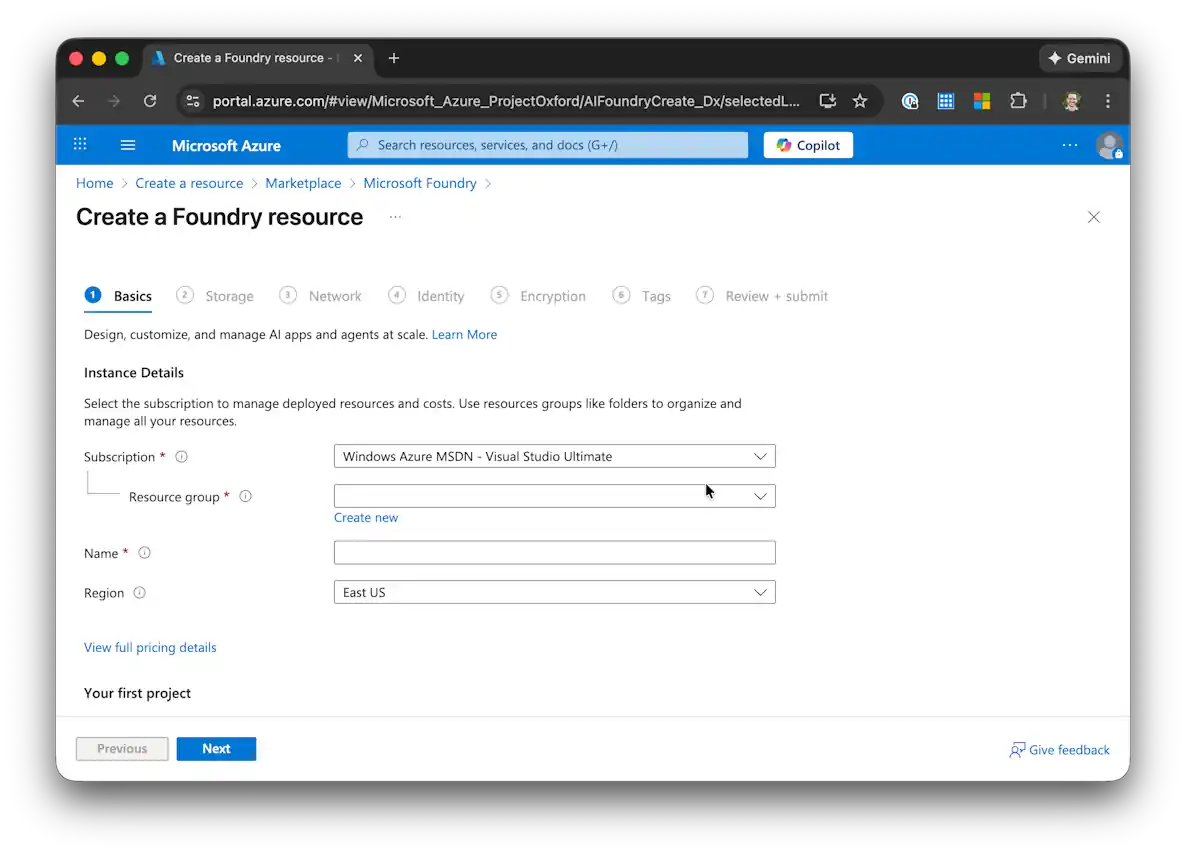
Click Create to begin the resource creation wizard.
-
In the Basics tab:
- Select or create a Resource group
- Enter a Name for your Foundry resource
- Enter a Project name
- Click Next
- Configure the Storage, Network, Identity, Encryption, and Tags tabs according to your organization's requirements, clicking Next after each section.
-
On the Review + submit tab, review your settings and click Create.
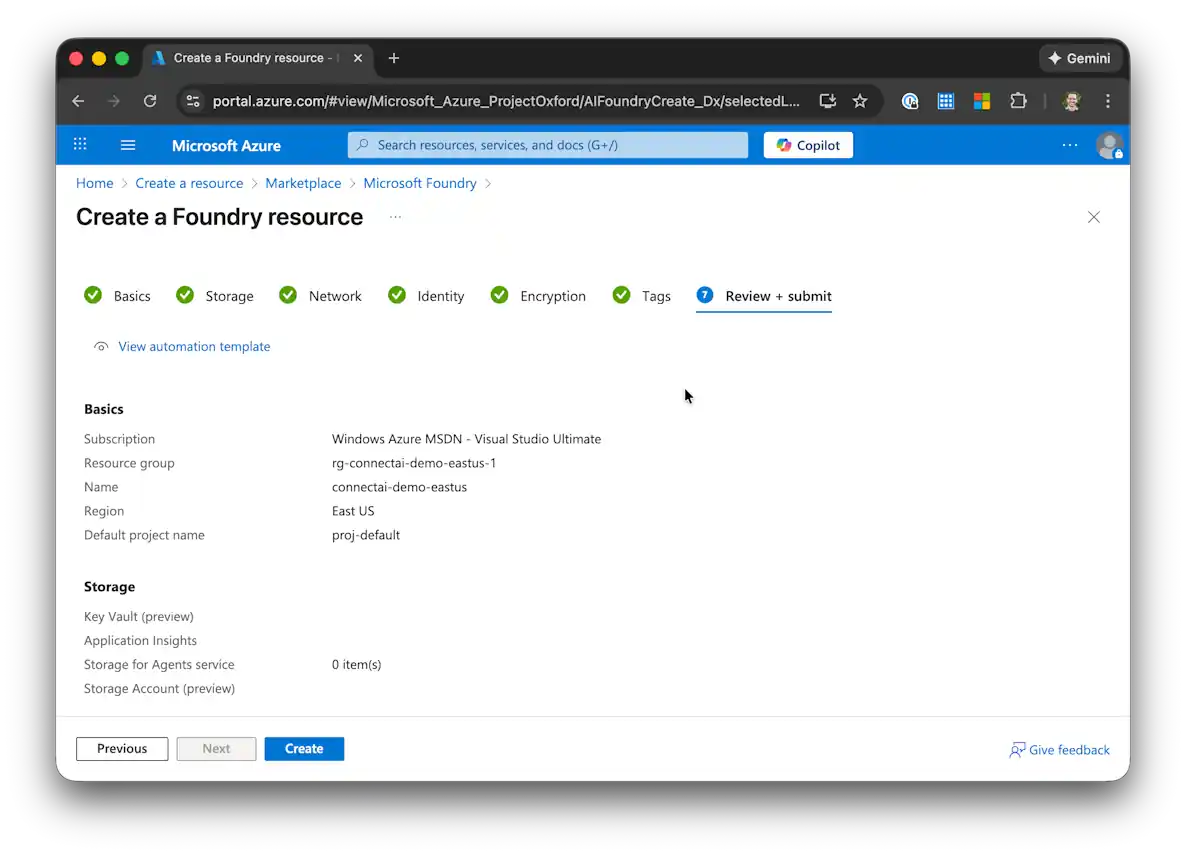
- Once the resource is created, click Go to resource.
-
Click Go to Foundry portal to access the Azure AI Foundry portal.
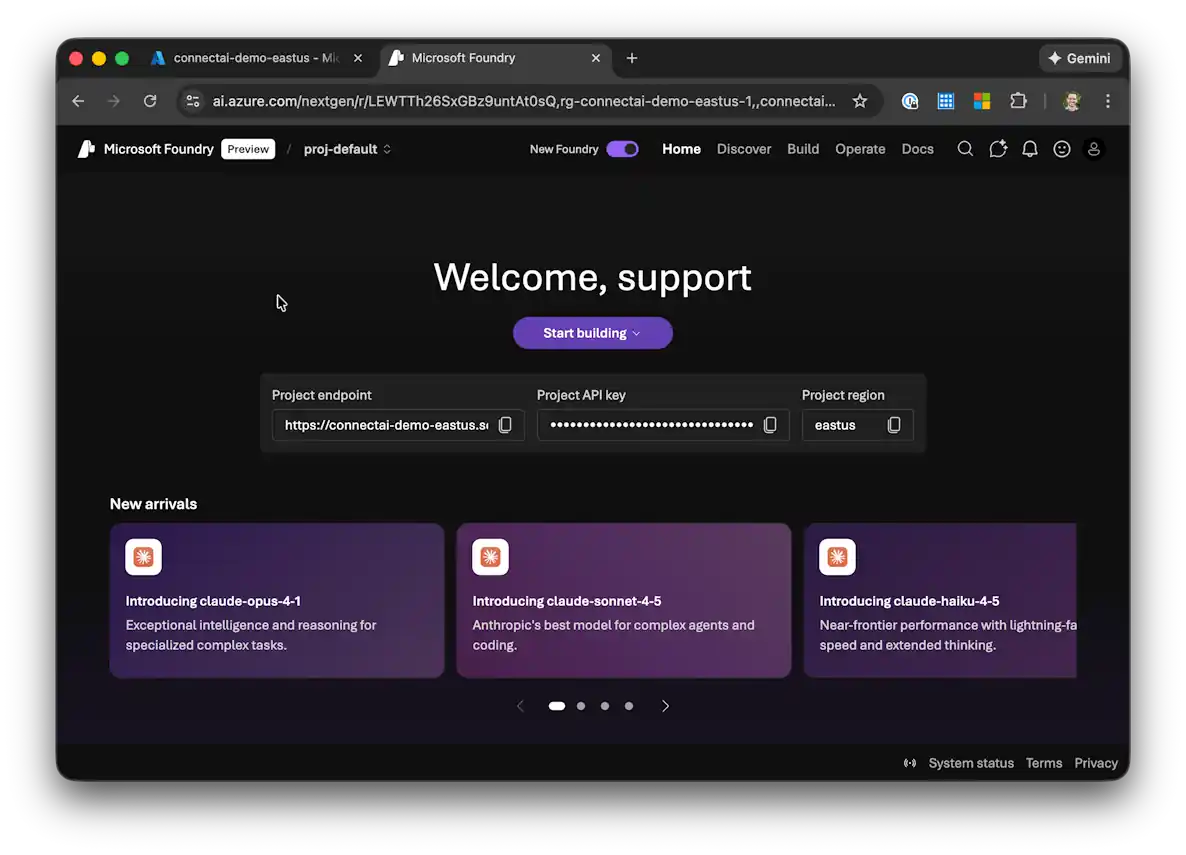
Step 2: Configure Sage Cloud Accounting Connectivity for Azure AI Foundry
Connectivity to Sage Cloud Accounting from Azure AI Foundry is made possible through CData Connect AI Remote MCP. To interact with Sage Cloud Accounting data from Azure AI Foundry, we start by creating and configuring a Sage Cloud Accounting connection in CData Connect AI.
-
Log into Connect AI, click Connections and click Add Connection

-
Select "Sage Cloud Accounting" from the Add Connection panel

-
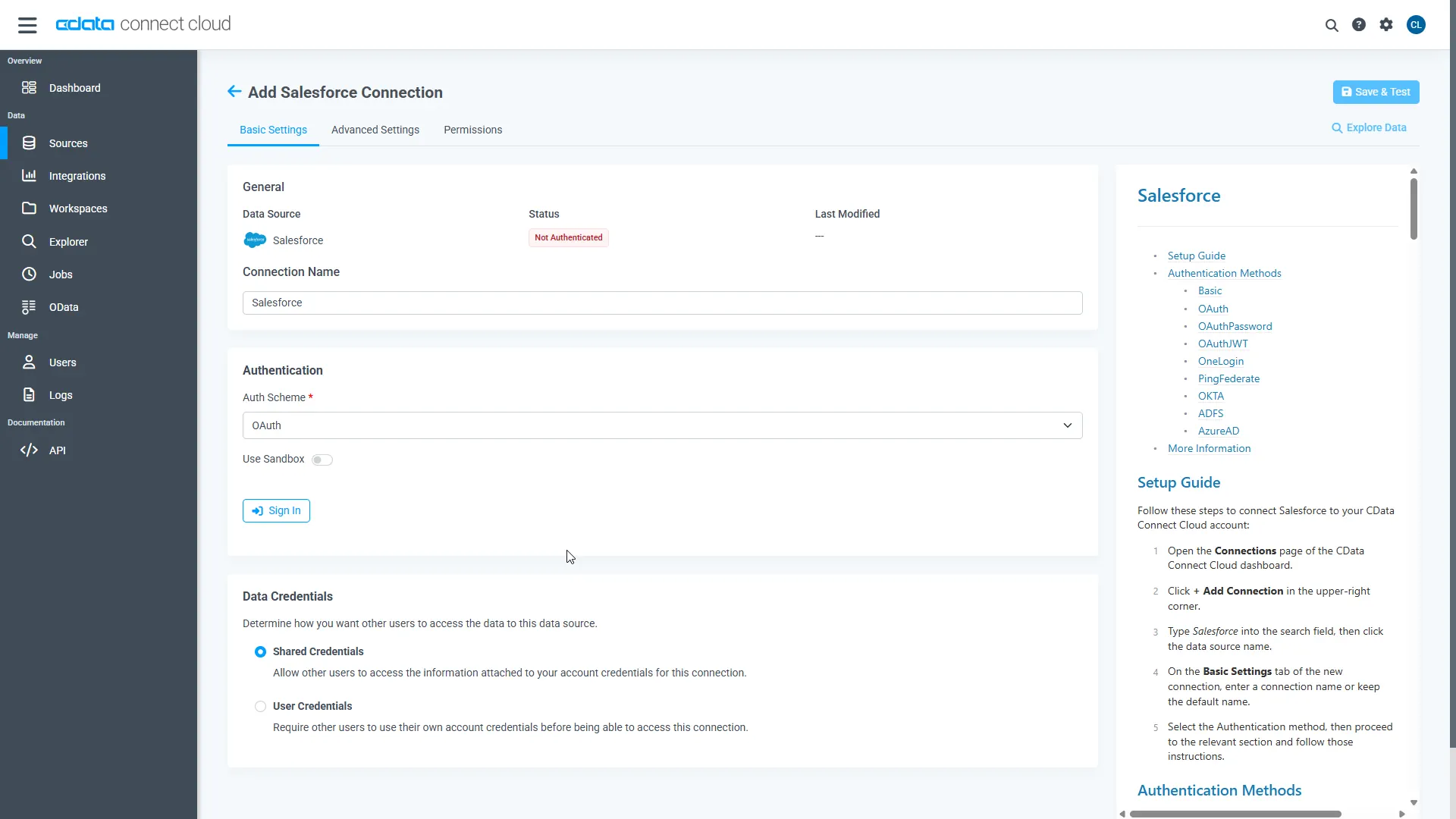
Sage Cloud Accounting uses OAuth to authenticate. Click "Sign in" to authenticate with Sage Cloud Accounting.
-
Navigate to the Permissions tab in the Add Sage Cloud Accounting Connection page and update the User-based permissions.

Add a Personal Access Token
A Personal Access Token (PAT) is used to authenticate the connection to Connect AI from Azure AI Foundry. It is best practice to create a separate PAT for each service to maintain granularity of access.
- Click on the Gear icon () at the top right of the Connect AI app to open the settings page.
- On the Settings page, go to the Access Tokens section and click Create PAT.
-
Give the PAT a name and click Create.

- The personal access token is only visible at creation, so be sure to copy it and store it securely for future use.
With the connection configured and a PAT generated, we are ready to connect to Sage Cloud Accounting data from Azure AI Foundry.
Step 3: Create an AI Agent in Azure AI Foundry
Follow these steps to create an AI agent and connect it to CData Connect AI:
-
In the Azure AI Foundry portal, click New Foundry to create a new project.
-
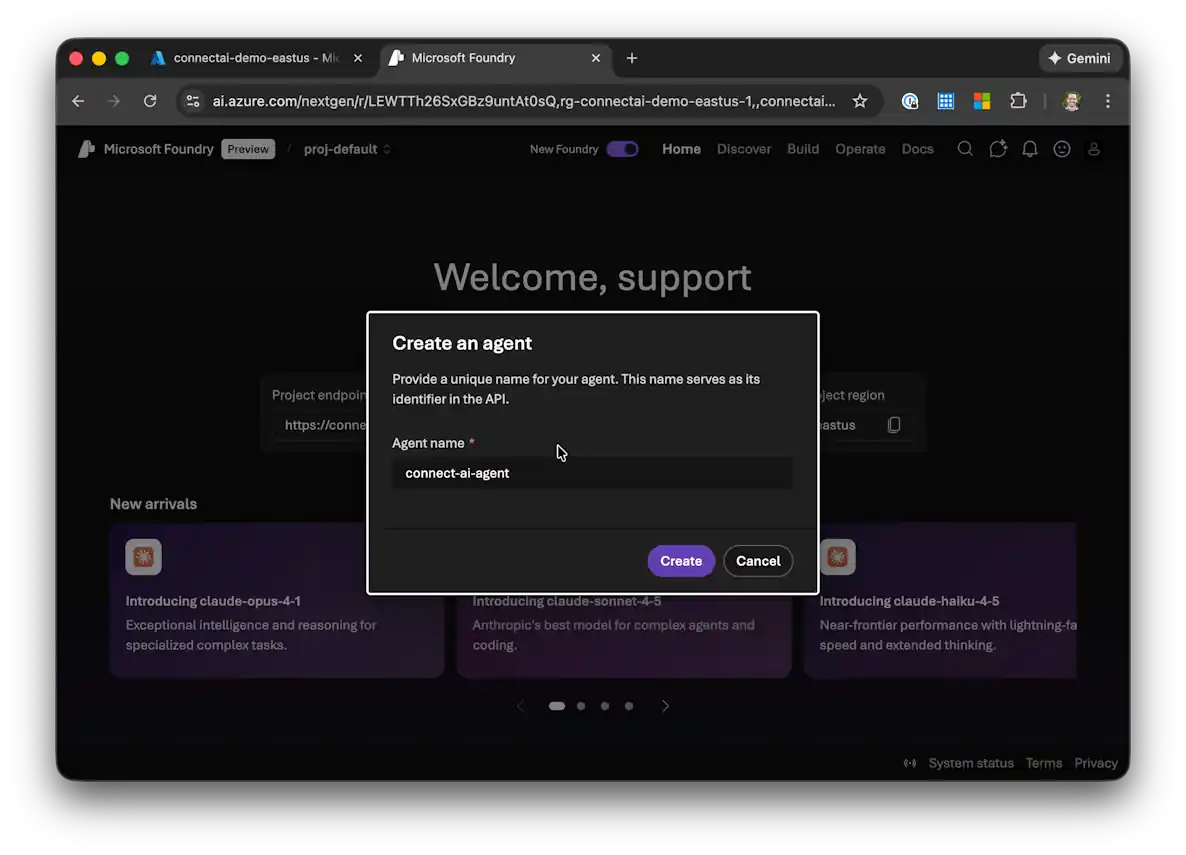
Click Start building and then select Create agent.
-
Enter a Name for your agent.
-
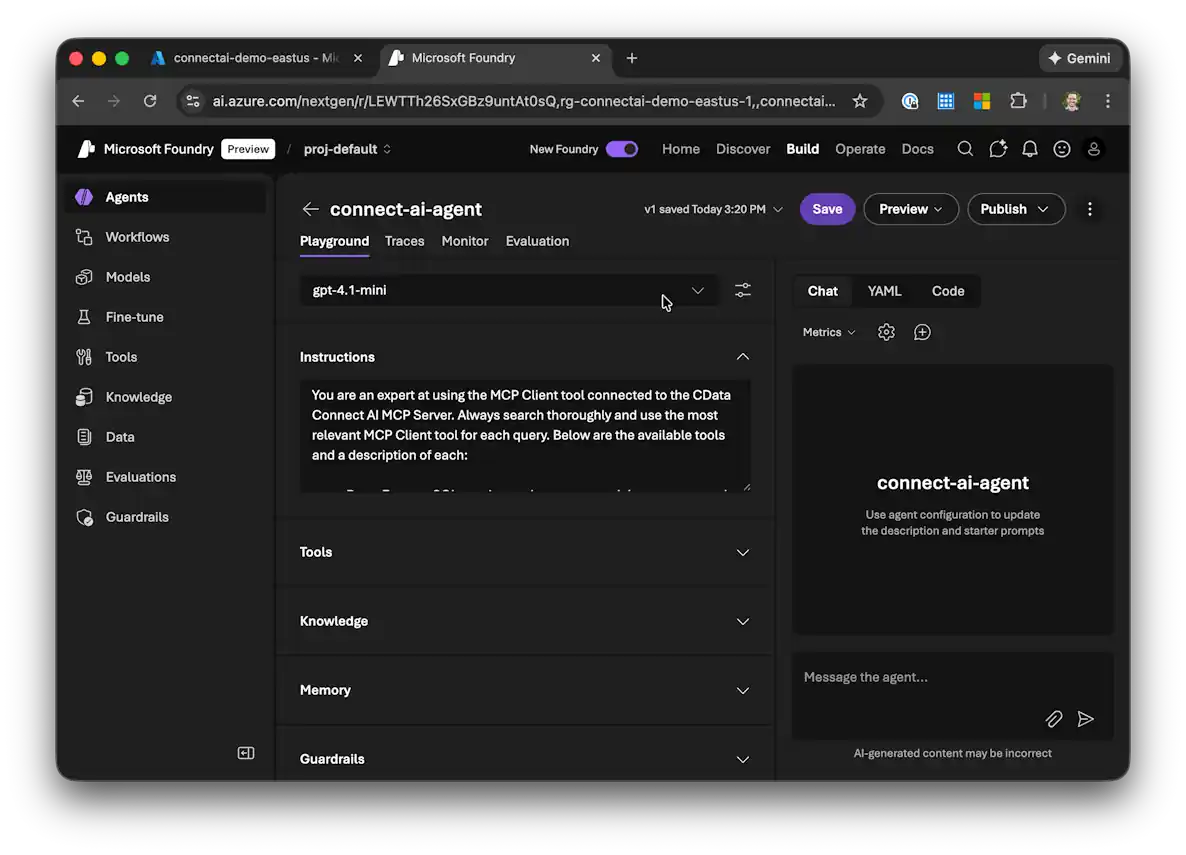
In the Setup section:
- Choose your preferred AI model
- Configure Instructions for how the agent should behave
Step 4: Add the CData Connect AI MCP Tool
Now you'll add the CData Connect AI MCP Server as a custom tool for your agent:
-
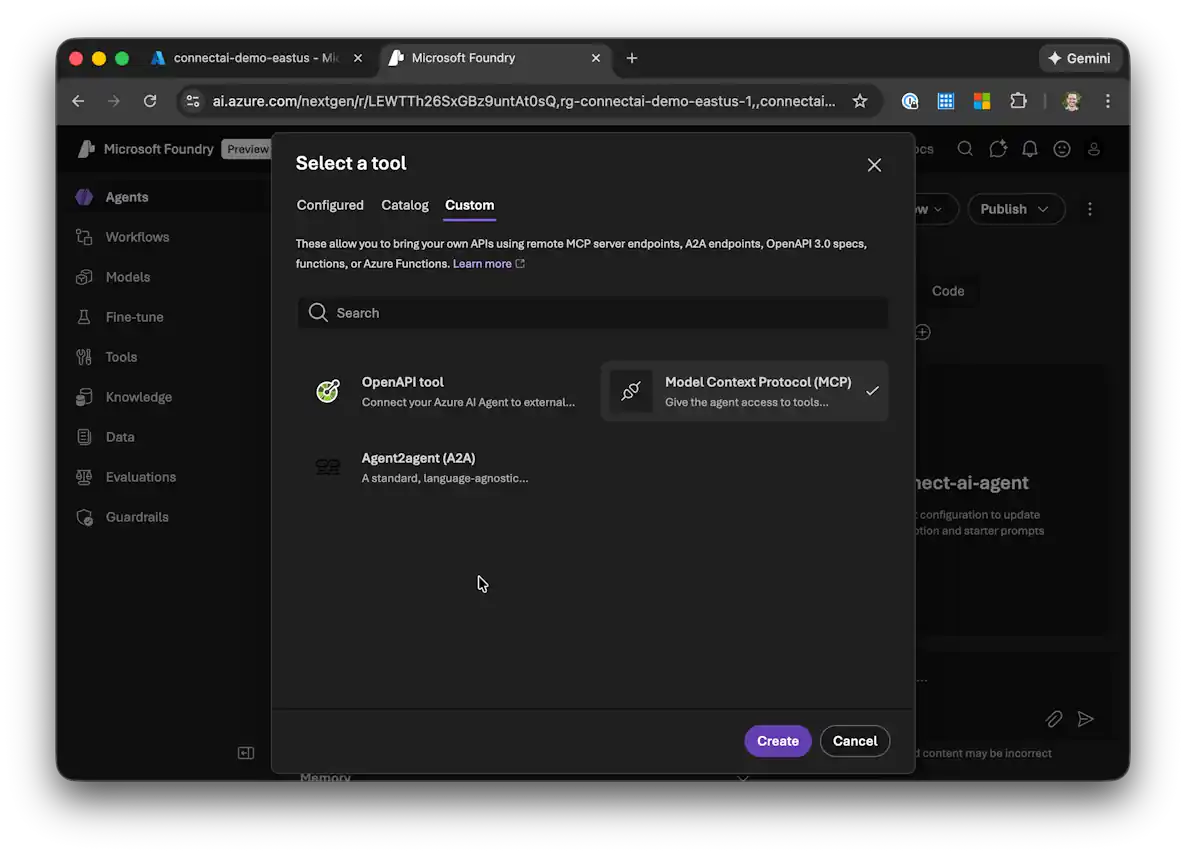
In the agent setup, navigate to the Tools section and click Add.
-
Select Custom from the tool options.
-
Choose Model Context Protocol and click Create.
-
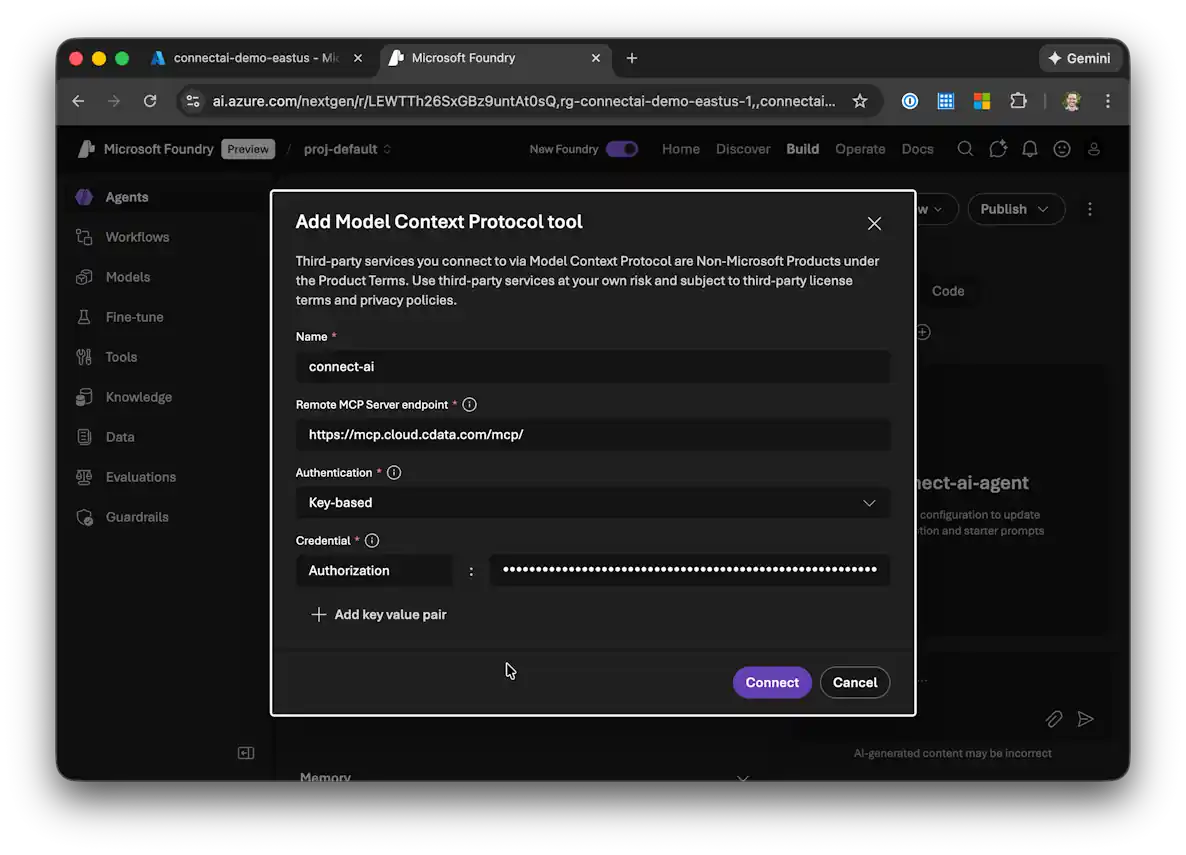
Enter a Name for the MCP tool (such as "CData Connect AI MCP Server").
-
In the Remote MCP Server endpoint field, enter: https://mcp.cloud.cdata.com/mcp/
-
For Authentication, select Key-based.
-
Configure the credential using:
- Header name: Authorization
- Value: Basic EMAIL:PAT, replacing EMAIL with your Connect AI email address and PAT with the personal access token you created earlier
-
Click Connect to establish the connection to CData Connect AI.
Optional: Provide Agent Context
You can enhance your agent's understanding by providing specific instructions about using the MCP Server tools. In the agent's Instructions section, you can add guidance such as:
You are an expert at using the MCP Client tool connected to the CData Connect AI MCP Server. Always search thoroughly and use the most relevant MCP Client tool for each query. Below are the available tools and a description of each:

queryData: Execute SQL queries against connected data sources and retrieve results. When you use the queryData tool, ensure you use the following format for the table name: catalog.schema.tableName
getCatalogs: Retrieve a list of available connections from CData Connect AI. The connection names should be used as catalog names in other tools and in any queries to CData Connect AI. Use the `getSchemas` tool to get a list of available schemas for a specific catalog.
getSchemas: Retrieve a list of available database schemas from CData Connect AI for a specific catalog. Use the `getTables` tool to get a list of available tables for a specific catalog and schema.
getTables: Retrieve a list of available database tables from CData Connect AI for a specific catalog and schema. Use the `getColumns` tool to get a list of available columns for a specific table.
getColumns: Retrieve a list of available database columns from CData Connect AI for a specific catalog, schema, and table.
getProcedures: Retrieve a list of stored procedures from CData Connect AI for a specific catalog and schema
getProcedureParameters: Retrieve a list of stored procedure parameters from CData Connect AI for a specific catalog, schema, and procedure.
executeProcedure: Execute stored procedures with parameters against connected data sources
Step 5: Chat with Your Sage Cloud Accounting Data
With your agent configured and connected to CData Connect AI, you can now interact with your Sage Cloud Accounting data using natural language:
-
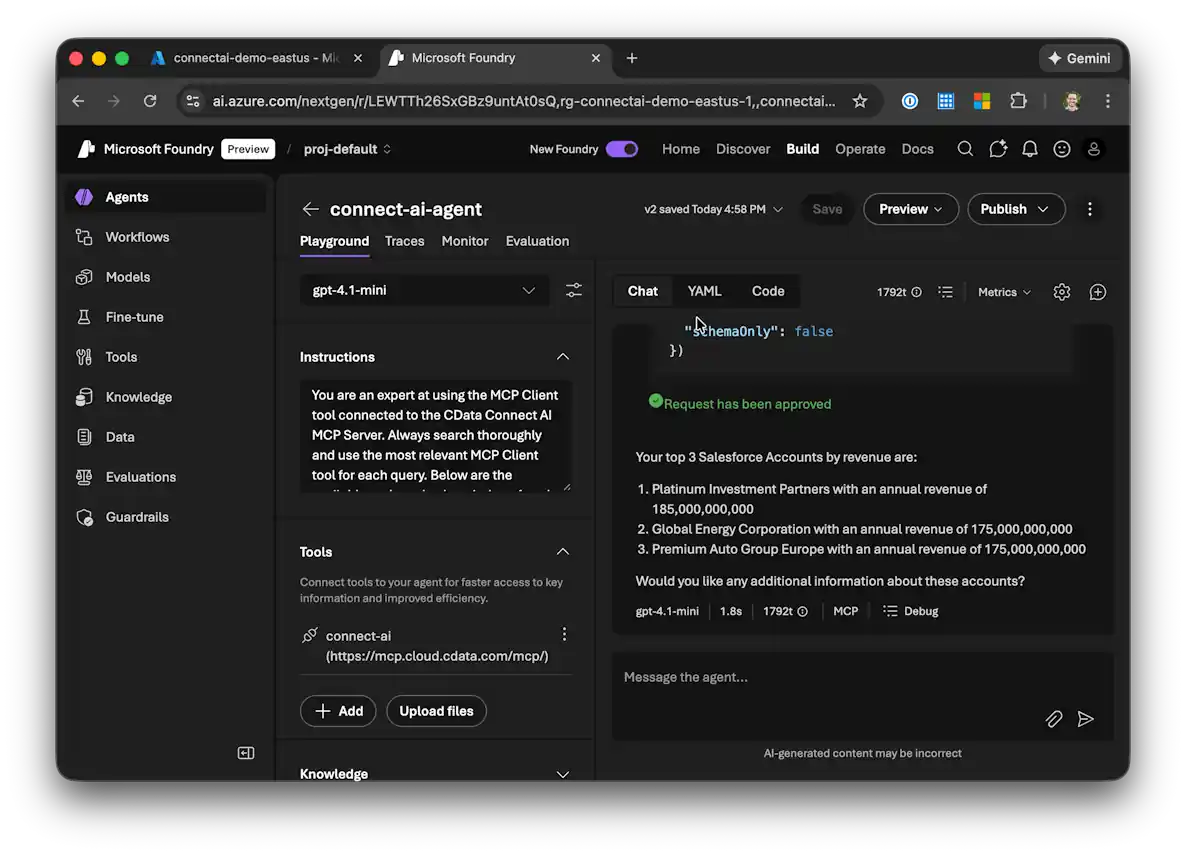
In the Azure AI Foundry portal, navigate to the Chat with data section of your agent.
-
Start asking questions about your Sage Cloud Accounting data. For example:
- "Show me all customers from the last 30 days"
- "What are my top performing products?"
- "Analyze sales trends for Q4"
- "List all active projects with their current status"
-
The agent will use the CData Connect AI MCP Server to query your Sage Cloud Accounting data in real-time and provide responses based on live data.
Step 6: Publish Your Agent
Once you're satisfied with your agent's configuration and testing, click Publish to make your agent available for use in your organization.
Get CData Connect AI
To get live data access to 300+ SaaS, Big Data, and NoSQL sources directly from your cloud applications, try CData Connect AI today!
