




Connect to Sage X3 Cloud Data in DBArtisan

The CData ODBC Driver for Sage X3 Cloud seamlessly integrates Sage X3 Cloud data into database management tools like DBArtisan by enabling you to access Sage X3 Cloud data as a database. This article shows how to create an data source for Sage X3 Cloud in DBArtisan and execute queries. You can then edit data visually and execute standard SQL.
Integrate Sage X3 Cloud Data into DBArtisan Projects
If you have not already, first specify connection properties in an ODBC DSN (data source name). This is the last step of the driver installation. You can use the Microsoft ODBC Data Source Administrator to create and configure ODBC DSNs.
Sage X3 Cloud uses the OAuth 2.0 Client Credentials flow, and an X-API-Key is also required for API access. Set AuthScheme to OAuth and specify the following connection properties:
- URL: The base URL of your Sage X3 Cloud instance.
- OAuthAccessTokenUrl: The OAuth token endpoint (e.g., https://your-auth-domain/oauth/token).
- OAuthClientId: Your OAuth application client ID.
- OAuthClientSecret: Your OAuth application client secret.
- Audience: The API audience value for the token request.
- XAPIKey: The X-API-Key provided by your Sage X3 Cloud administrator.
- Folder: The Sage X3 folder name (e.g., SEED). This folder is used as the default schema.
- Folders (optional): A comma-separated list of Sage X3 folders (e.g., SEED,PERF). Each folder is exposed as a separate schema, so you can query across folders with the Schema.Table syntax.
The driver obtains an access token with the Client Credentials flow and sends it with the X-API-Key on every API request. With InitiateOAuth set to GETANDREFRESH (the default), the driver acquires and refreshes the token automatically.
You can then follow the steps below to register Sage X3 Cloud data as a database instance in your project:
- In DBArtisan, click Data Source -> Register Datasource.
- Select Generic ODBC.
- Enter a name for the data source and select the DSN.
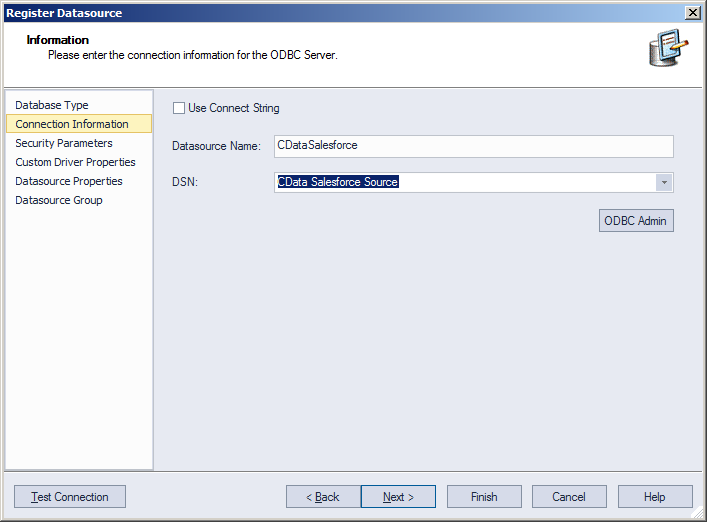
- Finish the wizard to connect to Sage X3 Cloud data. Sage X3 Cloud entities are displayed in the Datasource Explorer.
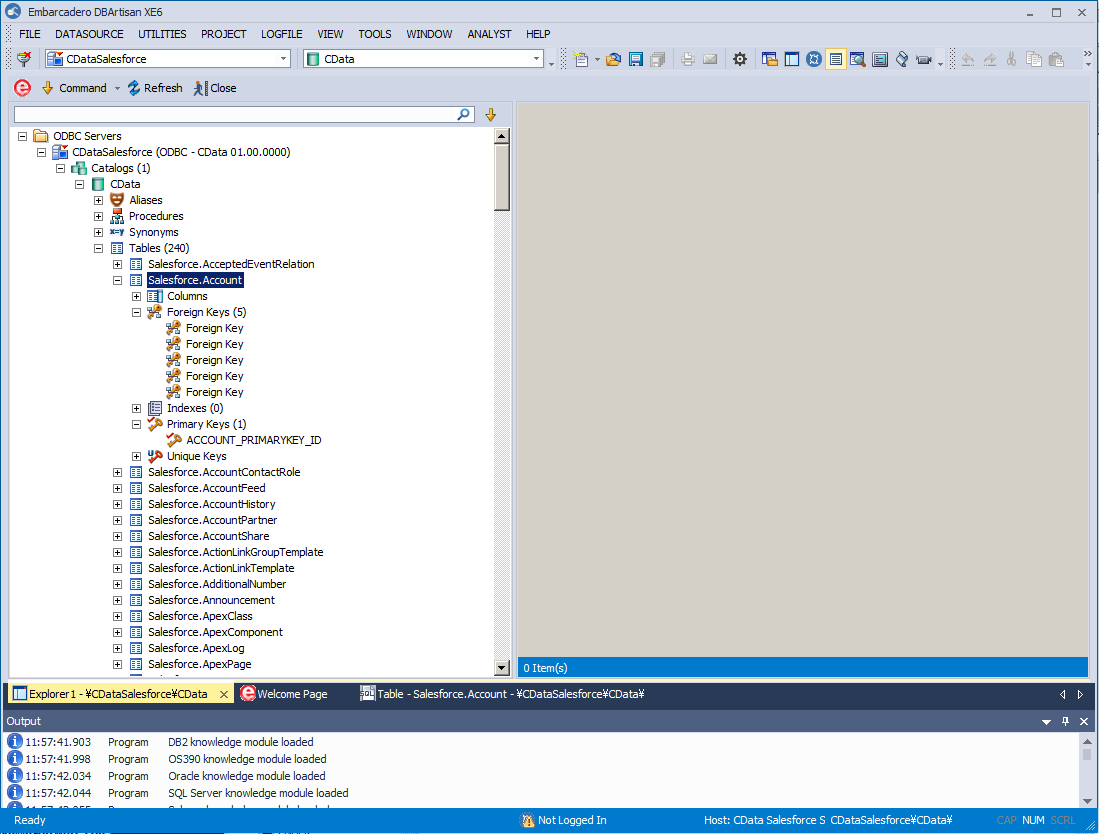
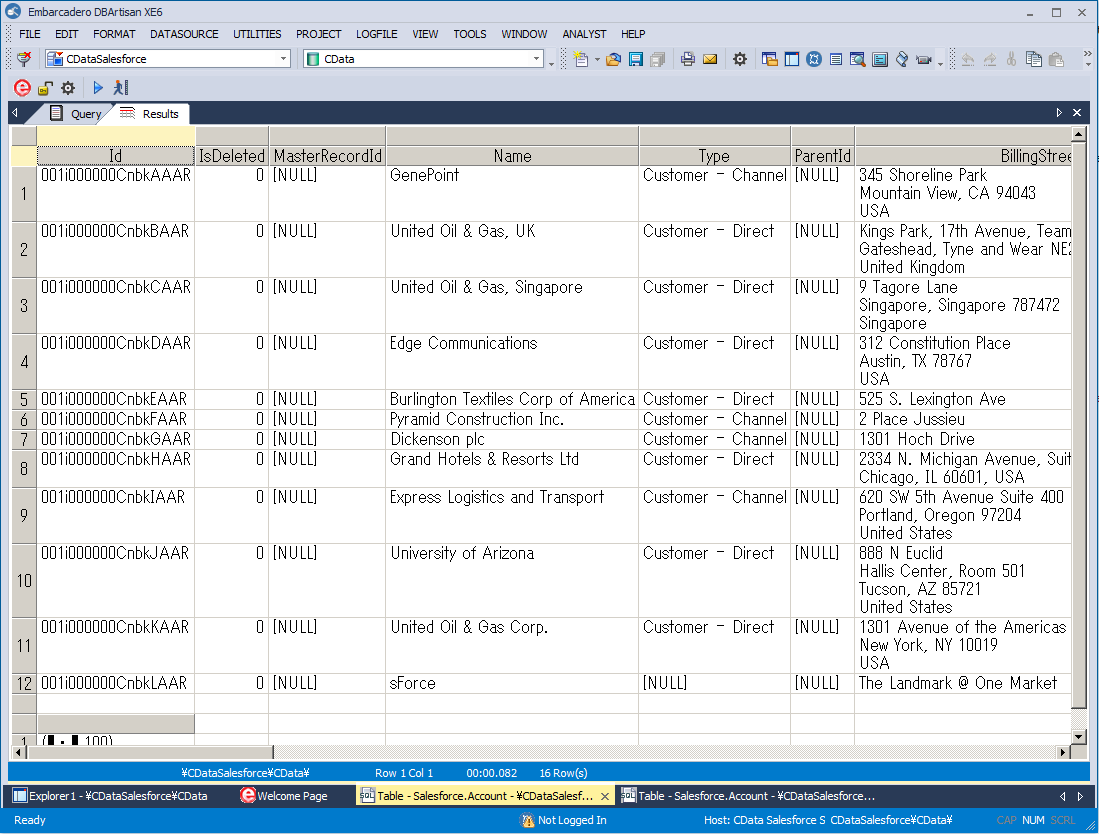
You can now work with Sage X3 Cloud data as you work with any other database. See the driver help documentation for more information on the queries supported by the Sage X3 Cloud API.
Ready to get started?
Download a free trial of the Sage X3 Cloud ODBC Driver to get started:
Download NowLearn more:
 Sage X3 Cloud ODBC Driver
The Sage X3 Cloud ODBC Driver is a powerful tool that allows you to connect with live data from Sage X3 Cloud, directly from any applications that support ODBC connectivity.
Access Sage X3 Cloud data like you would a database - read, write, and update Sage X3 Cloud data through a standard ODBC Driver interface.