Automate Tasks in Power Automate Using the CData API Server

Power Automate (Microsoft Flow) makes it easy to automate tasks that involve data from multiple systems, on premises or in the cloud. With the CData API Server, line-of-business users have a native way to create actions based on SAP Ariba Source triggers in Power Automate; the API Server makes it possible for SaaS applications like Power Automate to integrate seamlessly with SAP Ariba Source data through data access standards like Swagger and OData. This article shows how to use wizards in Power Automate and the API Server for SAP Ariba Source to create a trigger -- entities that match search criteria -- and send an email based on the results.
Set Up the API Server
Follow the steps below to begin producing secure and Swagger-enabled SAP Ariba Source APIs:
Deploy
The API Server runs on your own server. On Windows, you can deploy using the stand-alone server or IIS. On a Java servlet container, drop in the API Server WAR file. See the help documentation for more information and how-tos.
The API Server is also easy to deploy on Microsoft Azure, Amazon EC2, and Heroku.
Connect to SAP Ariba Source
After you deploy, provide authentication values and other connection properties by clicking Settings -> Connections in the API Server administration console. You can then choose the entities you want to allow the API Server access to by clicking Settings -> Resources.
In order to connect with SAP Ariba Source, set the following:
- API: Specify which API you would like the provider to retrieve SAP Ariba data from. Select the Supplier, Sourcing Project Management, or Contract API based on your business role (possible values are SupplierDataAPIWithPaginationV4, SourcingProjectManagementAPIV2, or ContractAPIV1).
- DataCenter: The data center where your account's data is hosted.
- Realm: The name of the site you want to access.
- Environment: Indicate whether you are connecting to a test or production environment (possible values are TEST or PRODUCTION).
If you are connecting to the Supplier Data API or the Contract API, additionally set the following:
- User: Id of the user on whose behalf API calls are invoked.
- PasswordAdapter: The password associated with the authenticating User.
If you're connecting to the Supplier API, set ProjectId to the Id of the sourcing project you want to retrieve data from.
Authenticating with OAuth
After setting connection properties, you need to configure OAuth connectivity to authenticate.
- Set AuthScheme to OAuthClient.
- Register an application with the service to obtain the APIKey, OAuthClientId and OAuthClientSecret.
For more information on creating an OAuth application, refer to the Help documentation.
Automatic OAuth
After setting the following, you are ready to connect:
-
APIKey: The Application key in your app settings.
OAuthClientId: The OAuth Client Id in your app settings.
OAuthClientSecret: The OAuth Secret in your app settings.
When you connect, the provider automatically completes the OAuth process:
- The provider obtains an access token from SAP Ariba and uses it to request data.
- The provider refreshes the access token automatically when it expires.
- The OAuth values are saved in memory relative to the location specified in OAuthSettingsLocation.
You will also need to enable CORS and define the following sections on the Settings -> Server page. As an alternative, you can select the option to allow all domains without '*'.
- Access-Control-Allow-Origin: Set this to a value of '*' or specify the domains that are allowed to connect.
- Access-Control-Allow-Methods: Set this to a value of "GET,PUT,POST,OPTIONS".
- Access-Control-Allow-Headers: Set this to "x-ms-client-request-id, authorization, content-type".
Authorize API Server Users
After determining the OData services you want to produce, authorize users by clicking Settings -> Users. The API Server uses authtoken-based authentication and supports the major authentication schemes. You can authenticate as well as encrypt connections with SSL. Access can also be restricted by IP address; access is restricted to only the local machine by default.
For simplicity, we will allow the authtoken for API users to be passed in the URL. You will need to add a setting in the Application section of the settings.cfg file, located in the data directory. On Windows, this is the app_data subfolder in the application root. In the Java edition, the location of the data directory depends on your operation system:
- Windows: C:\ProgramData\CData
- Unix or Mac OS X: ~/cdata
[Application]
AllowAuthtokenInURL = true
Add SAP Ariba Source Data to a Flow
You can use the built-in HTTP + Swagger connector to use a wizard to design a SAP Ariba Source process flow:
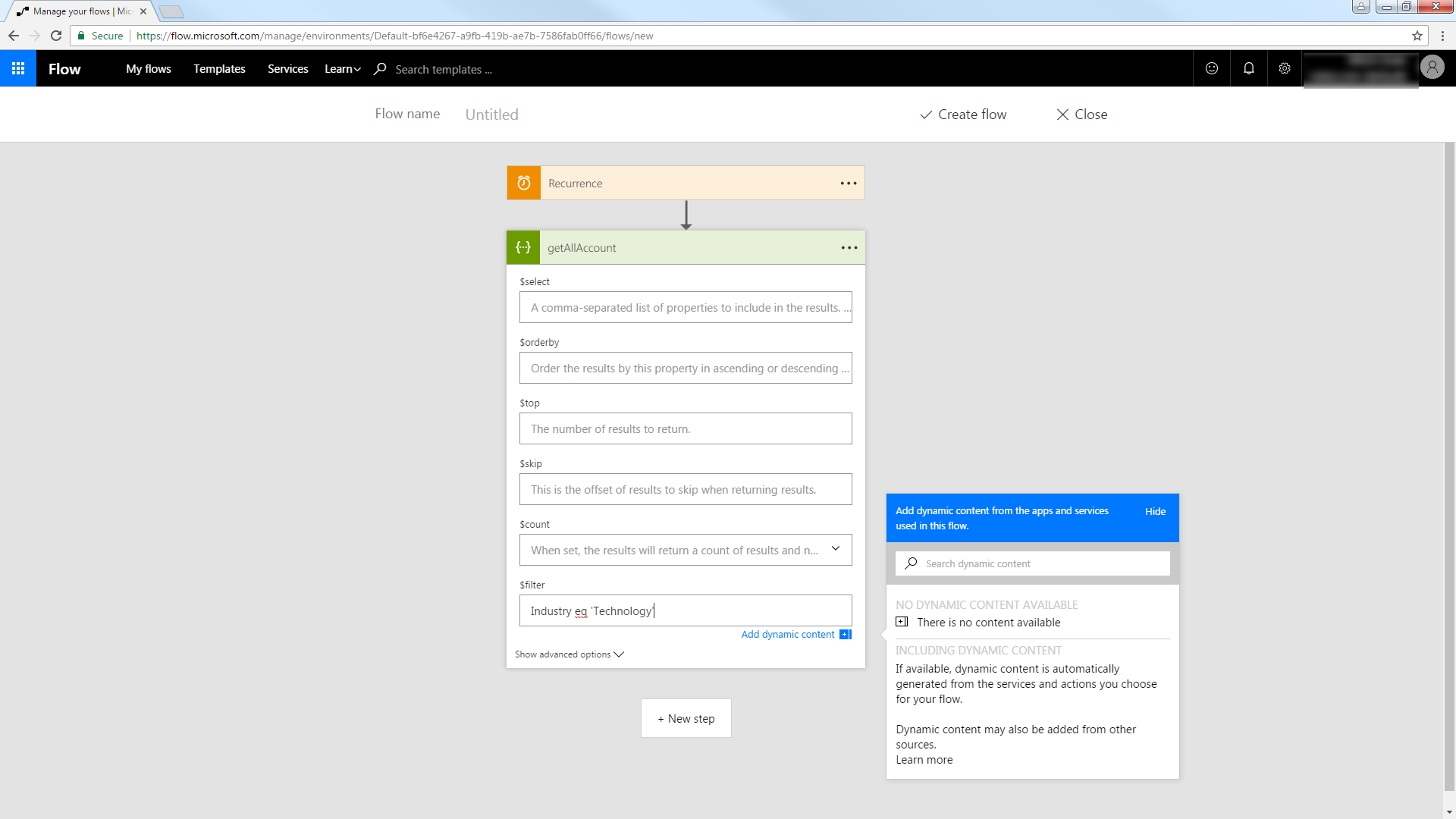
- In Power Automate, click My Flows -> Create from Blank.
- Select the Recurrence action and select a time interval for sending emails. This article uses 1 day.
- Add an HTTP + Swagger action by searching for Swagger.
- Enter the URL to the Swagger metadata document:
https://MySite:MyPort/api.rsc/@MyAuthtoken/$oas
- Select the "Return Vendors" operation.
Build the OData query to retrieve SAP Ariba Source data. This article defines the following OData filter expression in the $filter box:
Region eq 'USA'
See the API Server help documentation for more on filtering and examples of the supported OData.
Trigger an Action
You can now work with Vendors entities in your process flow. Follow the steps to send an automated email:
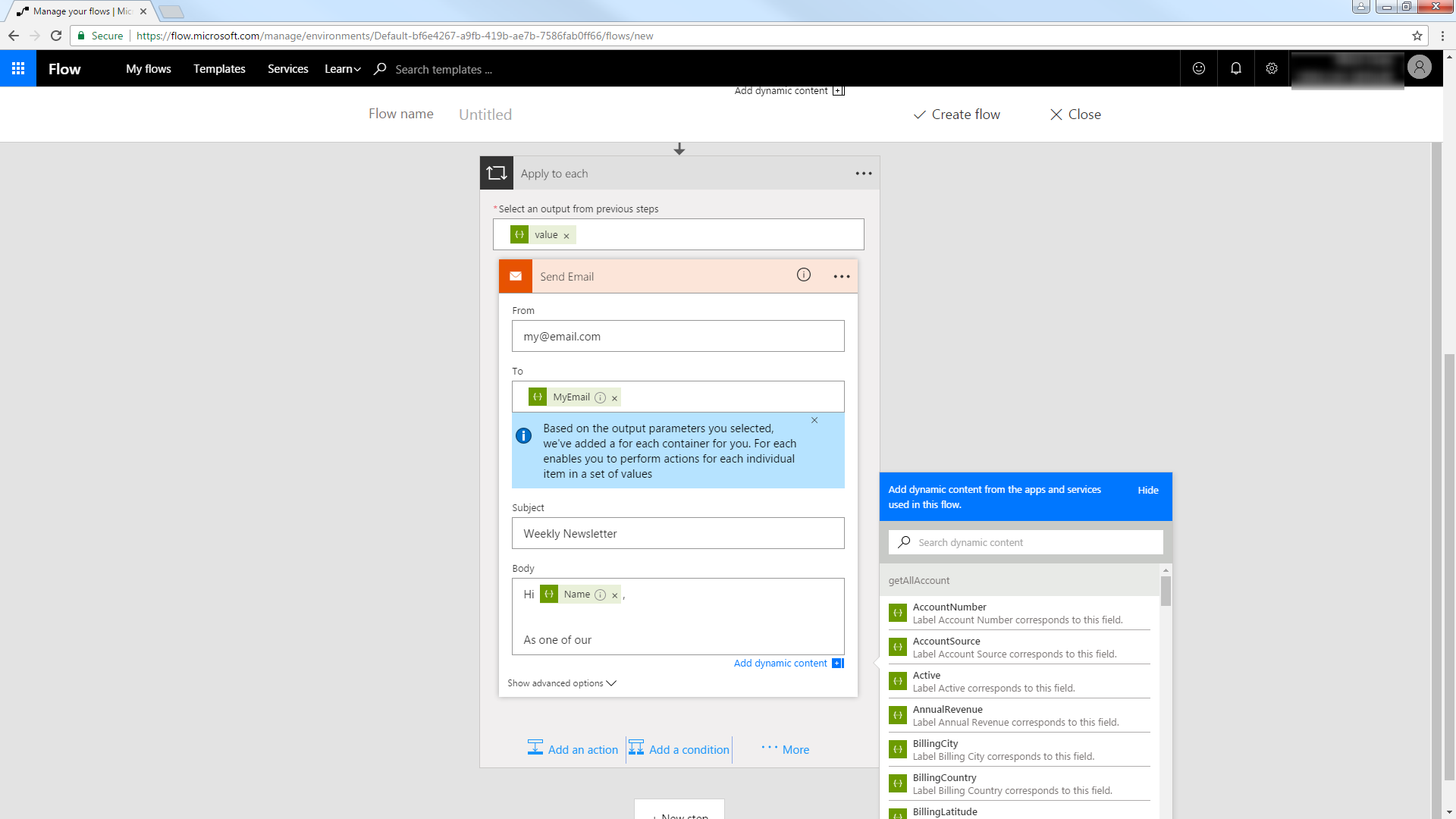
- Add an SMTP - Send Email action.
- Enter the address and credentials for the SMTP server and name the connection. Be sure to enable encryption if supported by your server.
- Enter the message headers and body. You can add SAP Ariba Source columns in these boxes.