






How to connect to SAP Business Warehouse Data in DBVisualizer

The CData JDBC Driver for SAP Business Warehouse implements JDBC standards to provide connectivity to SAP Business Warehouse data in applications ranging from business intelligence tools to IDEs. This article shows how to establish a connection to SAP Business Warehouse data in DBVisualizer and use the table editor to load SAP Business Warehouse data.
Create a New Driver Definition for SAP Business Warehouse Data
Follow the steps below to use the Driver Manager to provide connectivity to SAP Business Warehouse data from DBVisualizer tools.
- In DBVisualizer, click Tools -> Driver Manager.
- Click the plus sign "" to create a new driver.
- Select "Custom" as the template.
- On the Driver Settings tab:
- Set Name to a user-friendly name (e.g. "CData SAP Business Warehouse Driver")
- Set URL Format to jdbc:sapbusinesswarehouse:
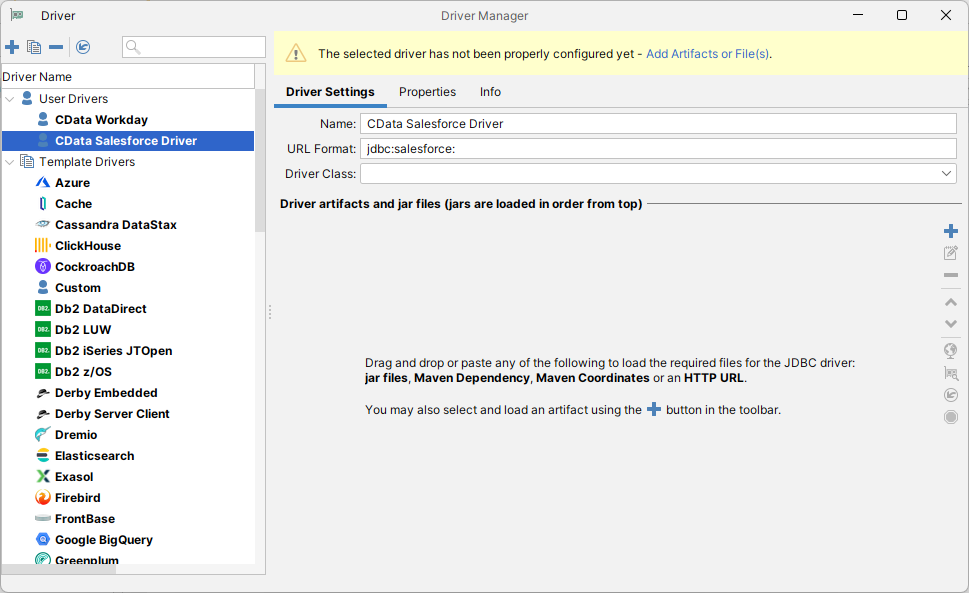
- In Driver artifacts and jar files (jars are loaded in order from top):
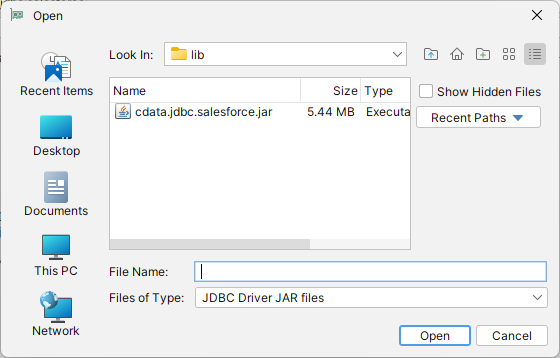
- Click the plus sign "" -> "Add Files"
- Navigate to the "lib" folder in the installation directory (C:\Program Files\CData JDBC Driver for SAP Business Warehouse XXXX\)
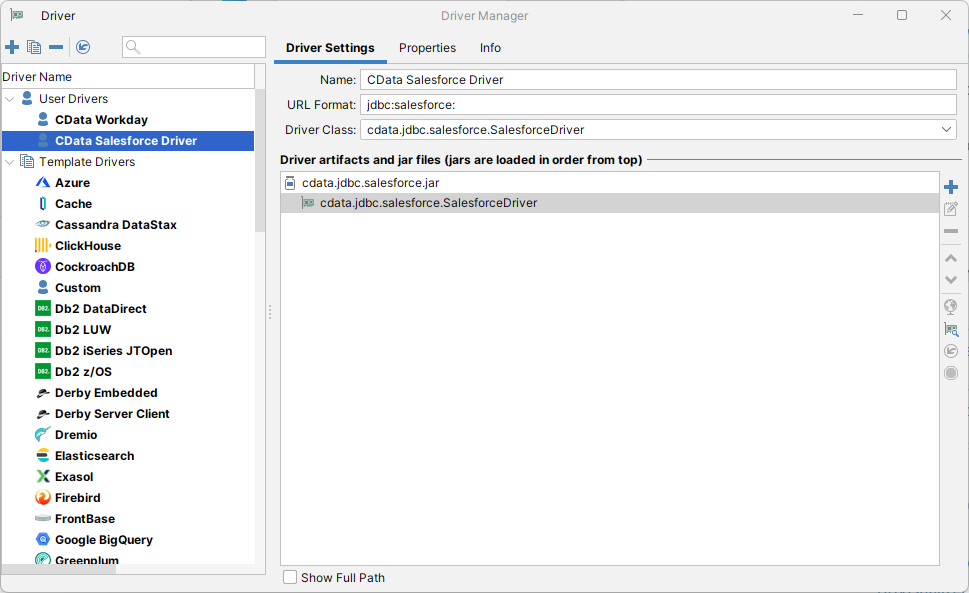
- Select the JAR file (cdata.jdbc.SAPBusinessWarehouse.jar) and click "Open"
- The Driver Class should populate automatically. If not, select class (cdata.jdbc.sapbusinesswarehouse.SAPBusinessWarehouseDriver).
Define the Connection to the JDBC Data Source
Close the "Driver Manager" and follow the steps below to save connection properties in the JDBC URL.
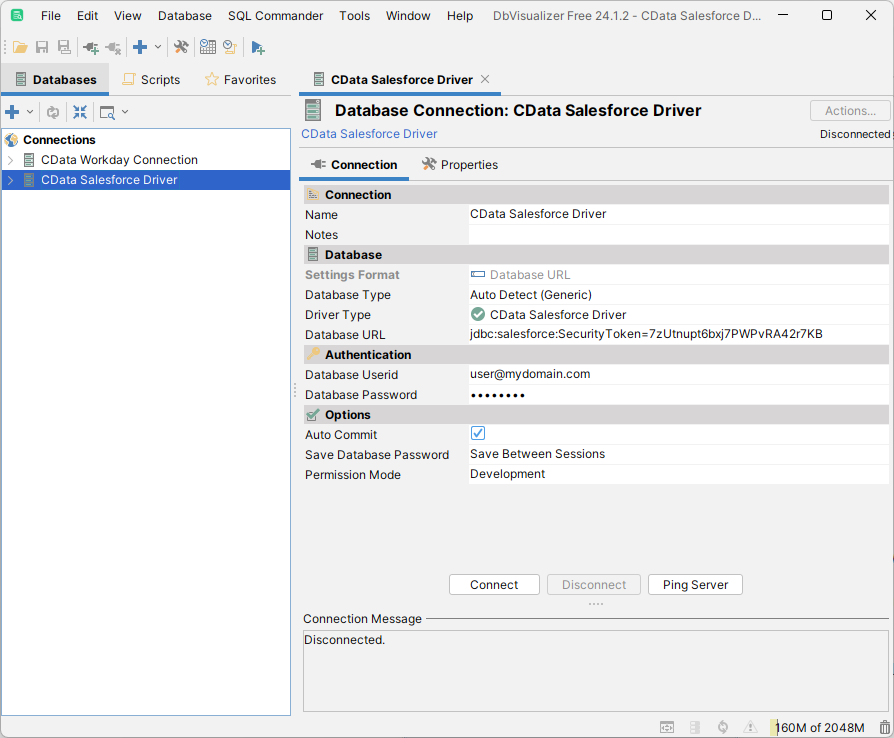
- In the "Databases" tab, click the plus sign "" and select the driver you just created.
In the "Connection" section, set the following options:
- Database Type: If you selected the wizard option, the database type is automatically detected. If you selected the "No Wizard" option, select the Generic or Auto Detect option in the Database Type menu.
- Driver Type: Select the driver you just created.
Database URL: Enter the full JDBC URL. The syntax of the JDBC URL is jdbc:sapbusinesswarehouse: followed by the connection properties in a semicolon-separated list of name-value pairs.
To connect to SAP Business Warehouse, set the URL property to a valid SAP Business Warehouse server base URL. The driver must connect to SAP Business Warehouse instances hosted over HTTP with XMLA access.
The driver supports the following authentication schemes via the AuthScheme property:
- None: Anonymous authentication, if available on the server.
- Basic: Set User and Password and set AuthScheme to Basic.
- Kerberos: See the Using Kerberos section of the help documentation for the required Kerberos properties.
By default, the driver attempts to negotiate SSL/TLS by checking the server's certificate against the system's trusted certificate store. To specify another certificate, see the SSLServerCert property for the available formats.
Built-in Connection String Designer
For assistance in constructing the JDBC URL, use the connection string designer built into the SAP Business Warehouse JDBC Driver. Either double-click the JAR file or execute the jar file from the command-line.
java -jar cdata.jdbc.sapbusinesswarehouse.jar
Fill in the connection properties and copy the connection string to the clipboard.

When you configure the JDBC URL, you may also want to set the Max Rows connection property. This will limit the number of rows returned, which is especially helpful for improving performance when designing reports and visualizations.
A typical connection string is below:
jdbc:sapbusinesswarehouse:URL=https://mysapserver:8000;AuthScheme=Basic;User=username;Password=password;
- NOTE: Database Userid and Database Password correspond with the User and Password properties for SAP Business Warehouse.
- On the Connection tab, click Connect.
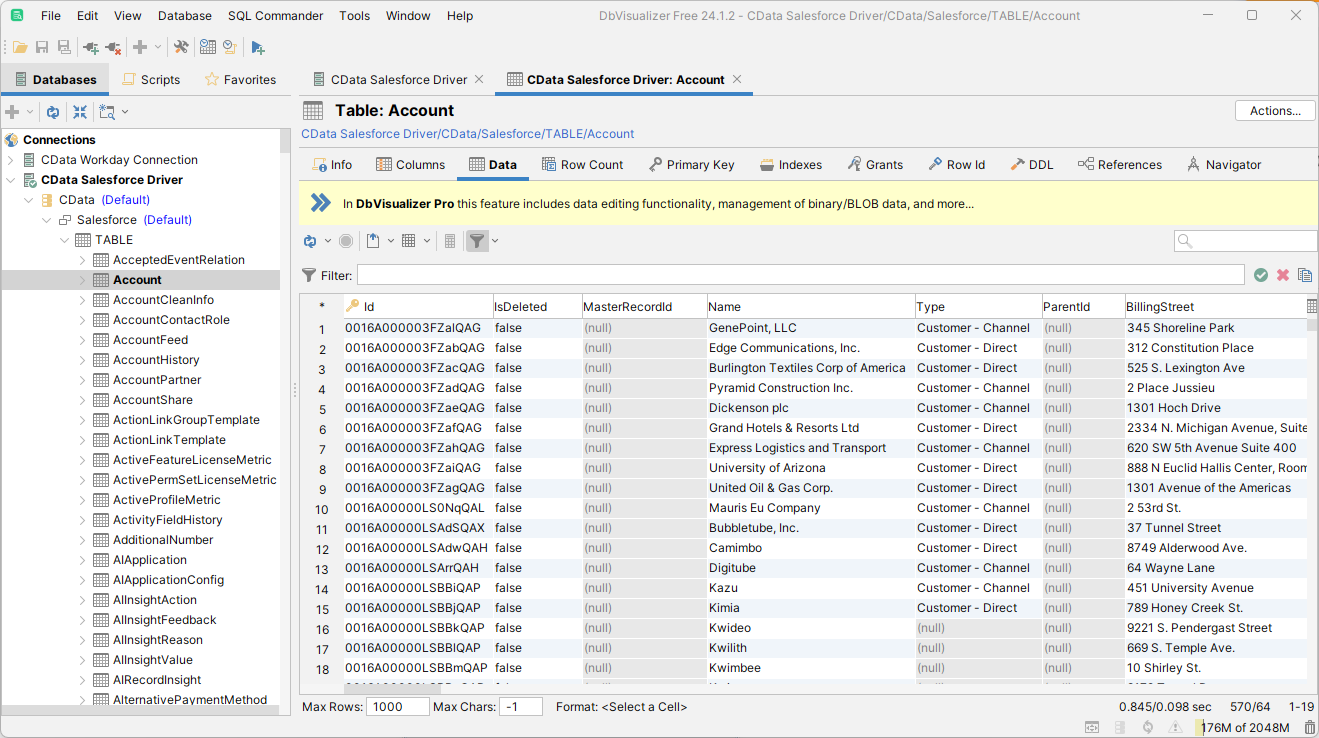
To browse through tables exposed by the SAP Business Warehouse JDBC Driver, right-click a table and click "Open in New Tab."
To execute SQL queries, use the SQL Commander tool: Click SQL Commander -> New SQL Commander. Select the Database Connection, Database, and Schema from the available menus.
See the "Supported SQL" chapter in the help documentation for more information on the supported SQL. See the "Data Model" chapter for table-specific information.
More Information & Free Trial
Download a free, 30-day trial of the CData JDBC Driver for SAP Business Warehouse and start working with your live SAP Business Warehouse data in DbVisualizer. Join the CData Community or reach out to our Support Team if you have any questions.Ready to get started?
Download a free trial of the SAP Business Warehouse Driver to get started:
Download NowLearn more:
 SAP Business Warehouse JDBC Driver
Rapidly create and deploy powerful Java applications that integrate with SAP Business Warehouse.