






Build MVC Applications with Connectivity to SAP SuccessFactors LMS Data

In this article, we will guide you through the process of utilizing wizards within Visual Studio to seamlessly integrate the CData ADO.NET Provider for SAP SuccessFactors LMS into a basic MVC (Model, View, Controller) project.
Create the Entity Framework Model
Follow the steps below to save connection properties and map tables to entities in the data model.
- Create a new MVC project in Visual Studio. In this example, the project name is MvcSAPSuccessFactorsLMSApp.
If you are using Entity Framework 6, you will need to take the preliminary step of registering the SAP SuccessFactors LMS Entity Framework provider for your project. See the "LINQ and Entity Framework" chapter in the help documentation for a guide.
Note that MVC 3 scaffolding and MVC 4 scaffolding do not support Entity Framework 6. You can use your scaffolding with Entity Framework 6 by upgrading to the latest version of MVC.- To add the .edmx file from the designer, right-click your Models folder and click Add New Item. Select ADO.NET Entity Data Model, name the model, and click Add. In this example, the name of the model is SAPSuccessFactorsLMSModel.
- In the Entity Data Model wizard, select the option 'EF Designer from database'. The Entity Data Model wizard is displayed.
- Click New Connection. Select CData SAP SuccessFactors LMS Data Source in the dialog that is displayed.
Specify the required connection string properties.
SAP SuccessFactors LMS uses OAuth authentication. Before connecting, you must configure an OAuth application tied to your SAP SuccessFactors LMS account.
To establish a connection, set the following properties:
- User: Your SAP SuccessFactors LMS username.
- CompanyId: Your SAP SuccessFactors company identifier.
- Url: The SAP SuccessFactors API URL (e.g., https://api4.successfactors.com).
- OAuthClientId: The client Id assigned when you registered your custom OAuth application.
- OAuthClientSecret: The client secret assigned when you registered your custom OAuth application.
See the Getting Started chapter of the help documentation for a guide to creating a custom OAuth app and using OAuth.
A typical connection string is below:
User=username;CompanyId=CompanyId;Url=https://api4.successfactors.com;InitiateOAuth=GETANDREFRESH;
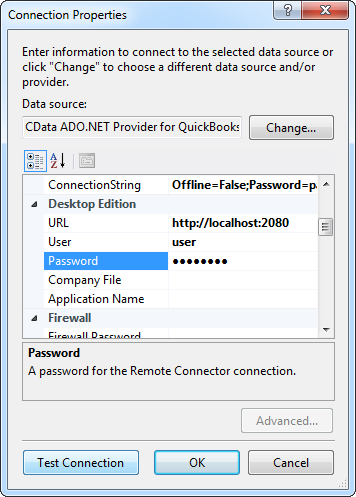
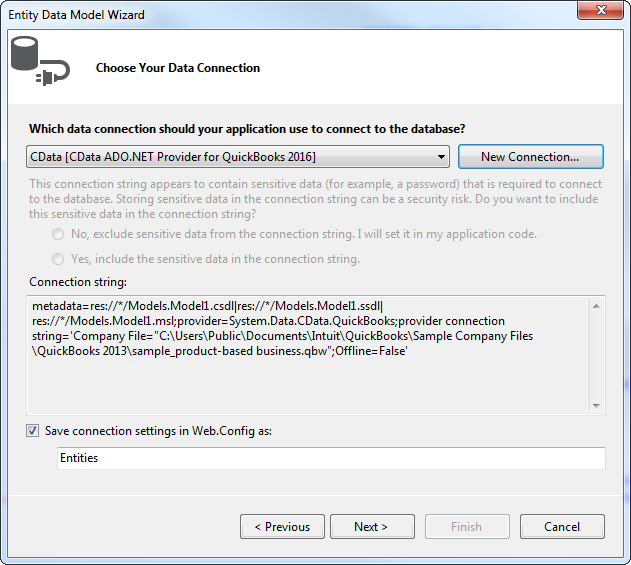
Name the connection and select whether to include sensitive information, such as connection credentials, in the connection string. For simplicity, this example saves sensitive information in Web.config. The connection settings are saved as SAPSuccessFactorsLMSEntities.
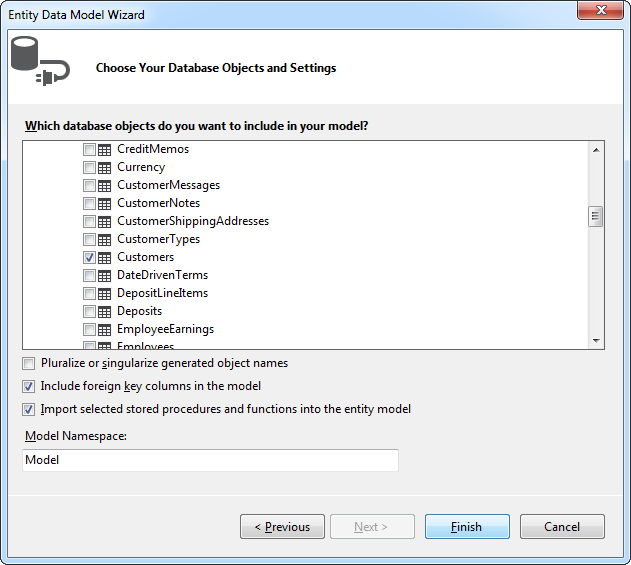
- Select the views you need. In this example, Items is imported. Also, the option to pluralize object names is deselected in this example. Click Finish to create the .edmx file.
- Build your project to complete this step.
Scaffold the Controller and Views
Once you've established the model and completed the project build, you can employ ASP.NET Scaffolding wizards to generate both the controller and the views.
- In Solution Explorer, right-click the controllers folder and click Add -> Controller. Select MVC 5 Controller with views, using Entity Framework.
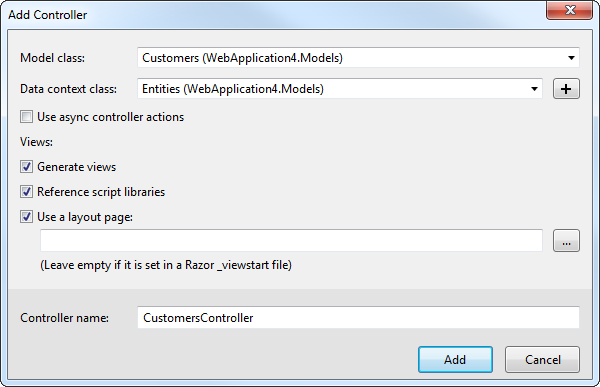
- In the Add Controller dialog that is then displayed, select the following options:
- Model class: Select a table you imported; for example, Items.
- Data context class: Select your context class.
-
Leave the default values for the other fields.
Ready to get started?
Download a free trial of the SAP SuccessFactors LMS Data Provider to get started:
Download NowLearn more:
 SAP SuccessFactors LMS ADO.NET Provider
Rapidly create and deploy powerful .NET applications that integrate with SAP SuccessFactors LMS.
