






Validate Sentry Data with QuerySurge

QuerySurge is a smart data testing solution that automates data validation and testing. When paired with the CData API Driver for JDBC, QuerySurge can work with live Sentry data. This article explains how to connect to Sentry data from QuerySurge.
With built-in optimized data processing, the CData JDBC Driver offers unmatched performance for interacting with live Sentry data. When you issue complex SQL queries to Sentry, the driver pushes supported SQL operations, like filters and aggregations, directly to Sentry and utilizes the embedded SQL engine to process unsupported operations client-side (often SQL functions and JOIN operations). Its built-in dynamic metadata querying allows you to work with and analyze Sentry data using native data types.
Connecting to Sentry Data in QuerySurge
To connect to live Sentry data from QuerySurge, you need to deploy the JDBC Driver JAR file to your QuerySurge Agent(s) and add a new connection from the QuerySurge Admin view.
Deploy the JDBC Driver
- Download the CData API Driver for JDBC installer, unzip the package, and run the JAR file to install the driver.
- Once the driver is installed, stop the Agent Service.
- Copy the JAR File (and license file if it exists) from the installation location (typically C:\Program Files\CData\CData API Driver for JDBC\lib\) to your Agent(s) (QuerySurge_install_dir\agent\jdbc).
- Restart the Agent Service.
For more information on deploying JDBC drivers for QuerySurge, refer to the QuerySurge Knowledge Base.
Configure a New Connection to Sentry
- Log into QuerySurge and navigate to the Admin view.
- Click Configuration -> Connections in the Administration Tree.
- Click Add to create a new connection.
- In the QuerySurge Connection Wizard, click Next.
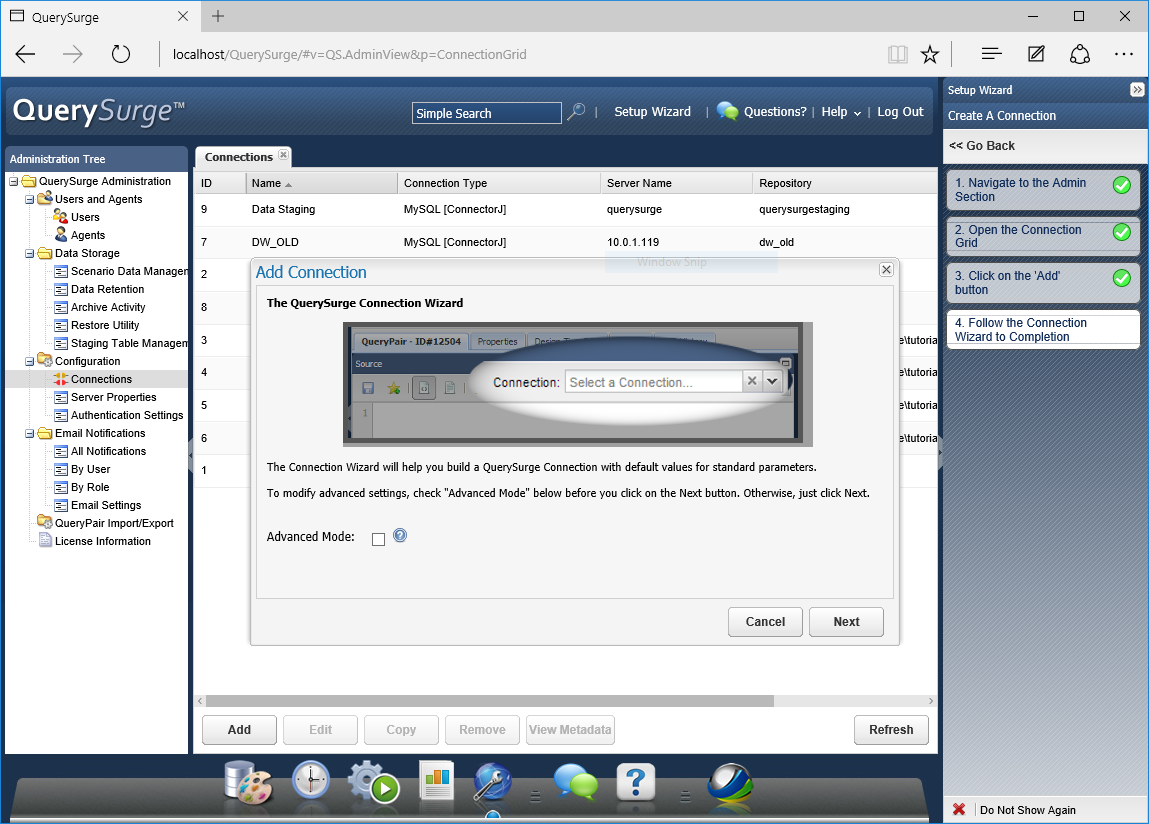
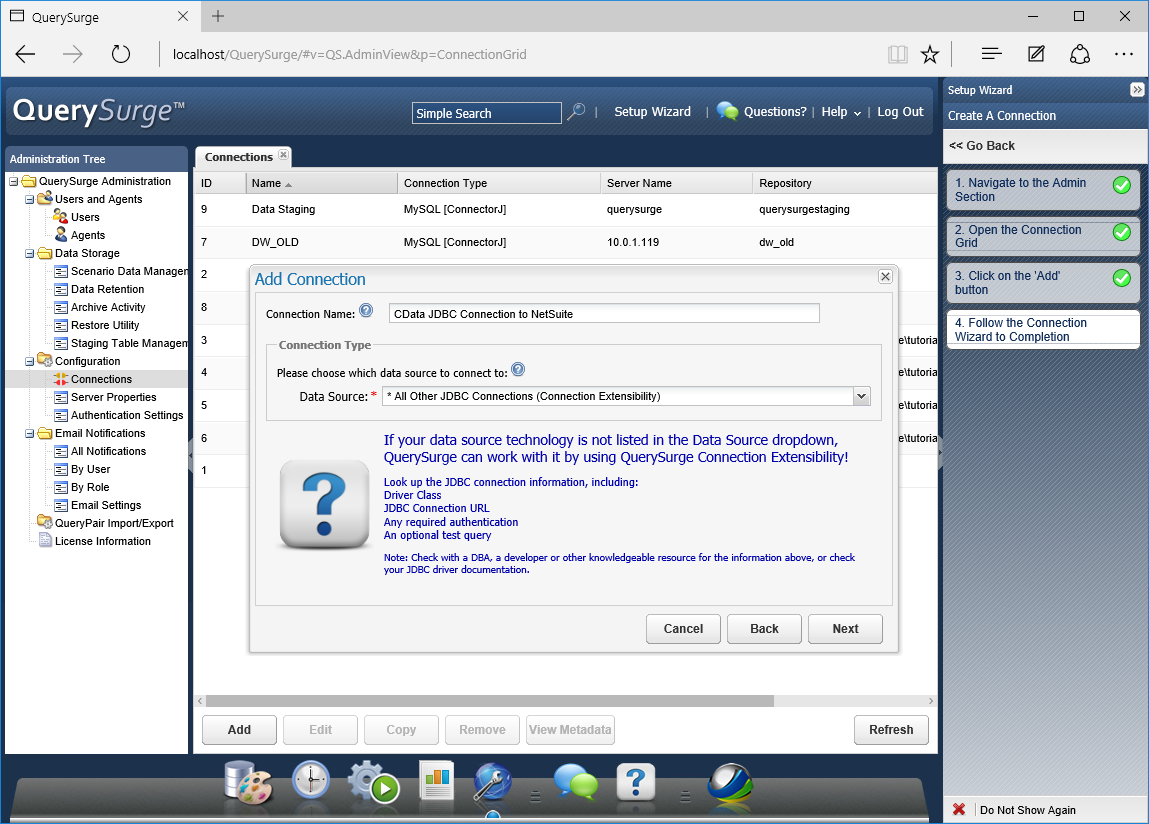
- Name the connection (e.g. CData JDBC Connection to Sentry).
- Set the Data Source to "All Other JDBC Connections (Connection Extensibility)" and click Next.
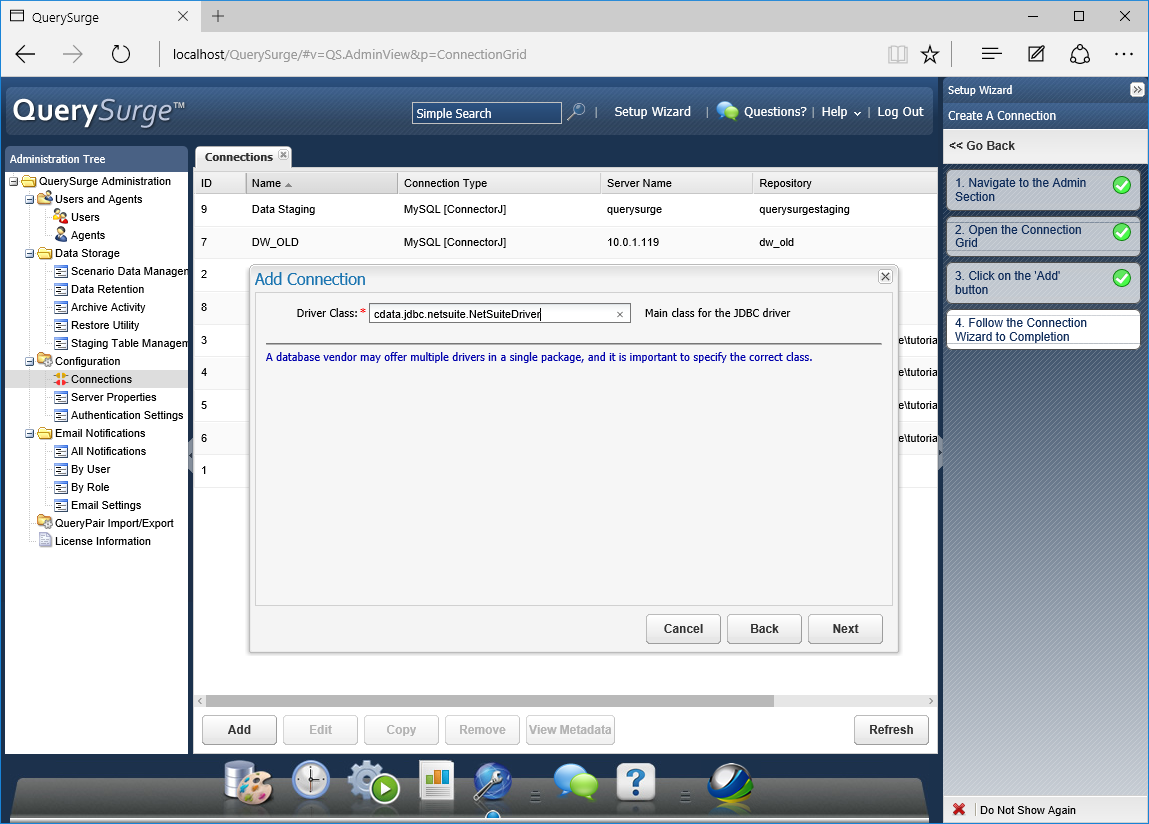
- Set the Driver Class to cdata.jdbc.api.APIDriver and click Next.
Set the Connection URL using the necessary connection properties to authenticate with Sentry. Your Connection URL will look something like the following:
jdbc:api:Profile=C:\profiles\Sentry.apip;AuthScheme=APIKey;ProfileSettings="APIKey=your_auth_token;OrganizationId=your_org_slug";
Built-in Connection String Designer
For assistance in constructing the JDBC URL, use the connection string designer built into the Sentry JDBC Driver. Either double-click the JAR file or execute the jar file from the command-line.
java -jar cdata.jdbc.api.jar
Fill in the connection properties and copy the connection string to the clipboard.
Using API Key Authentication
Sentry uses token-based authentication. To obtain an Auth Token:
- Log in to your Sentry account at https://sentry.io
- Navigate to Settings > Auth Tokens
- Click "Create New Token"
- Select the required scopes and click "Create Token"
- Copy the generated token (it will only be shown once)
After obtaining your Auth Token, set the following connection properties:
- AuthScheme: Set this to APIKey.
- APIKey: Set this to your Sentry Auth Token.
- OrganizationId: Set this to your Sentry organization slug or ID.
Example Connection String
Profile=C:\profiles\Sentry.apip;AuthScheme=APIKey;ProfileSettings="APIKey=your_auth_token;OrganizationId=your_org_slug";
Connecting to Sentry
Once the authentication is configured, you can connect to Sentry and query data from any of the available tables such as Organizations, Projects, Issues, and Events.

- Set the Test Query to enable the Test Connection button for the Connection (e.g. SELECT * FROM UserOrganizations LIMIT 1) and click Next.
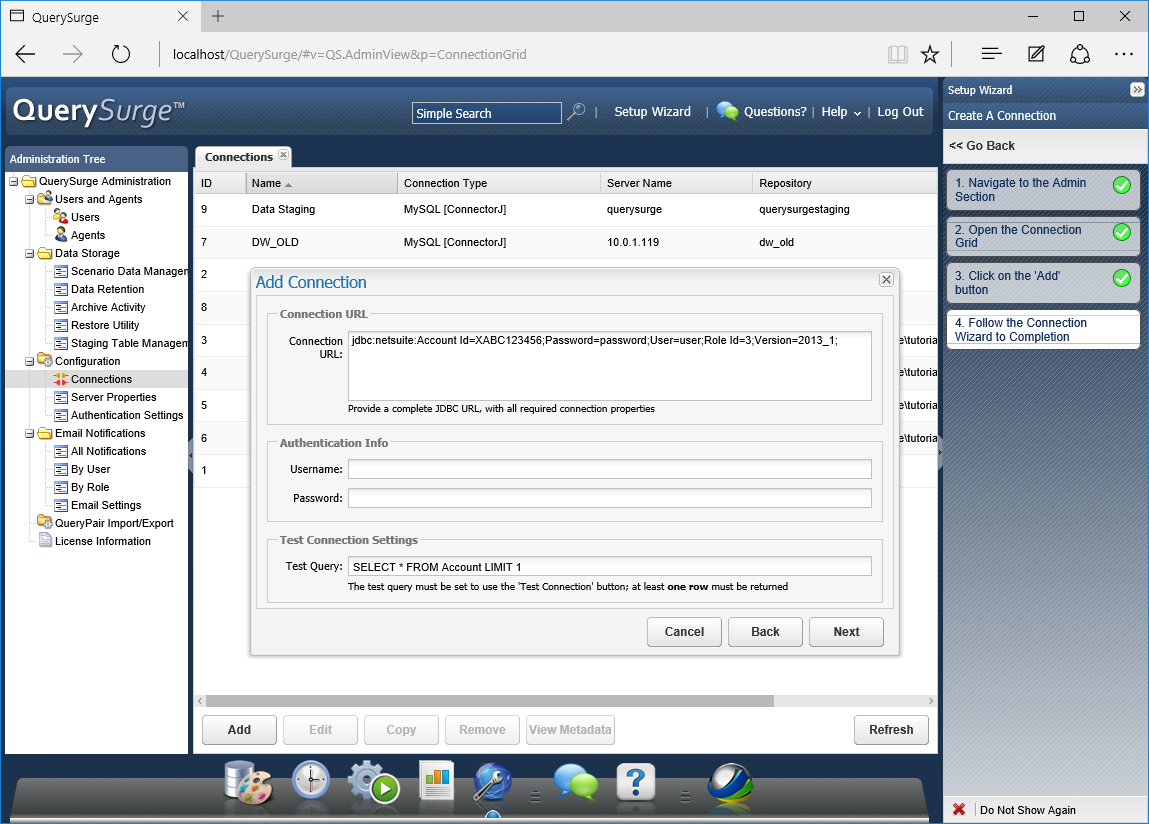
- Click Test Connection to ensure the connection is configured properly and click Save to add the connection.
Once the connection is added, you can write SQL queries against your Sentry data in QuerySurge.
Compare Sentry Data Queries with a QueryPair
With the connection configured, you can follow the steps below to compare querying Sentry data with a QueryPair.
- Select "Design Library" from the Design Menu
- Click QueryPairs under QuerySurge Design
- Click "Create New QueryPair"
- Name the QueryPair and click Save
- In either the Source or Target panes, select the connection created above (select the same connection to query Sentry twice or another connection to perform a comparison)
- Write queries in the Editor for each pane, e.g. SELECT * FROM UserOrganizations
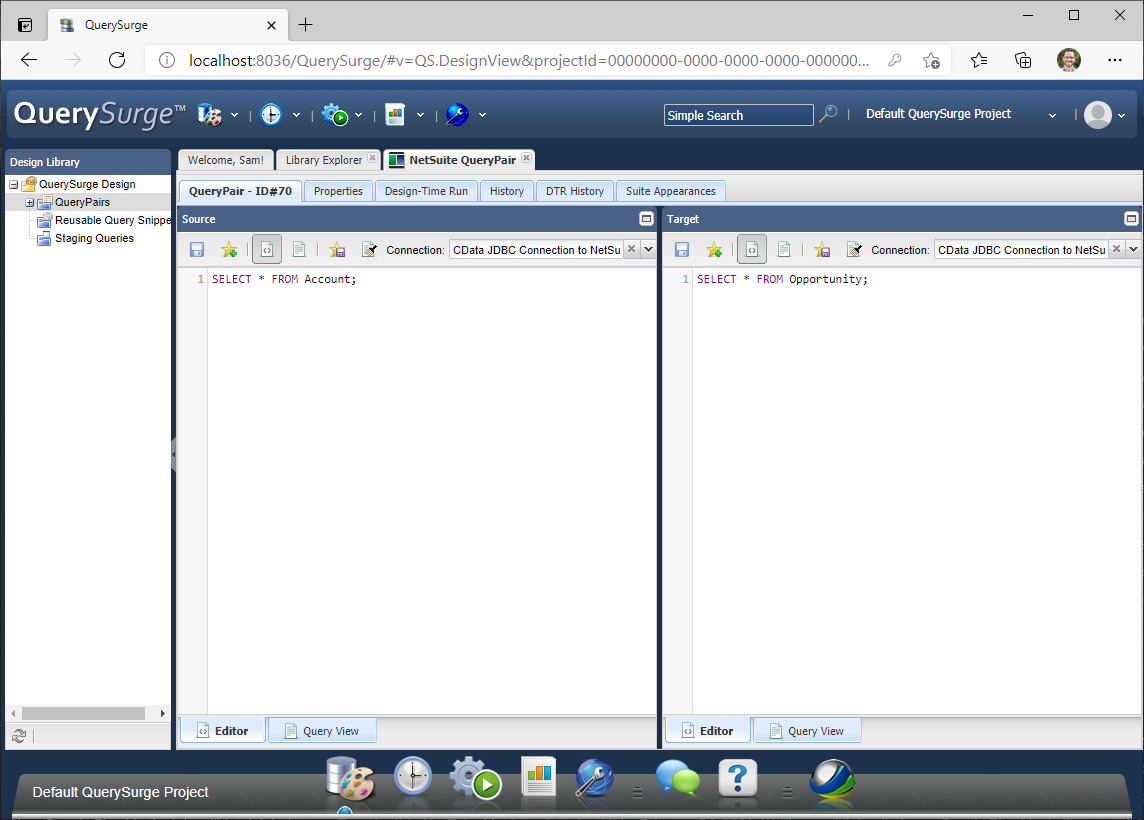
- Click the "Design-Time Run" tab to execute the queries
- When the query execution is finished, click "View Query Results" to see the Sentry data returned by the query

Download a free, 30-day trial of the CData API Driver for JDBC and start working with your live Sentry data in QuerySurge. Reach out to our Support Team if you have any questions.