






Visualize ServiceDesk Plus Data from Tableau

With CData Drivers for ServiceDesk Plus, you can use data access standards to unlock connectivity to business intelligence tools like Tableau. The CData API Driver for JDBC allows you to connect from Tableau on Windows and macOS. This article covers how to discover schemas and query ServiceDesk Plus data data in real-time.
Connect to ServiceDesk Plus in Tableau
Before starting Tableau, make sure you've placed the .jar file in the correct folder:
- Windows: C:\Program Files\Tableau\Drivers
- MacOS: ~/Library/Tableau/Drivers
Once your .jar file is in place, establishing a connection is straightforward.
- Start Tableau.
- Under To a Server, select More.
- Select Other Databases (JDBC)
- Enter the JDBC connection string in the URL field.
- Register your application in the Zoho Developer Console at https://api-console.zoho.com
- Configure your redirect URI to match your application setup
- Note your Client ID and Client Secret from the application settings
- AuthScheme: Set this to OAuth.
- OAuthClientId: Set this to your Zoho application Client ID.
- OAuthClientSecret: Set this to your Zoho application Client Secret.
- Scope: Set this to the required ServiceDeskPlus permissions (default includes read access to requests, problems, assets, and projects).
- Domain: Set this to your ServiceDeskPlus domain
- Portal: Set this to your ServiceDeskPlus portal
- Select Sign in.
Using OAuth Authentication
ServiceDeskPlus uses Zoho OAuth 2.0 for secure authentication. To set up OAuth access:
After setting the following connection properties, you are ready to connect:
Example Connection String
Profile=C:\profiles\ServiceDeskPlus.apip;ProfileSettings="Portal=itdesk;Domain=.in;Scope=SDPOnDemand.requests.READ SDPOnDemand.problems.READ SDPOnDemand.assets.READ SDPOnDemand.projects.READ";AuthScheme=OAuth;OAuthClientId=your_client_id;OAuthClientSecret=your_client_secret;
Built-in Connection String Designer
For assistance in constructing the JDBC URL, use the connection string designer built into the ServiceDesk Plus JDBC Driver. Either double-click the .jar file or execute the .jar file from the command-line.
From Windows:
java -jar 'C:\Program Files\CData[product_name]\lib\cdata.jdbc.api.jar'
From MacOS:
java -jar cdata.jdbc.api.jar
Fill in the connection properties and copy the connection string to the clipboard.

When you configure the JDBC URL, you may also want to set the Max Rows connection property. This will limit the number of rows returned, which is especially helpful for improving performance when designing reports and visualizations.
The following is a sample URL created in the designer:
jdbc:api:Profile=C:\profiles\ServiceDeskPlus.apip;ProfileSettings="Portal=itdesk;Domain=.in;Scope=SDPOnDemand.requests.READ SDPOnDemand.problems.READ SDPOnDemand.assets.READ SDPOnDemand.projects.READ";AuthScheme=OAuth;OAuthClientId=your_client_id;OAuthClientSecret=your_client_secret;
Discover Schemas and Query Data
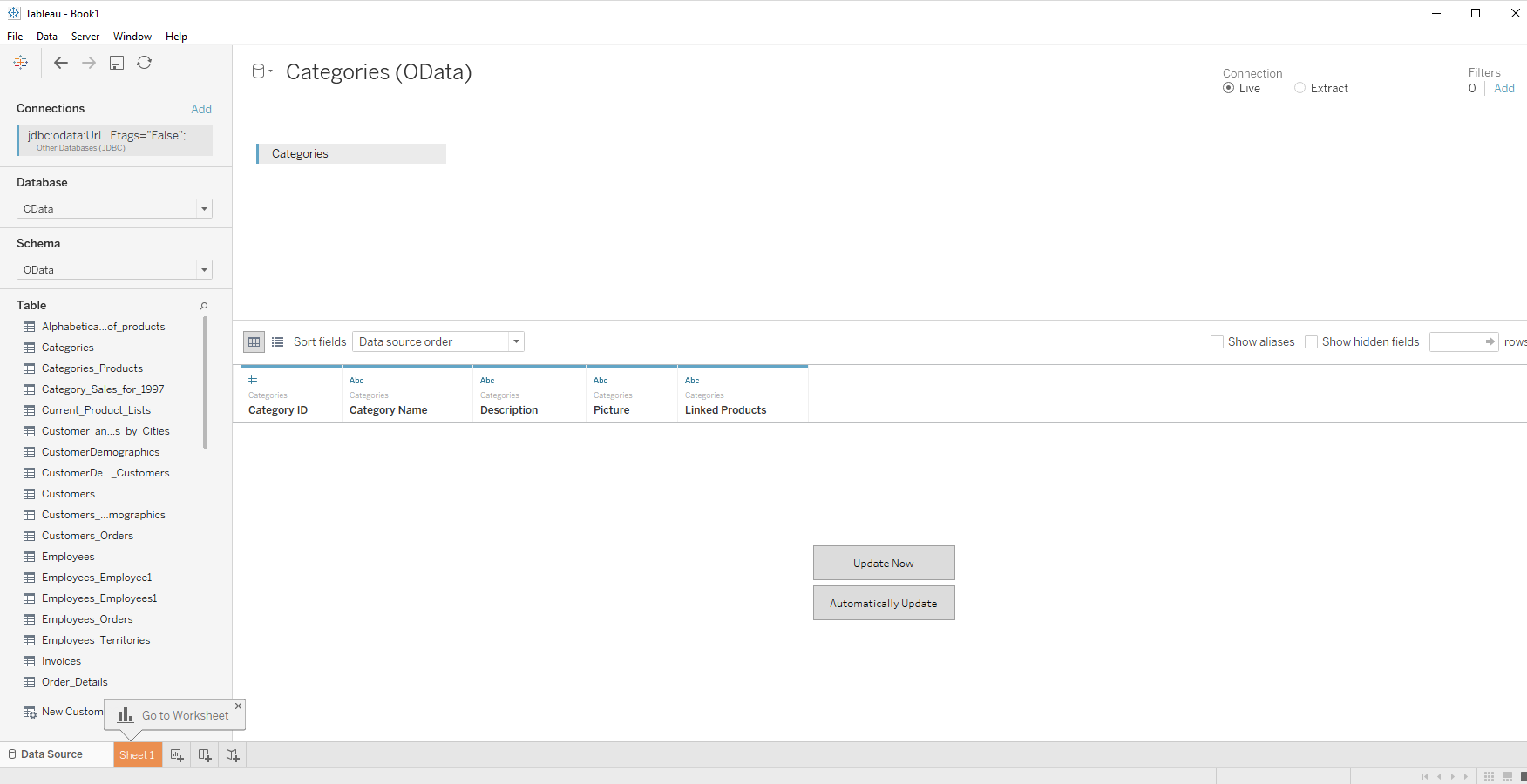
- Select CData from the Database pull-down menu.
- Select CData from the Schema pull-down menu.
- Drag the table onto the join area. You can include multiple tables.
- Select Update Now or Automatically Update. Update Now lets you preview the first 10,000 rows of the data source (or enter the number of rows you want to see in the Rows text box). Automatically Update automatically reflects the changes in the preview area.
- In the Connection menu, select the Live option, so that you skip loading a copy of the data into Tableau and instead work on real-time data.
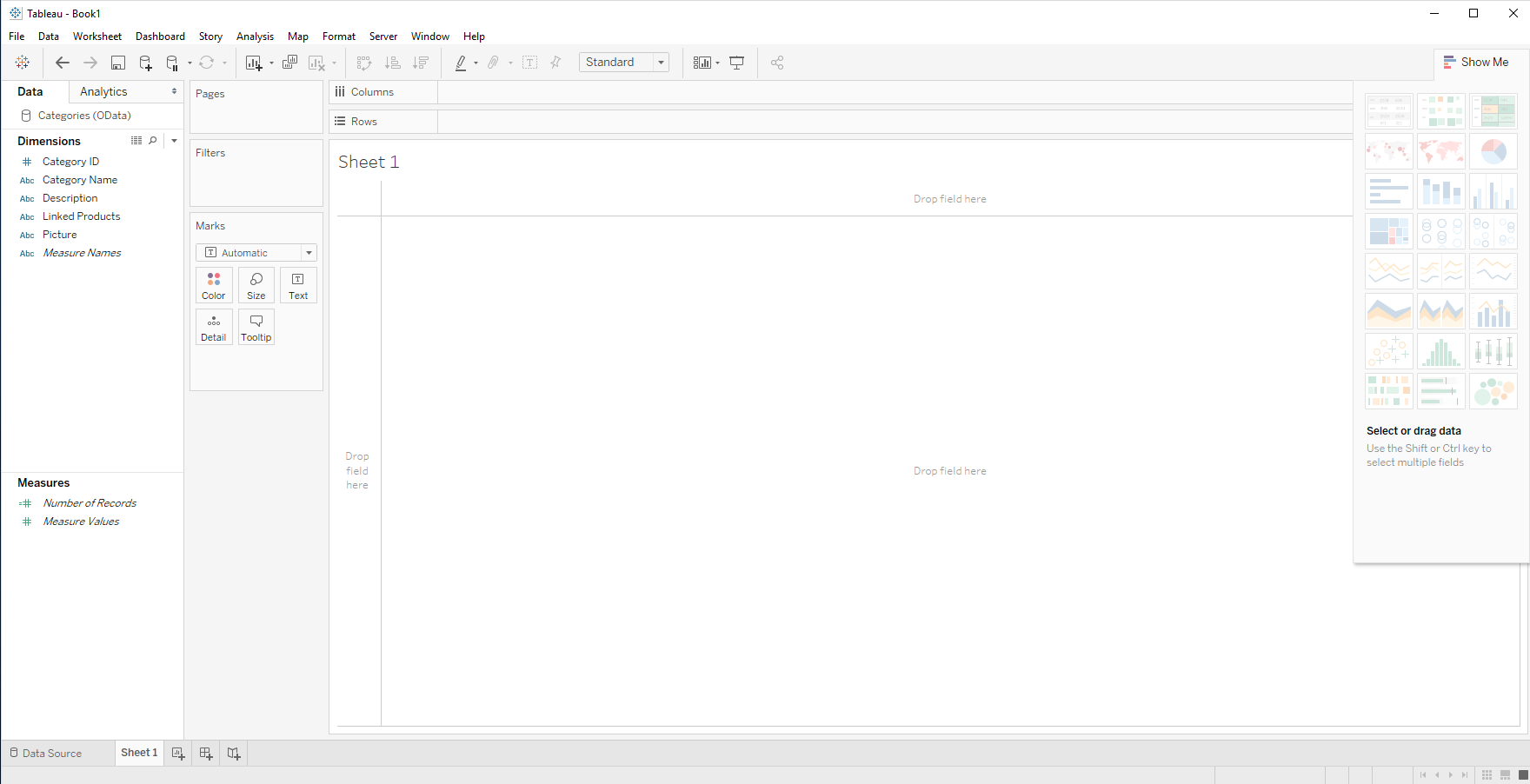
- Click the tab for your worksheet. Columns are listed as Dimensions and Measures, depending on the data type. The CData Driver discovers data types automatically, allowing you to leverage the powerful data processing and visualization features of Tableau.
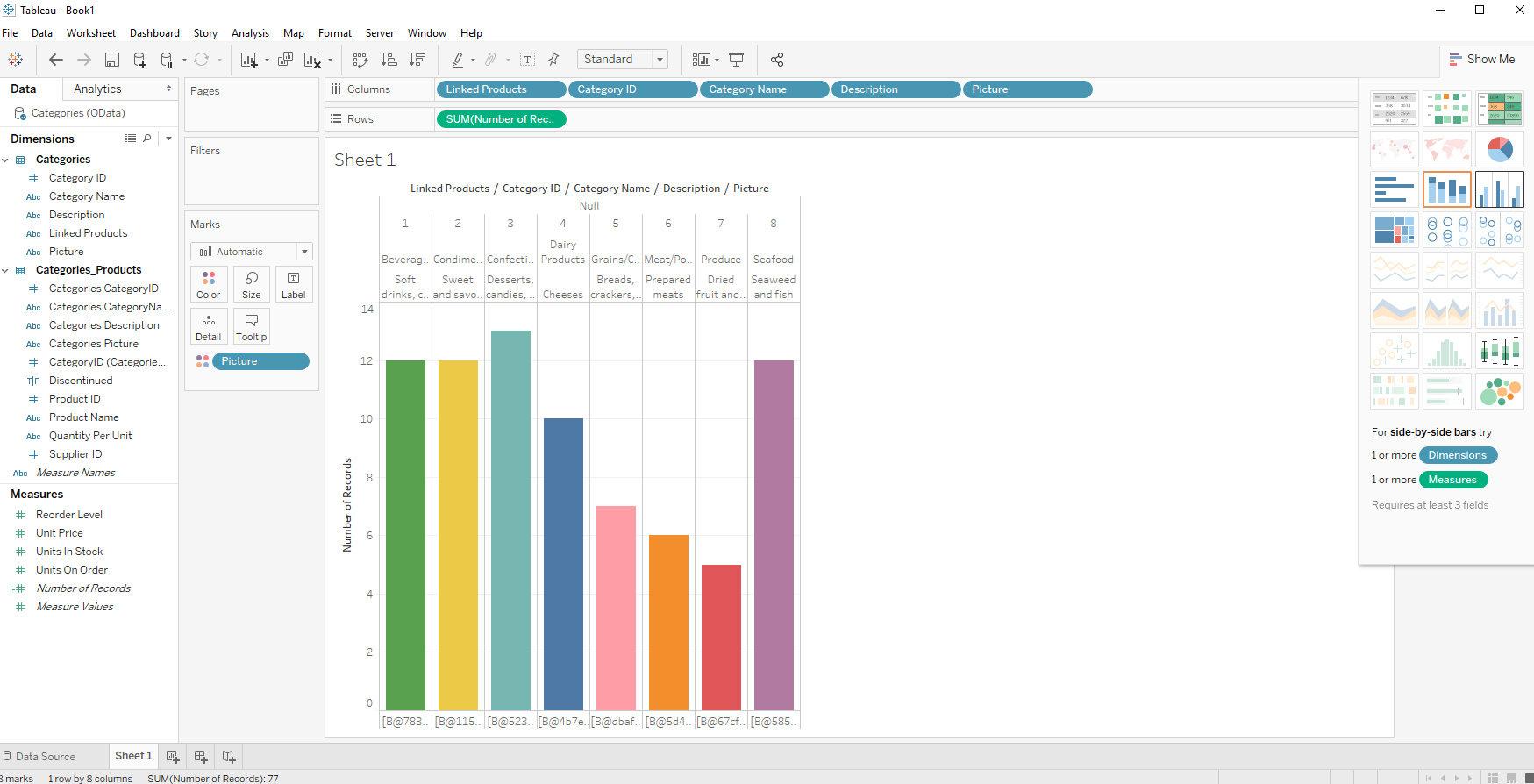
- Click and drag a field from the Dimensions or Measures area to Rows or Columns. Tableau creates column or row headers.
- Select one of the chart types from the Show Me tab. Tableau displays the chart type that you selected.
Using the CData API Driver for JDBC with Tableau, you can easily create robust visualizations and reports on ServiceDesk Plus data. Download a free, 30-day trial and get started today.