






How to connect and process Short.io data from Azure Databricks

Databricks is a cloud-based service that provides data processing capabilities through Apache Spark. When paired with the CData JDBC Driver, customers can use Databricks to perform data engineering and data science on live Short.io data. This article explains how to host the CData JDBC Driver in Azure, as well as connect to and process live Short.io data in Databricks.
With built-in optimized data processing, the CData JDBC driver offers unmatched performance for interacting with live Short.io data. When you issue complex SQL queries to Short.io, the driver pushes supported SQL operations, like filters and aggregations, directly to Short.io and utilizes the embedded SQL engine to process unsupported operations client-side (often SQL functions and JOIN operations). Its built-in dynamic metadata querying allows you to work with and analyze Short.io data using native data types.
Install the CData JDBC Driver in Azure
To work with live Short.io data in Databricks, install the driver through Azure Data Lake Storage (ADLS). (Please note that the method of connecting through DBFS, which previous versions of this article described, has been deprecated, but has not published an end-of-life.)
- Upload the JDBC JAR file to a blob container of your choice (i.e. "jdbcjars" container of the "databrickslibraries" storage account).
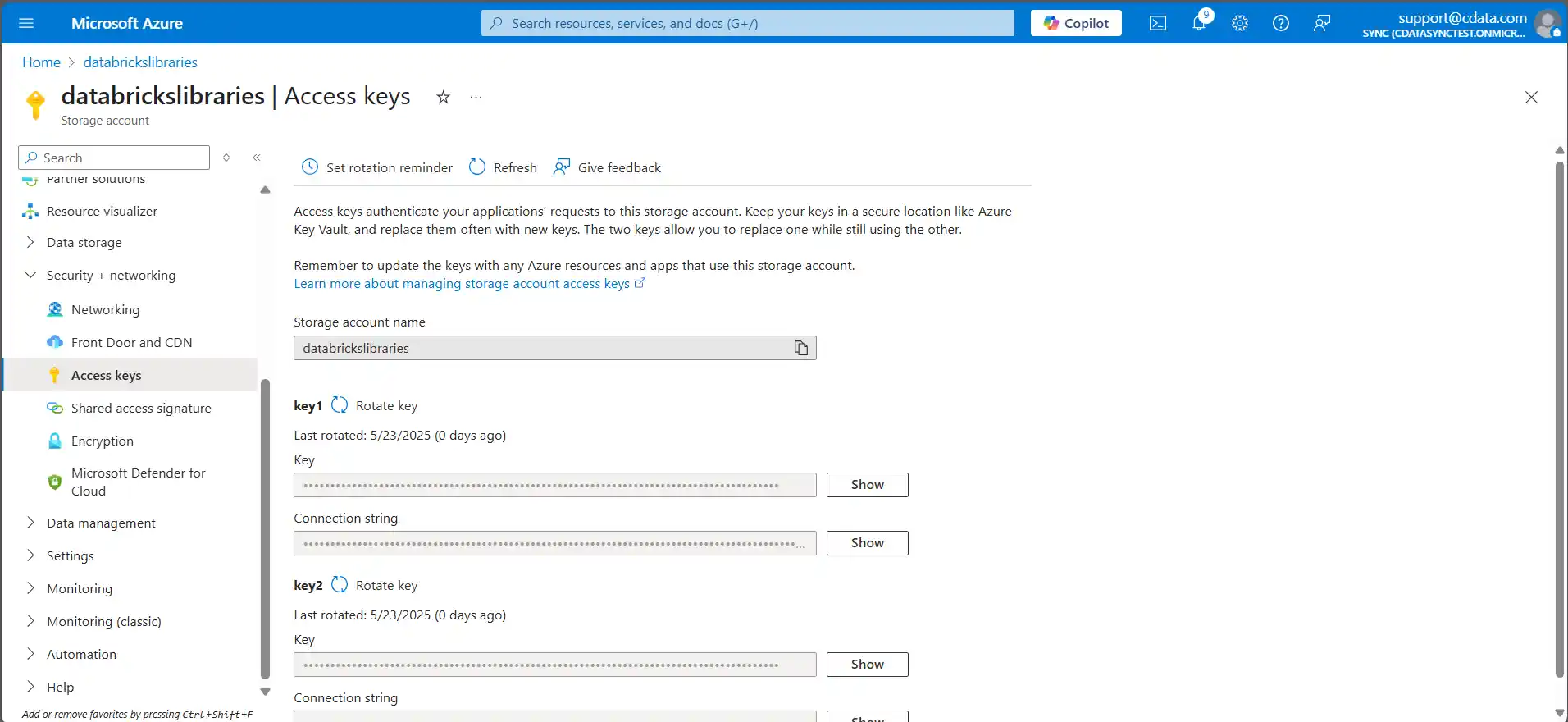
- Fetch the Account Key from the storage account by expanding "Security + networking" and clicking on "Access Keys". Show and copy whichever of the two keys you wish to use.
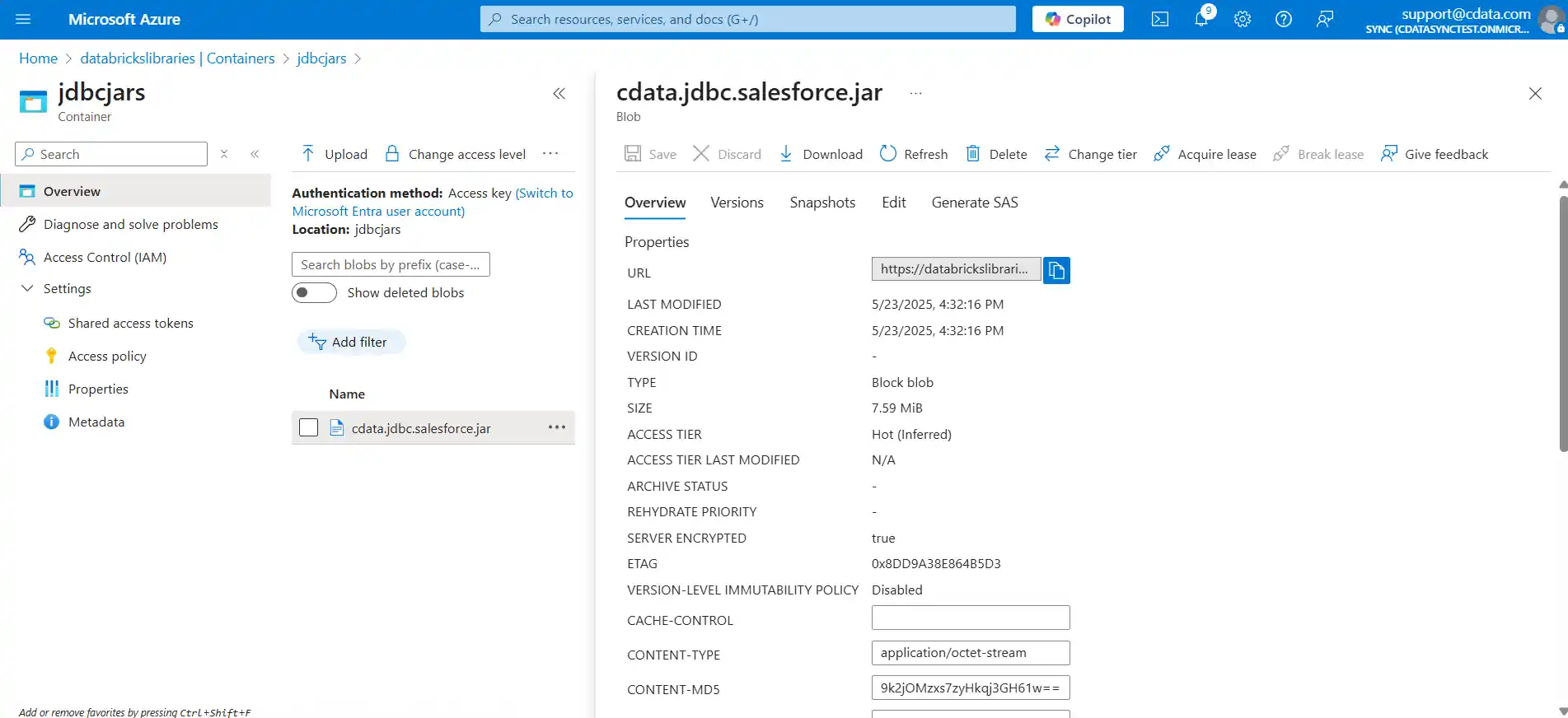
- Get the JDBC JAR file's URL by navigating to Containers, opening the specific container storing the JAR, and selecting the entry for the JDBC JAR file. This should open the file's details, where there should be a convenient button to copy the URL button to clipboard. This value will look similar to the below, though the "blob" component may vary depending on storage account type:
https://databrickslibraries.blob.core.windows.net/jdbcjars/cdata.jdbc.salesforce.jar
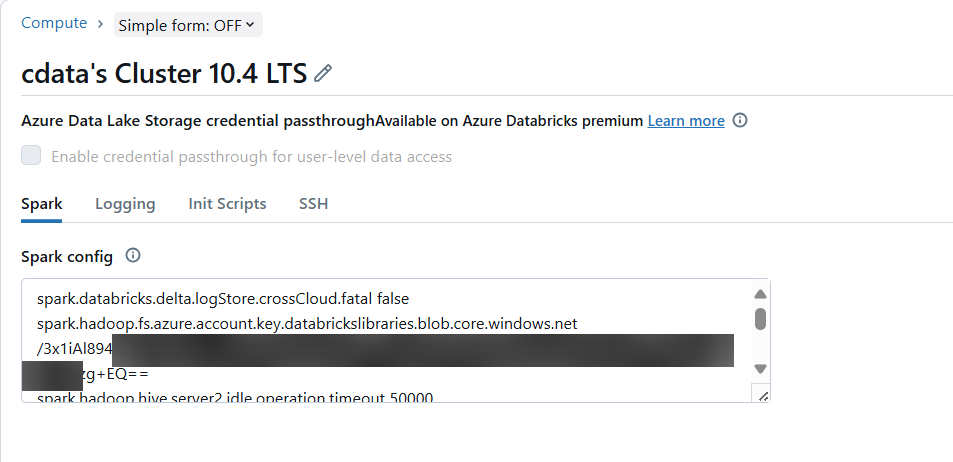
- In the Configuration tab of your Databricks cluster, click on the Edit button and expand "Advanced options". From there, add the following Spark option (derived from the JAR URL's domain name) with your copied Account key as its value and click Confirm:
spark.hadoop.fs.azure.account.key.databrickslibraries.blob.core.windows.net
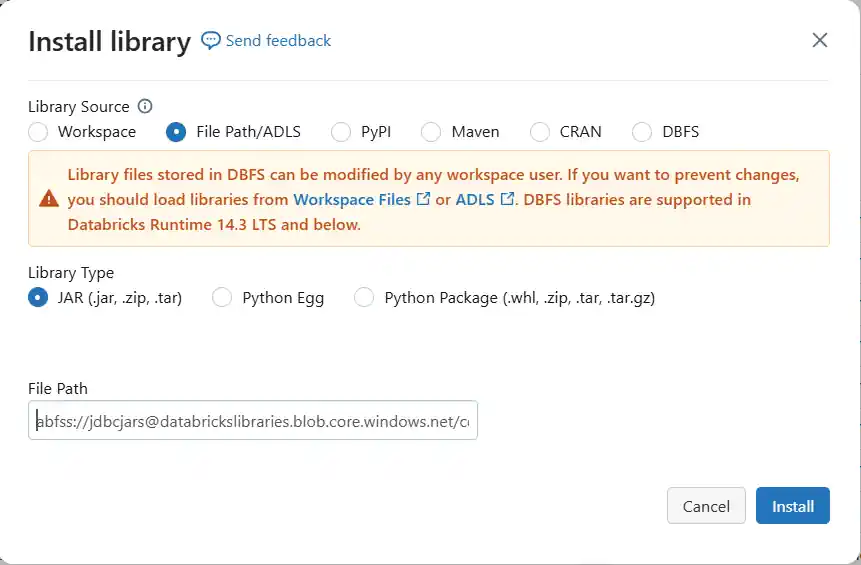
- In the Libraries tab of your Databricks cluster, click on "Install new", and select the ADLS option. Specify the ABFSS URL for the driver JAR (also derived from the JAR URL's domain name), and click Install. The ABFSS URL should resemble the below:
abfss://[email protected]/cdata.jdbc.salesforce.jar
Connect to Short.io from Databricks
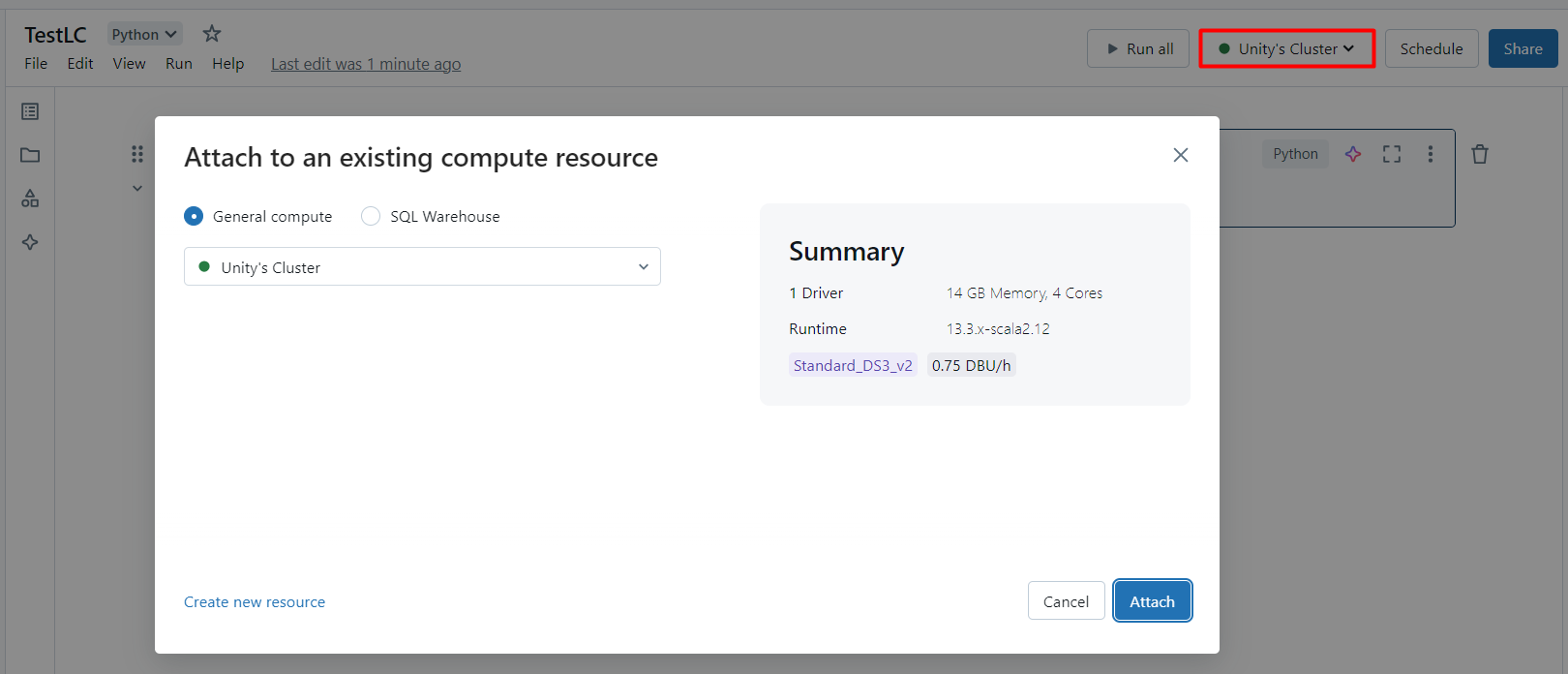
With the JAR file installed, we are ready to work with live Short.io data in Databricks. Start by creating a new notebook in your workspace. Name the workbook, make sure Python is selected as the language (which should be by default), click on Connect and under General Compute select the cluster where you installed the JDBC driver (should be selected by default).
Configure the Connection to Short.io
Connect to Short.io by referencing the class for the JDBC Driver and constructing a connection string to use in the JDBC URL. Additionally, you will need to set the RTK property in the JDBC URL (unless you are using a Beta driver). You can view the licensing file included in the installation for information on how to set this property.
driver = "cdata.jdbc.api.APIDriver"
url = "jdbc:api:RTK=5246...;Profile=C:\profiles\ShortIo.apip;AuthScheme=APIKey;ProfileSettings='APIKey=your_api_key';"
Built-in Connection String Designer
For assistance in constructing the JDBC URL, use the connection string designer built into the Short.io JDBC Driver. Either double-click the JAR file or execute the JAR file from the command-line.
java -jar cdata.jdbc.api.jar
Fill in the connection properties and copy the connection string to the clipboard.
Using API Key Authentication
Short.io uses API Key authentication. To obtain your API key:
- Log in to your Short.io account
- Navigate to Settings > Integrations & API > API
- Click Create API Key and copy your API key
After obtaining the API key, you are ready to connect:
- AuthScheme: Set this to APIKey.
- APIKey: Set this to your Short.io API key obtained from Settings > Integrations & API > API.
Example connection string:
Profile=C:\profiles\ShortIo.apip;AuthScheme=APIKey;ProfileSettings='APIKey=your_api_key';
Available Tables
The Short.io profile provides access to the following tables:
- Domains - Short.io domains associated with the authenticated account
- Links - Short links for a domain
- LinkExpand - Expand a short link by domain and path
- LinksByOriginalUrl - Retrieve multiple short links matching a given original destination URL
- Folders - Link folders within a specific domain
- LinkPermissions - Permission records for a specific link within a domain
- CountryTargeting - Country-based redirect targeting rules for a specific short link
- RegionTargeting - Region-based redirect targeting rules for a specific short link
- Regions - List of available regions/states for a given country code
- DomainStatistics - Aggregated click and traffic statistics for a Short.io domain
- LinkStatistics - Aggregated click and traffic statistics for a specific Short.io link

Load Short.io Data
Once the connection is configured, you can load Short.io data as a dataframe using the CData JDBC Driver and the connection information.
remote_table = spark.read.format ( "jdbc" ) \
	.option ( "driver" , driver) \
	.option ( "url" , url) \
	.option ( "dbtable" , "Domains") \
	.load ()
Display Short.io Data
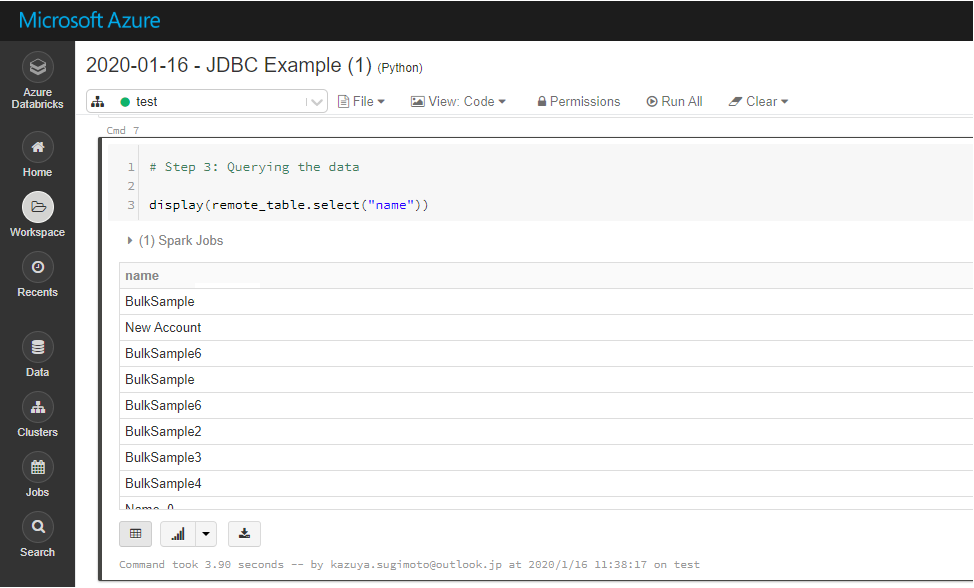
Check the loaded Short.io data by calling the display function.
display (remote_table.select (""))
Analyze Short.io Data in Azure Databricks
If you want to process data with Databricks SparkSQL, register the loaded data as a Temp View.
remote_table.createOrReplaceTempView ( "SAMPLE_VIEW" )
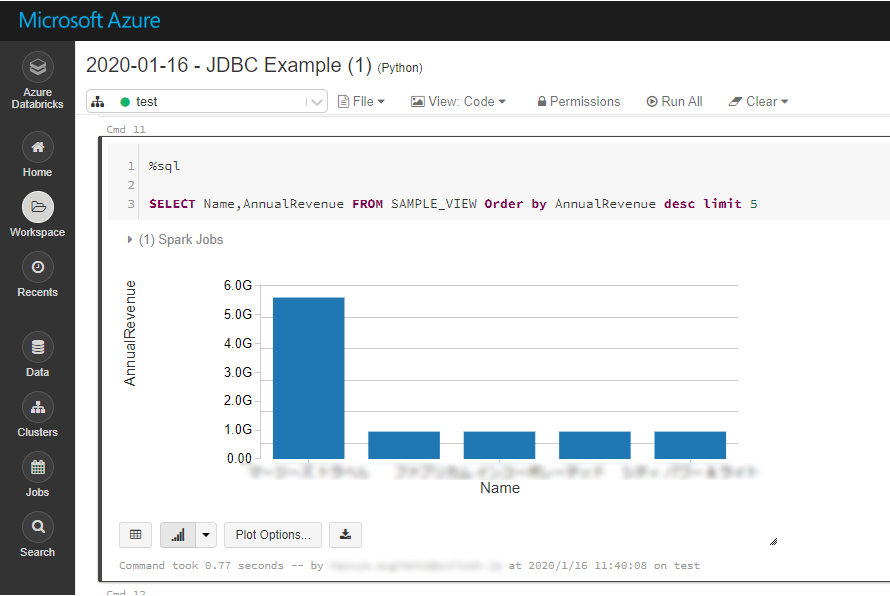
The SparkSQL below retrieves the Short.io data for analysis.
result = spark.sql("SELECT , FROM SAMPLE_VIEW WHERE = ''")
The data from Short.io is only available in the target notebook. If you want to use it with other users, save it as a table.
remote_table.write.format ( "parquet" ) .saveAsTable ( "SAMPLE_TABLE" )
Download a free, 30-day trial of the CData API Driver for JDBC and start working with your live Short.io data in Azure Databricks. Reach out to our Support Team if you have any questions.