




Integrating Boomi Agentstudio with SingleStore Data via CData Connect AI

Boomi Agentstudio is an enterprise platform for designing, orchestrating, and governing AI agents that automate tasks, enhance integration workflows, and support intelligent decision making across business processes. When you connect it with CData Connect AI, Boomi Agentstudio can securely access, query, and act on live enterprise data such as SingleStore through a standardized MCP tool interface.
CData Connect AI is a managed Model Context Protocol (MCP) platform that provides governed, real-time access to enterprise data systems. It exposes structured metadata, including catalogs, schemas, tables, and SQL querying across more than 350 data sources. With Connect AI, Boomi Agentstudio can incorporate live operational data directly into agent logic and workflow automation, eliminating the need for ETL pipelines, data replication, or custom integration code.
This article explains how to connect Boomi Agentstudio to a CData Connect AI MCP endpoint, configure access to your SingleStore or any other supported data source, and begin issuing real-time queries from within your agent-driven workflows.
Prerequisites
- An account in SingleStore.
- An account in CData Connect AI
- An account of Boomi Agentstudio.
Step 1: Configure SingleStore connectivity for Boomi Agentstudio
For Boomi Agentstudio to access SingleStore, create a connection to SingleStore in CData Connect AI. This connection is then exposed to Boomi using the remote MCP server.
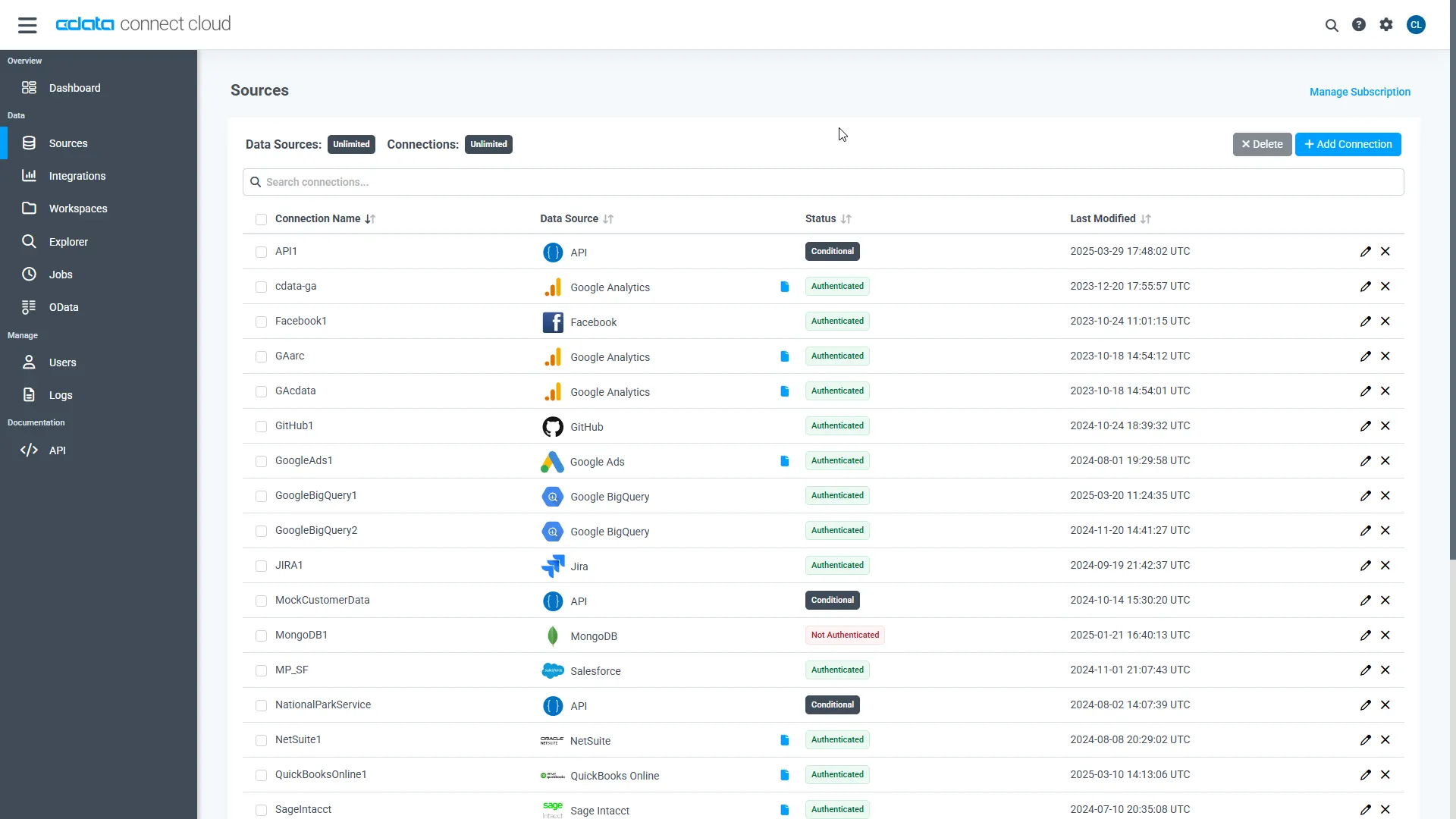
- Log in to Connect AI click Sources, and then click + Add Connection
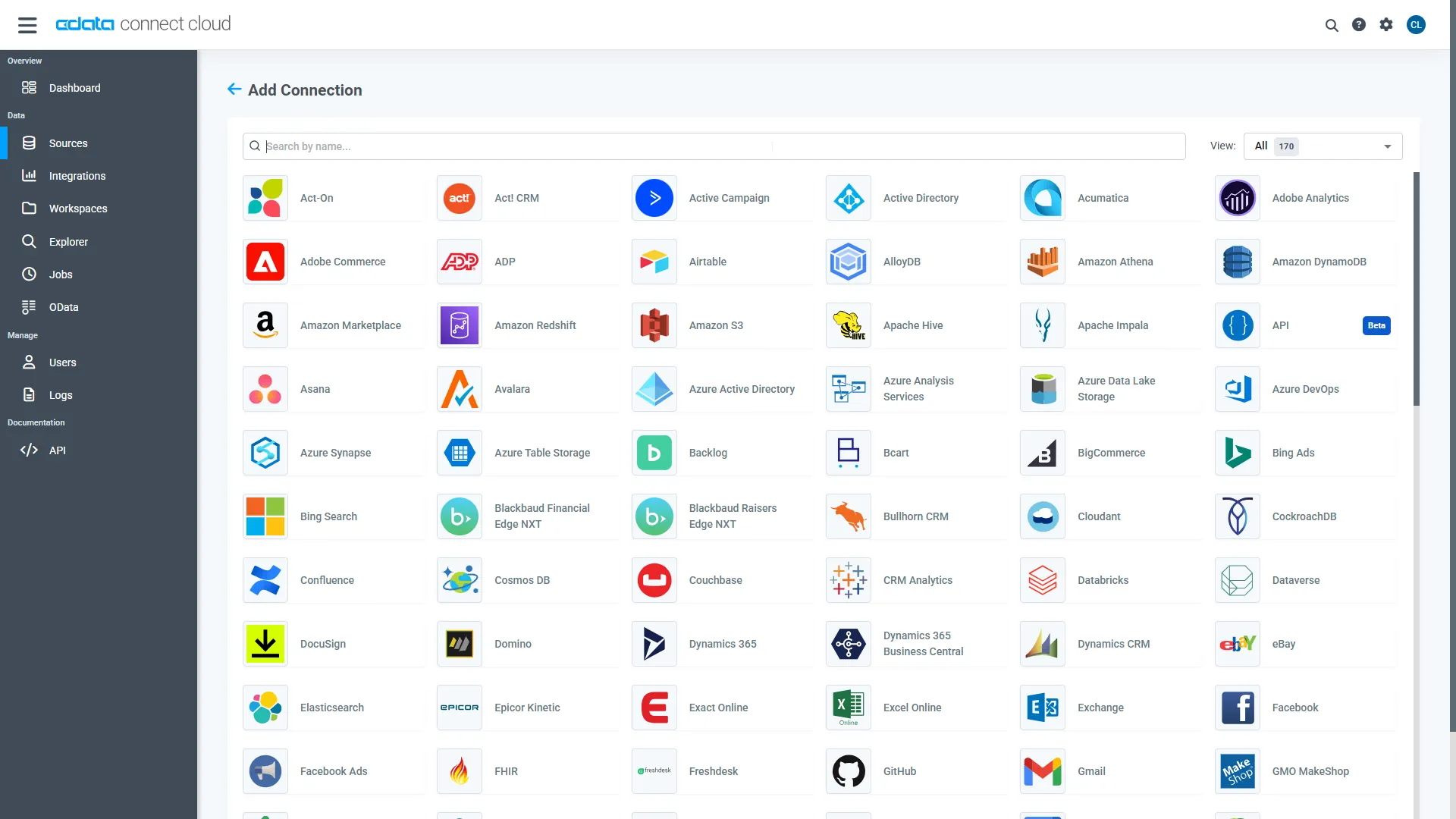
- From the available data sources, choose SingleStore
-
Enter the necessary authentication properties to connect to SingleStore
The following connection properties are required in order to connect to data.
- Server: The host name or IP of the server hosting the SingleStore database.
- Port: The port of the server hosting the SingleStore database.
- Database (Optional): The default database to connect to when connecting to the SingleStore Server. If this is not set, tables from all databases will be returned.
Connect Using Standard Authentication
To authenticate using standard authentication, set the following:
- User: The user which will be used to authenticate with the SingleStore server.
- Password: The password which will be used to authenticate with the SingleStore server.
Connect Using Integrated Security
As an alternative to providing the standard username and password, you can set IntegratedSecurity to True to authenticate trusted users to the server via Windows Authentication.
Connect Using SSL Authentication
You can leverage SSL authentication to connect to SingleStore data via a secure session. Configure the following connection properties to connect to data:
- SSLClientCert: Set this to the name of the certificate store for the client certificate. Used in the case of 2-way SSL, where truststore and keystore are kept on both the client and server machines.
- SSLClientCertPassword: If a client certificate store is password-protected, set this value to the store's password.
- SSLClientCertSubject: The subject of the TLS/SSL client certificate. Used to locate the certificate in the store.
- SSLClientCertType: The certificate type of the client store.
- SSLServerCert: The certificate to be accepted from the server.
Connect Using SSH Authentication
Using SSH, you can securely login to a remote machine. To access SingleStore data via SSH, configure the following connection properties:
- SSHClientCert: Set this to the name of the certificate store for the client certificate.
- SSHClientCertPassword: If a client certificate store is password-protected, set this value to the store's password.
- SSHClientCertSubject: The subject of the TLS/SSL client certificate. Used to locate the certificate in the store.
- SSHClientCertType: The certificate type of the client store.
- SSHPassword: The password that you use to authenticate with the SSH server.
- SSHPort: The port used for SSH operations.
- SSHServer: The SSH authentication server you are trying to authenticate against.
- SSHServerFingerPrint: The SSH Server fingerprint used for verification of the host you are connecting to.
- SSHUser: Set this to the username that you use to authenticate with the SSH server.
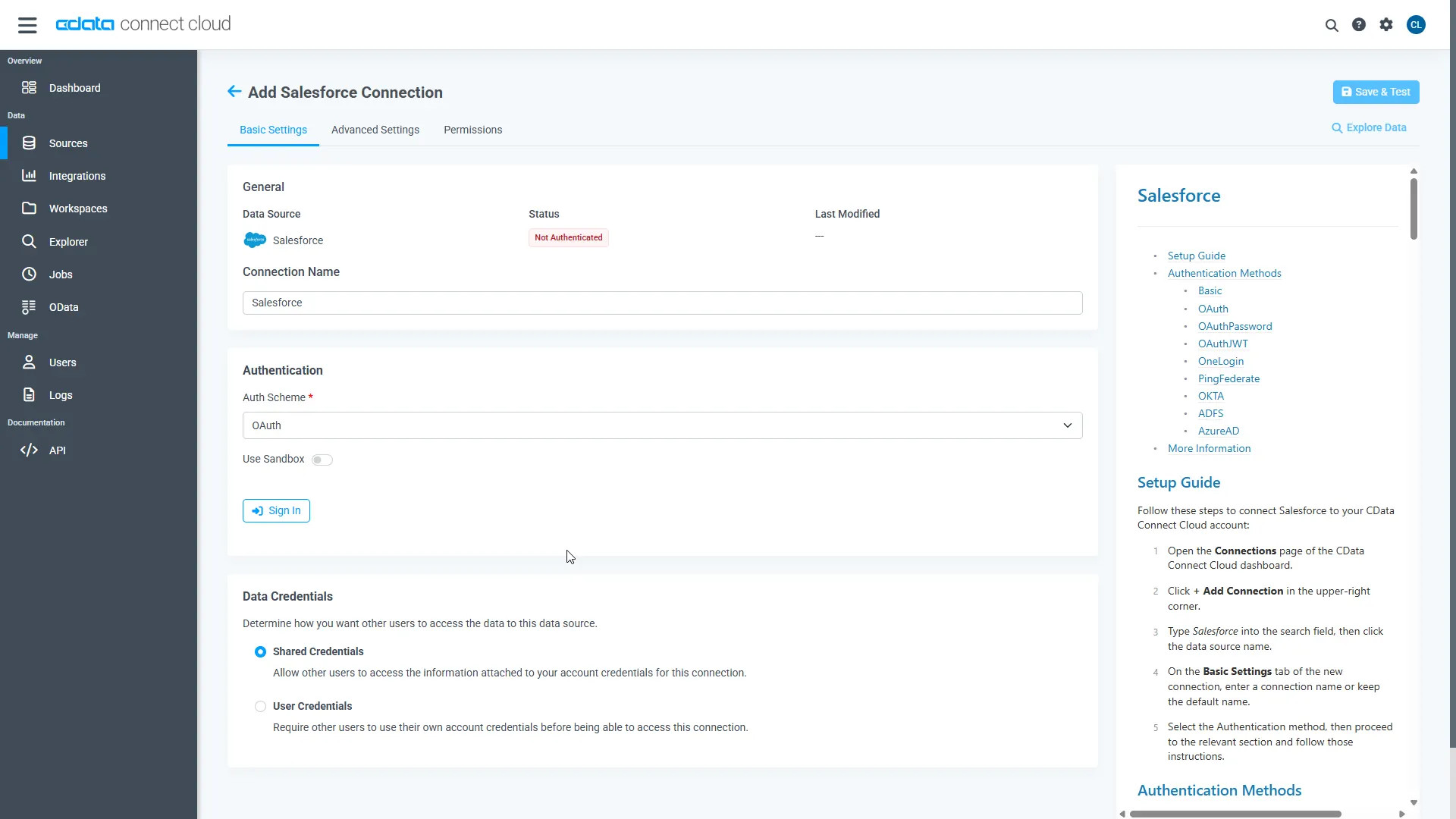
- Click Create & Test
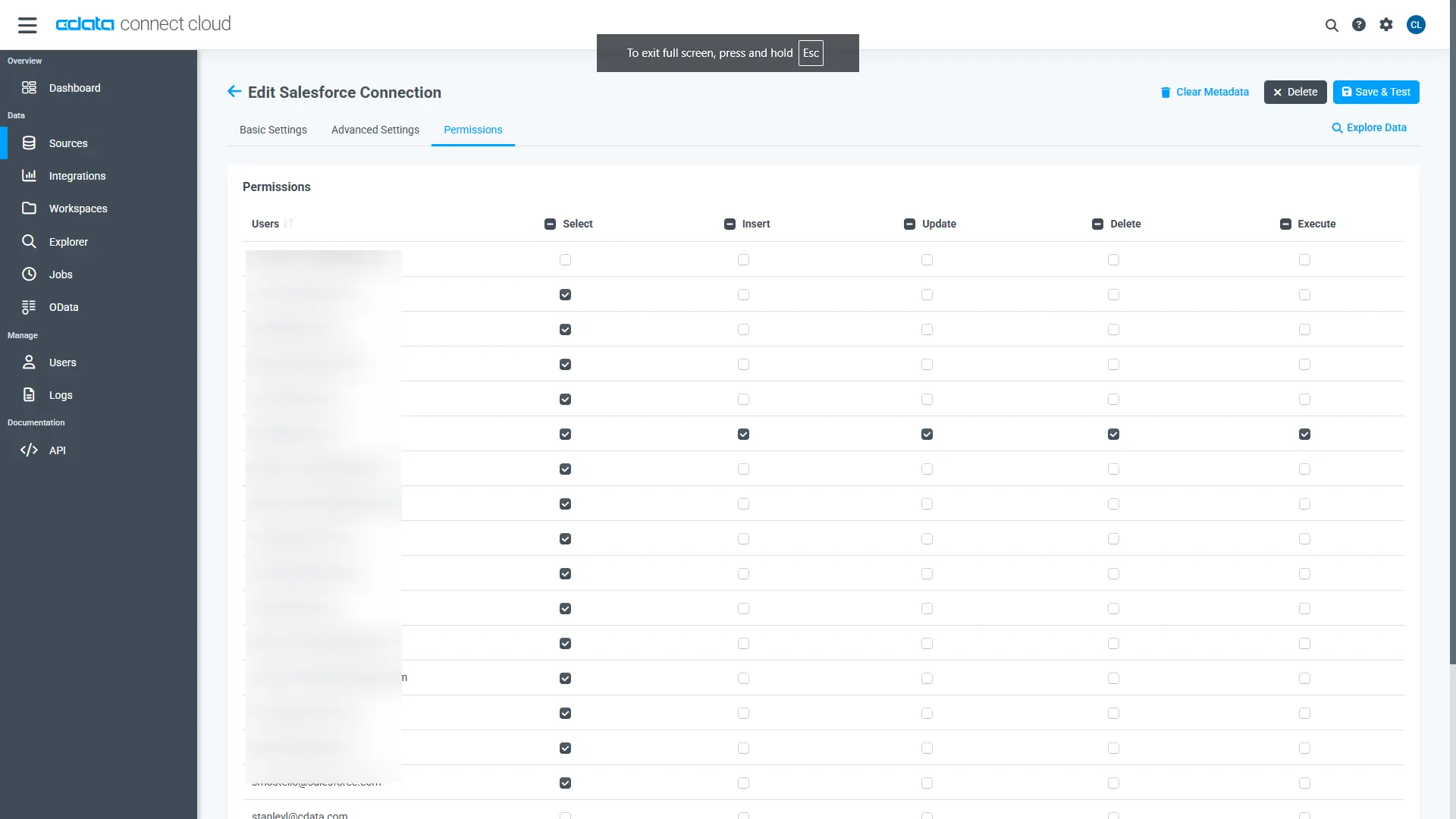
- Once authenticated, open the Permissions tab in the SingleStore connection and configure user-based permissions as required
Generate a Personal Access Token (PAT)
Boomi Agentstudio authenticates to Connect AI using an account email and a Personal Access Token (PAT). Creating separate PATs for each integration is recommended to maintain access control granularity.
- In Connect AI, select the Gear icon in the top-right to open Settings
- Under Access Tokens, select Create PAT
- Provide a descriptive name for the token and select Create
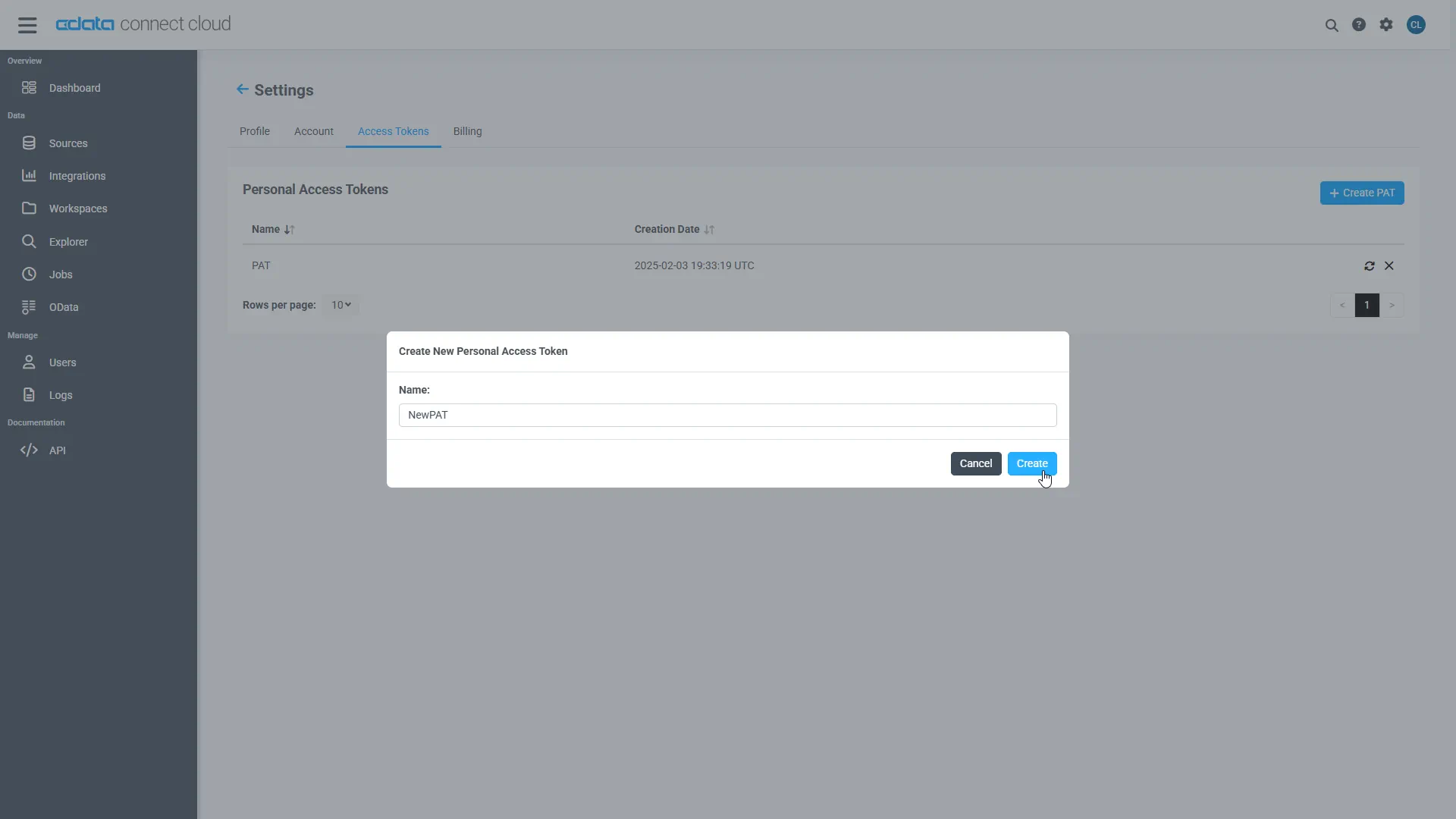
- Copy the token and store it securely. The PAT will only be visible during creation
With the SingleStore connection configured and a PAT generated, Boomi Agentstudio is ready to connect to SingleStore data via the CData Connect AI MCP server.
Step 2: Create a source using the CData Connect AI MCP endpoint
Start by creating a new MCP data source inside Boomi Agentstudio. This establishes a secure connection between Boomi and CData Connect AI, allowing agents to call MCP tools and work with live enterprise data.
To connect with Connect AI MCP as a source, follow the given process:
- Log in to Boomi.
- Open Services and select Agentstudio from the list.

- Go to the Sources tab and click Create a new source.

- In the Agent Designer window, open the Sources tab and choose Model Context Protocol (MCP) as the source type.

- On the Create MCP Source screen, enter the following Configuration details:
- Name: Provide a name for the source
- Details: Add a short description for the source
- Transport Type: Streamable HTTP
- URL: https://mcp.cloud.cdata.com/mcp
- Authentication: Basic Authentication
- Username: Enter your Connect AI account username
- Password: Enter your Connect AI PAT
- Click Test Connection.

- After you establish a successful connection, click Discover Tools. Boomi lists all MCP tools exposed by CData Connect AI, including queryData, getCatalogs, getSchemas, and getTables, along with the remaining tools, in the Tools tab.
- Select all tools in the Discover and Select Tools section and click Continue.

- In the Review section, verify the details and click Save.

Boomi adds the new source to the Sources tab.

Click the Tools tab to confirm that all tools from CData Connect AI appear in the list.

Step 3: Create a new agent
Create a new agent to interact with your SingleStore data. The agent acts as the interface between your prompts and the tools exposed by Connect AI, enabling it to process queries and return intelligent responses.
- Go to the Agents tab and click Create New Agent.

- In the Agent Designer window, select Blank Template under the Agents tab.

- In the Profile section, enter the following details:
- Basic Information: Specify the goal, agent name, and agent picture.
- Agent Mode: Select either Conversational or Structured mode based on how you want the agent to respond to prompts, and configure the mode accordingly.
- Click Save and Continue.

- In the Tasks section, define the actions your agent will perform:
- Click + Add New Task.

- In the Description tab, enter the task name and description.

- In the Instructions tab, click + Add New Instruction and describe how the agent should use the tool within this task.

- In the Tools tab, click + Add New Tool and select the tools exposed by Connect AI. Click Update Selected Tool, enable Requires Approval and Data Passthrough, save the task, and click Save and Continue.


Note: You can add up to 25 tools across all tasks.
- Click + Add New Task.
- In the Guardrails section, define the rules, restrictions, and filters to ensure your agent operates securely and ethically. Add a blocked message, denied topics, word filters, and custom regex patterns as required. Click Save and Continue.

- In the Review section, verify all details and click Deploy to deploy the agent.

After you deploy the agent, use it to generate accurate and contextual responses to your prompts in the chat interface.

Step 4: Prompt the SingleStore data using the agent
After you create and deploy your agent, interact with your SingleStore data using natural language prompts.
Follow these steps to prompt your SingleStore data:
- Go to the Chat tab and select your agent from the dropdown list.

- Enter a prompt (for example, "How many tables are available in SingleStore?").

- The agent processes your prompt and returns the results.

Get CData Connect AI
To get live data access to 300+ SaaS, Big Data, and NoSQL sources directly from your cloud applications, try CData Connect AI today!
