






Create Dynamic SparkPost Grids Using the Infragistics XamDataGrid

Using Infragistics WPF UI controls, you can build contemporary applications reminiscent of Microsoft Office for both desktop and touch-based devices. When coupled with the CData API Driver for ADO.NET, you gain the capability to construct interactive grids, charts, and various other visual elements while directly accessing real-time data from SparkPost data. This article will guide you through the process of creating a dynamic grid within Visual Studio using the Infragistics XamDataGrid control.
You will need to install the Infragistics WPF UI components to continue. Download a free trial here: https://www.infragistics.com/products/wpf.
Create a WPF Project
Open VisualStudio and create a new WPF project.
Add a TextBox for passing a SQL query to the CData ADO.NET Provider and a Button for executing the query.
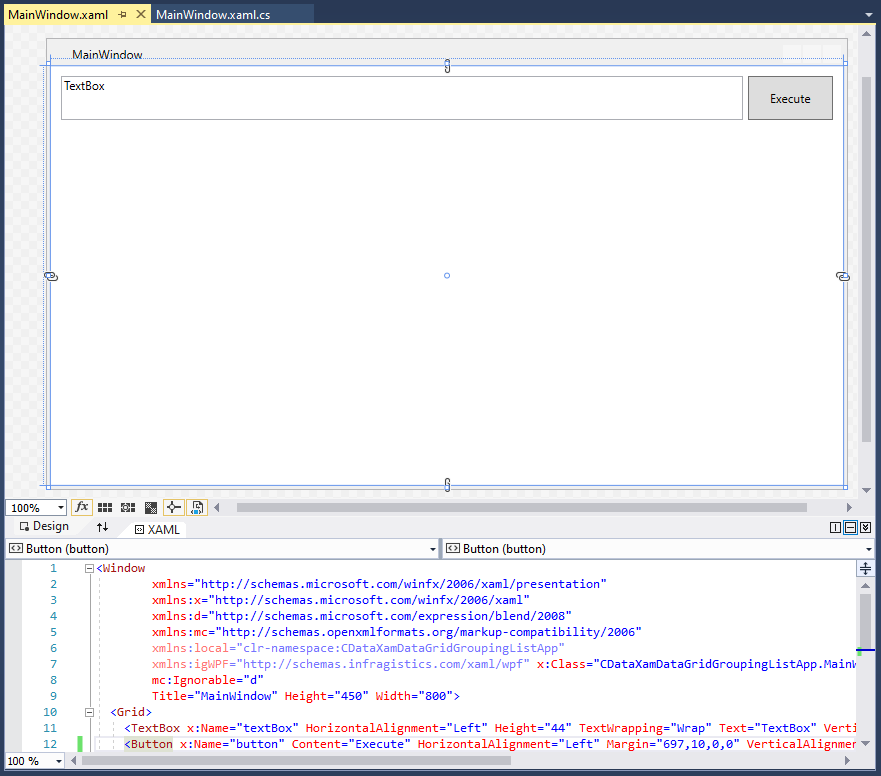
The XAML at this stage is as follows:
< Window
        xmlns="http://schemas.microsoft.com/winfx/2006/xaml/presentation"
        xmlns:x="http://schemas.microsoft.com/winfx/2006/xaml"
        xmlns:d="http://schemas.microsoft.com/expression/blend/2008"
        xmlns:mc="http://schemas.openxmlformats.org/markup-compatibility/2006"
        xmlns:local="clr-namespace:CDataXamDataGridGroupingListApp"
        xmlns:igWPF="http://schemas.infragistics.com/xaml/wpf" x:Class="CDataXamDataGridGroupingListApp.MainWindow"
        mc:Ignorable="d"
        Title="MainWindow" Height="450" Width="800">
  < Grid>
    < TextBox x:Name="textBox" HorizontalAlignment="Left" Height="44" TextWrapping="Wrap" Text="TextBox" VerticalAlignment="Top" Width="682" Margin="10,10,0,0"/>
    < Button x:Name="button" Content="Execute" HorizontalAlignment="Left" Margin="697,10,0,0" VerticalAlignment="Top" Width="85" Height="44"/>
  < /Grid>
< /Window>
Add and Configure a XamDataGrid
After adding the initial controls, add a XamDataGrid to the App. The component will appear in the Visual Studio toolbox.
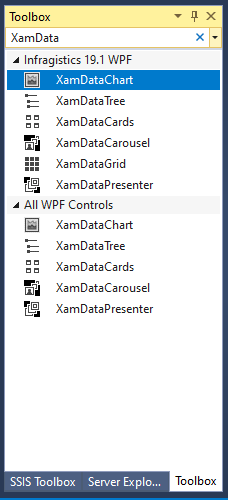
Arrange the component on the designer so that it is below the TextBox & Button and linked to the boundaries of the app.
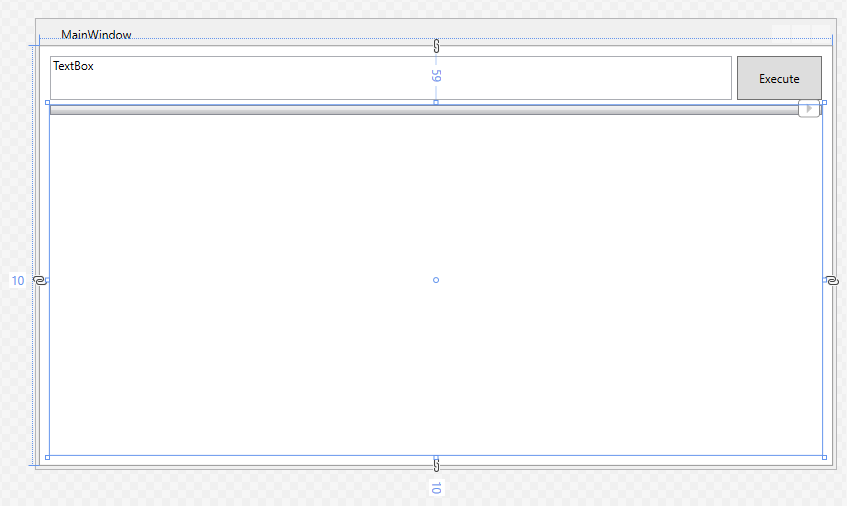
Once the XamDataGrid is placed, edit the XAML to set the XamDataGrid DataSource attribute to "{Binding}" and set the FieldSettings AllowRecordFiltering and AllowSummaries attributes to "true." Next, add an empty method as the Click event handler for the Button component. The XAML at this stage is as follows:
< Window
        xmlns="http://schemas.microsoft.com/winfx/2006/xaml/presentation"
        xmlns:x="http://schemas.microsoft.com/winfx/2006/xaml"
        xmlns:d="http://schemas.microsoft.com/expression/blend/2008"
        xmlns:mc="http://schemas.openxmlformats.org/markup-compatibility/2006"
        xmlns:local="clr-namespace:CDataXamDataGridGroupingListApp"
        xmlns:igWPF="http://schemas.infragistics.com/xaml/wpf" x:Class="CDataXamDataGridGroupingListApp.MainWindow"
        mc:Ignorable="d"
        Title="MainWindow" Height="450" Width="800">
  < Grid>
    < TextBox x:Name="textBox" HorizontalAlignment="Left" Height="44" TextWrapping="Wrap" Text="TextBox" VerticalAlignment="Top" Width="682" Margin="10,10,0,0"/>
    < Button x:Name="button" Content="Execute" HorizontalAlignment="Left" Margin="697,10,0,0" VerticalAlignment="Top" Width="85" Click="Button_Click" Height="44"/>

    < igWPF:XamDataGrid Margin="10,59,10,10" DataSource="{Binding}">
      < igWPF:XamDataGrid.FieldSettings>
        < igWPF:FieldSettings AllowSummaries="True" AllowRecordFiltering="True"/>
      < /igWPF:XamDataGrid.FieldSettings>
    < /igWPF:XamDataGrid>

  < /Grid>
< /Window>
Connect to and Query SparkPost
The last step in building our WPG App with a dynamic DataGrid is connecting to and querying live SparkPost data. First add a reference to the CData ADO.NET Provider to the project (typically found in C:\Program Files\CData[product_name]\lib).
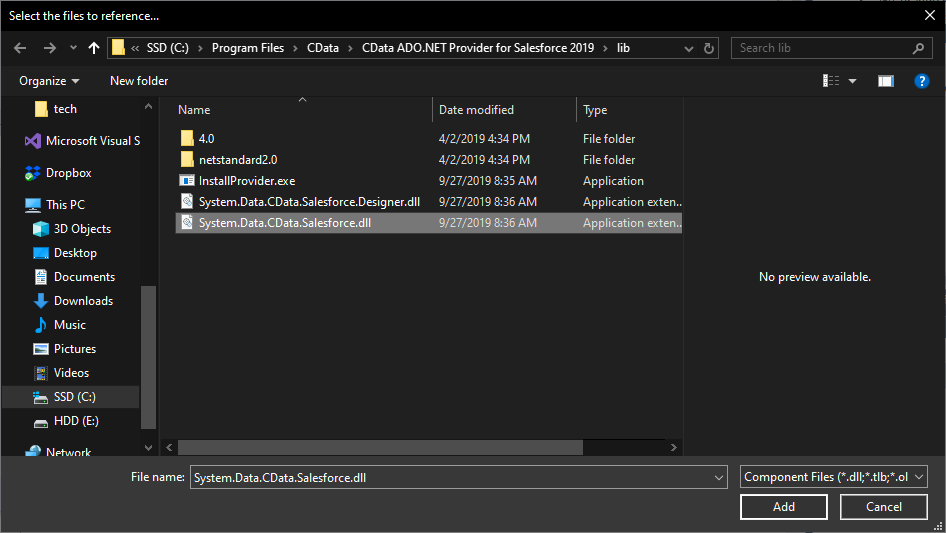
Next, add the Provider to the namespace, along with the standard Data library:
using System.Data.CData.API;
using System.Data;
Finally, add the code to connect to SparkPost and query using the text from the TextBox to the Click event handler.
Start by setting the Profile connection property to the location of the SparkPost Profile on disk (e.g. C:\profiles\SparkPost.apip). Next, set the ProfileSettings connection property to the connection string for SparkPost (see below).
SparkPost API Profile Settings
Generate an API key by navigating to Configuration > API Keys > Create API Key in your SparkPost account.
private void Button_Click(object sender, RoutedEventArgs e)
{
  //connecting to SparkPost
  string connString = "Profile=C:\profiles\SparkPost.apip;ProfileSettings='APIKey=your_api_key';";
  using (var conn = new APIConnection(connString))
  {
    //using the query from the TextBox
    var dataAdapter = new APIDataAdapter(textBox.Text, conn);
    var table = new DataTable();
    dataAdapter.Fill(table);

    //passing the DataRowCollection to the DataContext
    //  for use in the XamDataGrid
    this.DataContext = table.Rows;
  }
}
Run the Application
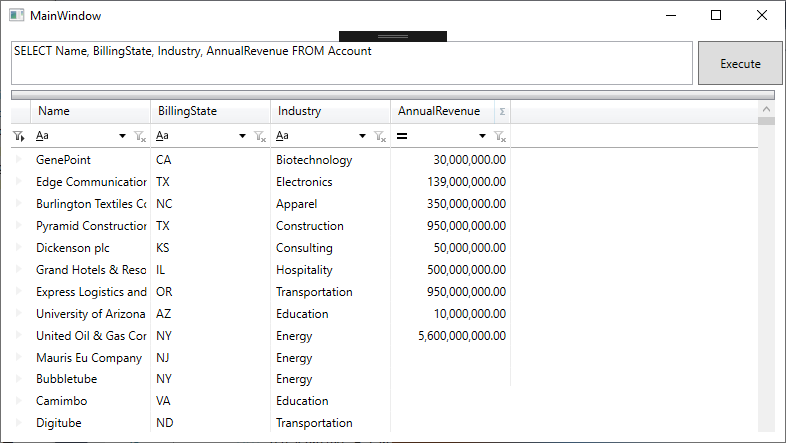
With the app fully configured, we are ready to display SparkPost data in our XamDataGrid. When you click "Execute," the app connects to SparkPost and submits the SQL query through the CData ADO.NET Provider.
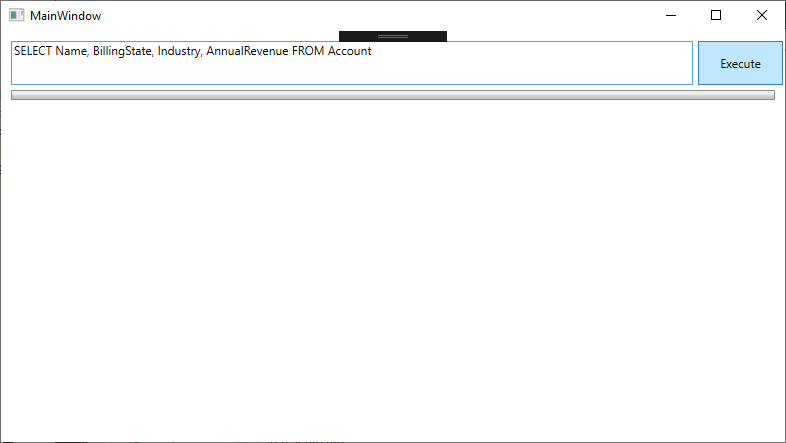
Live SparkPost data is displayed in the grid.
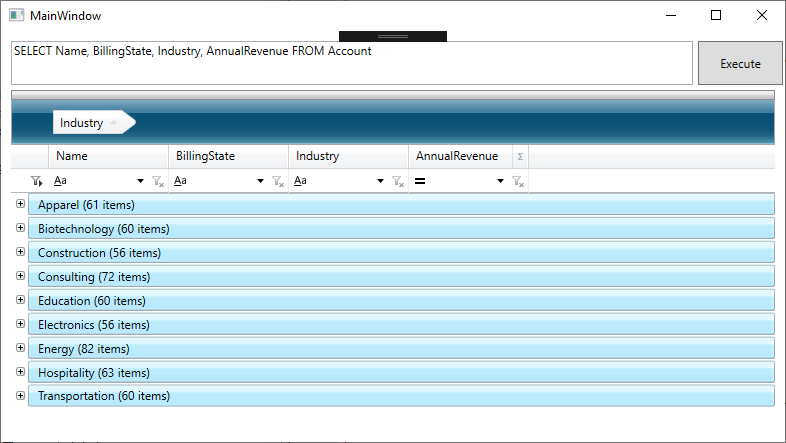
Group the data by dragging and dropping a column name into the header.
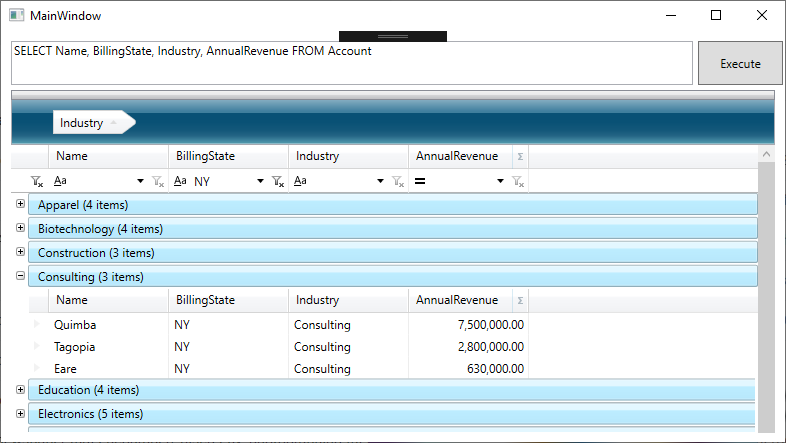
As you add groupings and filters, the underlying SQL query is submitted directly to SparkPost, making it possible to drill down into live SparkPost data to find only the specific information you need.
Free Trial & More Information
At this point, you have created a dynamic WPF App with access to live SparkPost data. For more information, visit the CData ADO.NET Provider page. Download a free, 30-day trial and start working live SparkPost data in apps built using the Infragistics UI controls today.