






Connect to and Visualize Live Spotify Data in Tableau Prep

Tableau is a visual analytics platform transforming the way businesses use data to solve problems. When paired with the CData API Driver for Tableau, you can easily get access to live Spotify data within Tableau Prep. This article shows how to connect to Spotify in Tableau Prep and build a simple chart.
The CData Tableau Connectors enable high-speed access to live Spotify data in Tableau. Once you install the connector, you simply authenticate with Spotify and you can immediately start building responsive, dynamic visualizations and dashboards. By surfacing Spotify data using native Tableau data types and handling complex filters, aggregations, & other operations automatically, CData Tableau Connectors grant seamless access to Spotify data.
NOTE: The CData Tableau Connectors support Tableau Prep Builder 2020.4.1 or higher. If you are using an older version of Tableau Prep Builder, you will need to use the CData JDBC Driver.
Install the CData Tableau Connector
When you install the CData Tableau Connector for Spotify, the installer should copy the TACO and JAR files to the appropriate directories. If your data source does not appear in the connection steps below, you will need to copy two files:
- Copy the TACO file (cdata.api.taco) found in the lib folder of the connector's installation location (C:\Program Files\CData\CData Tableau Connector for Spotify 20XX\lib on Windows) to the Tableau Prep Builder repository:
- Windows: C:\Users\[Windows User]\Documents\My Tableau Prep Repository\Connectors
- MacOS: /Users//Documents/My Tableau Prep Repository/Connectors
- Copy the JAR file (cdata.tableau.api.jar) found in the same lib folder to the Tableau drivers directory, typically [Tableau installation location]\Drivers.
Connect to Spotify in Tableau Prep Builder
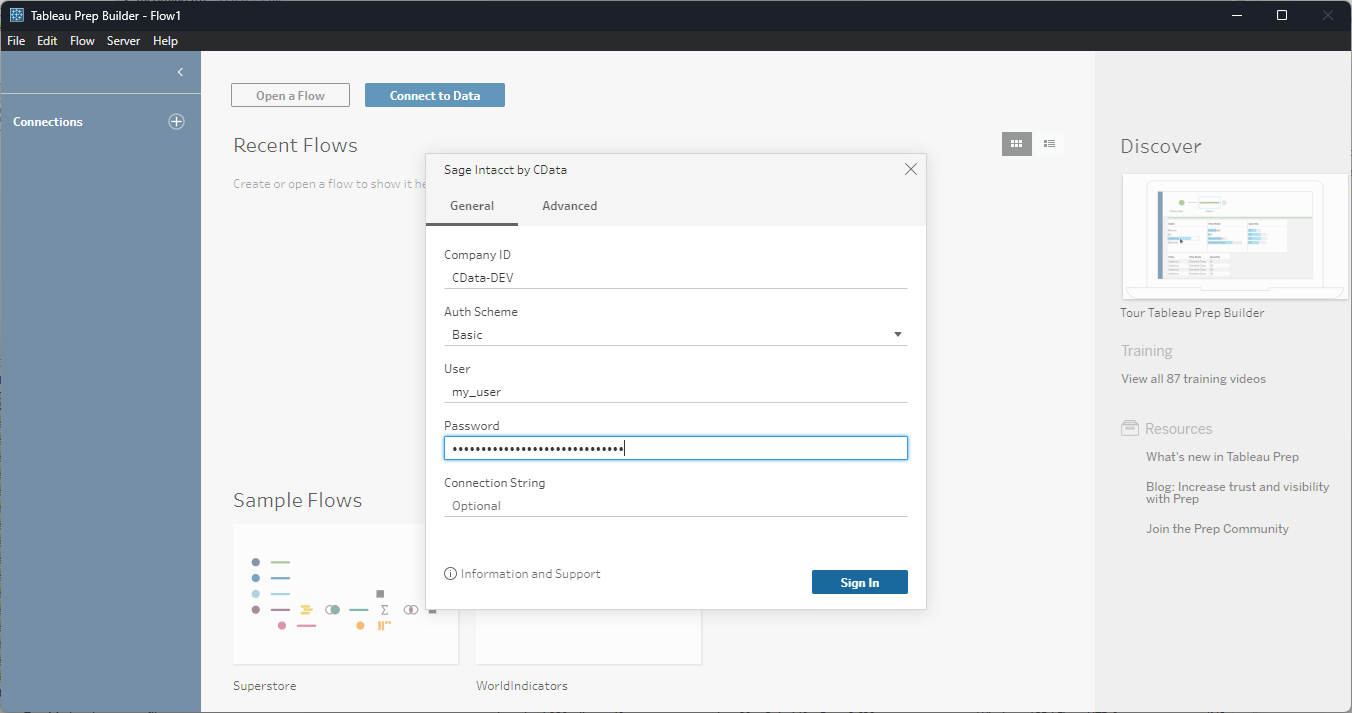
Open Tableau Prep Builder and click "Connect to Data" and search for "Spotify by CData." Configure the connection and click "Sign In."
Using OAuth Authentication
Spotify uses OAuth 2.0 for authentication. You will need to create an application in the Spotify Developer Dashboard to obtain your client credentials.
Setting Up Your Spotify Application
- Visit the Spotify Developer Dashboard.
- Log in with your Spotify account and click Create app.
- Provide an app name, description, and set a Redirect URI (e.g.,
http://localhost:33333
for desktop applications). - Copy your Client ID and Client Secret from the app settings.
Connection Properties
After setting the following connection properties, you are ready to connect:
- AuthScheme: Set this to OAuth.
- InitiateOAuth: Set this to GETANDREFRESH. You can use InitiateOAuth to manage the process to obtain the OAuthAccessToken.
- OAuthClientId: Set this to your Spotify application's Client ID.
- OAuthClientSecret: Set this to your Spotify application's Client Secret.
- Scope: Set this to the required OAuth scopes (space-separated). The default includes all read scopes needed for the tables in this profile.
- CallbackURL: Set this to the Redirect URI configured in your Spotify application (e.g., http://localhost:33333).
Example Connection String
Profile=C:\profiles\Spotify.apip;AuthScheme=OAuth;InitiateOAuth=GETANDREFRESH;OAuthClientId=your_client_id;OAuthClientSecret=your_client_secret;CallbackURL=http://localhost:33333;
Available OAuth Scopes
- user-read-private: Read access to user's subscription details and explicit content settings.
- user-read-email: Read access to user's email address.
- user-library-read: Read access to a user's saved tracks, albums, episodes, shows, and audiobooks.
- playlist-read-private: Read access to user's private playlists.
- playlist-read-collaborative: Read access to collaborative playlists the user follows.
- user-follow-read: Read access to the list of artists the current user follows.
- user-read-playback-state: Read access to a user's player state (device, current track, progress).
- user-read-currently-playing: Read access to a user's currently playing content.
- user-read-playback-history: Read access to a user's recently played tracks.
- user-top-read: Read access to a user's top artists and tracks.
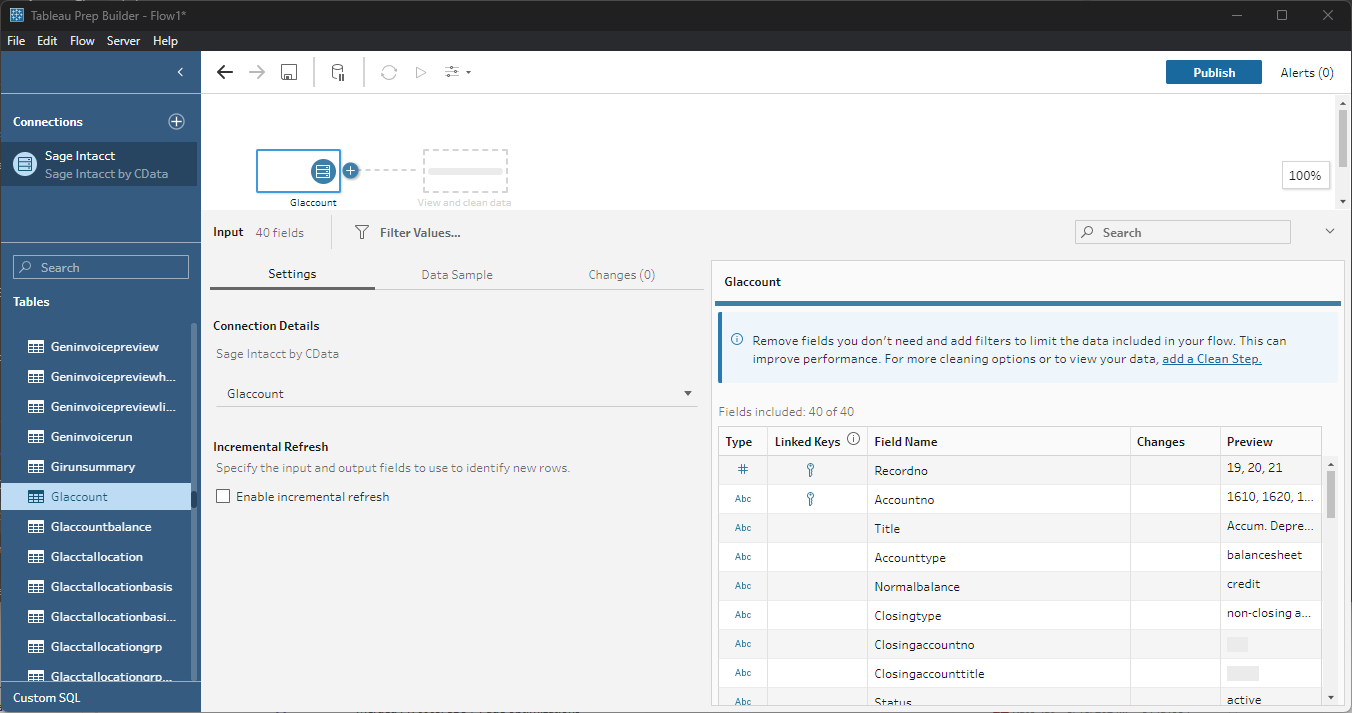
Discover and Prep Data
Drag the tables and views you wish to work with onto the canvas. You can include multiple tables.
Data Cleansing & Filtering
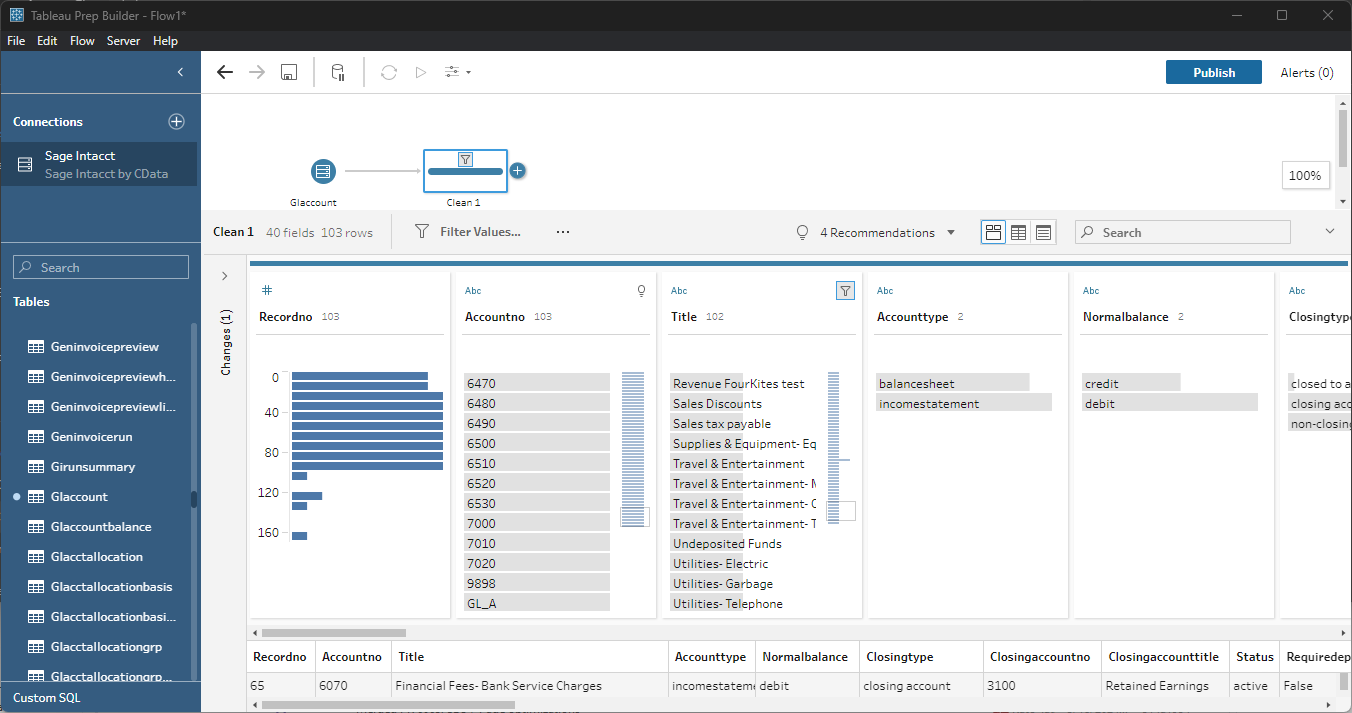
To further prepare the data, you can implement filters, remove duplicates, modify columns and more.
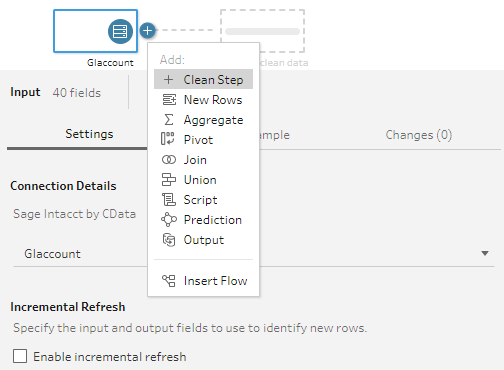
- Start by clicking on the plus next to your table and selecting the Clean Step option.
- Select the field values to filter by. As you select values, you can see how your selections impact other fields.
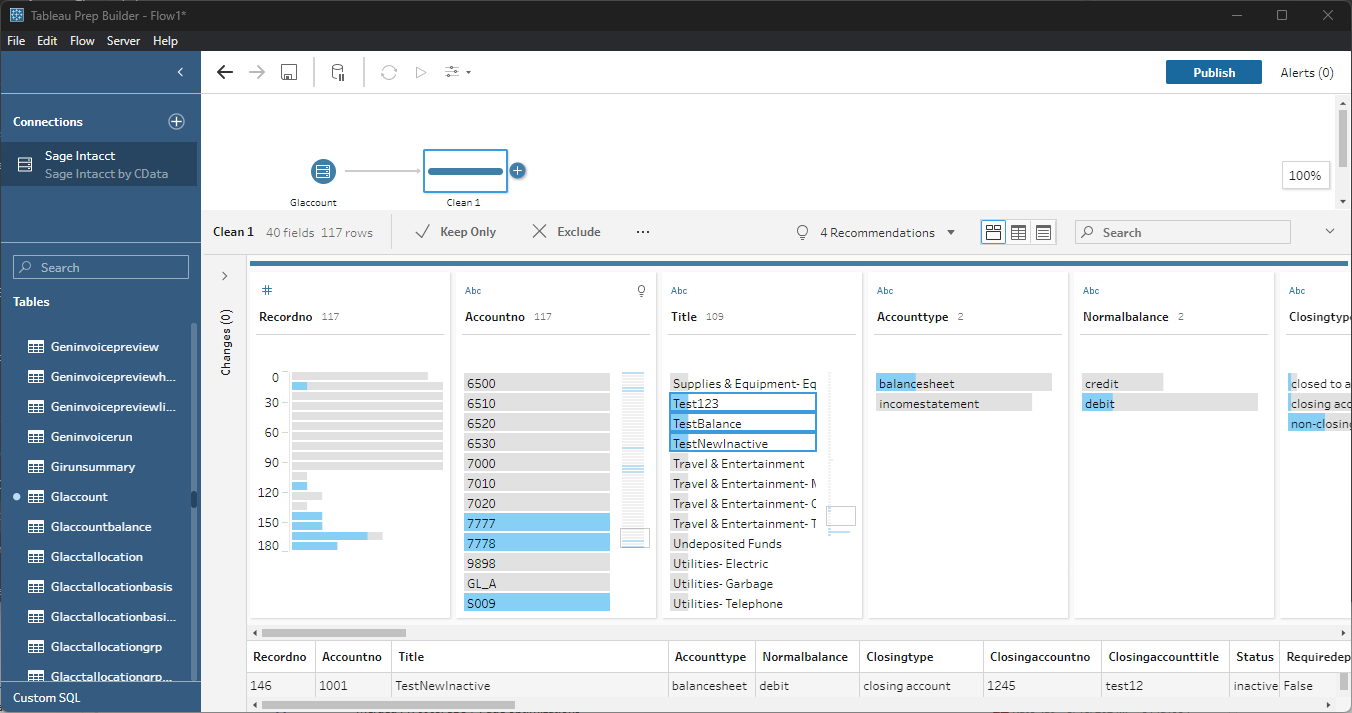
- Opt to "Keep Only" or "Exclude" entries with your select values and the data changes in response.
Data Joins and Unions
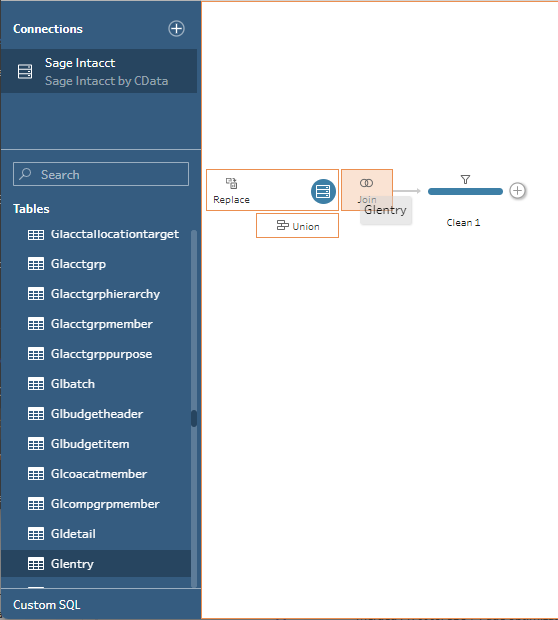
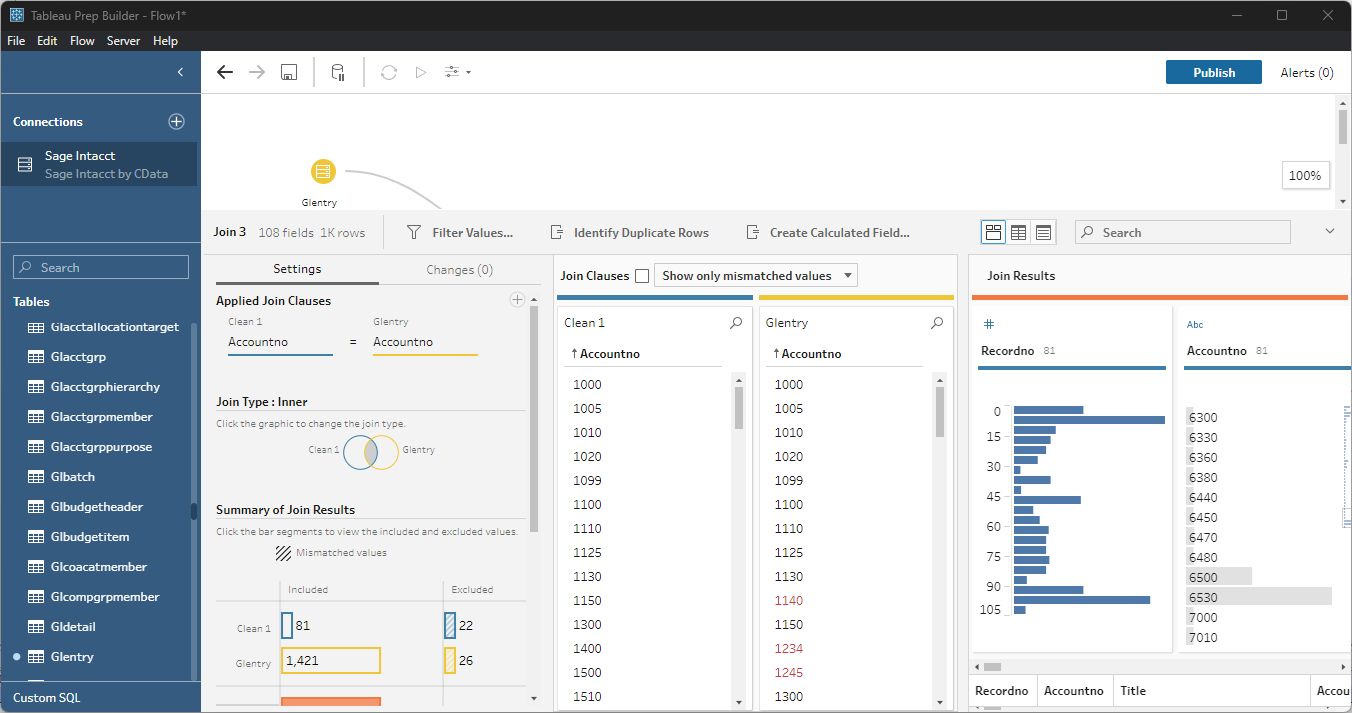
Data joining involves combining data from two or more related tables based on a common field or key.
- To join multiple tables, drag a related table next to an existing table in the canvas and place it in the Join box.
- Select the foreign keys that exist in both tables.
Exporting Prepped Data
After you perform any cleansing, filtering, transformations, and joins, you can export the data for visualization in Tableau.
- Add any other needed transformations then insert an Output node at the end of the flow.
- Configure the node to save to a file in the format of your choice.
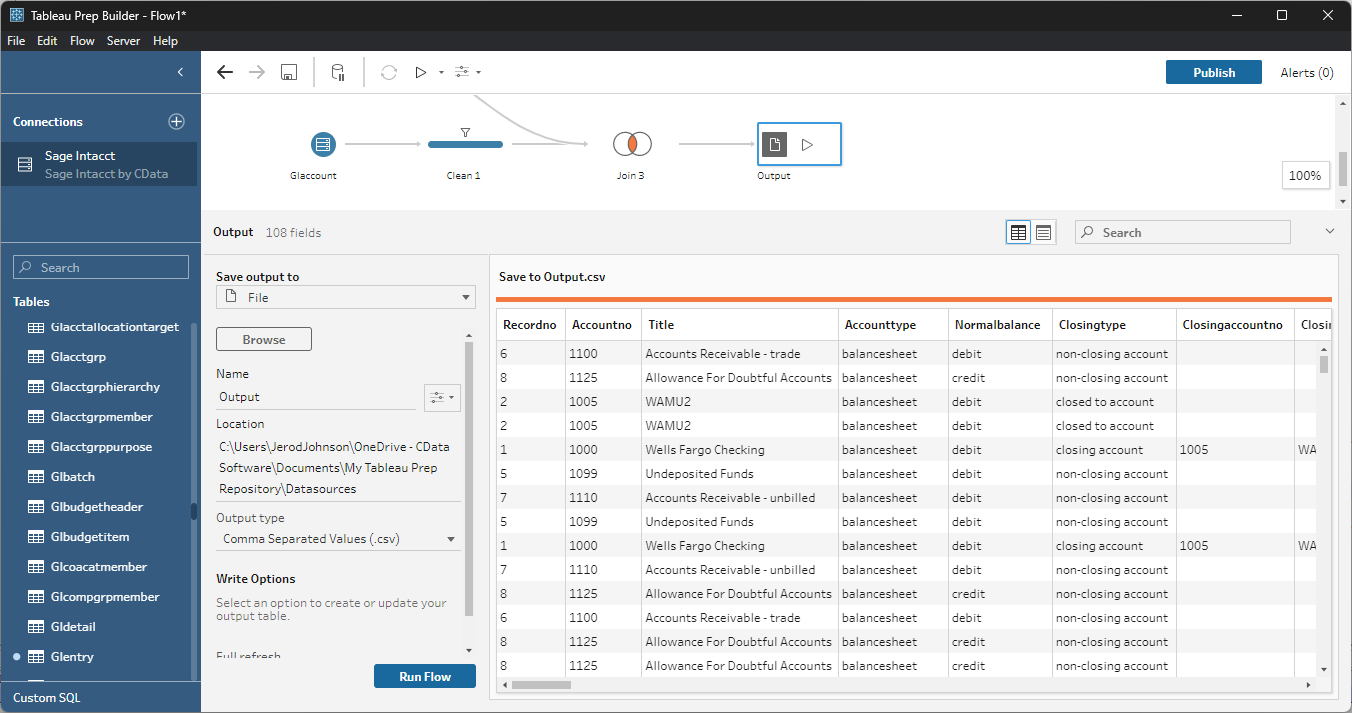
Once the output data is saved, you can work with it in Tableau, just like you would any other file source.
Using the CData API Driver for Tableau with Tableau Prep Builder, you can easily join, cleanse, filter, and aggregate Spotify data for visualizations and reports in Tableau. Download a free, 30-day trial and get started today.