






Build Strava-Connected Web Apps in Servoy

Servoy is a rapid application development and deployment platform. When paired with the CData API Driver for JDBC, users can build Strava-connected apps that work with live Strava data. This article describes how to connect to Strava from Servoy and build a simple web app to display and search Strava data.
With built-in optimized data processing, the CData JDBC Driver offers unmatched performance for interacting with live Strava data. When you issue complex SQL queries to Strava, the driver pushes supported SQL operations, like filters and aggregations, directly to Strava and utilizes the embedded SQL engine to process unsupported operations client-side (often SQL functions and JOIN operations). Its built-in dynamic metadata querying lets you work with Strava data using native data types.
Connect to Strava in Servoy Developer
To build Strava-connected apps, you need to first create a data provider in Servoy Developer using the CData API Driver for JDBC.
- Install the JDBC Driver.
- Copy the JDBC Driver JAR file. (cdata.jdbc.api.jar) to the /application_server/drivers/ directory in the installation directory for Servoy.
- Open Servoy Developer.
- In the Solution Explorer, right-click Database Server (under Resources) and choose "Connect to existing database" -> "empty."
- Name the server.
- Click to show the advanced server settings.
Set the URL, for example: jdbc:api:Profile=C:\profiles\Strava.apip;AuthScheme=OAuth;InitiateOAuth=GETANDREFRESH;OAuthClientId=your_client_id;OAuthClientSecret=your_client_secret;CallbackURL=http://localhost:33333;
Built-In Connection String Designer
For assistance in constructing the JDBC URL, use the connection string designer built into the Strava JDBC Driver. Either double-click the JAR file or execute the jar file from the command-line.
java -jar cdata.jdbc.api.jar
Fill in the connection properties and copy the connection string to the clipboard.
To authenticate to Strava, and connect to your own data or to allow other users to connect to their data, you can use the OAuth standard.
Using OAuth Authentication
You must create a custom OAuth application to connect to Strava. To create a custom OAuth application:
- Log into the Strava API Settings page
- Create a new application or select an existing application
- Set the "Authorization Callback Domain" to your callback URL domain (e.g. localhost)
- Note down the Client ID and Client Secret
After setting the following connection properties, you are ready to connect:
- AuthScheme: Set this to OAuth.
- InitiateOAuth: Set this to GETANDREFRESH. You can use InitiateOAuth to manage the process to obtain the OAuthAccessToken.
- OAuthClientId: Set this to the Client ID from your Strava API application.
- OAuthClientSecret: Set this to the Client Secret from your Strava API application.
- CallbackURL: Set this to the redirect URI matching your application's callback domain.
Example connection string:
Profile=C:\profiles\Strava.apip;AuthScheme=OAuth;InitiateOAuth=GETANDREFRESH;OAuthClientId=your_client_id;OAuthClientSecret=your_client_secret;CallbackURL=http://localhost:33333;

- Select the Driver class you just copied, for example, cdata.jdbc.api.APIDriver
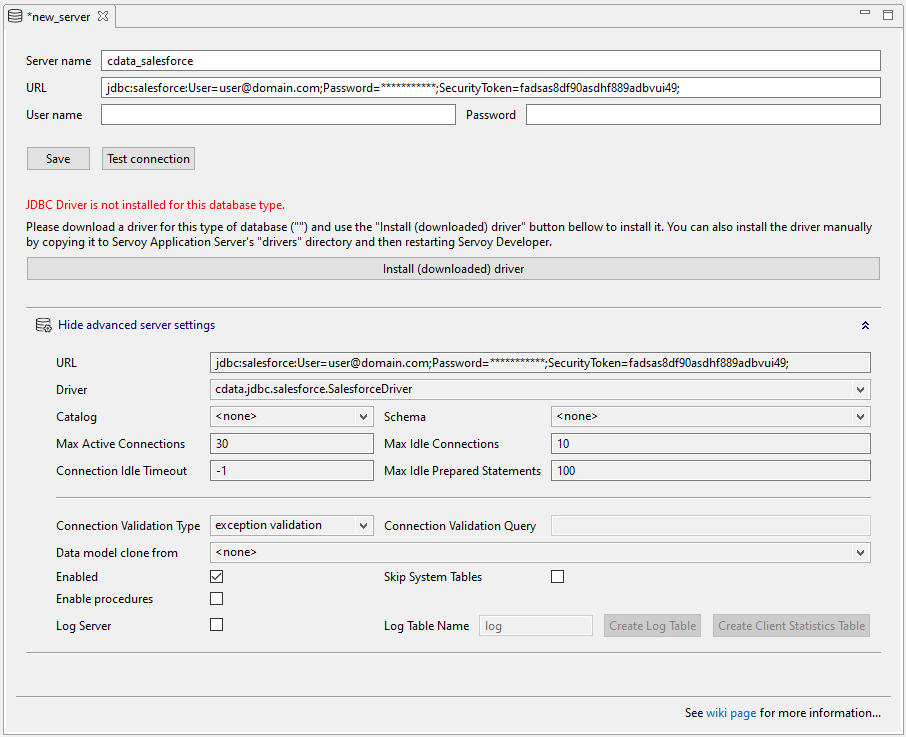
Build a Strava-Connected Web App
Once you have configured the connection to Strava in the Servoy Developer resources, you are ready to build apps with access to live Strava data.
Create a New Solution
- In the Server Explorer, right-click "All solutions" and select "Create new solution."
- Name the solution.
- Select the checkbox to include the "search" module.
- Click "Finish."
Create a New Form
Right-click "Forms" and select "Create new form."
- Name the form.
- Select a Datasource.
- Set the type (e.g., Simple) and click "Finish."
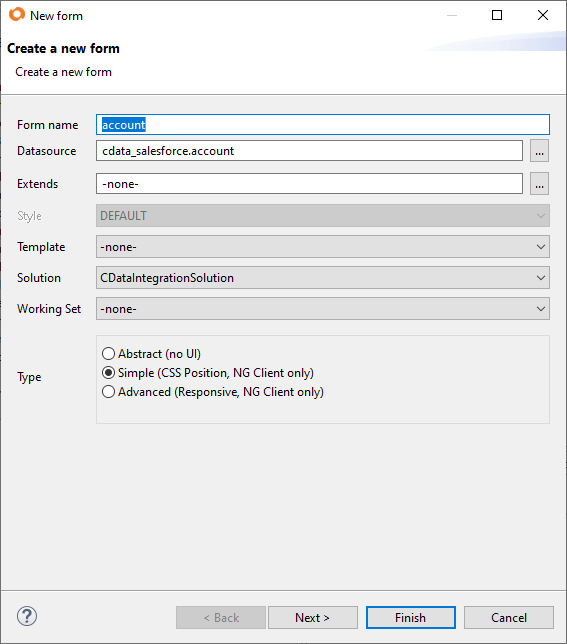
Add a Data Grid to the Form
- Drag a Data Grid component (from Servoy NG-Grids) onto the form.
Drag a column component onto the Data Grid and set the "dataprovider" property for each column component to a column from the Strava "table" (e.g., from the Athlete table).
Continue adding columns as desired.
Add Searching to the App
Note that the "svySearch" extension is required to add search functionality (included by default when you create a new solution). If you did not add the extension when you created the solution or you are modifying an existing solution, you can add the search module by right-clicking Modules (in the solution) and selecting "Add Module." Select "svySearch" and click "OK."
- Drag a Text Field component onto the Form.
- Right-click the Form and select "Open in Script Editor."
- Create a new variable (JavaScript) to hold the search value:
var searchText = '';
- Back on the Form, in the Text Field properties:
- Set the "dataprovider" property to the Form variable you just created.
- Double-click to add a method for the onAction event.
- Click to create the method in "Form," name the method (e.g., onEnter), and click "Create private."
- Click "OK & Show."
- Add the following JavaScript to the JavaScript file to use the Servoy framework to implement searching bound data based on the text in the Text Field:
var search = scopes.svySearch.createSimpleSearch(foundset).setSearchText(searchText);
search.setSearchAllColumns();
search.loadRecords(foundset);
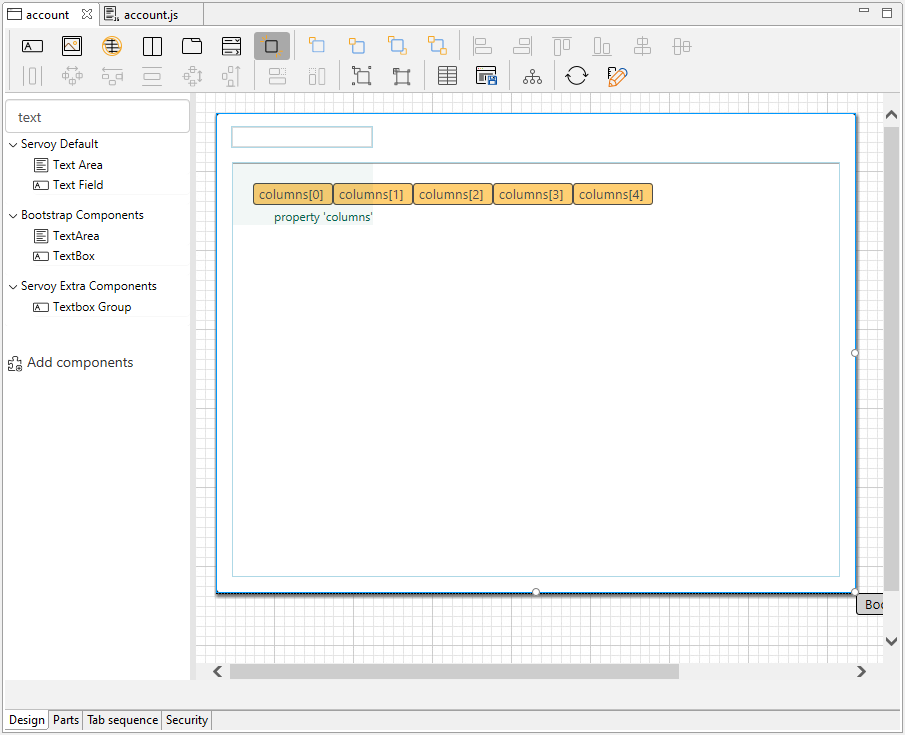
Save and Launch the App
Save the form and JavaScript file, then click Run -> Launch NGClient to start the web app.
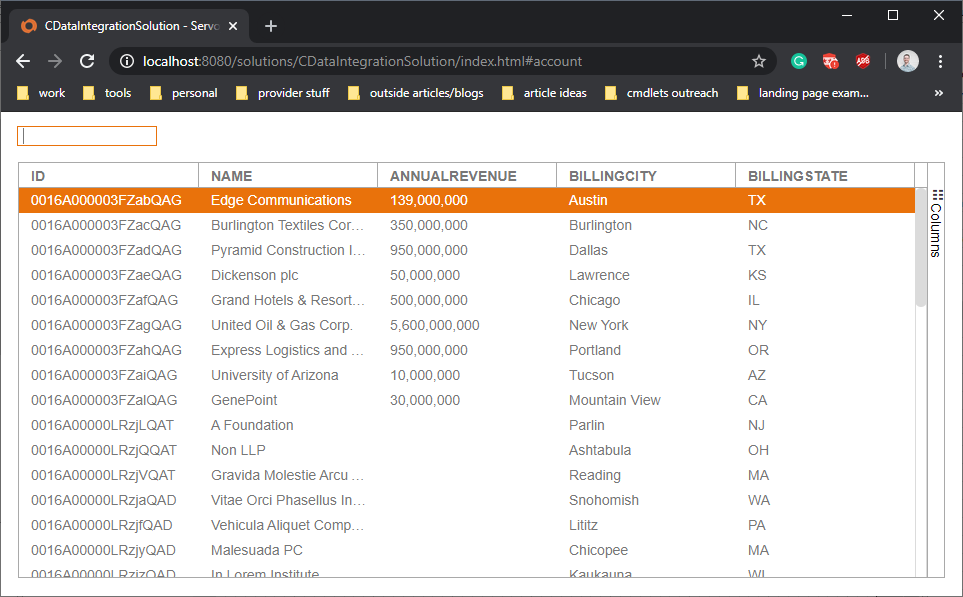
Download a free, 30-day trial of the CData API Driver for JDBC and start building Strava-connected apps with Servoy. Reach out to our Support Team if you have any questions.