






How to Visualize Supabase Data in Python with pandas

The rich ecosystem of Python modules lets you get to work quickly and integrate your systems more effectively. With the CData API Driver for Python, the pandas & Matplotlib modules, and the SQLAlchemy toolkit, you can build Supabase-connected Python applications and scripts for visualizing Supabase data. This article shows how to use the pandas, SQLAlchemy, and Matplotlib built-in functions to connect to Supabase data, execute queries, and visualize the results.
With built-in optimized data processing, the CData Python Connector offers unmatched performance for interacting with live Supabase data in Python. When you issue complex SQL queries from Supabase, the driver pushes supported SQL operations, like filters and aggregations, directly to Supabase and utilizes the embedded SQL engine to process unsupported operations client-side (often SQL functions and JOIN operations).
Connecting to Supabase Data
Connecting to Supabase data looks just like connecting to any relational data source. Create a connection string using the required connection properties. For this article, you will pass the connection string as a parameter to the create_engine function.
Start by setting the Profile connection property to the location of the Supabase Profile on disk (e.g. C:\profiles\Supabase.apip). Next, set the ProfileSettings connection property to the connection string for Supabase (see below).
Supabase API Profile Settings
Log into your Supabase account and navigate to Account Settings > Access Tokens to generate a new personal access token.
Follow the procedure below to install the required modules and start accessing Supabase through Python objects.
Install Required Modules
Use the pip utility to install the pandas & Matplotlib modules and the SQLAlchemy toolkit:
pip install pandas
pip install matplotlib
pip install sqlalchemy
Be sure to import the module with the following:
import pandas
import matplotlib.pyplot as plt
from sqlalchemy import create_engine
Visualize Supabase Data in Python
You can now connect with a connection string. Use the create_engine function to create an Engine for working with Supabase data.
engine = create_engine("api:///?Profile=C:\profiles\Supabase.apip&ProfileSettings='APIKey=your_api_key'")
Execute SQL to Supabase
Use the read_sql function from pandas to execute any SQL statement and store the resultset in a DataFrame.
df = pandas.read_sql("SELECT Ref, PostgresVersion FROM Branch WHERE Status = 'active'", engine)
Visualize Supabase Data
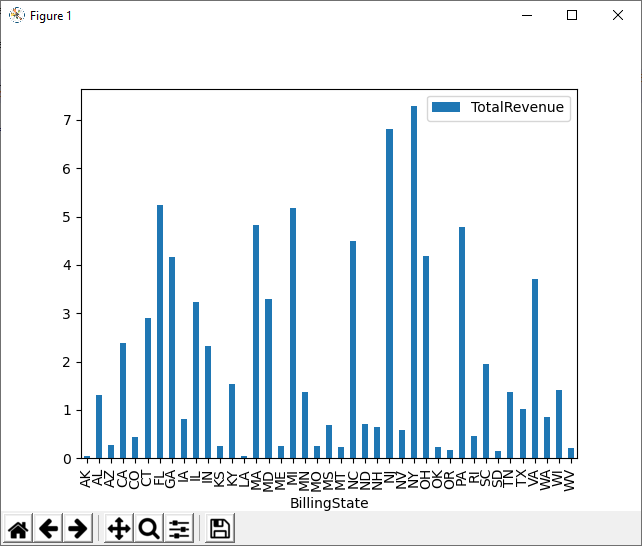
With the query results stored in a DataFrame, use the plot function to build a chart to display the Supabase data. The show method displays the chart in a new window.
df.plot(kind="bar", x="Ref", y="PostgresVersion")
plt.show()
Free Trial & More Information
Download a free, 30-day trial of the CData API Driver for Python to start building Python apps and scripts with connectivity to Supabase data. Reach out to our Support Team if you have any questions.
Full Source Code
import pandas
import matplotlib.pyplot as plt
from sqlalchemy import create_engin

engine = create_engine("api:///?Profile=C:\profiles\Supabase.apip&ProfileSettings='APIKey=your_api_key'")
df = pandas.read_sql("SELECT Ref, PostgresVersion FROM Branch WHERE Status = 'active'", engine)

df.plot(kind="bar", x="Ref", y="PostgresVersion")
plt.show()