Deploy the ADO.NET Provider for Vercel on an SSRS Report Server

In this article, we will guide you through the deployment process of the CData ADO.NET Provider for Vercel on an SQL Server Reporting Services (SSRS) report server. Additionally, you will learn how to establish a shared data source, which facilitates connectivity to real-time Vercel data from various reports. You can then access these shared data sources from the Report Designer within Visual Studio. For detailed instructions on creating datasets in Report Designer using ADO.NET, please refer to the "Using ADO.NET" section in the help documentation.
Deploy the ADO.NET Provider
The provider installation automatically deploys the provider on report servers in native mode. On report servers in SharePoint mode, you can use the install-sprs.ps1 PowerShell script to deploy. Simply run the script from the lib subfolder in the installation directory, or pass in the "path" parameter.
Create a Shared Data Source for Vercel
You can create shared data sources directly from a report server or SharePoint site. Alternatively, you can use Report Designer to create shared data sources.
Report Designer
You can use Report Designer to create shared data sources on native mode report servers and report servers on a SharePoint server farm.
- In a Report Server Project in Visual Studio, right-click Shared Data Sources in Solution Explorer and click Add New Data Source.
- Enter a name for the data source and in the Type menu select CData API Report.
- In the Connection String box, enter the connection string to connect to Vercel. A typical connection string is below:
Profile=C:\profiles\Vercel.apip;AuthScheme=APIKey;APIKey=your_access_token;
Using API Key Authentication
Vercel uses Bearer token authentication. You can use either a personal access token or an OAuth access token as the API key.
To obtain a personal access token:
- Log into your Vercel account at https://vercel.com/
- Navigate to Account Settings > Tokens.
- Click Create Token, enter a name and expiration, and click Create.
- Copy the generated token (it will only be shown once).
After obtaining your token, set the following connection properties:
- AuthScheme: Set this to APIKey.
- APIKey: Set this to your Vercel personal access token or OAuth access token.
Example Connection String
Profile=C:\profiles\Vercel.apip;AuthScheme=APIKey;APIKey=your_access_token;
Working with Teams
Many Vercel resources are scoped to a team. To scope all requests to a specific team, set the TeamId connection property to your team's ID. You can find your team ID by querying the Teams table or from the Vercel dashboard. Alternatively, you can specify TeamId in your SQL queries using the WHERE clause where supported.
Connecting to Vercel
Once the authentication is configured, you can connect to Vercel and query data from any of the available tables such as Projects, Deployments, Teams, and Domains.
When you configure the connection, you may also want to set the Max Rows connection property. This will limit the number of rows returned, which is especially helpful for improving performance when designing reports and visualizations.
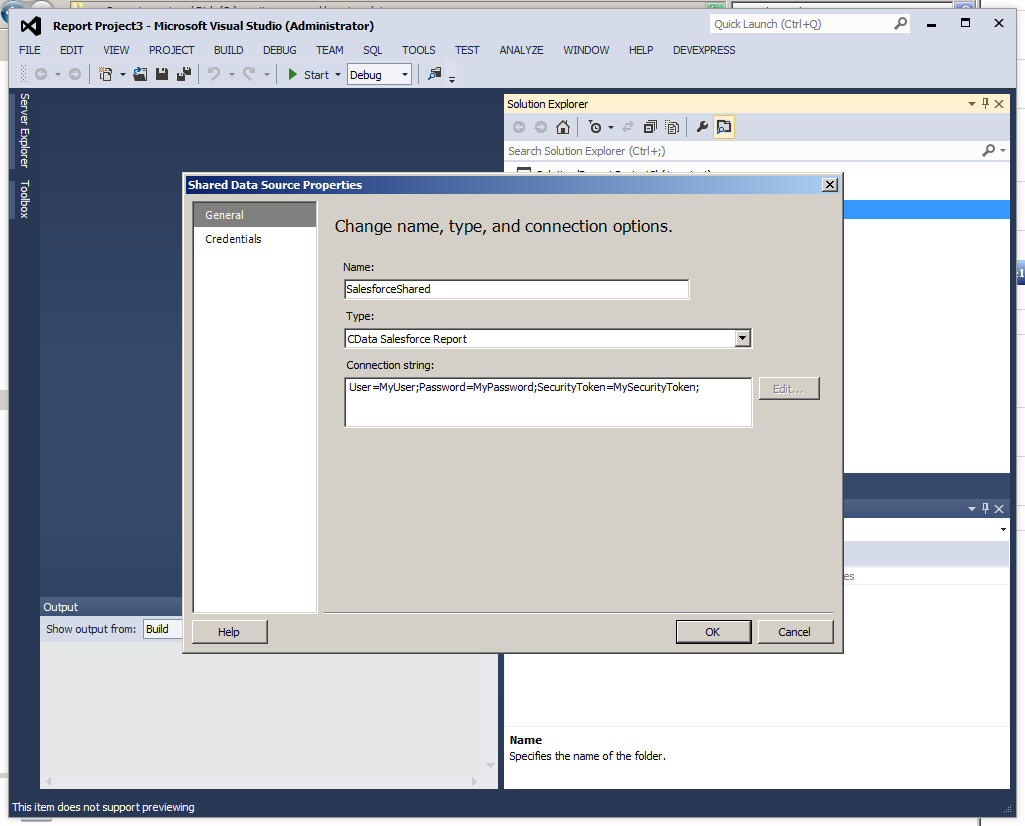
- Set the folder and server URL in your project properties. If you are publishing to SharePoint, the values for all properties must be fully qualified URLs. For example:
- Report Server: http://MyServerName/ReportServer
- SharePoint: http://MyServerName/MySite/MySubsite
- Right-click the shared data source and click Deploy.
Report Manager
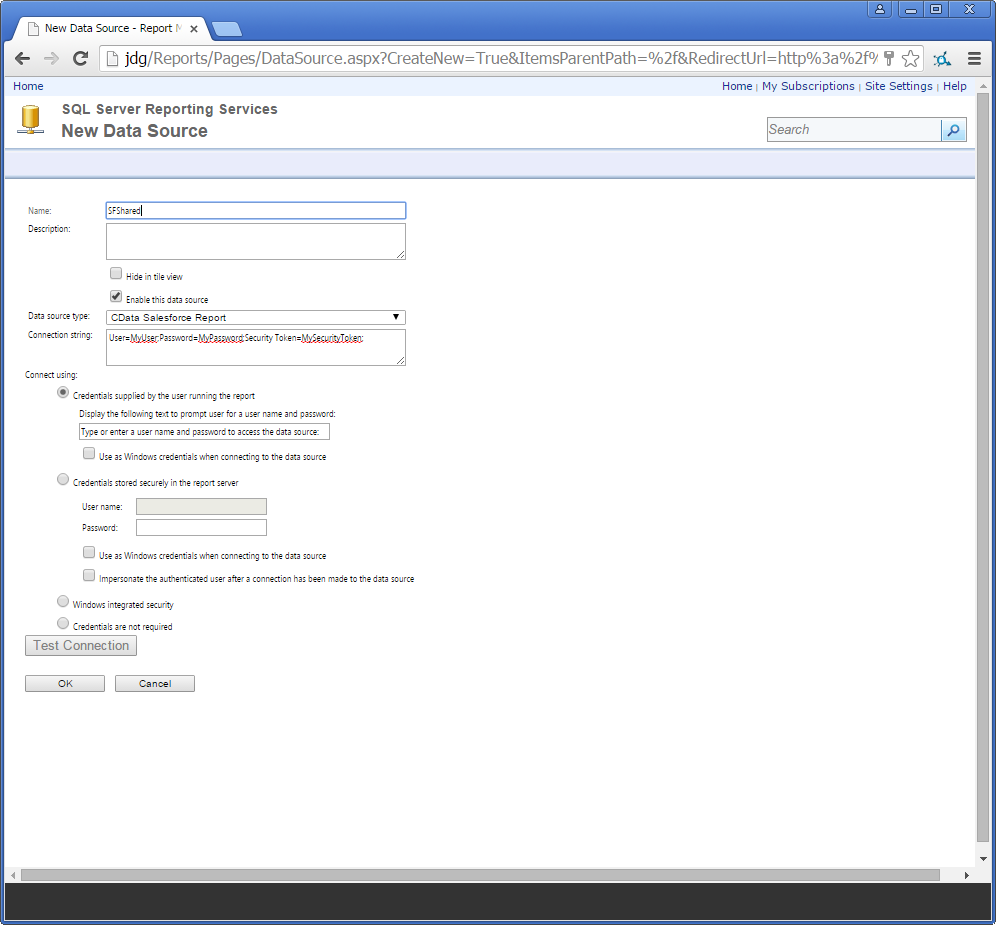
On native mode installations of report server, you can use Report Manager to create shared data sources. You must have permissions to manage data sources on the report server.
- From the Home page in Report Manager, click New Data Source. The New Data Source page is displayed.
- Enter a name for the data source and in the Data Source Type menu, select CData API Report.
- In the Connection String box, enter the connection string to connect to Vercel. A typical connection string is below:
Profile=C:\profiles\Vercel.apip;AuthScheme=APIKey;APIKey=your_access_token;
Using API Key Authentication
Vercel uses Bearer token authentication. You can use either a personal access token or an OAuth access token as the API key.
To obtain a personal access token:
- Log into your Vercel account at https://vercel.com/
- Navigate to Account Settings > Tokens.
- Click Create Token, enter a name and expiration, and click Create.
- Copy the generated token (it will only be shown once).
After obtaining your token, set the following connection properties:
- AuthScheme: Set this to APIKey.
- APIKey: Set this to your Vercel personal access token or OAuth access token.
Example Connection String
Profile=C:\profiles\Vercel.apip;AuthScheme=APIKey;APIKey=your_access_token;
Working with Teams
Many Vercel resources are scoped to a team. To scope all requests to a specific team, set the TeamId connection property to your team's ID. You can find your team ID by querying the Teams table or from the Vercel dashboard. Alternatively, you can specify TeamId in your SQL queries using the WHERE clause where supported.
Connecting to Vercel
Once the authentication is configured, you can connect to Vercel and query data from any of the available tables such as Projects, Deployments, Teams, and Domains.
SharePoint
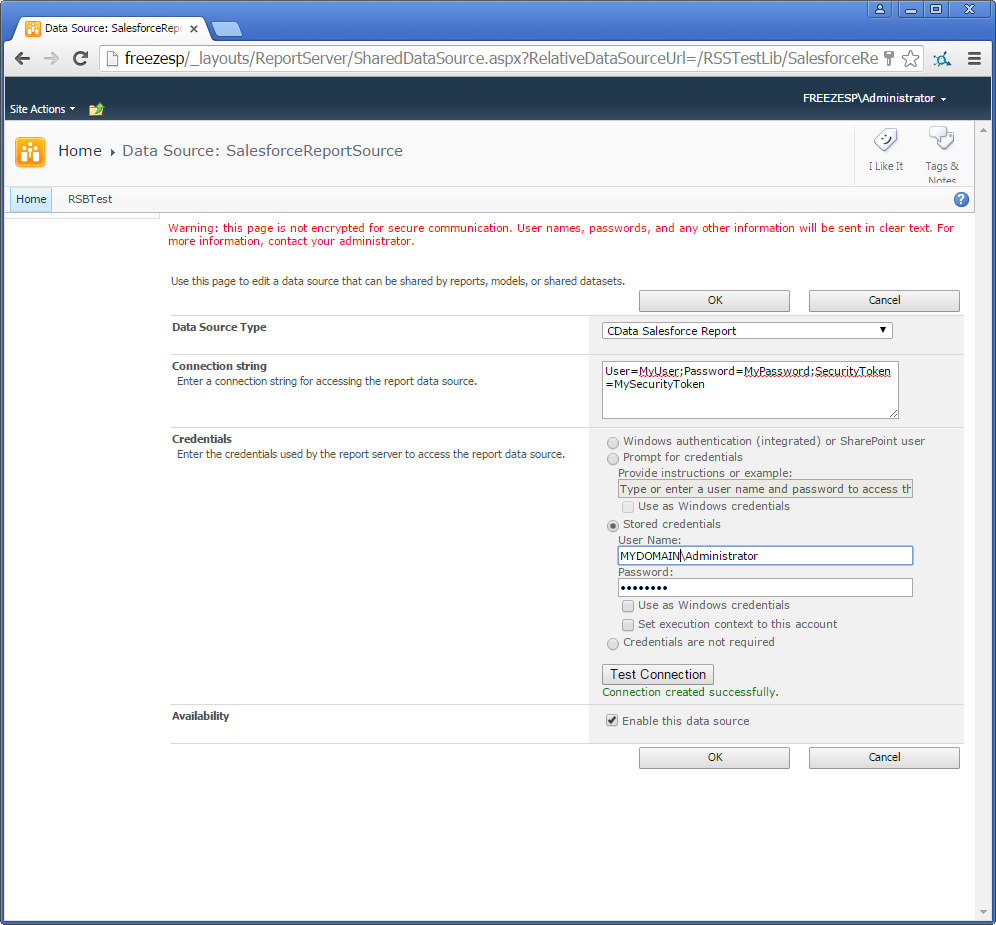
Follow the steps below to create a shared data source on a SharePoint site. Note that this step has the following prerequisites in SharePoint 2013:
- The Reporting Services add-in for SharePoint
- The Report Server Integration site collection feature
Follow the steps below to add the report server content types to your library:
- Log into SharePoint and open the library where you want to save the .rsds file.
- Click Library on the ribbon and then click Library Settings.
- In the General Settings section, click Advanced Settings.
- In the Content Types section, select Yes to allow the management of content types. The Content Types section is added to the Library Settings page.
- On the Library Settings page, click Add from existing site content types.
- In the Available Site Content Types list, select Report Data Source and click Add.
You can then create the shared data source. You will create an .rsds file that contains the connection information to Vercel.
- Log into SharePoint and open the library where you want to save the .rsds file.
- On the ribbon click Documents -> New Document -> Report Data Source.
- Enter a name for the data source.
- In the Data Source Type menu, select CData API Report.
- In the Connection String box, enter the connection string to connect to Vercel. A typical connection string is below:
Profile=C:\profiles\Vercel.apip;AuthScheme=APIKey;APIKey=your_access_token;
Using API Key Authentication
Vercel uses Bearer token authentication. You can use either a personal access token or an OAuth access token as the API key.
To obtain a personal access token:
- Log into your Vercel account at https://vercel.com/
- Navigate to Account Settings > Tokens.
- Click Create Token, enter a name and expiration, and click Create.
- Copy the generated token (it will only be shown once).
After obtaining your token, set the following connection properties:
- AuthScheme: Set this to APIKey.
- APIKey: Set this to your Vercel personal access token or OAuth access token.
Example Connection String
Profile=C:\profiles\Vercel.apip;AuthScheme=APIKey;APIKey=your_access_token;
Working with Teams
Many Vercel resources are scoped to a team. To scope all requests to a specific team, set the TeamId connection property to your team's ID. You can find your team ID by querying the Teams table or from the Vercel dashboard. Alternatively, you can specify TeamId in your SQL queries using the WHERE clause where supported.
Connecting to Vercel
Once the authentication is configured, you can connect to Vercel and query data from any of the available tables such as Projects, Deployments, Teams, and Domains.