






Build an OLAP Cube in SSAS from Vimeo Data

SQL Server Analysis Services (SSAS) serves as an analytical data engine employed in decision support and business analytics, offering high-level semantic data models for business reports and client applications like Power BI, Excel, Reporting Services reports, and various data visualization tools. When coupled with the CData API Driver for ADO.NET, you gain the capability to generate cubes from Vimeo data, facilitating more profound and efficient data analysis.
In this article, we will guide you through the process of developing and deploying a multi-dimensional model of Vimeo data by creating an Analysis Services project in Visual Studio. To proceed, ensure that you have an accessible SSAS instance and have installed the ADO.NET Provider.
Creating a Data Source for Vimeo
Start by creating a new Analysis Service Multidimensional and Data Mining Project in Visual Studio. Next, create a Data Source for Vimeo data in the project.
- In the Solution Explorer, right-click Data Source and select New Data Source.
- Opt to create a data source based on an existing or new connection and click New.
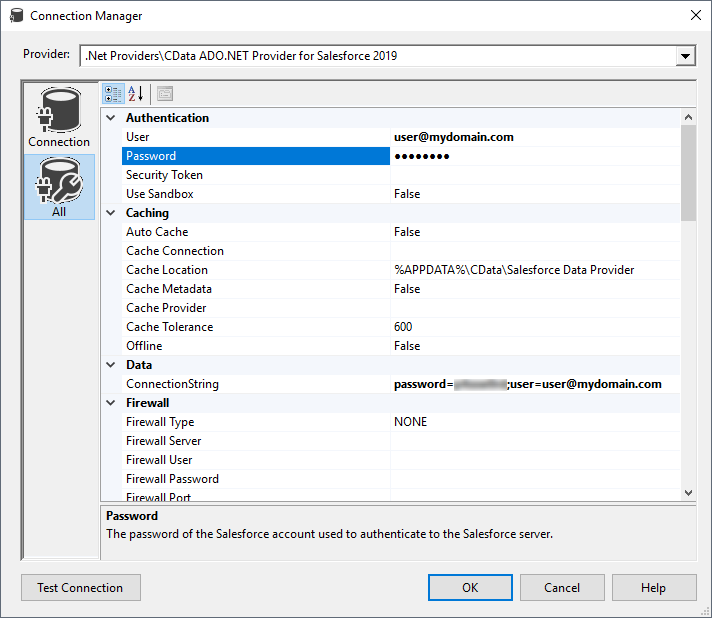
- In the Connection Manager, select CData API Driver for ADO.NET, enter the necessary connection properties, and click Next.
Vimeo is a professional video hosting platform. The Vimeo API uses personal access tokens (bearer tokens) to enable secure access to video metadata, user information, channels, groups, categories, and related resources.
Using API Key Authentication
To authenticate to the Vimeo API, you will need to provide a personal access token. To obtain your access token:
- Log in to your Vimeo account at https://vimeo.com
- Navigate to https://developer.vimeo.com/apps
- Create a new app or select an existing app
- Under "Personal Access Tokens", click "Generate" to create a new token
- Select the required scopes: public and private for read access
- Copy the generated token
After obtaining your access token, set the following connection properties:
- AuthScheme: Set this to APIKey.
- APIKey: Set this to your Vimeo personal access token.
Example connection string
Profile=C:\profiles\Vimeo.apip;ProfileSettings='APIKey=your_personal_access_token';
When you configure the connection, you may also want to set the Max Rows connection property. This will limit the number of rows returned, which is especially helpful for improving performance when designing reports and visualizations.
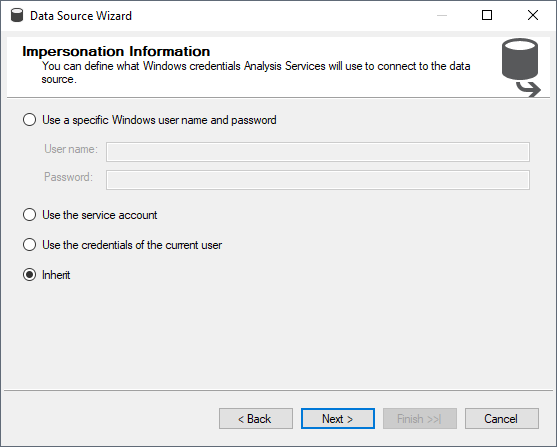
- Set the impersonation method to Inherit and click Next.
- Name the data source (CData Vimeo Source) and click Finish.
Creating a Data Source View
After you create the data source, create the data source view.
- In the Solution Explorer, right-click Data Source Views and select New Data Source View.
- Select the data source you just created (CData Vimeo Source) and click Next.
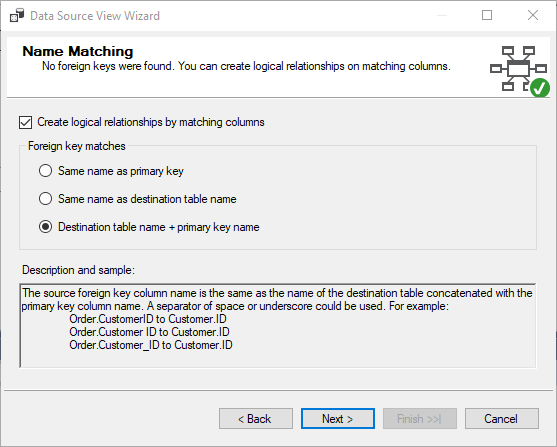
- Choose a foreign key match pattern that matches your underlying data source and click Next.
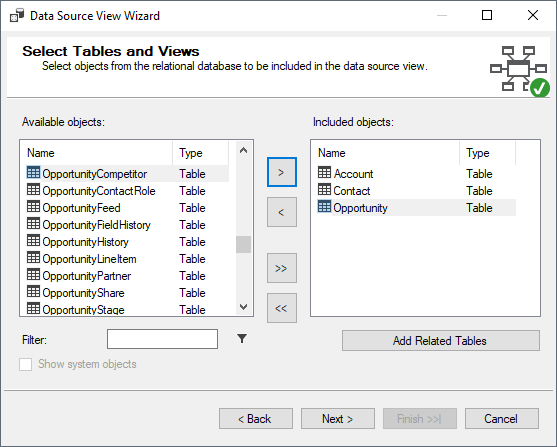
- Select Vimeo tables to add to the view and click Next.
- Name the view and click Finish
Based on the foreign key match scheme, relationships in the underlying data will be automatically detected. You can view (and edit) these relationships by double clicking Data Source View.
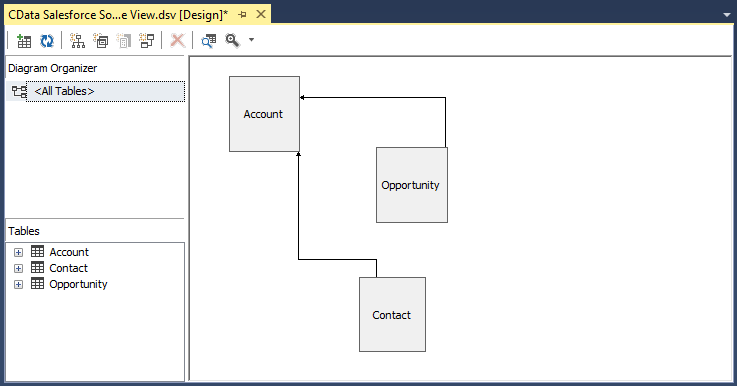
Note that adding a secondary data source to the Data Source View is not supported. When working with multiple data sources, SSAS requires both sources to support remote queries via OpenRowset which is unavailable in the ADO.NET Provider.
Creating a Cube for Vimeo
The last step before you can process the project and deploy Vimeo data to SSAS is creating the cubes.
- In the Solution Explorer, right-click Cubes and select New Cube
- Select "Use existing tables" and click Next.
- Select the tables that will be used for measure group tables and click Next.
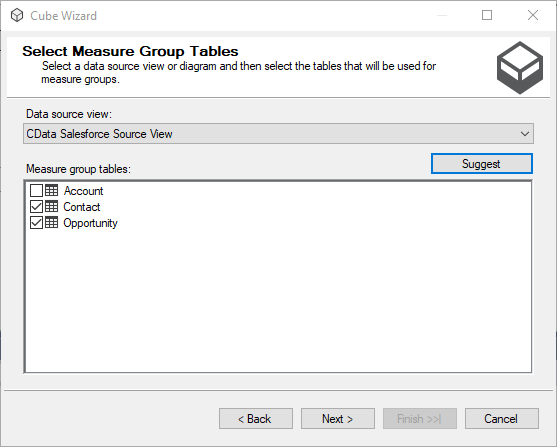
- Select the measures you want to include in the cube and click Next.
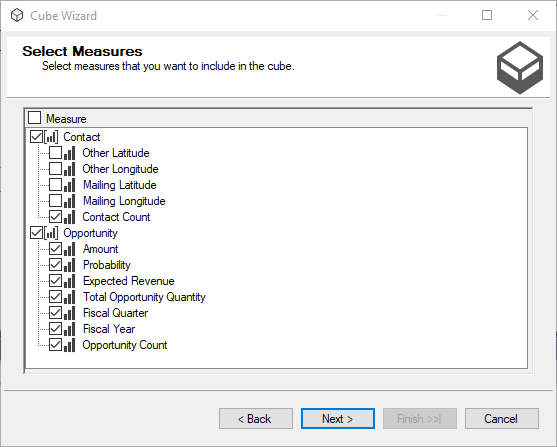
- Select the dimensions to be created, based on the available tables, and click Next.
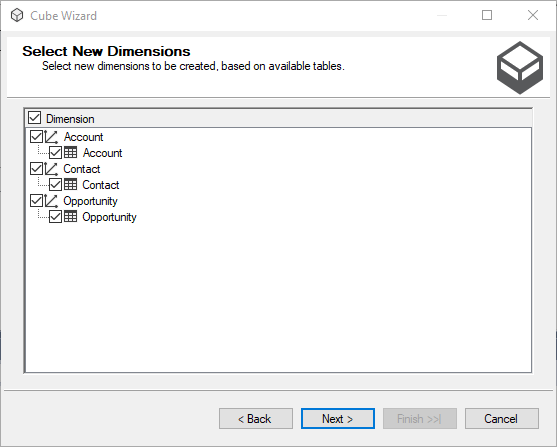
- Review all of your selections and click Finish.
Process the Project
With the data source, data source view, and cube created, you are ready to deploy the cube to SSAS. To configure the target server and database, right-click the project and select properties. Navigate to deployment and configure the Server and Database properties in the Target section.
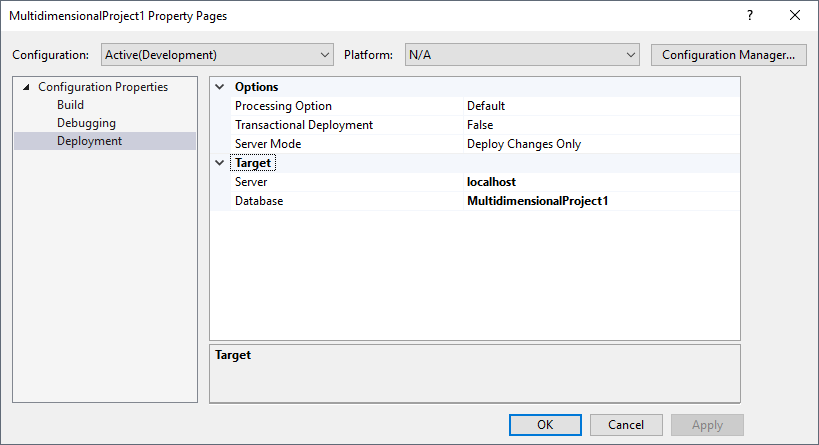
After configuring the target server and database, right-click the project and select Process. You may need to build and deploy the project as a part of this step. Once the project is built and deployed, click Run in the Process Database wizard.
Now you have an OLAP cube for Vimeo data in your SSAS instance, ready to be analyzed, reported, and viewed. Get started with a free, 30-day trial of the CData API Driver for ADO.NET.