






Integrate Webflow Data in Your Informatica Cloud Instance

Informatica Cloud allows you to perform extract, transform, and load (ETL) tasks in the cloud. With the Cloud Secure Agent and the CData API Driver for JDBC, you get live access to Webflow data, directly within Informatica Cloud. In this article, we will walk through downloading and registering the Cloud Secure Agent, connecting to Webflow through the JDBC Driver and generating a mapping that can be used in any Informatica Cloud process.
Informatica Cloud Secure Agent
To work with the Webflow data through the JDBC Driver, install the Cloud Secure Agent.
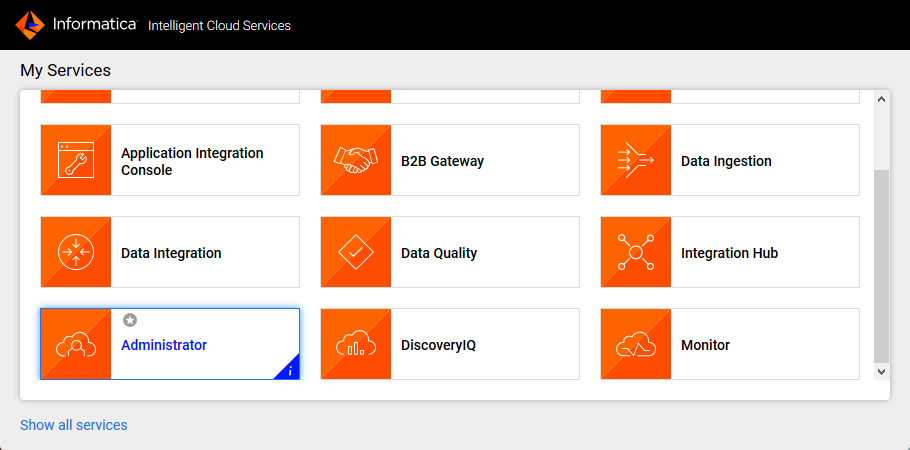
- Navigate to the Administrator page in Informatica Cloud
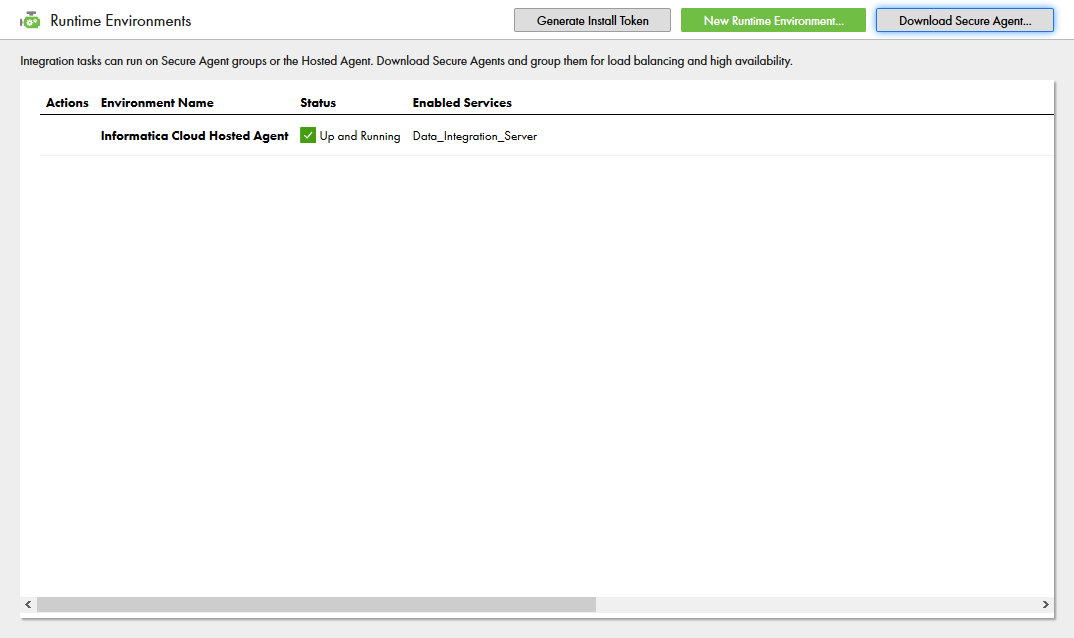
- Select the Runtime Environments tab
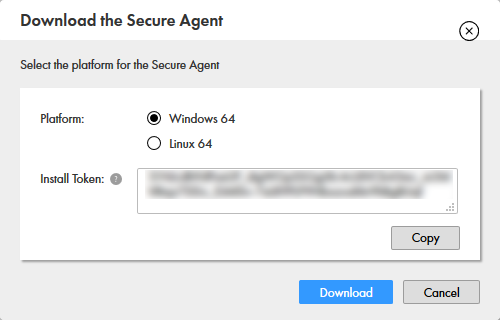
- Click "Download Secure Agent"
- Make note of the Install Token
- Run the installer on the client machine and register the Cloud Secure Agent with your username and install token
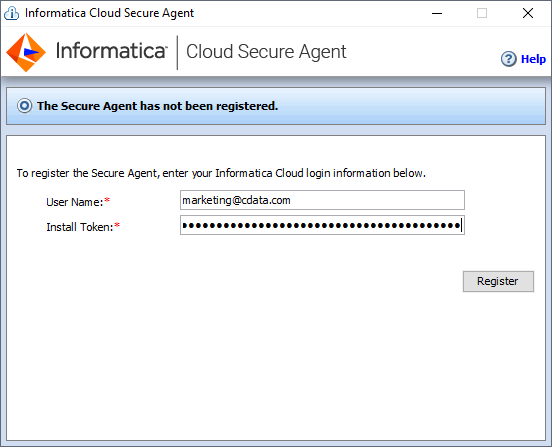
NOTE: It may take some time for all of the Cloud Secure Agent services to get up and running.
Connecting to the Webflow JDBC Driver
With the Cloud Secure Agent installed and running, you are ready to connect to Webflow through the JDBC Driver.
Adding the JDBC Driver to the Secure Agent Machine
- Navigate to the following directory on the Secure Agent machine:
%Secure Agent installation directory%/ext/connectors/thirdparty/
- Create a folder and add the driver JAR file (cdata.jdbc.api.jar) based on the type of mapping that you want to configure.
For mappings, create the following folder and add the driver JAR file:
informatica.jdbc_v2/common
For mappings in advanced mode, also create the following folder and add the driver JAR file:
informatica.jdbc_v2/spark
- Restart the Secure Agent.
Connecting to Webflow in Informatica Cloud
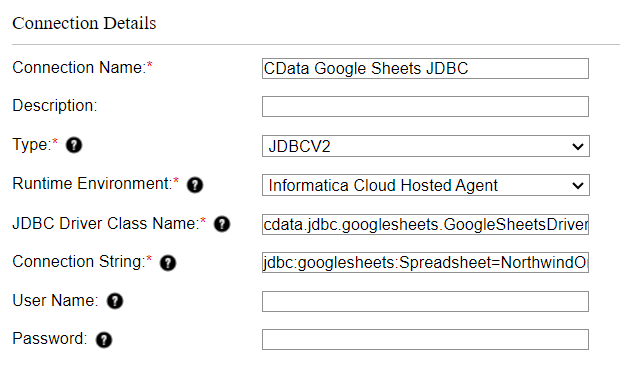
After installing the driver JAR file, you are ready to configure your connection to Webflow in Informatica Cloud. Start by clicking the Connections tab and clicking New Connection. Fill in the following properties for the connection:- Connection Name: Name your connection (i.e.: CData Webflow Connection)
- Type: Select "JDBC_V2"
- Runtime Environment: Select the runtime environment where you installed the Secure Agent
- JDBC Driver Class Name: The name of the JDBC driver class: cdata.jdbc.api.APIDriver
- JDBC Connection URL: Set this to the JDBC URL for Webflow. Your URL will look similar to the following:
jdbc:api:Profile=C:\profiles\Webflow.apip;AuthScheme=OAuth;InitiateOAuth=GETANDREFRESH;OAuthClientId=your_client_id;OAuthClientSecret=your_client_secret;CallbackUrl=your_callback_url;
Authentication
Webflow uses OAuth 2.0 authentication to ensure secure access to sites, CMS collections, e-commerce data, and other resources. This authentication method allows you to securely connect to your Webflow workspace and manage resources with proper authorization.
OAuth 2.0 Setup and Configuration
Step 1: Create a Webflow OAuth Application
To set up OAuth authentication:
- Visit the Webflow Developer Portal
- Navigate to "Apps & Integrations" in your Webflow account
- Click "Register an App" to create a new OAuth application
- Configure the application name, description, and redirect URI (CallbackURL)
- Copy the Client ID and Client Secret for use in your connection
Required Connection Properties
- AuthScheme: Set this to OAuth (required)
- OAuthClientId: Client ID from your Webflow OAuth application (required)
- OAuthClientSecret: Client secret from your Webflow OAuth application (required)
- CallbackURL: Redirect URI specified in your OAuth application (required)
- InitiateOAuth: Set to GETANDREFRESH for automatic token management (recommended)
Required OAuth Scopes
The Webflow API Profile requires the following OAuth scopes:
- sites:read - Read access to site information and configuration
- pages:read - Read access to site pages
- cms:read - Read access to CMS collections and items
- forms:read - Read access to forms and form submissions
- assets:read - Read access to media assets and folders
- ecommerce:read - Read access to products, orders, and inventory
- authorized_user:read - Read access to the authorized user
Built-In Connection String Designer
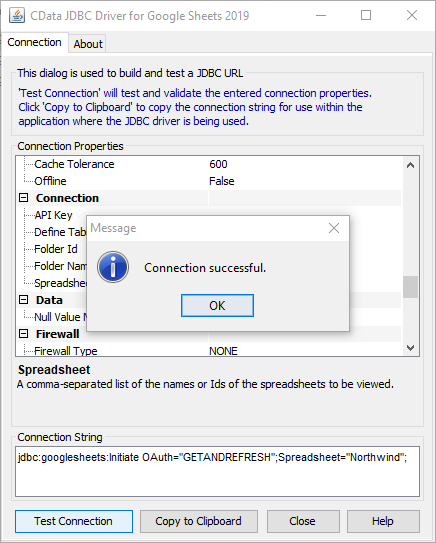
For assistance in constructing the JDBC URL, use the connection string designer built into the Webflow JDBC Driver. Either double-click the .jar file or execute the .jar file from the command-line.
java -jar cdata.jdbc.api.jarFill in the connection properties and copy the connection string to the clipboard.
- Username: Set this to a placeholder value (since Webflow does not require a username)
- Password: Set this to a placeholder value (since Webflow does not require a password)
Create a Mapping for Webflow Data
With the connection to Webflow configured, we can now access Webflow data in any Informatica process. The steps below walk through creating a mapping for Webflow to another data target.
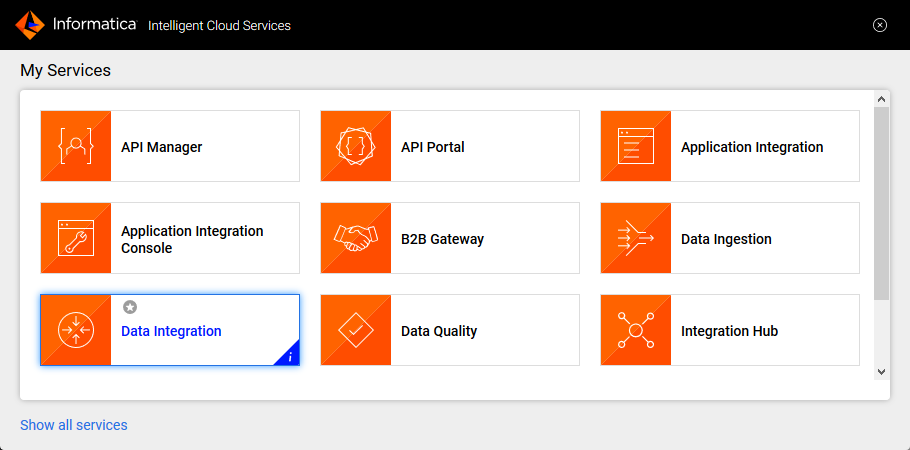
- Navigate to the Data Integration page
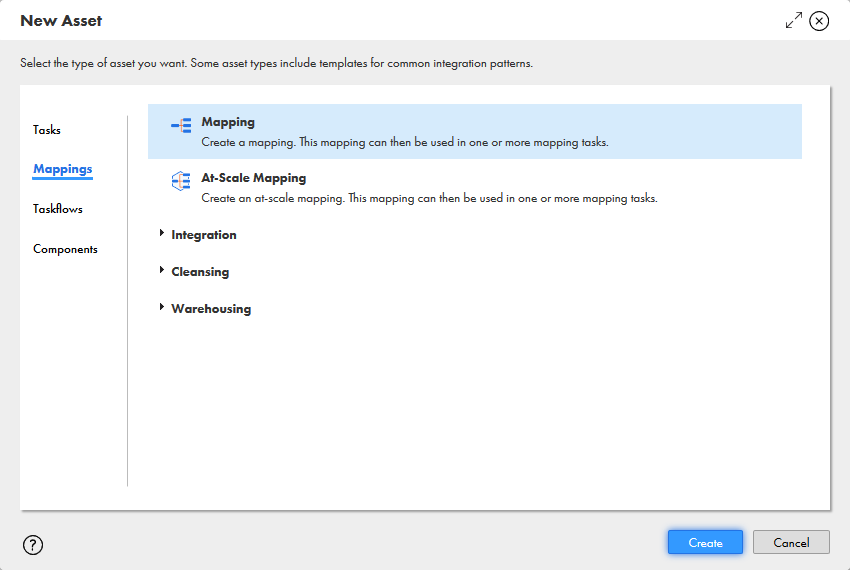
- Click New.. and select Mapping from the Mappings tab
- Click the Source Object and in the Source tab, select the Connection and set the Source Type
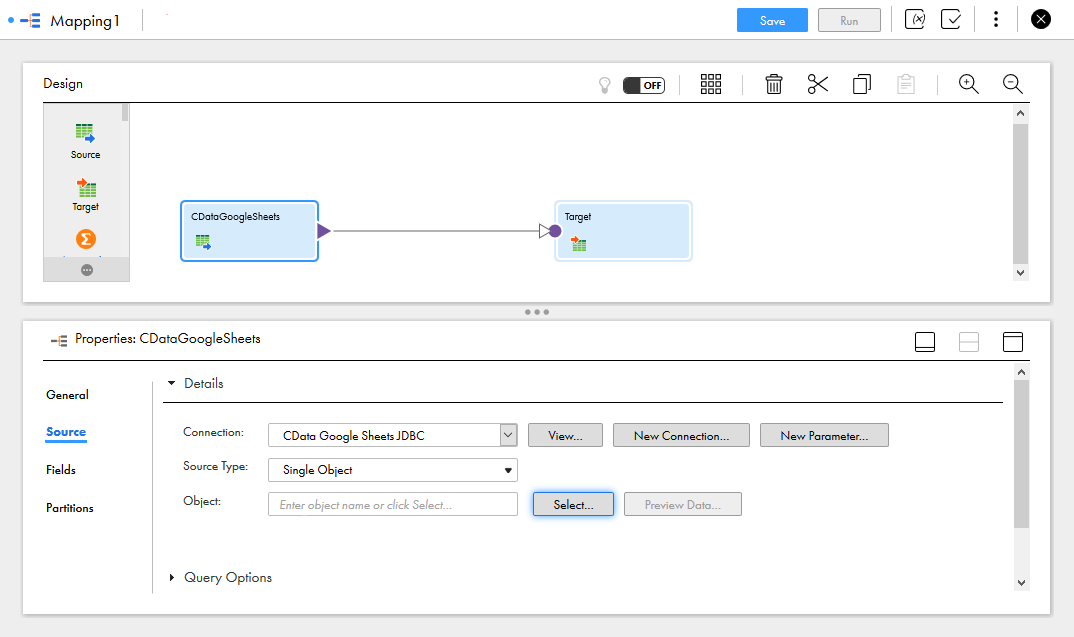
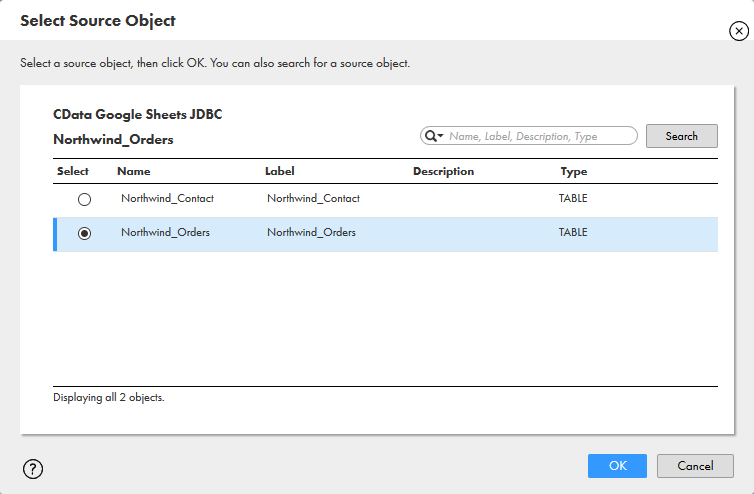
- Click "Select" to choose the table to map
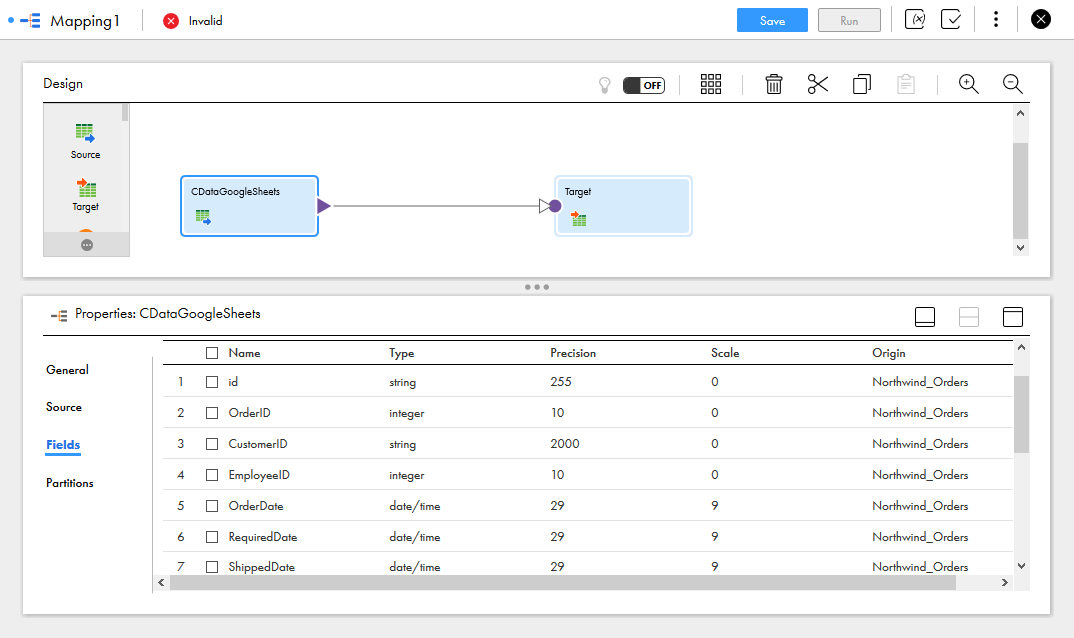
- In the Fields tab, select the fields from the Webflow table to map
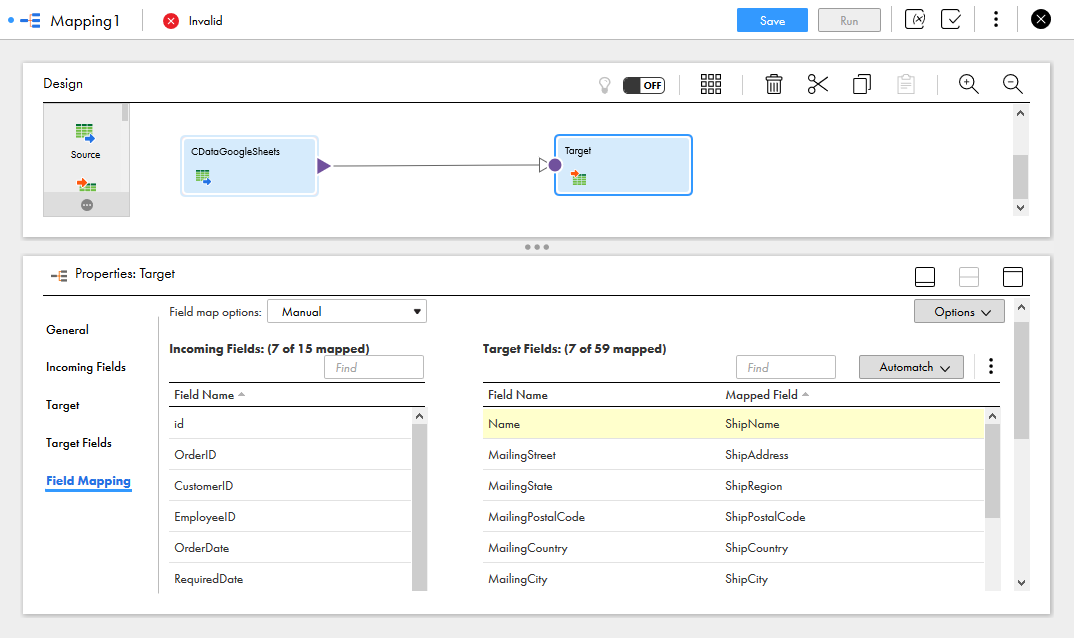
- Click the Target object and configure the Target source, table and fields. In the Field Mapping tab, map the source fields to the target fields.
With the mapping configured, you are ready to start integrating live Webflow data with any of the supported connections in Informatica Cloud. Download a free, 30-day trial of the CData API Driver for JDBC and start working with your live Webflow data in Informatica Cloud today.