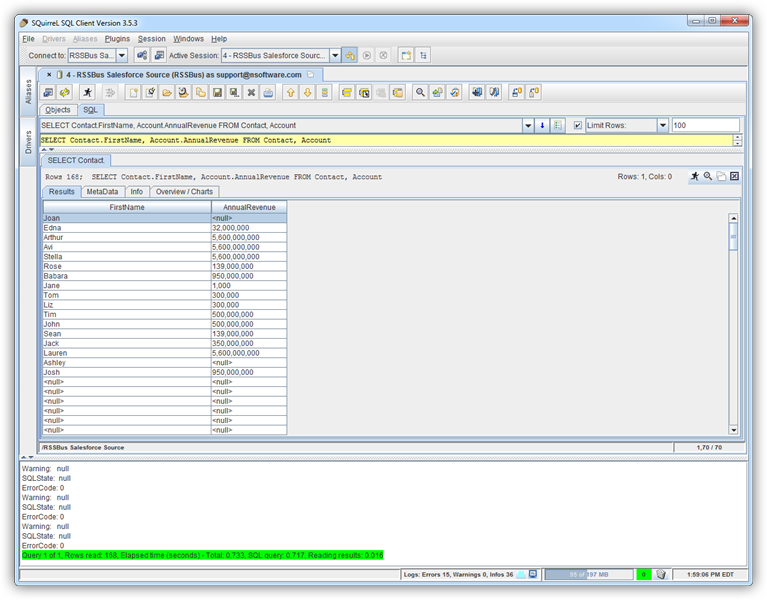
How to connect to Webflow Data with Squirrel SQL client

The CData JDBC Driver for Webflow enables you to execute queries to Webflow data in tools like Squirrel SQL Client. In this article, you will create a JDBC data source for Webflow data and execute queries.
Add the JDBC Driver for Webflow
Follow the steps below to add the driver JAR.
- In Squirrel SQL, click Windows -> View Drivers.
- Click the plus icon to open the Add Driver wizard.
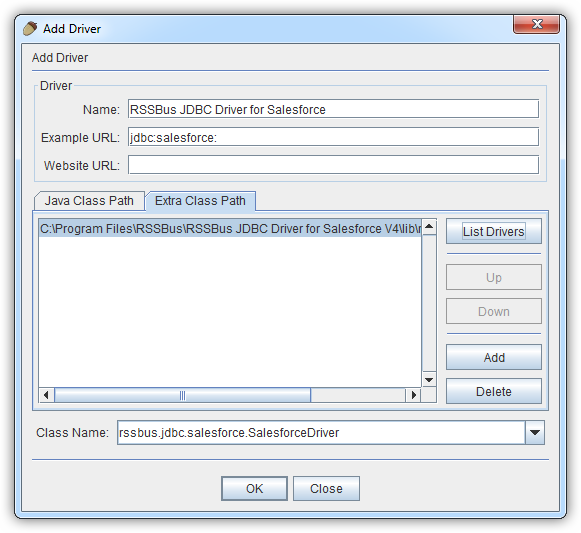
- In the Name box, enter a user-friendly name for the driver; for example, CData JDBC Driver for Webflow.
- In the Example URL box, enter jdbc:api:
- In the Extra Class Path tab, click Add.
- In the file explorer dialog that opens, select the JAR file for the driver, located in the lib subfolder of the installation directory.
- Click List Drivers to populate the Class Name menu with the class name for the driver, cdata.jdbc.api.APIDriver.
Define Connection Properties
Follow the steps below to save connection properties in the driver alias.
- Click Windows -> View Aliases.
- In the pane that lists the aliases, click the plus icon.
In the Add Alias wizard that opens, the following fields are required for the JDBC driver:
- Name: Enter a name for the alias; for example, CData Webflow Source.
- Driver: Select the CData JDBC Driver for Webflow.
- URL: Enter jdbc:api:
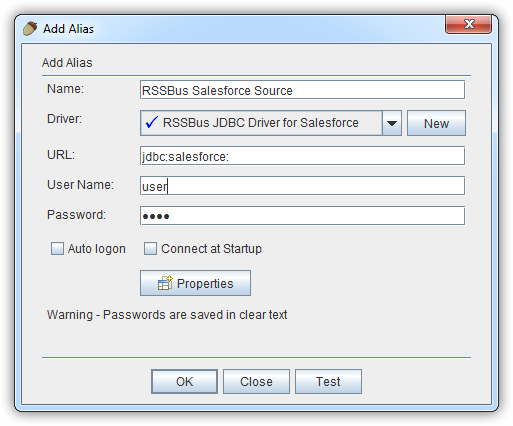
- If you want to define any additional properties, click Properties.
- In the Driver properties tab of the dialog that appears, select the Use driver properties checkbox.
- In the Specify column, select the checkboxes for the required connection properties.
Authentication
Webflow uses OAuth 2.0 authentication to ensure secure access to sites, CMS collections, e-commerce data, and other resources. This authentication method allows you to securely connect to your Webflow workspace and manage resources with proper authorization.
OAuth 2.0 Setup and Configuration
Step 1: Create a Webflow OAuth Application
To set up OAuth authentication:
- Visit the Webflow Developer Portal
- Navigate to "Apps & Integrations" in your Webflow account
- Click "Register an App" to create a new OAuth application
- Configure the application name, description, and redirect URI (CallbackURL)
- Copy the Client ID and Client Secret for use in your connection
Required Connection Properties
- AuthScheme: Set this to OAuth (required)
- OAuthClientId: Client ID from your Webflow OAuth application (required)
- OAuthClientSecret: Client secret from your Webflow OAuth application (required)
- CallbackURL: Redirect URI specified in your OAuth application (required)
- InitiateOAuth: Set to GETANDREFRESH for automatic token management (recommended)
Required OAuth Scopes
The Webflow API Profile requires the following OAuth scopes:
- sites:read - Read access to site information and configuration
- pages:read - Read access to site pages
- cms:read - Read access to CMS collections and items
- forms:read - Read access to forms and form submissions
- assets:read - Read access to media assets and folders
- ecommerce:read - Read access to products, orders, and inventory
- authorized_user:read - Read access to the authorized user
Below is a typical connection string:
jdbc:api:Profile=C:\profiles\Webflow.apip;AuthScheme=OAuth;InitiateOAuth=GETANDREFRESH;OAuthClientId=your_client_id;OAuthClientSecret=your_client_secret;CallbackUrl=your_callback_url;
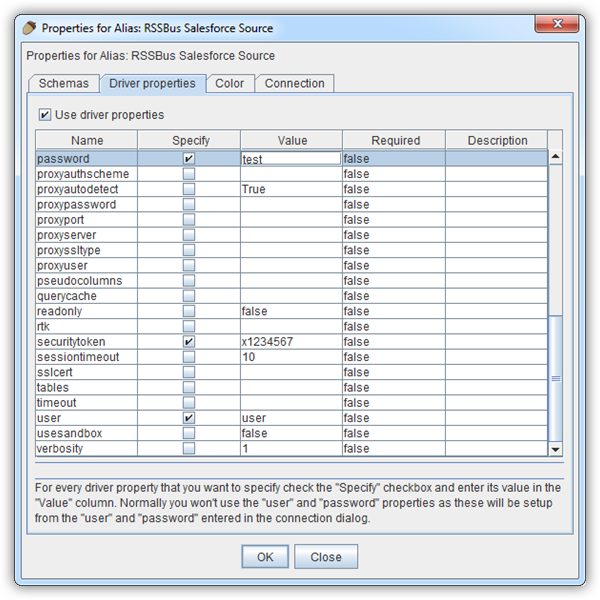
- In the dialog that appears after you click OK, click connect to test the connection.
Discover Schemas and Query Webflow Data
After the metadata has loaded, a new tab for the Webflow data source is displayed. On the Objects subtab, you can discover schema information, such as the available tables and views.
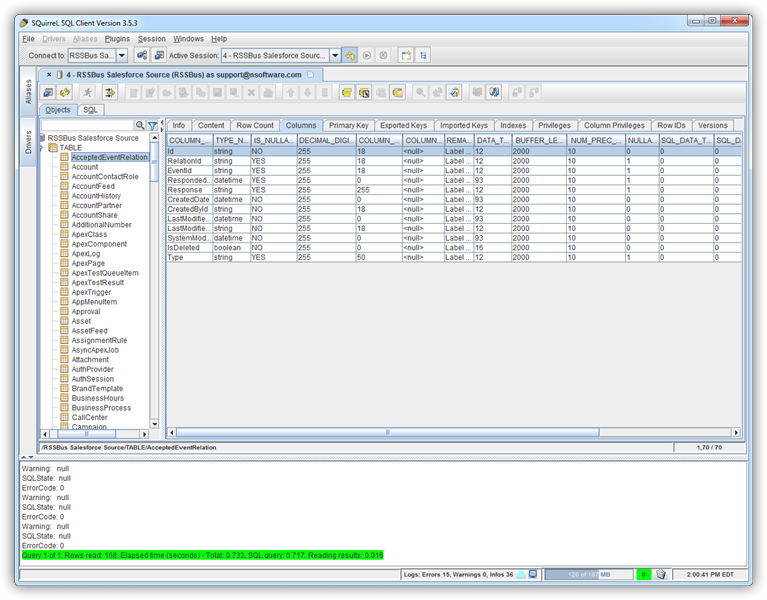
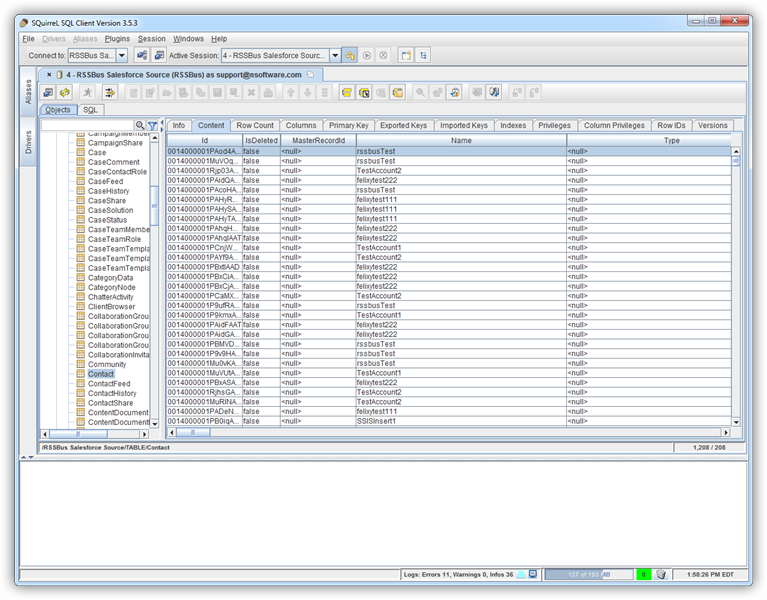
To view table data, select the table on the Objects tab. The table data is then loaded in a grid on the Content tab.
To execute an SQL query, enter the query on the SQL tab and then click Run SQL (the runner icon). For example:
SELECT , FROM Sites WHERE Id = 'your_site_id'