






Connect to Zoho Recruit Data in the Denodo Platform

Denodo Platform is a data virtualization product providing a single point of contact for enterprise database data. When paired with the CData API Driver for JDBC, Denodo users can work with live Zoho Recruit data alongside other enterprise data sources. This article explains how to create a virtual data source for Zoho Recruit in the Denodo Virtual DataPort Administrator.
With built-in optimized data processing, the CData JDBC Driver offers unmatched performance for interacting with live Zoho Recruit data. When you issue complex SQL queries to Zoho Recruit, the driver pushes supported SQL operations, like filters and aggregations, directly to Zoho Recruit and utilizes the embedded SQL engine to process unsupported operations client-side (often SQL functions and JOIN operations). Its built-in dynamic metadata querying allows you to work with and analyze Zoho Recruit data using native data types.
Create the Zoho Recruit Virtual Port
To connect to live Zoho Recruit data from Denodo, you need to copy the JDBC Driver JAR file to the external library directory for Denodo and create a new JDBC Data Source from the Virtual DataPort Administrator tool.
- Download the CData API Driver for JDBC installer, unzip the package, and run the JAR file to install the driver.
- Copy the JAR File (and license file if it exists) from the installation location (typically C:\Program Files\CData\CData API Driver for JDBC\lib\) to the Denodo external library directory (C:\Denodo\Denodo Platform\lib-external\jdbc-drivers\cdata-api-19).
- Open the Denodo Virtual DataPort Administrator tool and navigate to the Server Explorer tab.
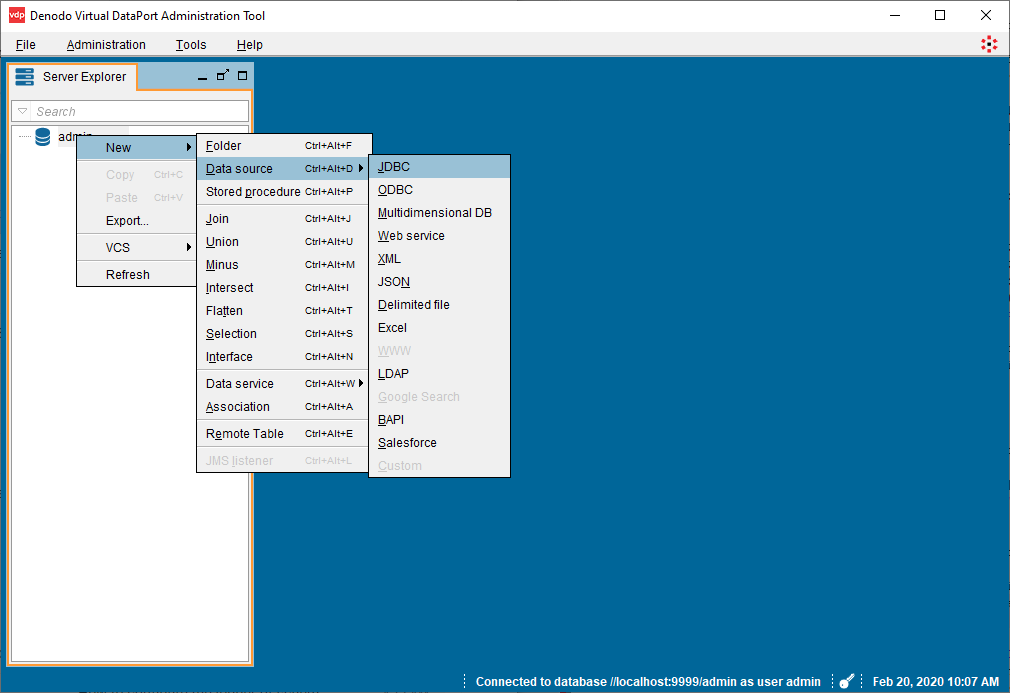
- Right-click "admin" and select New -> Data source -> JDBC.
- Configure the JDBC Connection:
- Name: your choice, e.g.: api
- Database adapter: Generic
- Driver class path: C:\Denodo\Denodo Platform\lib-external\jdbc-drivers\cdata-api-19
- Driver class: cdata.jdbc.api.APIDriver
Database URI: Set this to a JDBC URL using the necessary connection properties. For example,
jdbc:api:Profile=C:\profiles\ZohoRecruit.apip;ProfileSettings='Domain=.com';AuthScheme=OAuth;InitiateOAuth=GETANDREFRESH;OAuthClientId=your_client_id;OAuthClientSecret=your_client_secret;CallbackUrl=your_callback_url;
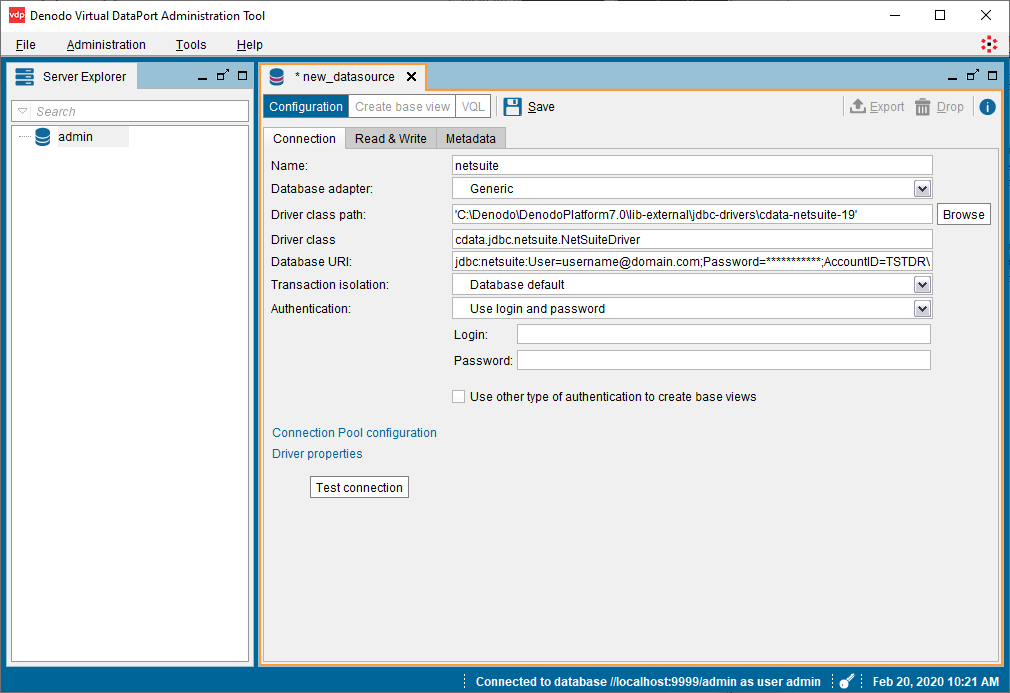
Information on creating the Database URI follows:
Built-In Connection String Designer
For assistance in constructing the JDBC URL, use the connection string designer built into the Zoho Recruit JDBC Driver. Either double-click the JAR file or execute the jar file from the command-line.
java -jar cdata.jdbc.api.jar
Fill in the connection properties and copy the connection string to the clipboard.
To authenticate to ZohoRecruit, and connect to your own data or to allow other users to connect to their data, you can use the OAuth standard.
Using OAuth Authentication
First, you will need to register an OAuth application with ZohoRecruit. To do so, go to the Zoho Developer Console, add a new Client (Server-based application) and set a valid OAuth redirect URL. Your OAuth application will be assigned a client id and a client secret. Additionally, you will need to set the relevant Domain (.com, .eu, .in, .com.cn, or .jp), which defaults to .com.
After setting the following connection properties, you are ready to connect:
- AuthScheme: Set this to OAuth.
- InitiateOAuth: Set this to GETANDREFRESH. You can use InitiateOAuth to manage the process to obtain the OAuthAccessToken.
- OAuthClientId: Set this to the client_id that is specified in your app settings.
- OAuthClientSecret: Set this to the client_secret that is specified in your app settings.
- CallbackURL: Set this to the Redirect URI that is specified in your app settings.
- Domain: Set this in ProfileSettings to your ZohoRecruit account domain (e.g. .com, .eu, .in, .com.cn, .jp).
Example connection string:
Profile=C:\profiles\ZohoRecruit.apip;ProfileSettings='Domain=.com';AuthScheme=OAuth;InitiateOAuth=GETANDREFRESH;OAuthClientId=your_client_id;OAuthClientSecret=your_client_secret;CallbackUrl=your_callback_url;

- Click the "Test connection" button to confirm the configuration and click Save.
View Zoho Recruit Data in the VirtualPort Administrator Tool
After creating the data source, you can create a base view of Zoho Recruit data for use in the Denodo Platform.
- Click the "Create base view" button in the newly created VirtualPort (admin.API).
- Expand the object tree and select the objects (tables) you wish to import.
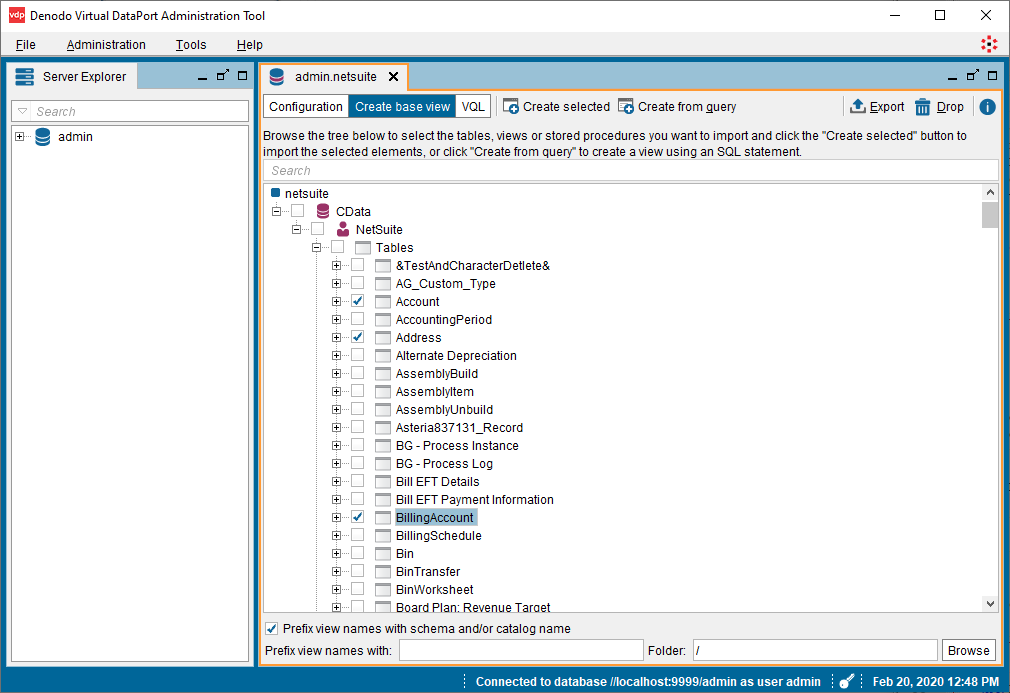
- Click the "Create selected" button to create views of the Zoho Recruit data.
Optional: Click "Create associations from foreign keys" to define relationships between the objects. - With the view(s) created, navigate to a table (cdata_api_attachments) in the Server Explorer and double-click the selected table.
- In the new tab, click "Execution panel" to open a query panel.
- Customize the query in the "Execute" tab or use the default:
SELECT * FROM cdata_api_attachments CONTEXT ('i18n'='us_est', 'cache_wait_for_load'='true')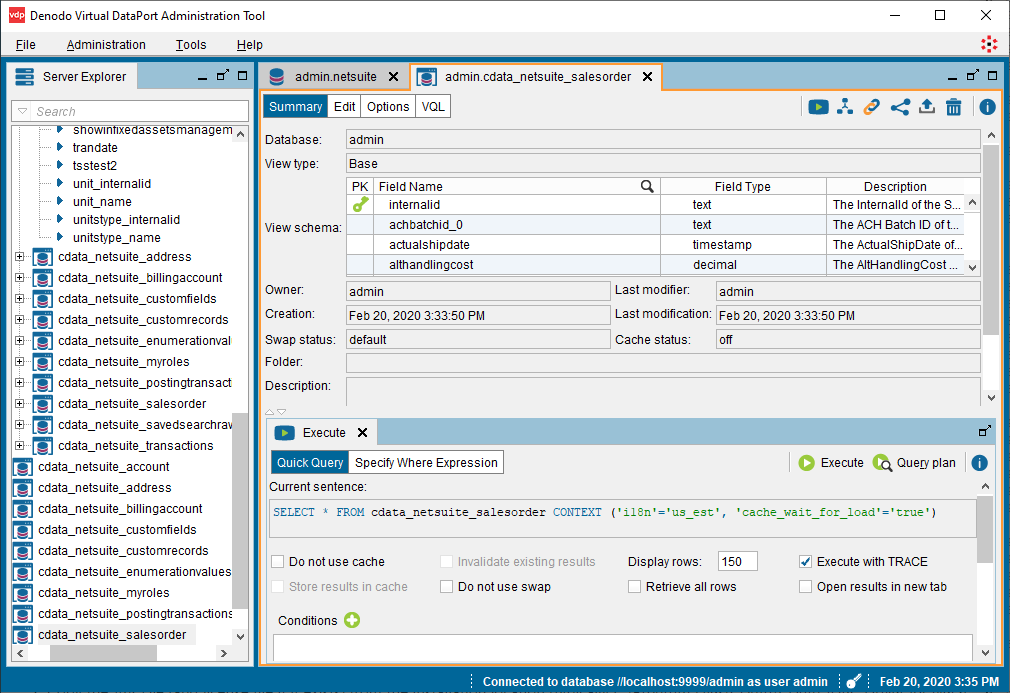
- Click Execute to view the data.
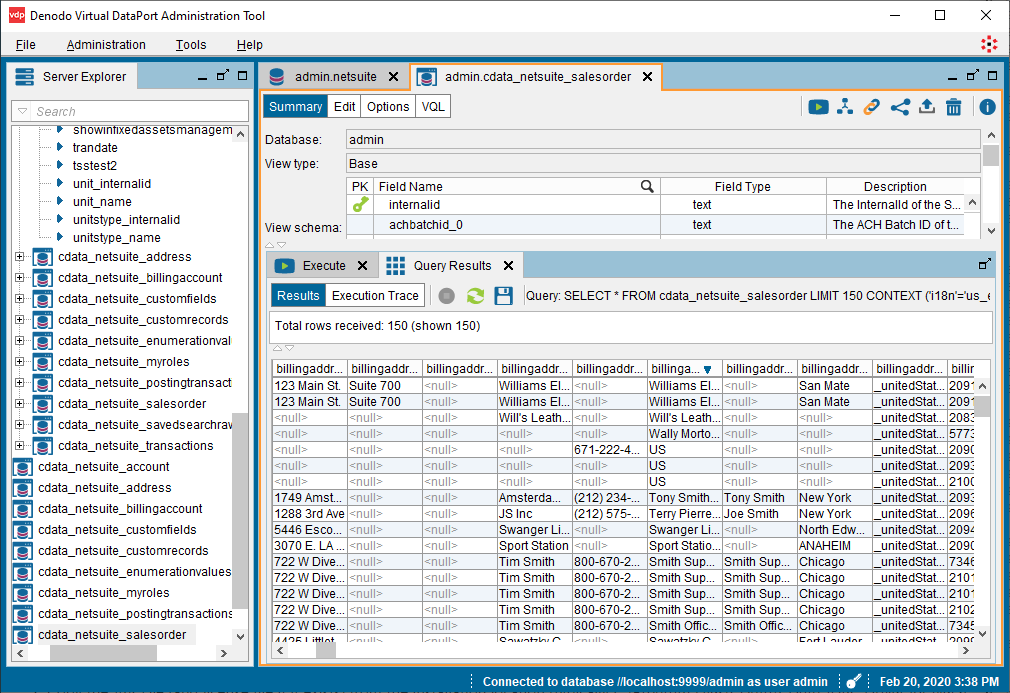
With the base view created, you can now work with live Zoho Recruit data like you would any other data source in Denodo Platform, for example, querying Zoho Recruit in the Denodo Data Catalog.
Download a free, 30-day trial of the CData API Driver for JDBC and start working with your live Zoho Recruit data in Denodo Platform. Reach out to our Support Team if you have any questions.