






Integrate Open WebUI with Live Zuora Data via CData Connect AI

Open WebUI is an open-source, self-hosted AI chat platform that brings together hosted LLM APIs and locally served models under a single, customizable interface. It supports the Model Context Protocol (MCP) through its tool server framework, allowing you to configure external tools and data sources so that chats can reach beyond the model's training data and interact with live systems.
By integrating Open WebUI with CData Connect AI through the built-in MCP Server, Open WebUI gains governed, real-time access to live Zuora data. This enables users to list catalogs, explore schemas, and query records from Zuora data using natural language prompts, with all data access running securely against authorized sources.
This article explains how to configure Zuora connectivity in Connect AI, generate the required personal access token, install Open WebUI, register the Connect AI MCP Server, configure an LLM provider, and verify the integration by querying live Zuora data from the Open WebUI chat interface.
Step 1: Configure Zuora connectivity for Open WebUI
Connectivity to Zuora from Open WebUI is made possible through Connect AI's Remote MCP Server. To interact with Zuora data from Open WebUI, start by creating and configuring a Zuora connection in Connect AI.
- Log into Connect AI, click Sources, and then click Add Connection
- Select Zuora from the Add Connection panel
-
Enter the necessary authentication properties to connect to Zuora.
Zuora uses the OAuth standard to authenticate users. See the online Help documentation for a full OAuth authentication guide.
Configuring Tenant property
In order to create a valid connection with the provider you need to choose one of the Tenant values (USProduction by default) which matches your account configuration. The following is a list with the available options:
- USProduction: Requests sent to https://rest.zuora.com.
- USAPISandbox: Requests sent to https://rest.apisandbox.zuora.com"
- USPerformanceTest: Requests sent to https://rest.pt1.zuora.com"
- EUProduction: Requests sent to https://rest.eu.zuora.com"
- EUSandbox: Requests sent to https://rest.sandbox.eu.zuora.com"
Selecting a Zuora Service
Two Zuora services are available: Data Query and AQuA API. By default ZuoraService is set to AQuADataExport.
DataQuery
The Data Query feature enables you to export data from your Zuora tenant by performing asynchronous, read-only SQL queries. We recommend to use this service for quick lightweight SQL queries.
Limitations- The maximum number of input records per table after filters have been applied: 1,000,000
- The maximum number of output records: 100,000
- The maximum number of simultaneous queries submitted for execution per tenant: 5
- The maximum number of queued queries submitted for execution after reaching the limitation of simultaneous queries per tenant: 10
- The maximum processing time for each query in hours: 1
- The maximum size of memory allocated to each query in GB: 2
- The maximum number of indices when using Index Join, in other words, the maximum number of records being returned by the left table based on the unique value used in the WHERE clause when using Index Join: 20,000
AQuADataExport
AQuA API export is designed to export all the records for all the objects ( tables ). AQuA query jobs have the following limitations:
Limitations- If a query in an AQuA job is executed longer than 8 hours, this job will be killed automatically.
- The killed AQuA job can be retried three times before returned as failed.

- Click Save & Test
- Navigate to the Permissions tab and update user-based permissions



Add a Personal Access Token
A Personal Access Token (PAT) is used to authenticate the connection to Connect AI from Open WebUI. It is best practice to create a separate PAT for each integration to maintain granular access control.
- Click the gear icon () at the top right of the Connect AI app to open Settings
- On the Settings page, go to the Access Tokens section and click Create PAT
- Give the PAT a descriptive name and click Create
- Copy the token when displayed and store it securely. It will not be shown again

With the Zuora connection configured and a PAT generated, Open WebUI can now connect to Zuora data through Connect AI.
Step 2: Install Open WebUI and configure Connect AI MCP
Next, install Open WebUI locally and configure the Connect AI Remote MCP Server as a tool server so that the chat interface can discover and call live data tools through Connect AI.
- Install Open WebUI by following the official Quick Start guide
- Once the installation is complete, start Open WebUI and open it in your browser to access the chat interface
-
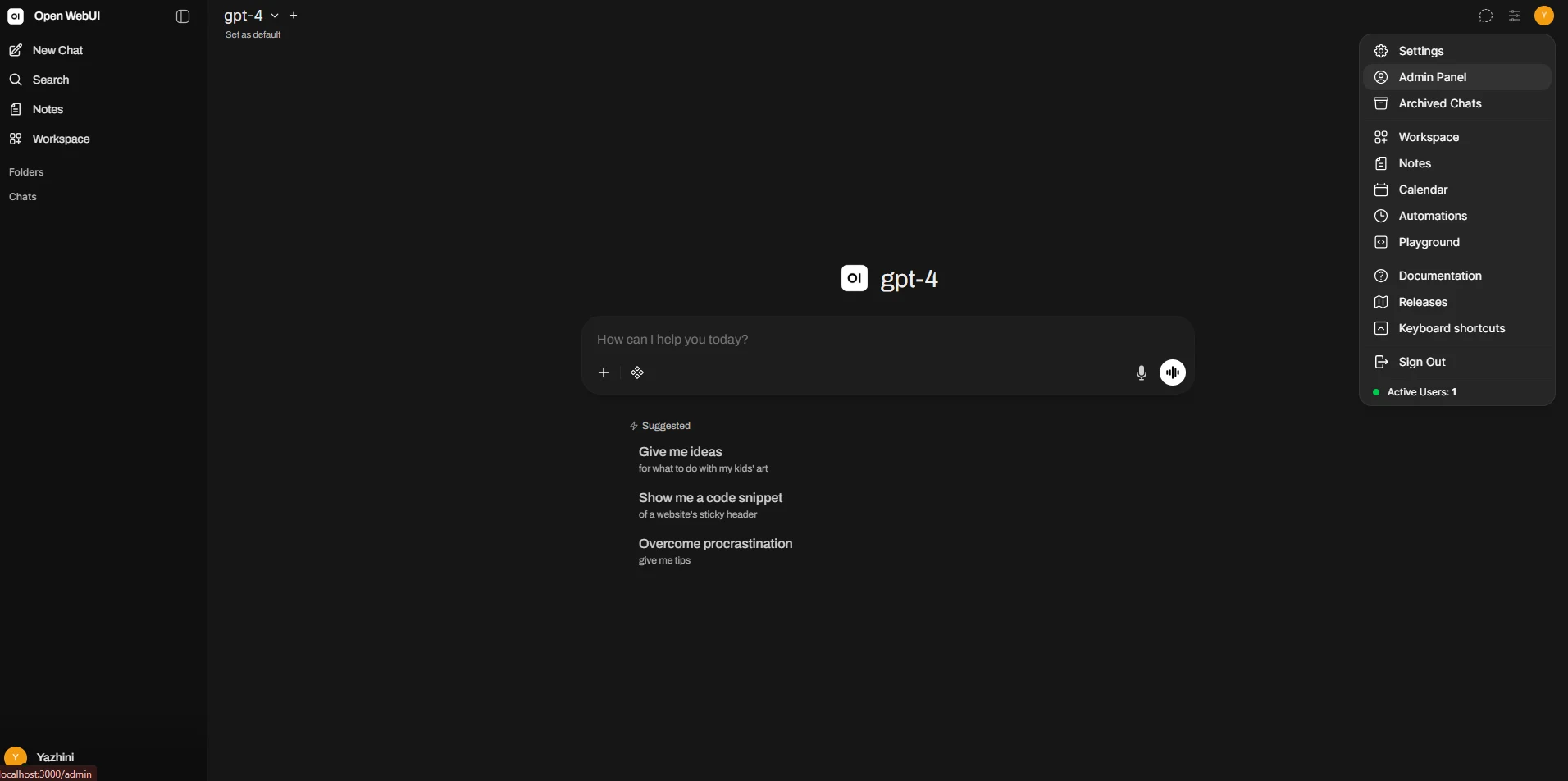
Click your profile icon in the top right and select Admin Panel
-
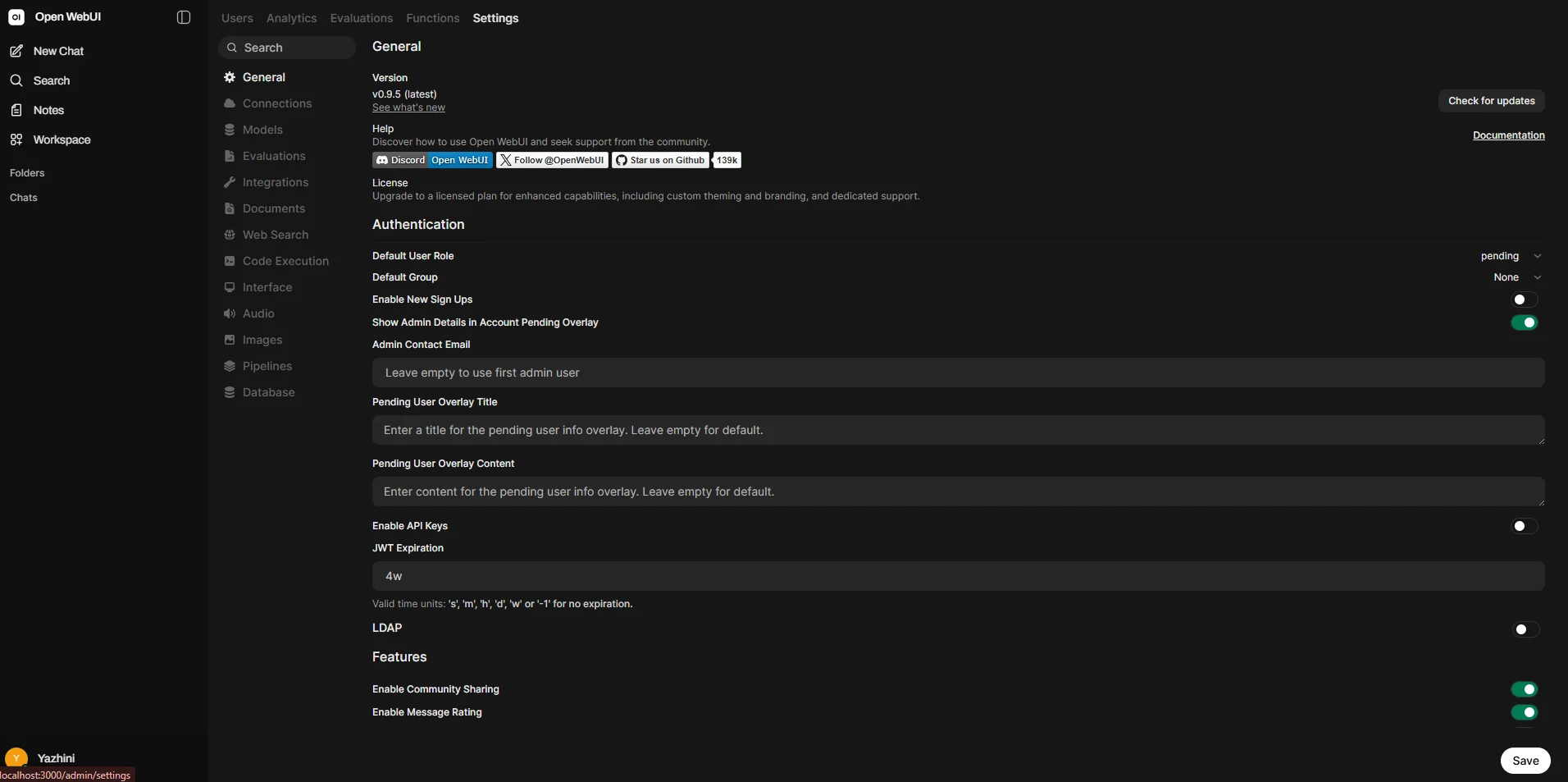
In the top navigation bar of the Admin Panel, click Settings
-
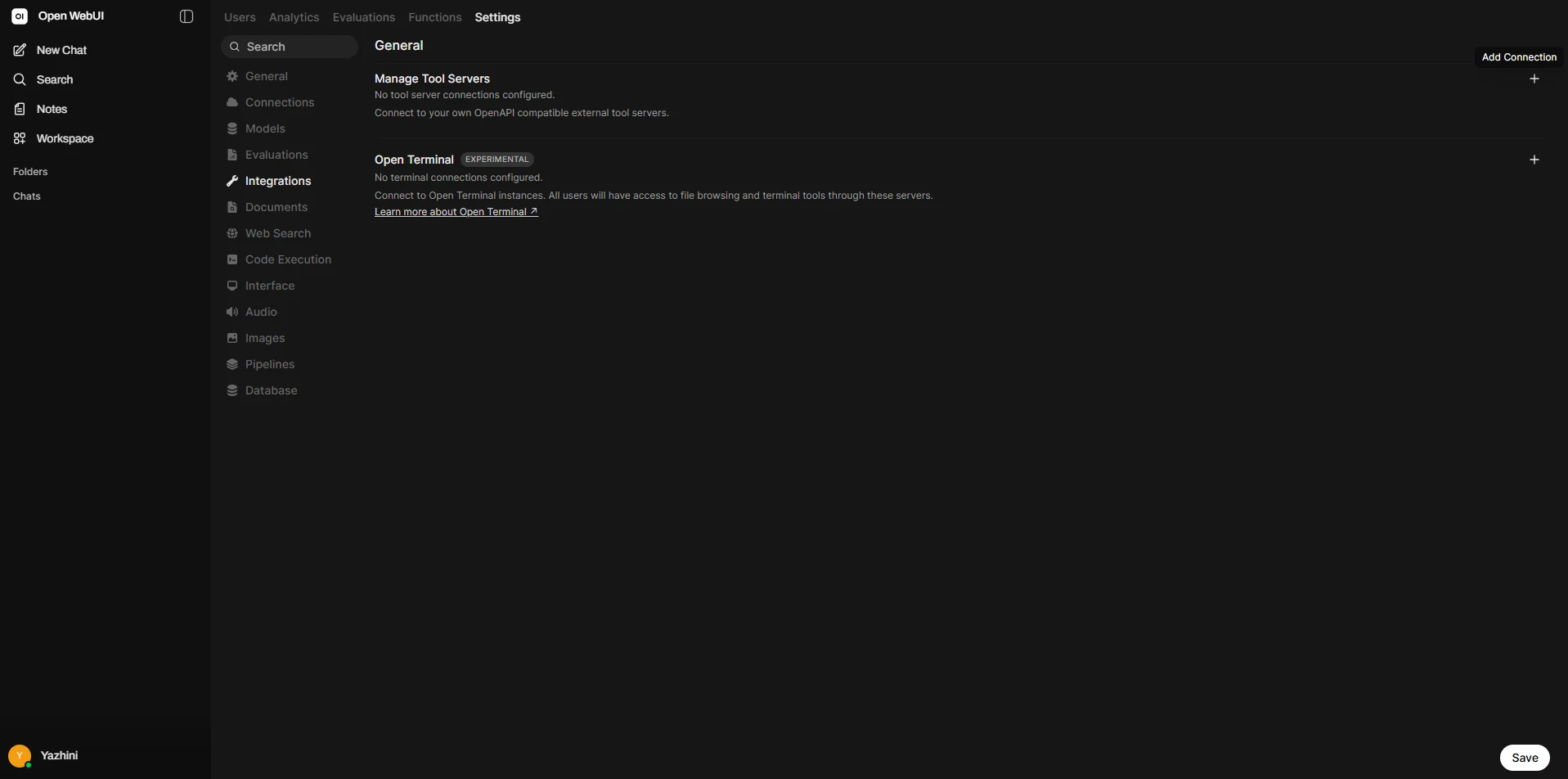
Select Integrations from the left menu, then click the icon next to Manage Tool Servers to add a new connection
-
In the Add Connection panel, configure the server with the following values:
- Type: MCP Streamable HTTP
- Name: CData MCP, or any name of your choice
- ID: cdata-mcp
- URL: https://mcp.cloud.cdata.com/mcp
- Auth: None
-
Expand the Advanced section and paste the following JSON into the Headers field:
{
    "Authorization": "Basic your_base64_encoded_email_PAT",
    "Content-Type": "application/json"
}
Note: Open WebUI will use Basic authentication with Connect AI. Combine your Connect AI user email and the PAT you created earlier in the format email:PAT, base64 encode the combined string, and prefix it with Basic. For example, given [email protected]:ABC123...XYZ789, the Authorization header value becomes something like: Basic dXNlckBkb21haW4uY29tOkFCQzEyMy4uLlhZWjc4OQ==
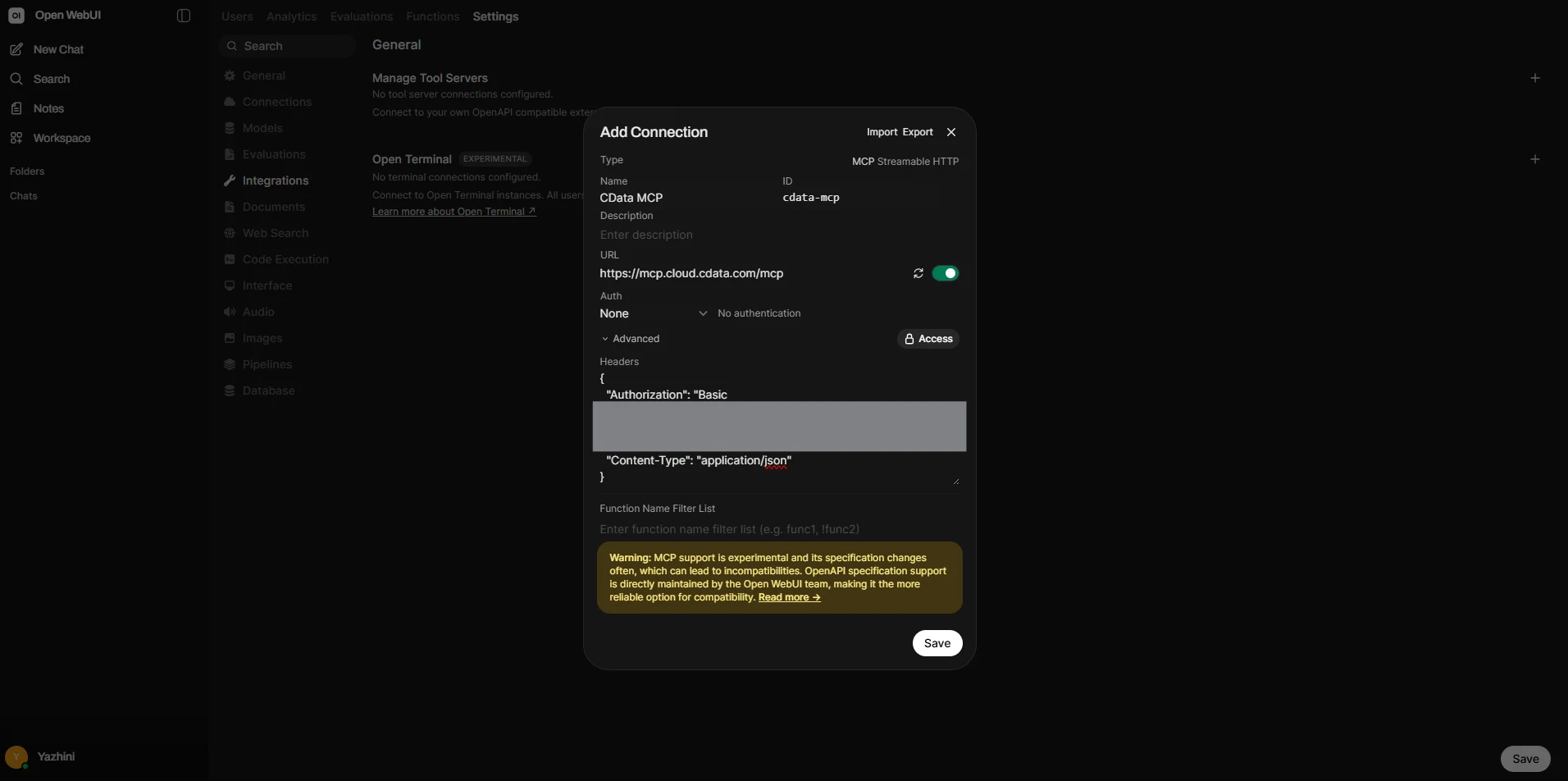
- Click Save to register the tool server
Enable the MCP server and configure an LLM provider
Open WebUI requires at least one LLM provider to power the chat. Enable the MCP server from the chat input and configure an API key for your preferred provider so the model can interpret prompts and call MCP tools through Connect AI.
-
Return to the chat interface, click the Integrations icon at the bottom of the chat input, select Tools, and toggle CData MCP on to expose the tools to the chat
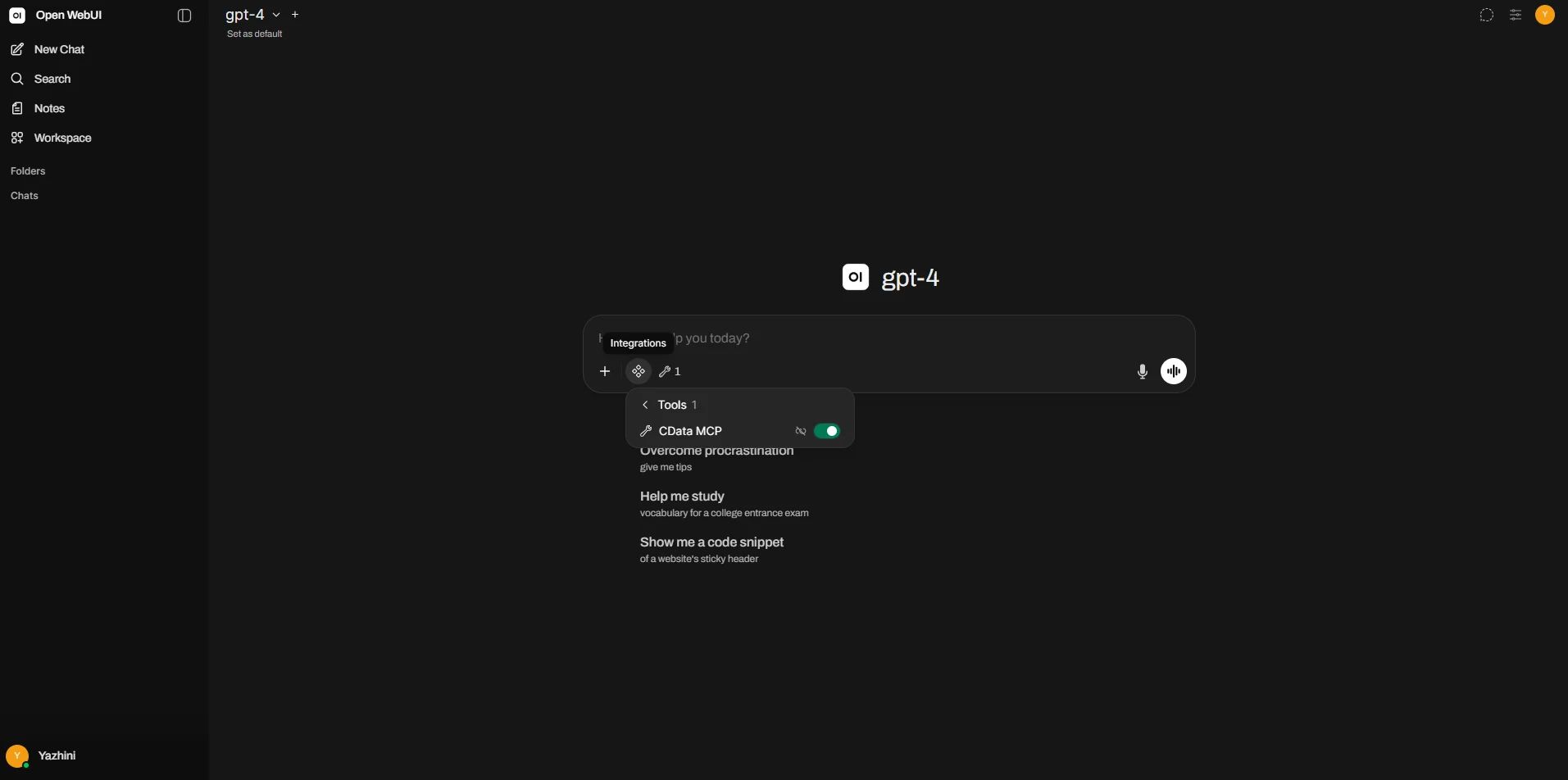
- At the top of the chat, click the model selector and choose your preferred LLM provider and model. Add your provider API key when prompted so the model can be used in the chat
With the MCP server and an LLM provider configured, Open WebUI is ready to query live Zuora data through Connect AI.
Step 3: Query live Zuora data from Open WebUI
With the integration complete, use the Open WebUI chat input to interact with live Zuora data through natural language prompts handled by the configured LLM.
-
With the CData MCP server enabled and a model selected, type a prompt in the chat input, for example:
- List all catalogs in my cdata mcp
- Show the available schemas and tables for Zuora
- Query the top 5 records from a table in Zuora data
-
Open WebUI calls the Connect AI MCP Server and returns live results from Zuora data
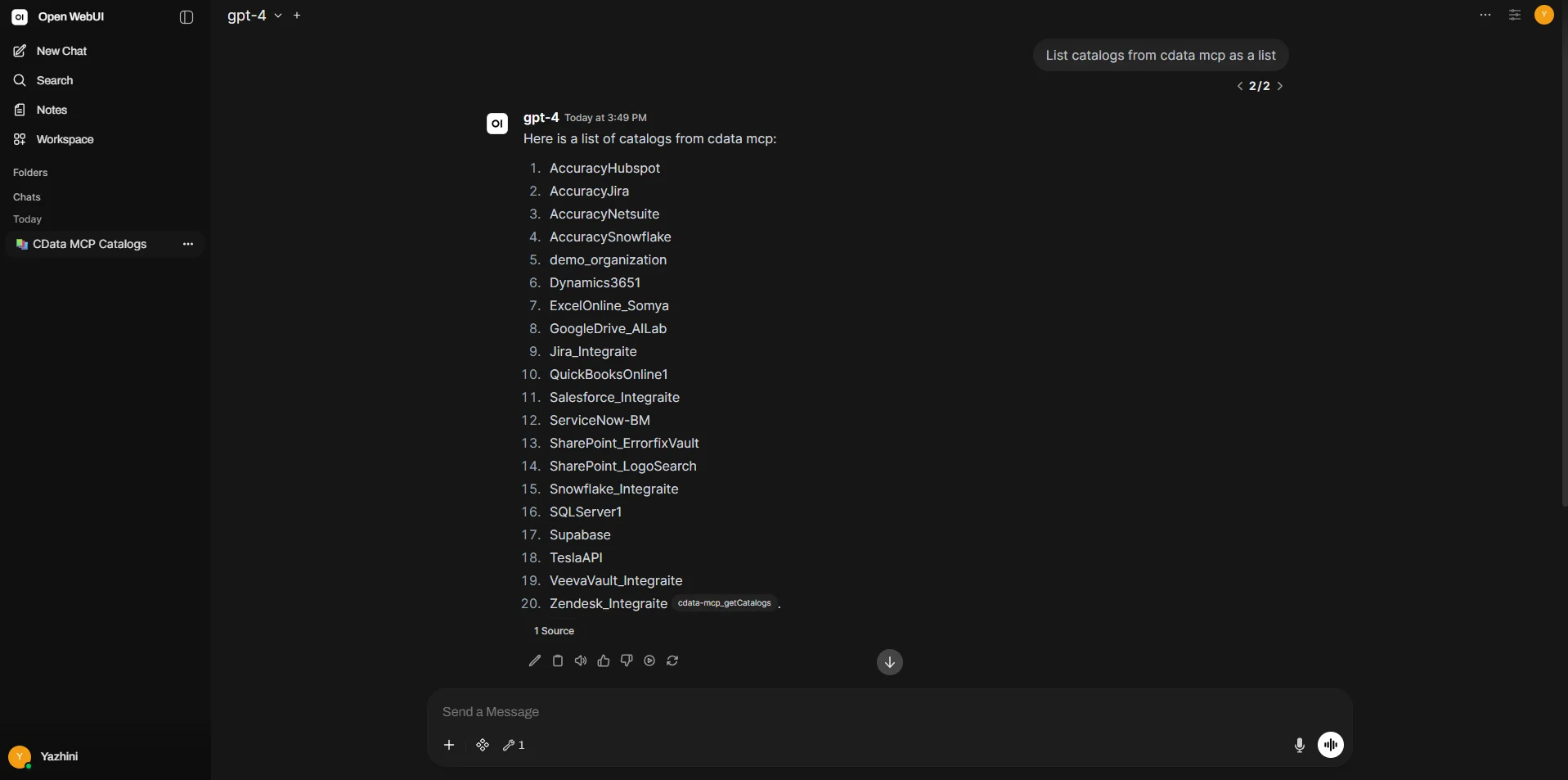
At this point, your Open WebUI instance communicates with the Connect AI MCP Server and retrieves live Zuora data through remote MCP tools directly from the chat interface.
Get CData Connect AI
To acess hundreds of SaaS, Big Data, and NoSQL sources directly from your cloud applications, try CData Connect AI today! Download a free 14-day trial of CData Connect AI today, and as always, our world-class Support Team is available to assist you with any questions you may have.