There’s a particular kind of discomfort that comes from knowing your brand no longer tells the truth about your company. Not that it ever lied, exactly but at some point, the company outgrew the wrapper it came in. That’s where we found ourselves at CData heading into 2026.
I’ve been at CData for over a decade. I watched us grow from a scrappy connectivity tools company into an enterprise platform serving over 10,000 customers and recognized in the Gartner Magic Quadrant for Data Integration. For most of that time, our brand did its job, but “doing its job” isn’t the same as doing the work the company needs.
So we rebuilt it. Not a refresh. Not a tweak. A ground-up brand evolution, from brand strategy, logo and color palette to typography, voice, visual language, and positioning. Here’s how it happened, what we learned, and why it matters.
The honest case for change
Let’s start with the uncomfortable part: what wasn’t working.
Our previous brand was developed in the early 2010s. It carried what I've heard some describe as “futuristic SaaS” energy: lowercase letterforms with severe geometric cuts, a color palette dominated by #00A0FF (a shade of cyan). We incorporated isometric illustrations and kept up with many trends over the years. For a data connectivity company in 2014 we had an edge.
By 2025, that edge had dulled. When we put the old logo under scrutiny, the issues compounded: the lowercase “cdata” wordmark created readability problems (people genuinely asked, “Is it edata? Adata?”). The embedded triangle in the C — originally a forward-looking eye — was perceived as a backward arrow, suggesting retreat rather than progress. The sharp, angular details that once felt futuristic now threatened trust and technical credibility.
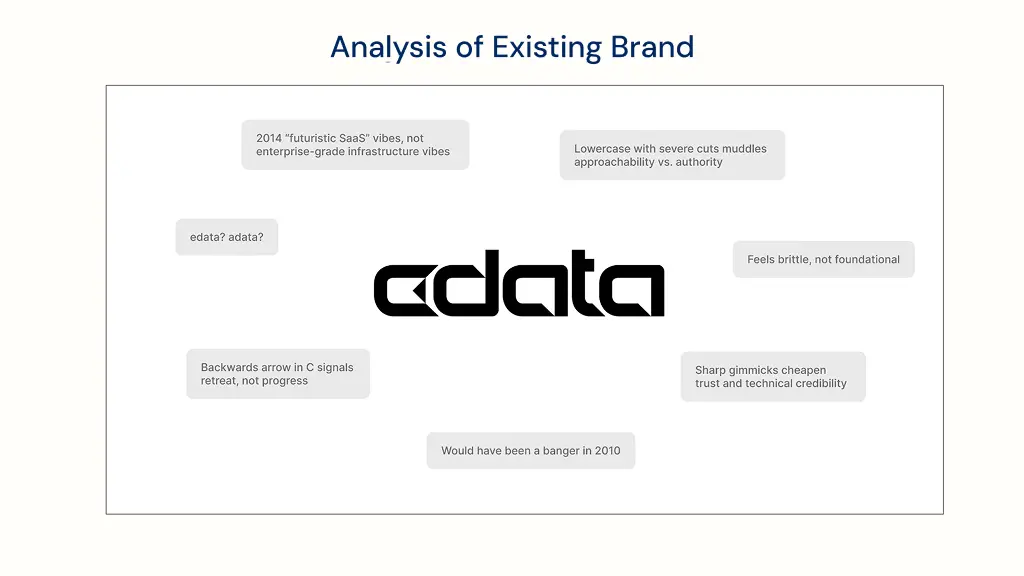
An honest audit of our existing brand surfaced hard truths: readability issues, retreat-signaling iconography, and an aesthetic that peaked around 2010.
Meanwhile, the market had shifted beneath us. Our drivers and connectors remain core to what we do. They’re the foundation thousands of customers rely on every day. However, the company had grown well beyond that origin story. We’re now building the infrastructure layer that connects AI to live enterprise data, serving platform teams, AI builders, and data leaders alongside the engineers who’ve been with us from the start.
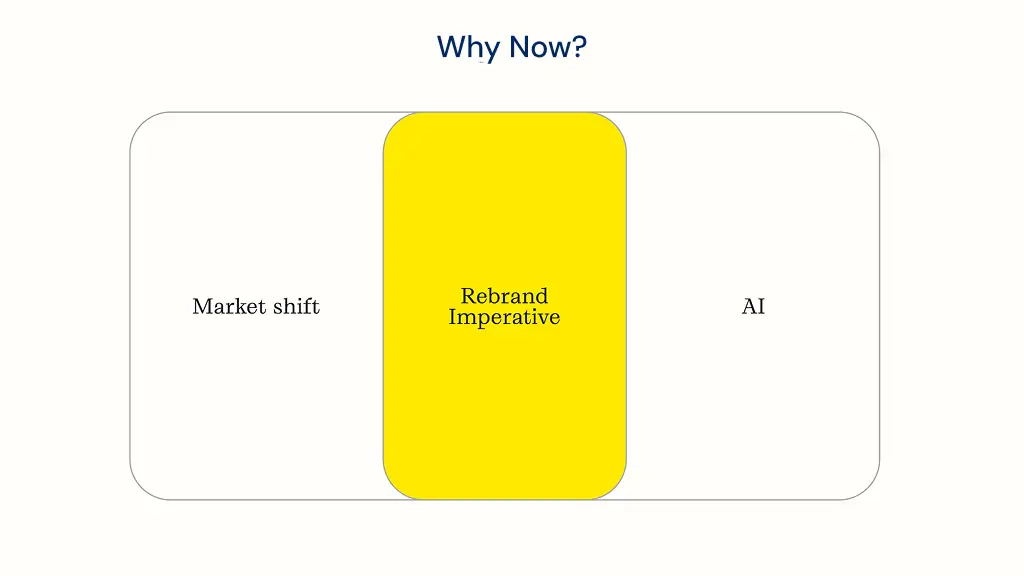
Two forces converging: a fundamental market shift toward AI and CData’s evolution beyond legacy connectivity. The rebrand wasn’t optional — it was an imperative.
The brand didn’t communicate any of that. We looked like a legacy integration tool trying to play in the AI era. In a market that’s moving fast and getting more crowded, the gap between what your company does and what your brand says about it becomes a real liability.
The process: Strategy before pixels
We brought in two partners, each with a distinct mandate. For positioning and messaging, we worked with Harmonic Message, a product marketing consultancy that helped us define where CData fits in the AI landscape and build the narrative framework behind every piece of external communication. For brand identity, we partnered with Focus Lab, a B2B brand agency whose work with companies like Salesloft, Braze, and Outreach gave us confidence they understood our space. They brought the creative rigor and outside perspective we needed, challenging our assumptions and pushing us toward bolder visual choices than we might not have made on our own.
The process started with strategy, not design. A half-day onsite messaging workshop with Harmonic Message. Iterative development of our foundational positioning elements, from our internal point of view to a full platform positioning and messaging framework. Then came a key breakthrough that became the backbone of everything: the three C’s: Connectivity, Context, and Control.
These represent the three gaps that prevent enterprise AI from delivering real value: AI can’t access your live systems (connectivity), it doesn’t understand what “revenue” actually means in your specific business (context), and there’s no audit trail or governance (control). CData solves all three. Our old brand, however, didn’t articulate any of this. It listed features instead of framing problems.
The brand strategy work also surfaced our brand archetypes, the foundational personality models that shape how a brand speaks, behaves, and connects with its audience. Ours are the Ruler and the Reformer. We’re not trying to be the cool, playful disruptor. We’re the infrastructure company that enterprises trust when accuracy is non-negotiable. That’s a different energy, and it demands a different design language.
What changed: The before and after
Logo
The old CData wordmark was complex, hard to read, and built on angular cuts that felt more ornamental than meaningful. The new wordmark is uppercase, clean, and authoritative. The “C” retains a distinctive bracket-like form, a deliberate nod to the structural, foundational role CData plays, but it’s simple, legible, and precise. No tricks. No gimmicks.
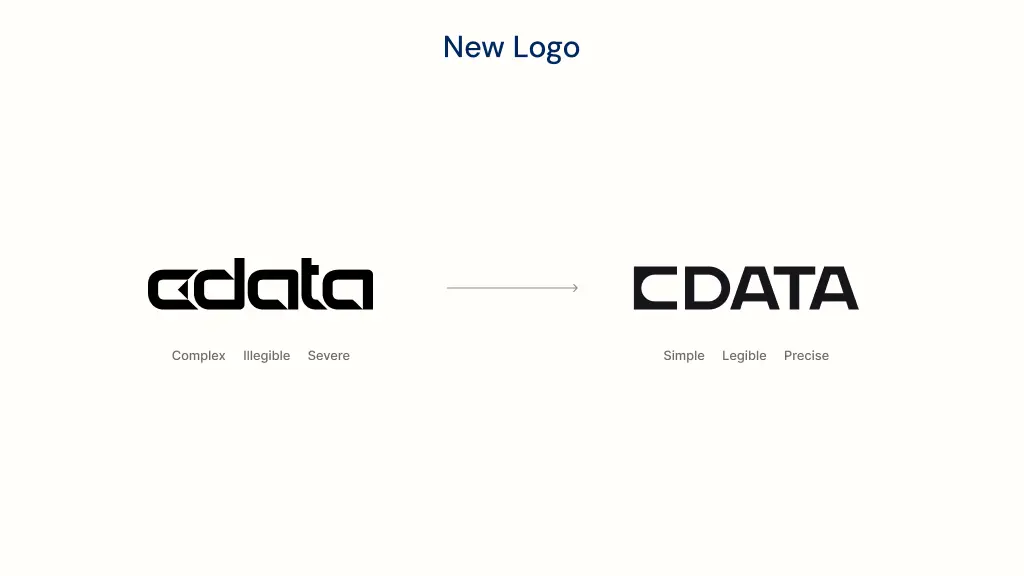
The wordmark evolution: from complex, illegible, and severe to simple, legible, and precise.
The app icon, the small symbol that represents CData across devices, desktops, and browser tabs, went through an equally dramatic shift. The old icon was a blue, arrow-like abstract mark on white. The new one is a bold black “C” on a vibrant yellow square. You can’t miss it. That was intentional.
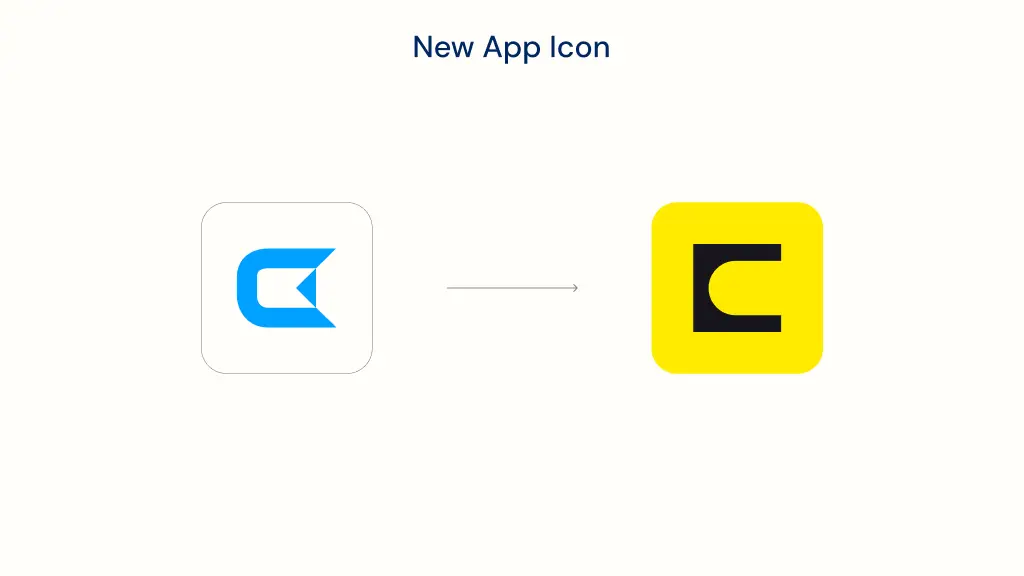
App icon: from understated blue on white to unmistakable yellow and black.
Color palette
We moved away from the old blue-and-cyan palette that blended into the broader B2B tech landscape. The new palette is built around five named colors, each tied to a brand attribute:
Clarity (white), Agility (yellow), Depth (near-black), Balance (gray/silver), and Resolve (deep navy). The yellow is the most immediately distinctive choice. It’s bold, optimistic, and ownable in a landscape where most data infrastructure brands reach for shades of blue, purple, and teal.
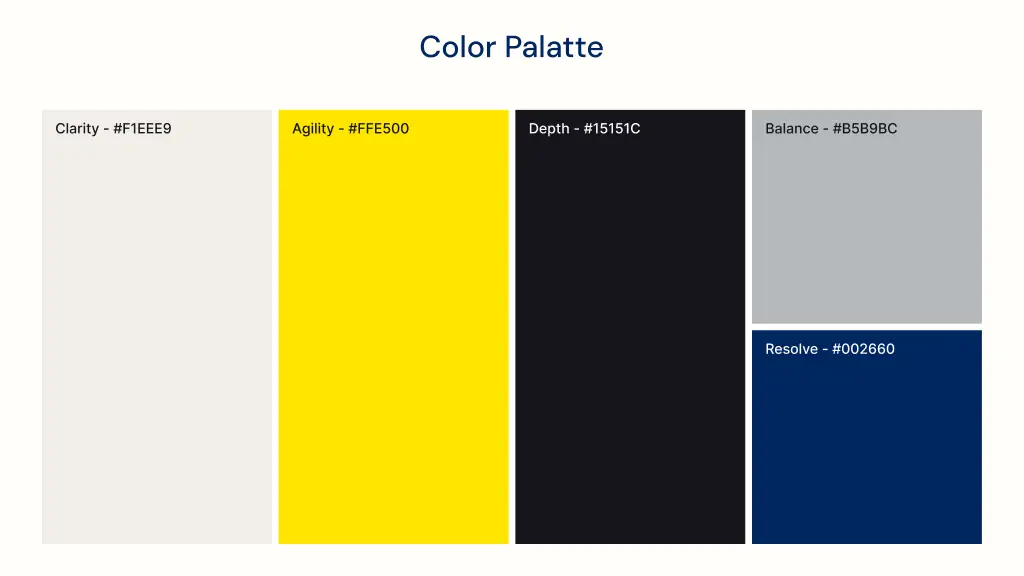
Each color in the new palette carries a name and a purpose. The yellow — “Agility” — is our most distinctive choice.
Typography
We replaced our old typeface stack with three carefully chosen fonts. Grafier is our primary typeface, a bold, confident serif that carries our headlines. We wanted something with weight and authority, a typeface that earns trust before you've read a word. DM Sans serves as our body text for readability and warmth. DM Mono handles technical and code-related contexts. The combination reflects who we are: deeply technical and deeply human.
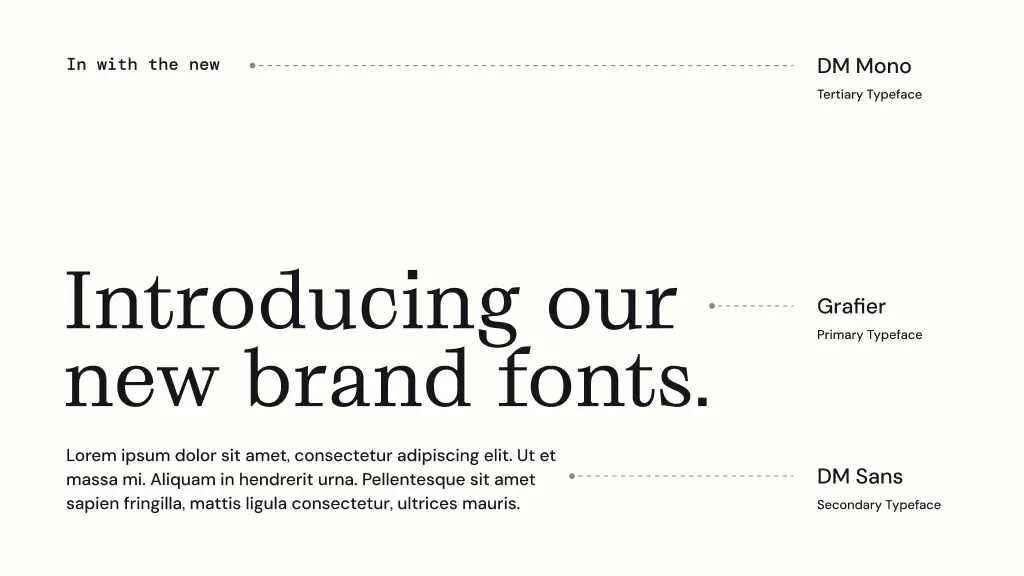
The new type system: Grafier for headlines, DM Sans for body, DM Mono for technical contexts.
Voice and copy
This might be the change we’re most proud of. Our old copywriting was technically accurate but emotionally inert. It compressed too many ideas into every sentence, centered on the platform instead of the customer’s problem, and led with transformation language that felt aspirational but abstract.
The new voice leads with judgment and stakes. Instead of “Transform your data infrastructure into a unified foundation for analytics and AI,” we say: “Built for data that has to be right.” Nine words that do more work than a paragraph.
Our homepage headline became “CData is the foundation for confident enterprise AI.” The copy that follows it connects directly to the real-world pressure our customers face: live data access, governance that holds up in production, context and control intact.
The shift was deliberate: we lead with what’s true and what’s at stake, not with a list of capabilities. We show restraint to reinforce trust. When everything else in your market is shouting, the confident quiet of a brand that knows what it is becomes the loudest thing in the room.
The full system in action
A brand isn’t any single element — it’s the system working together. Here’s what the new CData looks like across touchpoints:
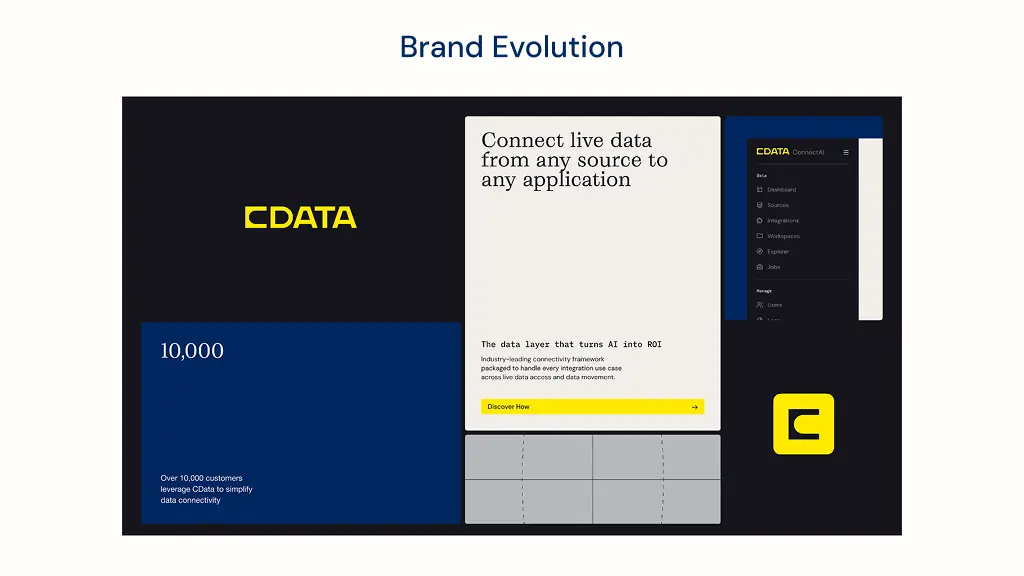
The new brand system: navy and yellow palette, Grafier headlines, clean product UI, and the bold “C” icon — all working together.
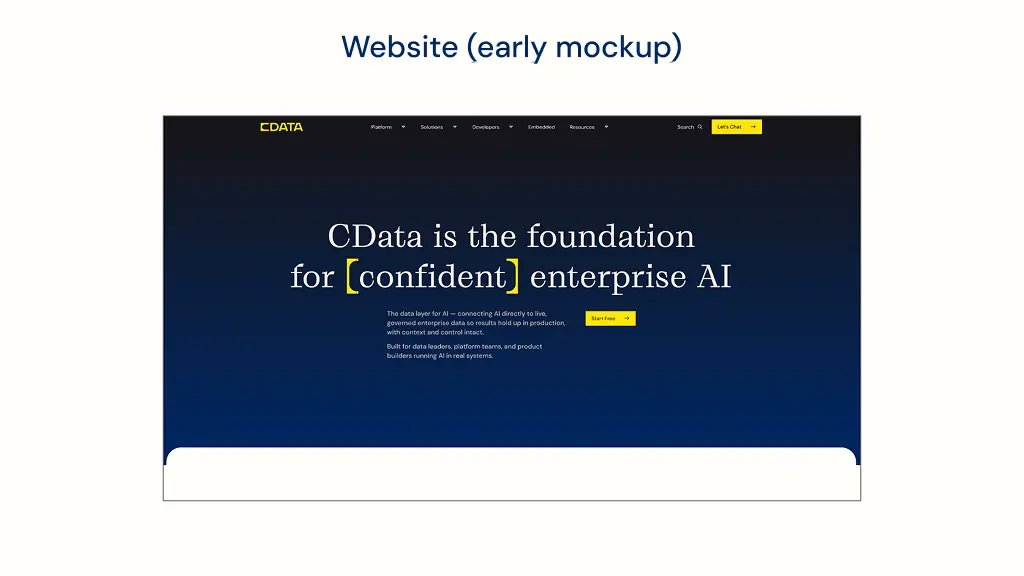
The new website: “CData is the foundation for confident enterprise AI.”
What we’re building toward
The rebrand launches publicly at the Gartner Data & Analytics conference this week. We’re not doing a soft rollout — we’re going out with airport advertising across Orlando, highway billboards, a buyout of screen advertising at Orlando International Airport (MCO), a stepped-up booth presence, and a session on scaling enterprise AI architecture.
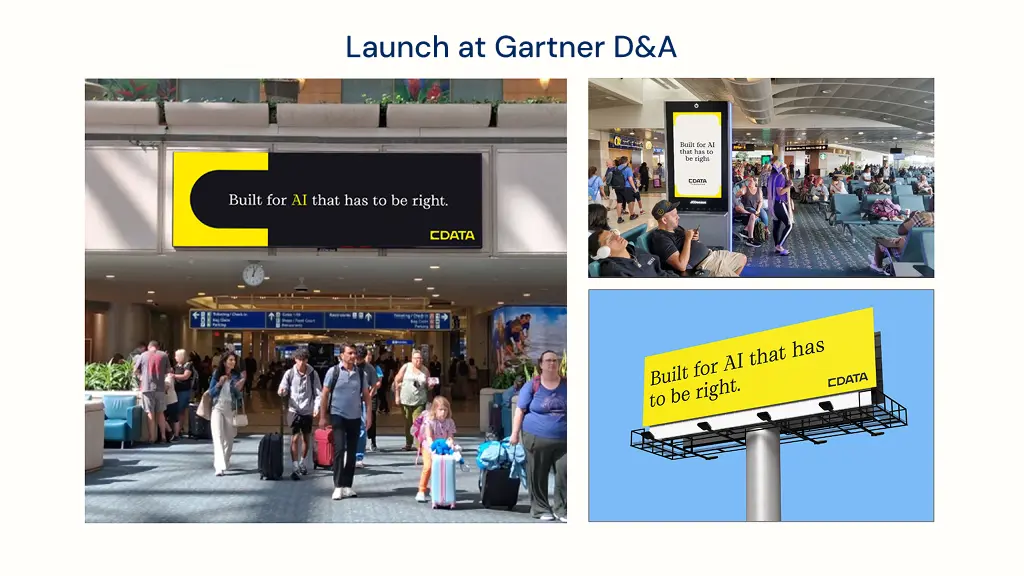
The launch: airport takeovers at MCO, highway billboards, and digital screens — all carrying the new brand and a single message.
The tagline on those billboards: “Built for AI that has to be right.”
A launch, though, is just day one. What excites our team isn’t the billboards — it’s what happens when the brand starts compounding. When the positioning, the visual identity, and the voice all reinforce the same story across every touchpoint: website, product UI, sales decks, social, conference booths, partner materials.
We’re measuring the impact across five dimensions: AI-related search visibility, engagement with AI content, AI-oriented pipeline, industry recognition, and event performance. Still, the metric I’ll be watching most closely is something less quantifiable — whether the developers, data leaders, and platform teams who encounter CData for the first time immediately understand what we are and why we exist.
What I’d tell other brand leaders considering this
If your brand was built for a market that no longer exists, no amount of clever marketing will compensate. The gap between what your company is and what your brand says will show up in every sales conversation, every analyst briefing, and every job posting.
Do the strategy work first. Understand your archetypes, your landscape, and the specific problems your audience is losing sleep over. Then design a system that expresses all of that with the minimum number of elements and the maximum amount of conviction.
We didn’t rebuild our brand because the old one was ugly. We rebuilt it because it was telling the wrong story.
Now the story and the company match. We’re just getting started.
Andre Thompson is the Creative Director at CData, where he leads the company’s visual design and brand initiatives. CData is the data layer for enterprise AI, serving over 10,000 customers worldwide.




