




Connect to Alchemy Data in DBeaver

NOTE: The Legacy ODBC driver was removed in DBeaver Community Edition 23.1. As an alternative, you can use a CData JDBC Driver (learn how here: How to Connect DBeaver to Alchemy via JDBC). If you need to use ODBC Drivers, refer to the DBeaver Documentation.
The CData API Driver for ODBC enables access to live data from Alchemy under the ODBC standard, allowing you work with Alchemy data in a wide variety of BI, reporting, and ETL tools and directly, using familiar SQL queries. This article shows how to manage Alchemy data with visual tools in DBeaver like the query browser.
The CData ODBC drivers offer unmatched performance for interacting with live Alchemy data in DBeaver due to optimized data processing built into the driver. When you issue complex SQL queries from DBeaver to Alchemy, the driver pushes supported SQL operations, like filters and aggregations, directly to Alchemy and utilizes the embedded SQL engine to process unsupported operations (often SQL functions and JOIN operations) client-side. With built-in dynamic metadata querying, you can manage and analyze Alchemy data.
Connect to Alchemy
If you have not already done so, provide values for the required connection properties in the data source name (DSN). You can configure the DSN using the Microsoft ODBC Data Source Administrator. This is also the last step of the driver installation. See the "Getting Started" chapter in the Help documentation for a guide to using the Microsoft ODBC Data Source Administrator to create and configure a DSN.
Start by setting the Profile connection property to the location of the Alchemy Profile on disk (e.g. C:\profiles\Alchemy.apip). Next, set the ProfileSettings connection property to the connection string for Alchemy (see below).
Alchemy API Profile Settings
Alchemy uses API key authentication. The API key is supplied in the request URL path. To obtain an API key:
- Sign in to your Alchemy account at https://dashboard.alchemy.com.
- Open an existing app or create a new one.
- Copy the app's API key from the API Key dialog.
After obtaining your API key, set the following connection properties:
- AuthScheme: Set this to APIKey.
- Network: Optional. The blockchain network slug for NFT API requests (for example, eth-mainnet, base-mainnet, polygon-mainnet). Defaults to eth-mainnet.
Set the following in the ProfileSettings connection property:
- APIKey: Set this to your Alchemy app API key.
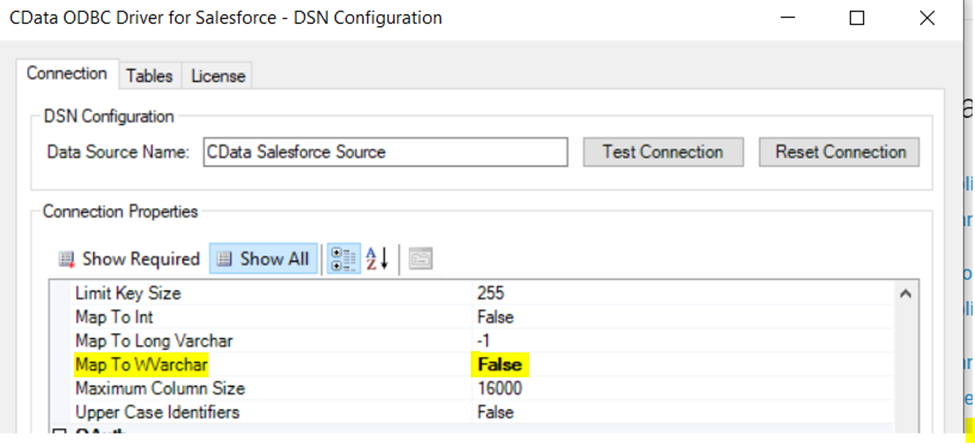
Finally, set the "Map To WVarchar connection property to False in the DSN Configuration window for the driver. This configuration will allow string types to be mapped to SQL_VARCHAR and prevent SQL_WVARCHAR types from being displayed as NULL.
Connecting to the Alchemy ODBC Data Source in DBeaver
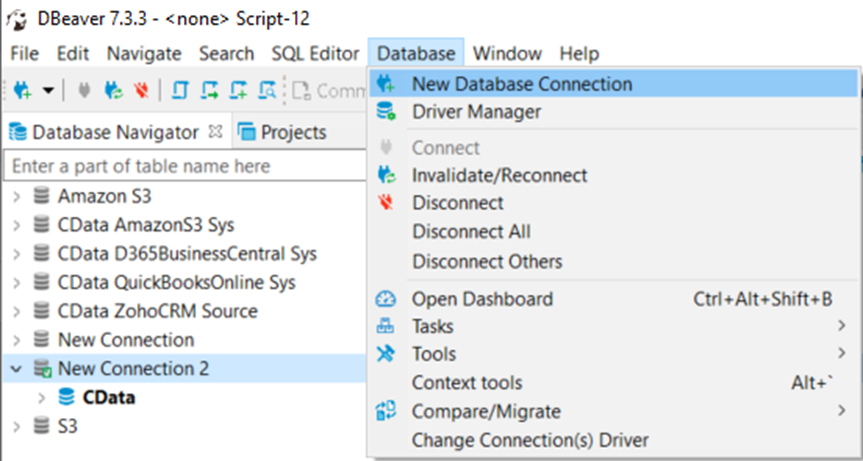
- Open the DBeaver application and in the Database menu, select the New Database Connection option.
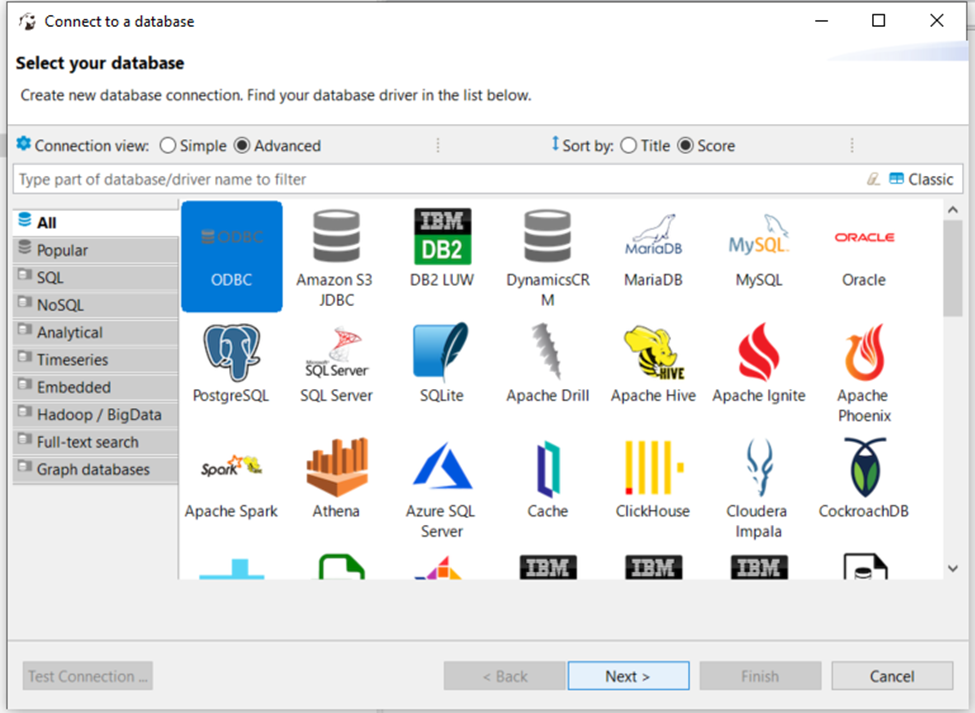
- In the 'Connect to a database' window, select ODBC and click Next.
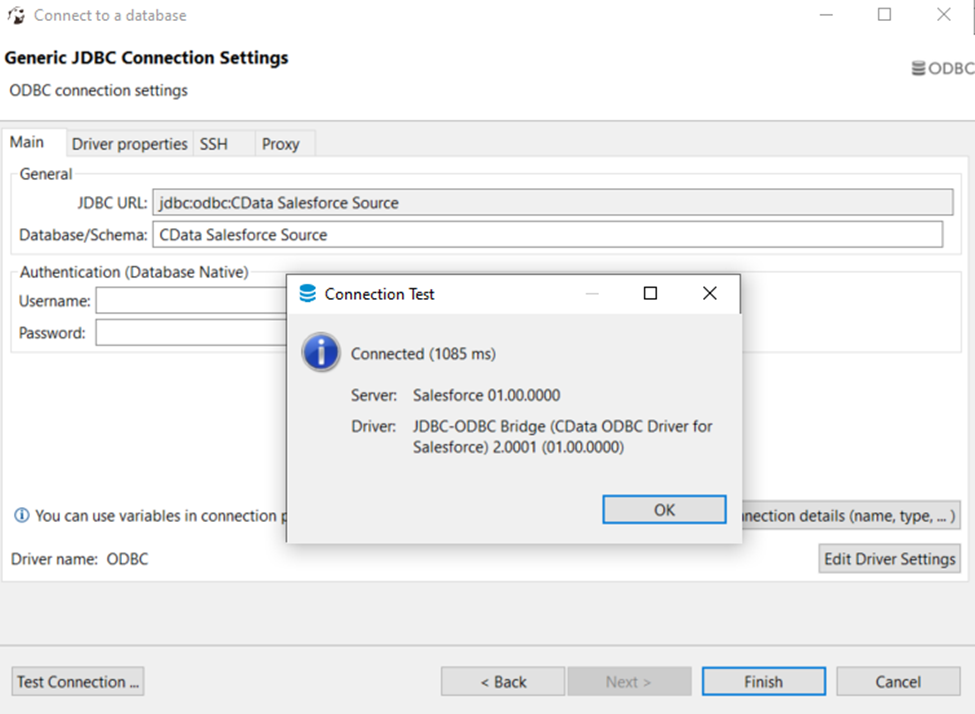
- In the Database/Schema field, enter the DSN name (CData Alchemy Source by default). It will be automatically added to the JDBC URL as well.
- Click the Test Connection button. You should receive a 'Connected' message after DBeaver has detected the DSN, along with details about the driver if the connection is successful.
Query Alchemy Data
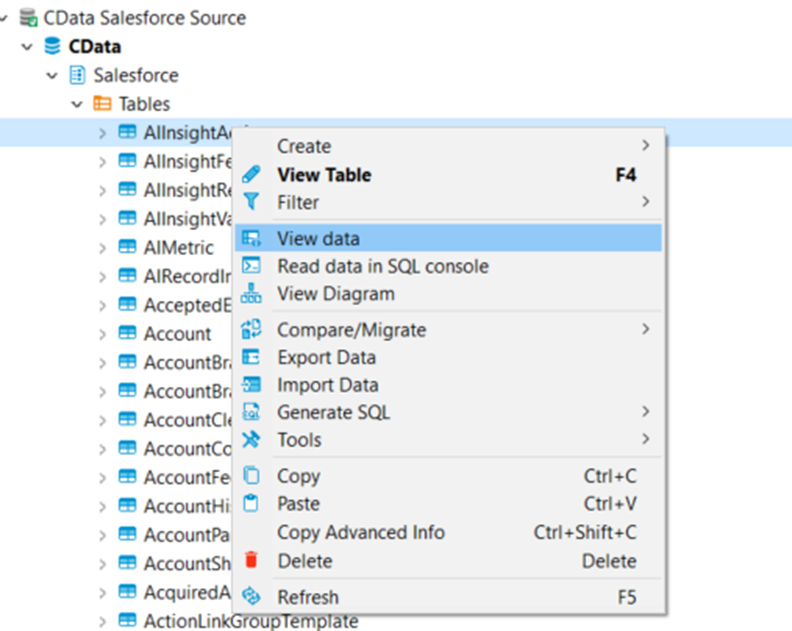
You can now query information from the tables exposed by the data source connection. You can expand the database structure in order to view all the tables. You can retrieve the table's data by right-clicking on a table name and selecting View data. The data will then be available in the Data tab.
Free Trial & More Information
At this point, you have connected to live Alchemy data from DBeaver. For more information, visit the CData ODBC Driver page. Download a free, 30-day trial and start working live Alchemy data DBeaver today.