






Create Data Visualizations in Cognos BI with Anaplan Data

You can use the CData ODBC driver for Anaplan to integrate Anaplan data with the drag-and-drop style of Cognos Report Studio. This article describes both a graphical approach to create data visualizations, with no SQL required, as well as how to execute any SQL query supported by Anaplan.
Configure and Publish the Data Source
If you have not already, first specify connection properties in an ODBC DSN (data source name). This is the last step of the driver installation. You can use the Microsoft ODBC Data Source Administrator to create and configure ODBC DSNs.
Authenticating to Anaplan
The driver supports authenticating with Basic, Certificate, or OAuth. In every case, set Region to the region where your Anaplan account data is hosted (e.g., US1, which is the default).
Using Basic Authentication
Set AuthScheme to Basic, then supply your Anaplan User and Password. If your workspace uses single sign-on (SSO), you must be assigned as an Exception User to use Basic authentication.
Using Certificate Authentication
Set AuthScheme to Certificate, then supply the Certificate, CertificateType, and PrivateKey properties (and the matching CertificatePassword / PrivateKeyPassword if either is encrypted). The certificate must be a CA-issued X.509 certificate registered with your Anaplan tenant administrator.
Using OAuth Authentication
Register a custom OAuth application in Anaplan, then set the following properties:
- OAuthClientId: The client Id assigned when you registered your custom OAuth application.
- OAuthClientSecret: The client secret assigned when you registered your custom OAuth application.
- CallbackURL: The redirect URI defined when you registered your application.
- InitiateOAuth: Set to GETANDREFRESH to have the driver manage the OAuth token exchange and refresh automatically.
See the Getting Started chapter of the help documentation for a guide to creating a custom OAuth app and using OAuth.
When you configure the DSN, you may also want to set the Max Rows connection property. This will limit the number of rows returned, which is especially helpful for improving performance when designing reports and visualizations.
If you are running Cognos from a 64-bit machine and want to modify the DSN or create other Anaplan DSNs, you must use a system DSN. You will also need to open the 32-bit ODBC Data Source Administrator. You can open it with the following command:
C:\Windows\sysWOW64\odbcad32.exe
After creating a DSN, you can then publish the data source:
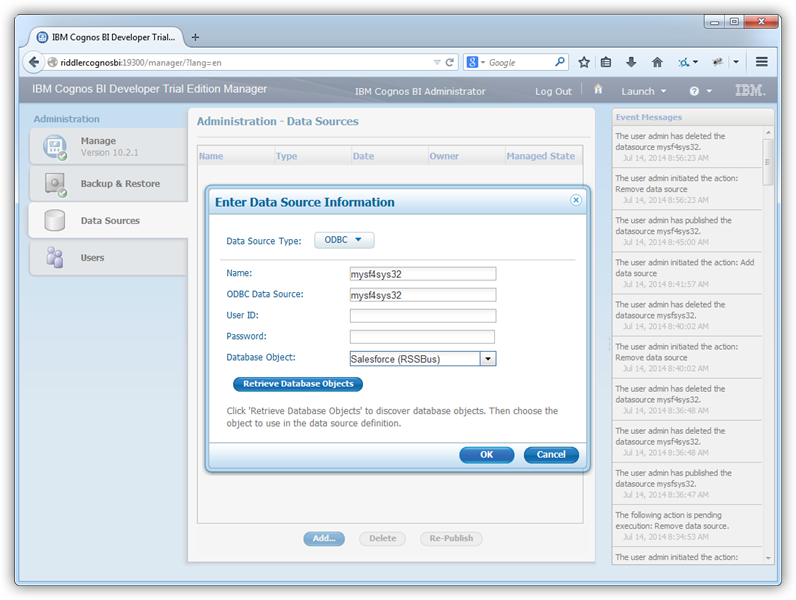
- Open Cognos Administration and click Data Source Connections to add a new data source:
-
Select the ODBC option and enter the DSN, CData Anaplan Sys, and a user-friendly name.
- Click Retrieve Objects and choose the CData Anaplan database object.
Add Data Visualizations to a Report
You can now create reports on Anaplan data in Cognos Report Studio by dragging and dropping table columns from the Source Explorer onto report objects. The sections below show how to create a simple report with a chart that shows up-to-date data.
As you build the report, Cognos Report Studio will generate SQL queries and rely on the driver to execute them. The driver will convert queries into requests to the Anaplan API. To execute queries to the live Anaplan data, the driver depends on the capabilities of the underlying API.
Create a Chart Based on an Aggregate
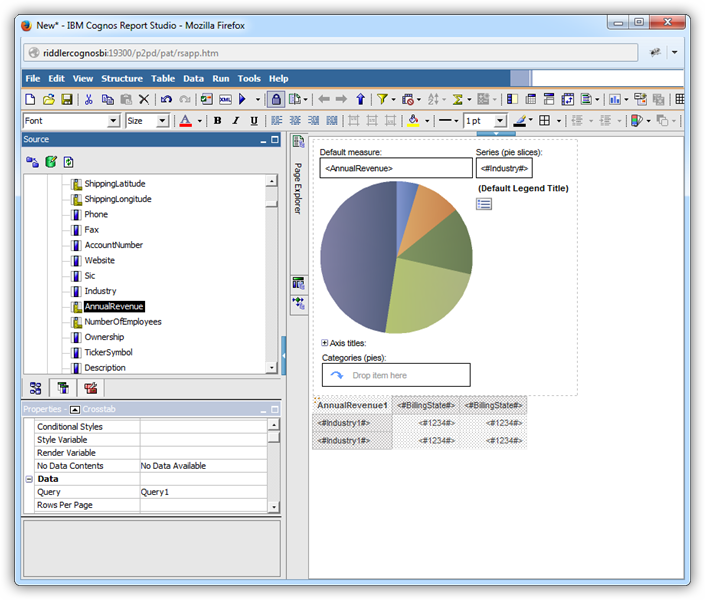
You can populate almost any report object in Cognos with Anaplan data by simply dragging and dropping columns from the Source Explorer onto the dimensions of the object. The column in the Series dimension of the chart is automatically grouped.
Additionally, Cognos sets a logical default aggregate function for the measure dimension based on the data type. For this example, override the default by clicking the Product column in the Data Items tab and set the Aggregate Function property to Not Applicable. The Rollup Aggregate Function property must be set to Automatic.
Convert a Query Object to SQL
When you know the query you need, or if you want to adjust the generated query, convert a query object into an SQL statement. After a query has been converted to SQL, the UI controls are not available for the query object. Follow the procedure below to populate a chart with user-defined SQL.
Cognos will rely on the driver to execute the user-defined query. Using the driver's SQL engine ensures that queries will always return up-to-date results, as there is no cached copy of the data.
- Hover over the Query Explorer and click the Queries folder to display the query objects in your report.
-
If you want to edit the autogenerated query, click the button in the Generated SQL property for the query object. In the resulting dialog, click Convert.
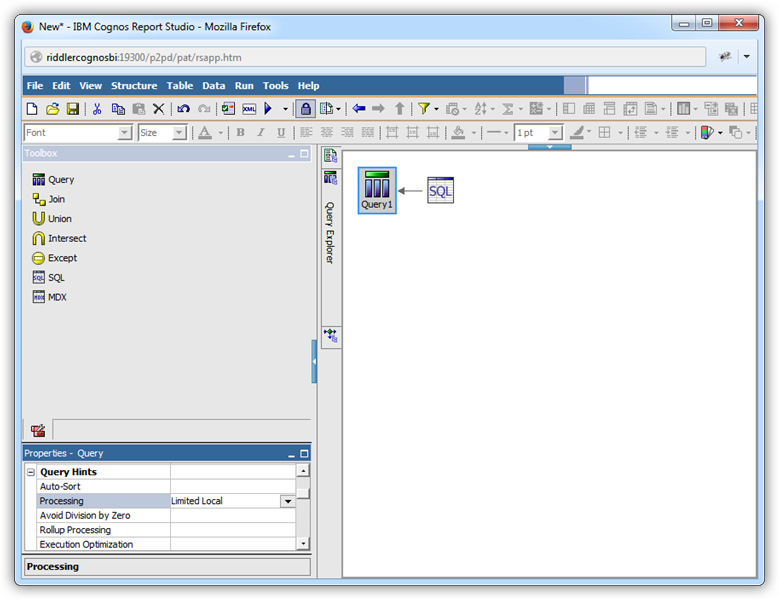
If you want to enter a new SQL statement, drop an SQL object in-line with the query object.
- Modify the properties for the SQL object: Select the Anaplan data source in the SQL properties and set the SQL Syntax property to Native.
Click the button in the SQL property and enter the SQL query in the resulting dialog. This example uses the query below:
SELECT Region, Product FROM [Workspace].[Model].[Sales] WHERE Value = '100'
Modify the properties for the query object: Set the Processing property to "Limited Local". This value is required to convert a query object to SQL.
Fill a Chart with the Results of a Query
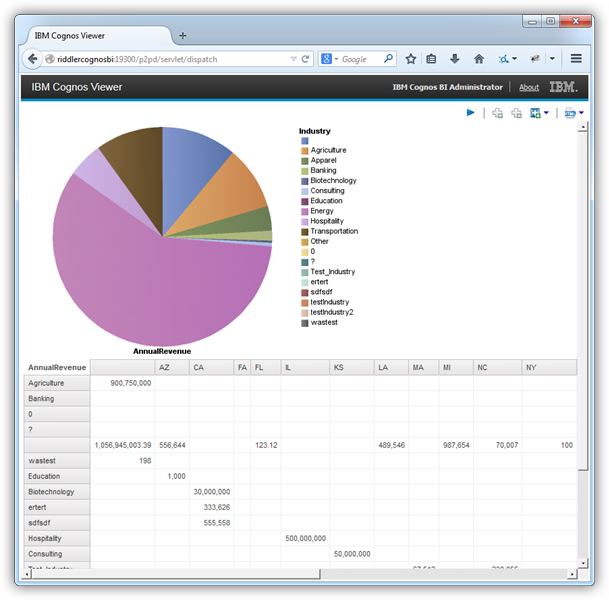
You can now access the results of the SQL query as objects in the Data Items tab. Follow the procedure below to create a chart with the results; for example, the Product for each Region from the Sales table.
- Return to the page by hovering over the Page Explorer and then clicking the page object.
- Drag a pie chart from the toolbox onto the workspace.
- In the properties for the chart, set the Query property to the name of the query you created above.
- Click the Data Items tab and drag columns onto the x- and y-axes. In this example, drag the Region column to the Series (pie slices) box and the Product column to the Default Measure box.
-
Modify the default properties for the Default Measure (the Product values): In the Aggregate Function box, select the Total option.
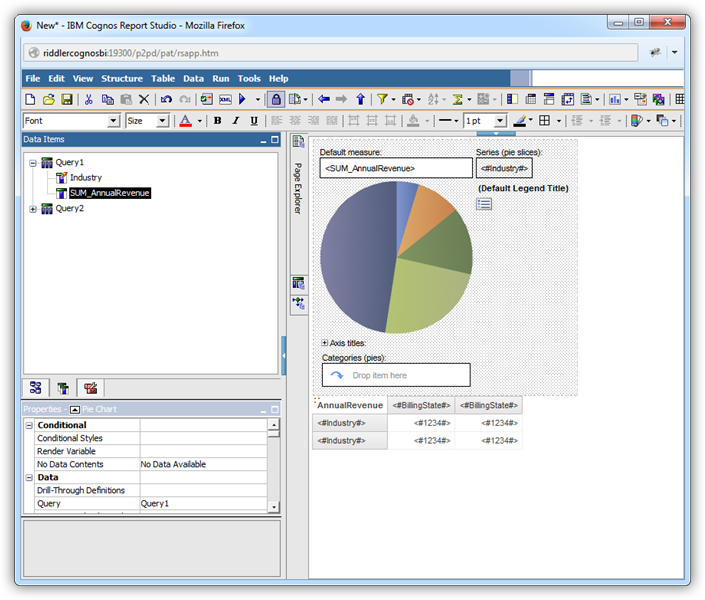
Run the report to add the results of the query.
Ready to get started?
Download a free trial of the Anaplan ODBC Driver to get started:
Download NowLearn more:
 Anaplan ODBC Driver
The Anaplan ODBC Driver is a powerful tool that allows you to connect with live data from Anaplan, directly from any applications that support ODBC connectivity.
Access Anaplan data like you would a database - read, write, and update Anaplan 0, etc. through a standard ODBC Driver interface.