




Create Reports with Oracle Eloqua Reporting Data in SAP Crystal Reports

Crystal Reports has many options for offloading data processing to remote data; this enables real-time reporting. The CData ODBC Driver for Oracle Eloqua Reporting brings this capability to Crystal Reports. This article shows how to create a report on Oracle Eloqua Reporting data that refreshes when you run the report.
Refer to the given table for the tools and versions used for this article:
| Application Name | Version |
|---|---|
| SAP Crystal Reports 2020 | SP3 |
| ODBC Driver | 23.0.8565 |
Connect to Oracle Eloqua Reporting Data
If you have not already, specify connection properties in an ODBC DSN (data source name). This is the last step of the driver installation. You can use the Microsoft ODBC Data Source Administrator to create and configure ODBC DSNs.
Oracle Eloqua Reporting supports the following authentication methods:
- Basic authentication (User and Password)
- OAuth 2.0 code grant flow
- OAuth 2.0 password grant flow
Basic Authentication (User and Password)
To perform authentication with a user and password, specify these properties:
- AuthScheme: Basic.
- Company: The company name associated with your Oracle Eloqua Reporting account.
- User: Your login account name.
- Password: Your login password.
OAuth Authentication (Code Grant Flow)
To authenticate with the OAuth code grant flow, you must set AuthScheme to OAuth and create a custom OAuth application. For information about how to create a custom OAuth application, see the Help documentation.
Then set the following properties:
- InitiateOAuth: GETANDREFRESH. Used to automatically get and refresh the OAuthAccessToken.
- OAuthClientId: The client Id assigned when you registered your application.
- OAuthClientSecret: The client secret that was assigned when you registered your application.
- CallbackURL: The redirect URI that was defined when you registered your application.
When you connect, the driver opens Oracle Eloqua Reporting's OAuth endpoint in your default browser. Log in and grant permissions to the application. When the access token expires, the driver refreshes it automatically.
OAuth Authentication (Password Grant Flow)
With the OAuth password grant flow, you can use your OAuth application's credentials alongside your user credentials to authenticate without the need to grant permission manually via a browser prompt. You must create an OAuth app (see the Help documentation) to use this authentication method.
Set the following properties:
- AuthScheme: OAuthPassword
- Company: The company's unique identifier.
- User: Your login account name.
- Password: Your login password.
- OAuthClientId: The client Id assigned when you registered your custom OAuth application.
- OAuthClientSecret: The client secret assigned when you registered your custom OAuth application.
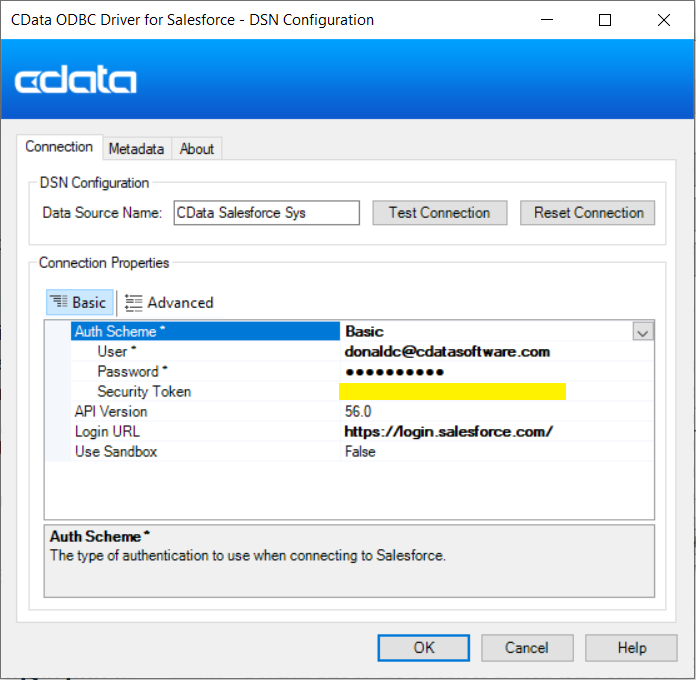
When configuring the DSN, you may also want to set the Max Rows connection property. This will limit the number of rows returned, which is especially helpful for improving performance when designing reports and visualizations.
Design a Report in SAP Crystal Reports
Follow the procedure below to use the SAP Crystal Reports tool to create the Oracle Eloqua Reporting connection and Design a Report.
- File -> New -> Standard Report.
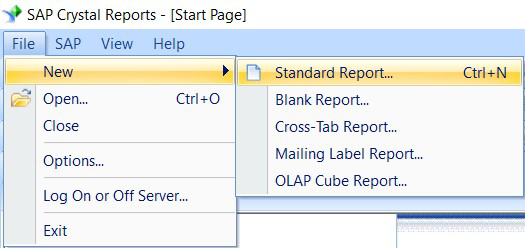
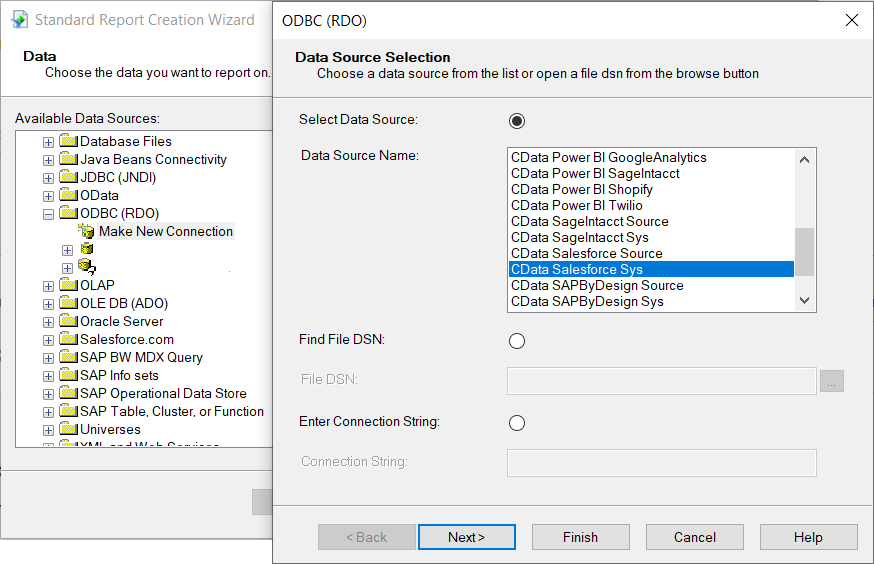
- Expand the ODBC (RDO) node under Create New Connection and double-click on "Make a New Connection". Select CData Oracle Eloqua Reporting Sys or any other source to prepare the report. Click on NEXT and FINISH.
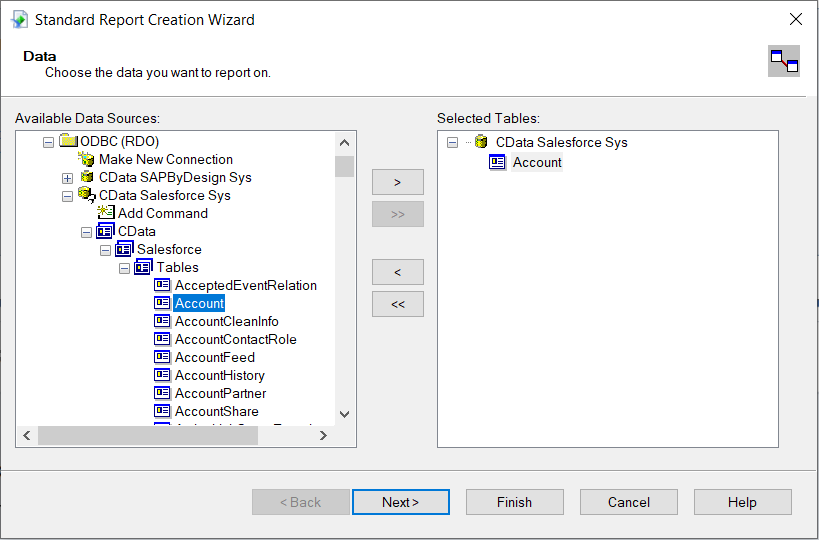
- Configure the data source by selecting the tables needed in the report and clicking NEXT.
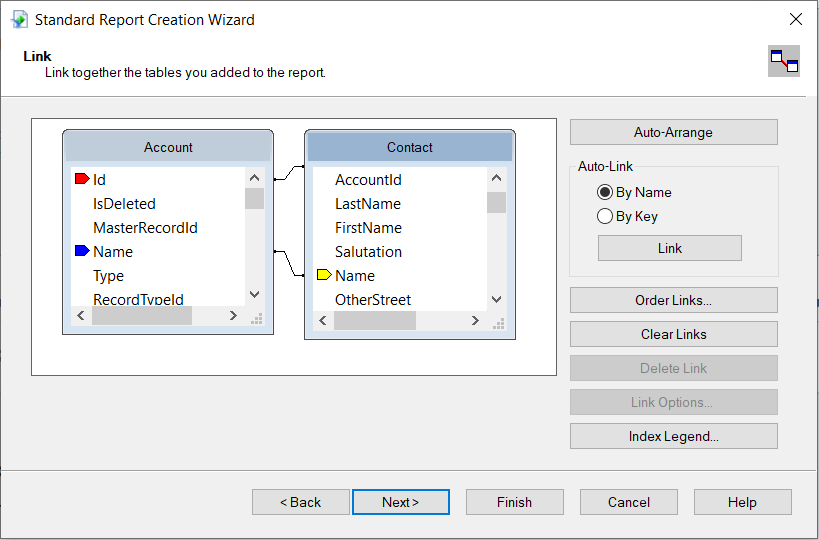
- You can also link tables from the Oracle Eloqua Reporting data in SAP Crystal Reports. Click on NEXT after adding the links between tables.
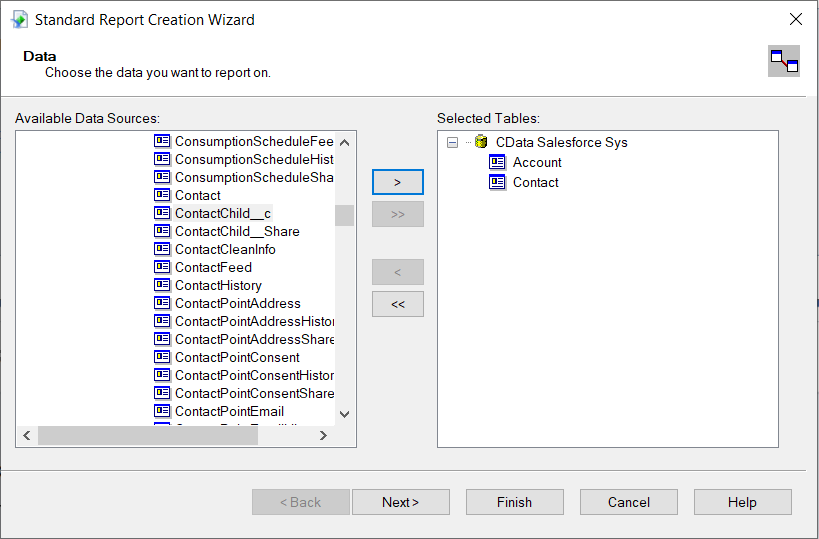
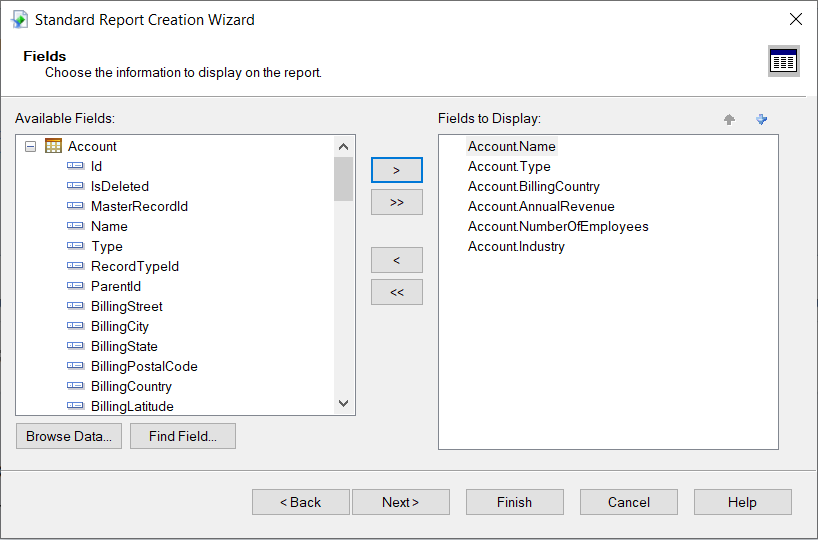
- After the tables are selected, select the fields you want displayed in the report from the selected table, followed by NEXT.
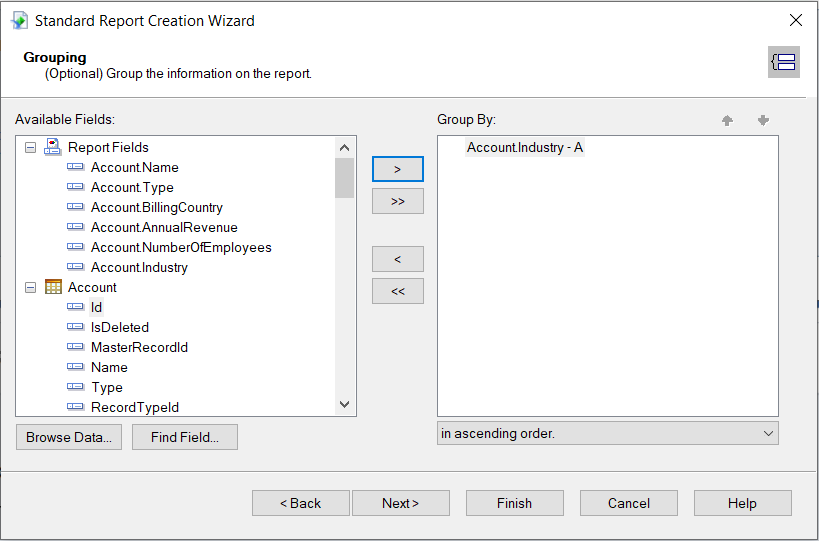
- Select the "Group By" field to group the information on the report.
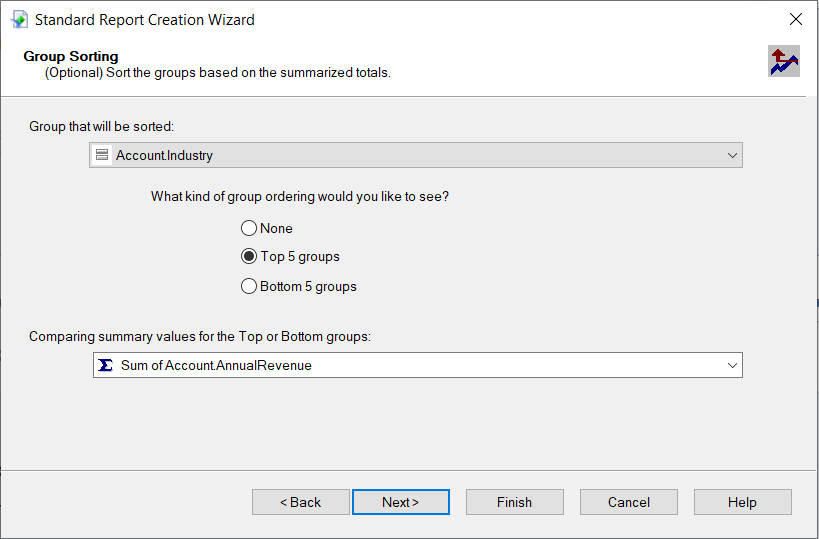
- Sort the groups based on summarised totals and click on NEXT.
Create a Chart
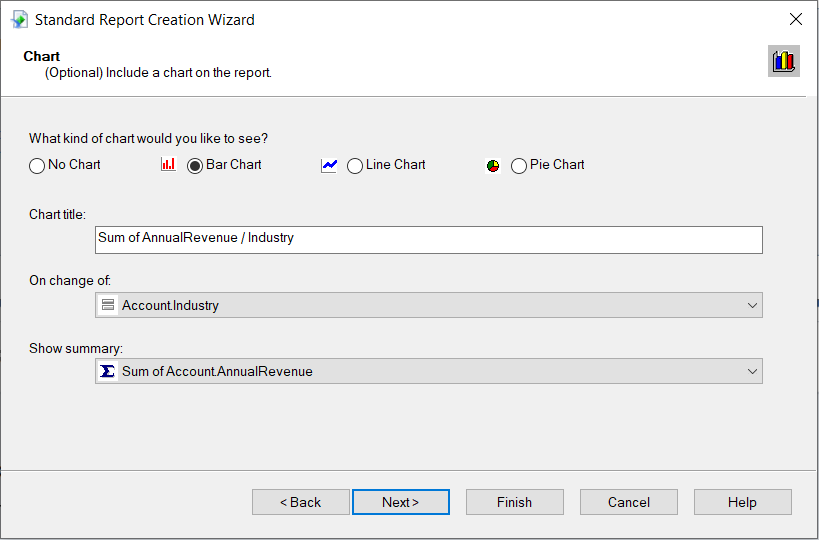
After selecting a column to group by, the Standard Report Creation Wizard presents the option to create a chart. Follow the steps below to create a chart aggregating the column's values.
- In the Standard Report Creation Wizard, select the Bar Chart option and select the column you grouped by in the "On change of" menu.
- In the Show Summary menu, select the summary you created.
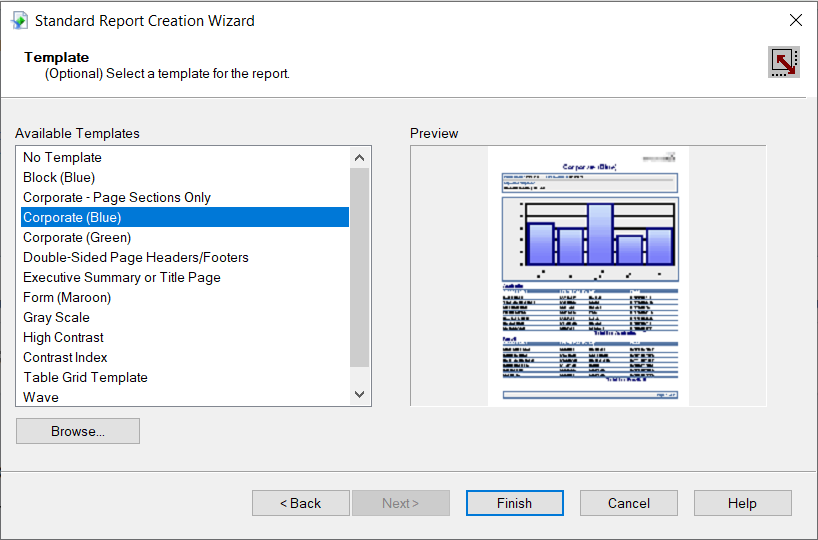
- Select filters and a template, as needed, to finish the wizard.
Select a template for the report to preview the finished report and view the chart populated with your data.
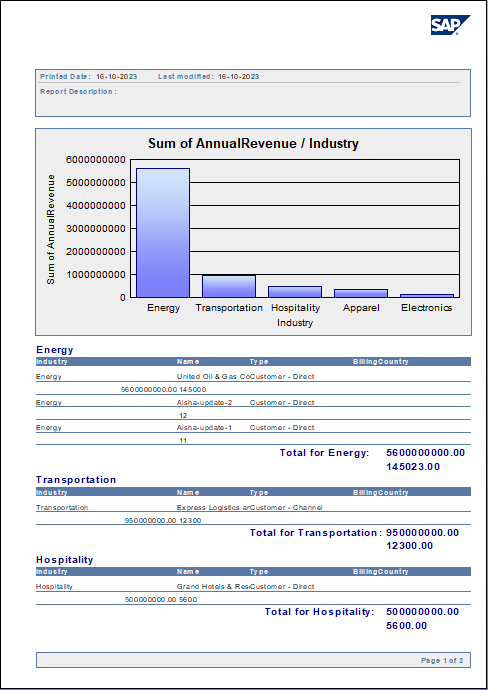
The Final Report
You can now see that the report contains all the fields specified.
Working with Remote Data
To ensure that you see updates to data, click File and clear the "Save Data with Report" option. As you interact with the report, for example, drilling down to hidden details, Crystal Reports executes SQL queries to retrieve the data needed to display the report. To reload data you have already retrieved, refresh or rerun the report.
You can offload processing onto the driver by hiding details elements and enabling server-side grouping. To do this, you need to select a column to group by in the report creation wizard.
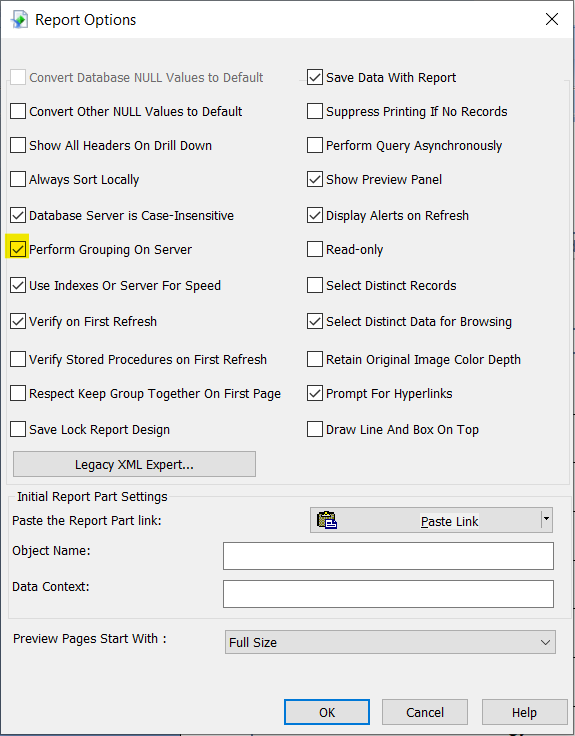
- Click File -> Report Options and select the "Perform Grouping On Server" option.
- Click Report -> Section Expert and select the Details section of your report. Select the "Hide (Drill-Down OK)" option.
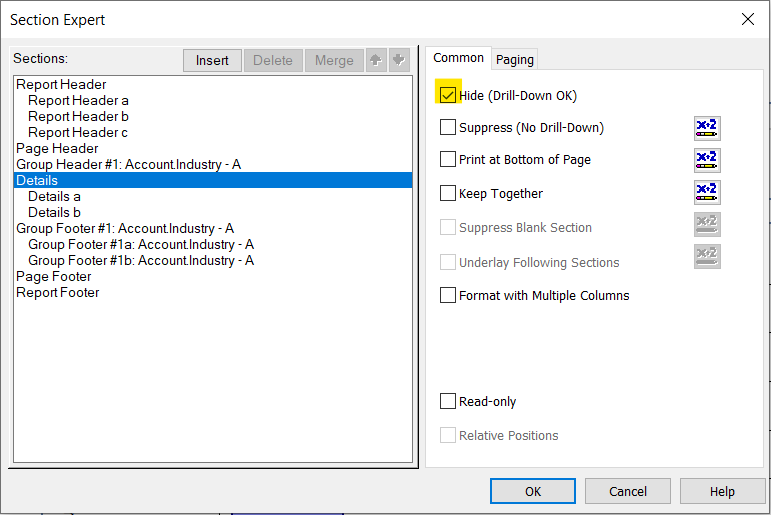
When you preview your report with the hidden details, Crystal Reports executes a GROUP BY query. When you double-click a column in the chart to drill down to details, Crystal Reports executes a SELECT WHERE query that decreases load times by retrieving only the data needed.
At this point, you have created a SAP Crystal report built on top of live Oracle Eloqua Reporting data using SAP Crystal Reports and CData ODBC driver. Learn more about the CData ODBC Driver for Oracle Eloqua Reporting and download a free trial from the CData ODBC Driver for Oracle Eloqua Reporting page. Let our Support Team know if you have any questions.
Ready to get started?
Download a free trial of the Oracle Eloqua Reporting ODBC Driver to get started:
Download NowLearn more:
 Oracle Eloqua Reporting ODBC Driver
The Oracle Eloqua Reporting ODBC Driver is a powerful tool that allows you to connect with live data from Oracle Eloqua Reporting, directly from any applications that support ODBC connectivity.
Access Oracle Eloqua Reporting data like you would a database - read, write, and update Oracle Eloqua Reporting 0, etc. through a standard ODBC Driver interface.
