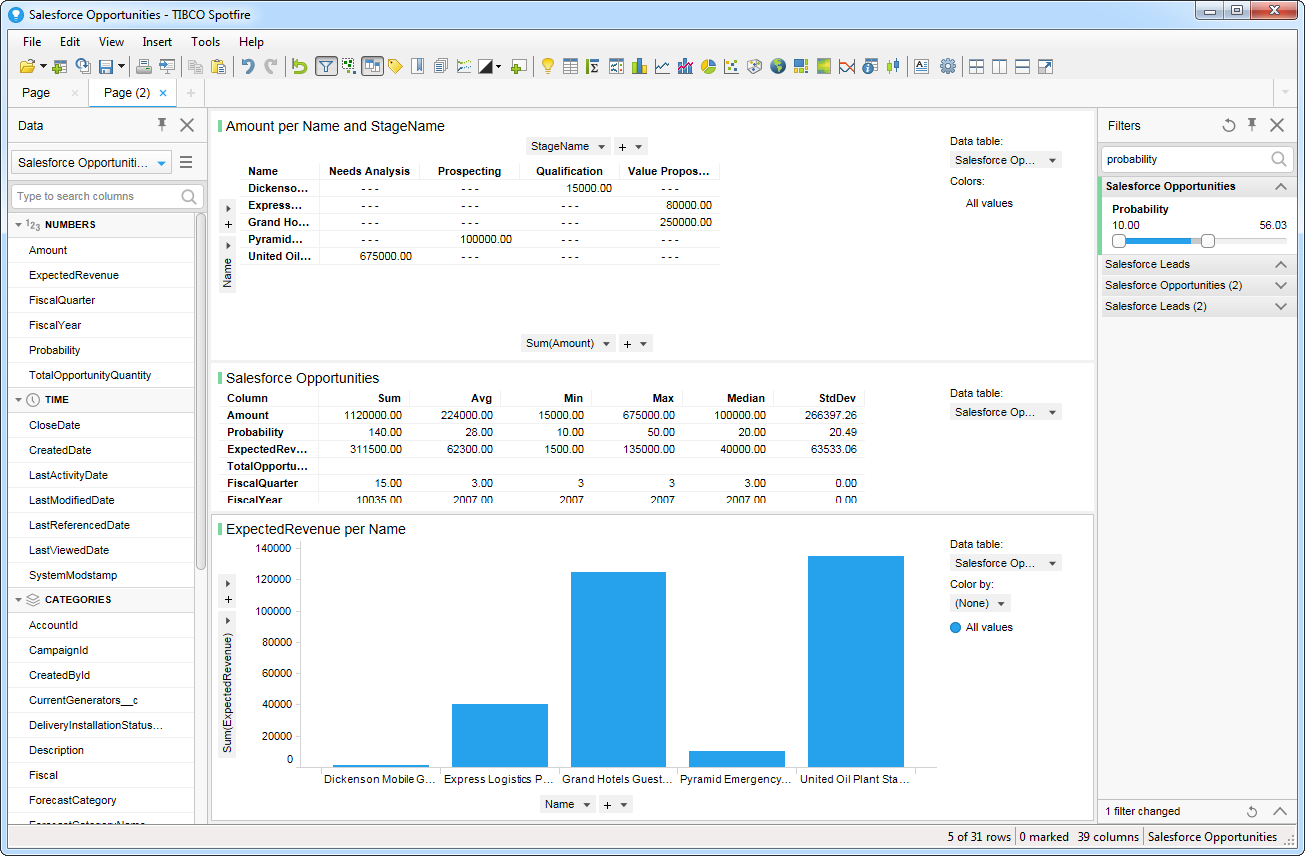
Visualize Gong Data in TIBCO Spotfire through ODBC

This article walks you through using the CData ODBC Driver for Gong in TIBCO Spotfire. You will use the data import wizard to connect to a DSN (data source name) for Salesforce and build on the sample visualizations to create a simple dashboard.
Connect to Gong as an ODBC Data Source
If you have not already, first specify connection properties in an ODBC DSN (data source name). This is the last step of the driver installation. You can use the Microsoft ODBC Data Source Administrator to create and configure ODBC DSNs.
To authenticate to Gong, you can use API Key authentication with your Gong API Key and API Secret.
Authentication
To authenticate to Gong, you must provide your Gong API Key and API Secret, along with your tenant Domain. These credentials are combined and Base64-encoded to form the Basic authentication header used for all API requests.
Using API Key Authentication
To authenticate using an API Key, you need to obtain your API Key and API Secret from your Gong account settings.
You can then connect by setting the AuthScheme to APIKey and providing your credentials:
- AuthScheme: Set this to APIKey.
- APIKey: Set this to your Gong API Key.
- APISecret: Set this to your Gong API Secret.
- Domain: Set this to your Gong tenant domain (e.g., us-36533.api.gong.io).
Example connection string
Profile=C:\profiles\Gong.apip;AuthScheme=APIKey;ProfileSettings='APIKey=your_api_key;APISecret=your_api_secret;Domain=your-tenant.api.gong.io';
When you configure the DSN, you may also want to set the Max Rows connection property. This will limit the number of rows returned, which is especially helpful for improving performance when designing reports and visualizations.
Create Visualizations of Gong Tables
Follow the steps below to connect to the DSN and create real-time data visualizations:
- Click Data -> Add Data ...
- Click Other -> Load data with ODBC, OLE DB, or ADO.NET data provider.
- In the Data Source Type menu, select ODBC Data Provider and click Configure.
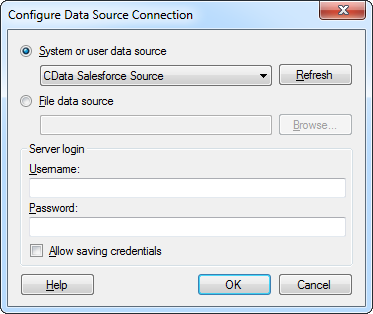
- Select the DSN.
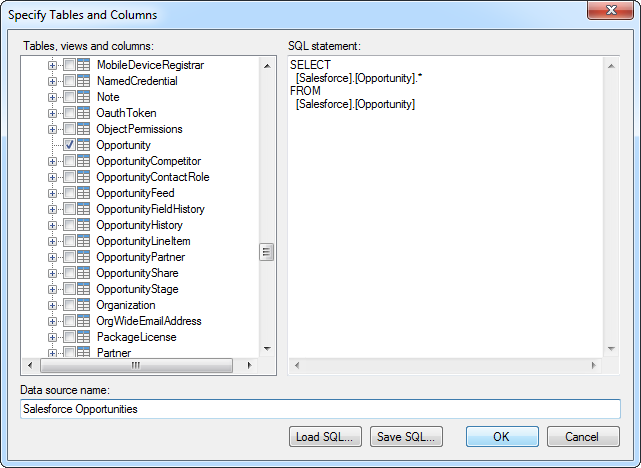
- Select the tables that you want to add to the dashboard. This example uses AnsweredScorecards. You can also specify an SQL query. The driver supports the standard SQL syntax.
- If you want to work with the live data, click the Keep Data Table External option. This option enables your dashboards to reflect changes to the data in real time.
If you want to load the data into memory and process the data locally, click the Import Data Table option. This option is better for offline use or if a slow network connection is making your dashboard less interactive.
- After adding tables, the Recommended Visualizations wizard is displayed. When you select a table, Spotfire uses the column data types to detect number, time, and category columns. This example uses in the Numbers section and in the Categories section.
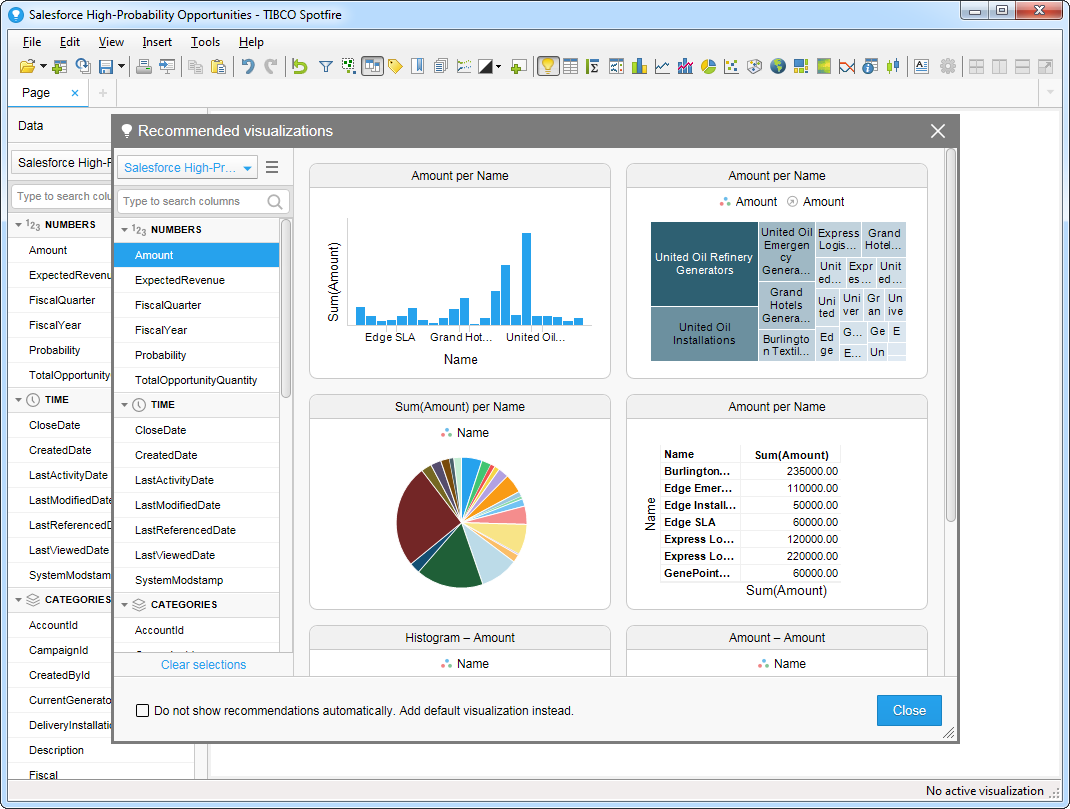
After adding several visualizations in the Recommended Visualizations wizard, you can make other modifications to the dashboard. For example, you can zoom in on high probability opportunities by applying a filter on the page. To add a filter, click the Filter button. The available filters for each query are displayed in the Filters pane.