



How to Connect to Live HubSpot Data from OpenAI Python Applications (via CData Connect AI)

OpenAI's Python SDK provides powerful capabilities for building AI applications that can interact with various data sources. When combined with CData Connect AI Remote MCP, you can build intelligent chat applications that interact with your HubSpot data in real-time through natural language queries. This article outlines the process of connecting to HubSpot using Connect AI Remote MCP and configuring an OpenAI-powered Python application to interact with your HubSpot data through conversational AI.
CData Connect AI offers a dedicated cloud-to-cloud interface for connecting to HubSpot data. The CData Connect AI Remote MCP Server enables secure communication between OpenAI applications and HubSpot. This allows your AI assistants to read from and take actions on your live HubSpot data. With its inherent optimized data processing capabilities, CData Connect AI efficiently channels all supported SQL operations, including filters and JOINs, directly to HubSpot. This leverages server-side processing to swiftly deliver the requested HubSpot data.
In this article, we show how to configure an OpenAI-powered Python application to conversationally explore (or Vibe Query) your data using natural language. With Connect AI you can build AI assistants with access to live HubSpot data, plus hundreds of other sources.
About HubSpot Data Integration
CData provides the easiest way to access and integrate live data from HubSpot. Customers use CData connectivity to:
- Access HubSpot without worrying about API updates or changes.
- Access custom objects and fields in HubSpot with no extra configuration steps involved.
- Use SQL stored procedures to perform functional operations like uploading or downloading attachments, inserting engagements, and creating or deleting custom objects or fields.
Users frequently integrate HubSpot with analytics tools such as Tableau, Power BI, and Excel, and leverage our tools to replicate HubSpot data to databases or data warehouses.
To learn about how other customers are using CData's HubSpot solutions, check out our blog: Drivers in Focus: Simplified HubSpot Connectivity.
Getting Started
Step 1: Configure HubSpot Connectivity for OpenAI Applications
Connectivity to HubSpot from OpenAI applications is made possible through CData Connect AI Remote MCP. To interact with HubSpot data from your OpenAI assistant, we start by creating and configuring a HubSpot connection in CData Connect AI.
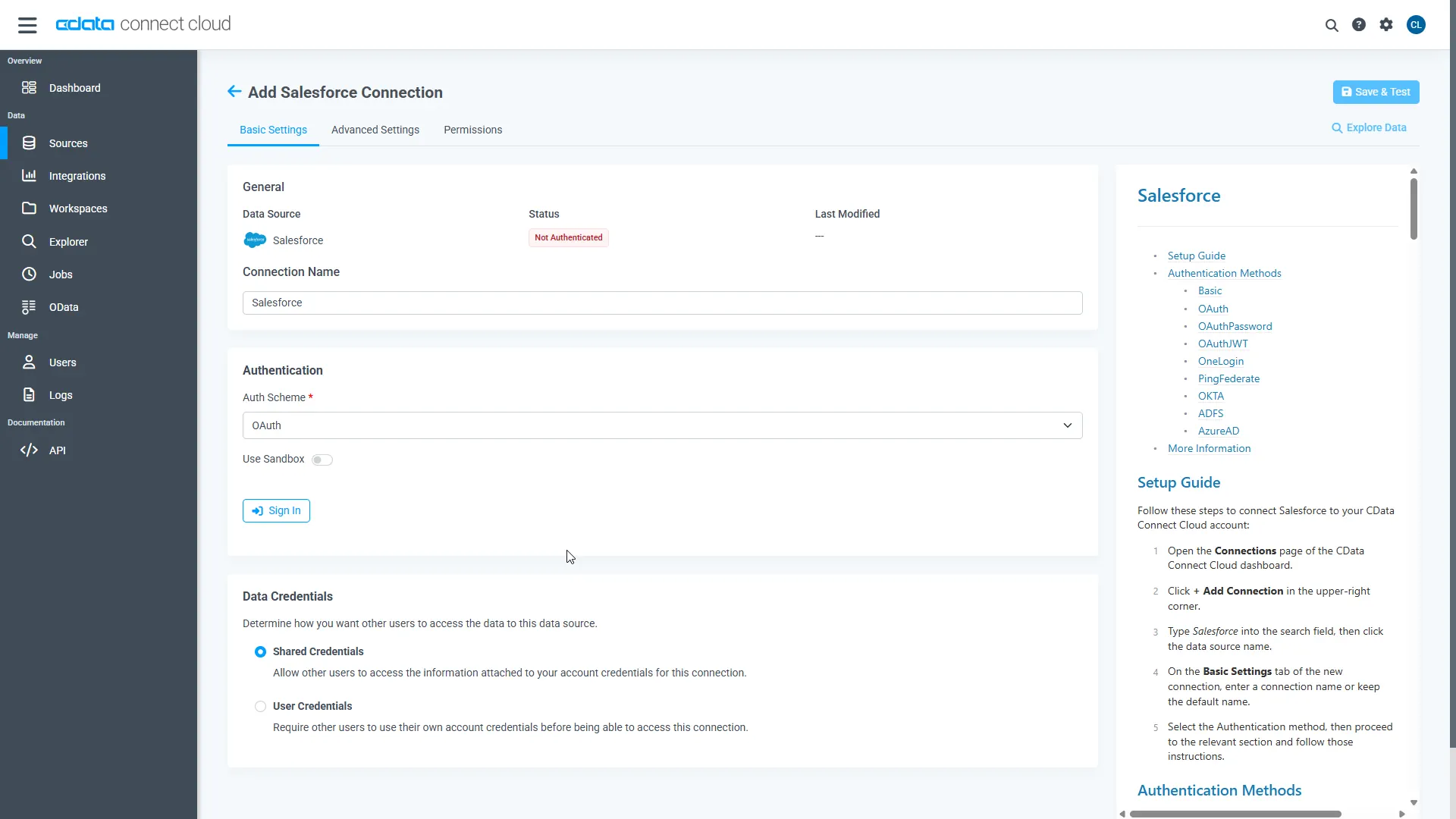
- Log into Connect AI, click Sources, and then click Add Connection
- Select "HubSpot" from the Add Connection panel
-
HubSpot uses OAuth to authenticate. Click "Sign in" to authenticate with HubSpot.
-
Navigate to the Permissions tab in the Add HubSpot Connection page and update the User-based permissions.



Add a Personal Access Token
A Personal Access Token (PAT) is used to authenticate the connection to Connect AI from your OpenAI application. It is best practice to create a separate PAT for each service to maintain granularity of access.
- Click on the Gear icon () at the top right of the Connect AI app to open the settings page.
- On the Settings page, go to the Access Tokens section and click Create PAT.
-
Give the PAT a name and click Create.

- The personal access token is only visible at creation, so be sure to copy it and store it securely for future use.
With the connection configured and a PAT generated, we are ready to connect to HubSpot data from your OpenAI application.
Step 2: Configure Your OpenAI Python Application for CData Connect AI
Follow these steps to configure your OpenAI Python application to connect to CData Connect AI. You can use our pre-built client as a starting point, available at https://github.com/CDataSoftware/openai-mcp-client, or follow the instructions below to create your own.
-
Ensure you have Python 3.8+ installed and install the required dependencies:
pip install openai python-dotenv httpx
-
Clone or download the OpenAI MCP client from GitHub:
git clone https://github.com/CDataSoftware/openai-mcp-client.git
cd openai-mcp-client
-
Set up your environment variables. Create a .env file in your project root with the following variables:
OPENAI_API_KEY=YOUR_OPENAI_API_KEY
MCP_SERVER_URL=https://mcp.cloud.cdata.com/mcp
MCP_USERNAME=YOUR_EMAIL
MCP_PASSWORD=YOUR_PAT
OPENAI_MODEL=gpt-4
Replace YOUR_OPENAI_API_KEY with your OpenAI API key, YOUR_EMAIL with your Connect AI email address, and YOUR_PAT with the Personal Access Token created in Step 1. -
If creating your own application, here's the core implementation for connecting to CData Connect AI MCP Server:
import os import asyncio import base64 from dotenv import load_dotenv from mcp_client import MCPServerStreamableHttp, MCPAgent # Load environment variables load_dotenv() async def main(): """Main chat loop for interacting with HubSpot data.""" # Get configuration api_key = os.getenv('OPENAI_API_KEY') mcp_url = os.getenv('MCP_SERVER_URL', 'https://mcp.cloud.cdata.com/mcp') username = os.getenv('MCP_USERNAME', '') password = os.getenv('MCP_PASSWORD', '') model = os.getenv('OPENAI_MODEL', 'gpt-4') # Create auth header for MCP server headers = {} if username and password: auth = base64.b64encode(f"{username}:{password}".encode()).decode() headers = {"Authorization": f"Basic {auth}"} # Connect to CData MCP Server async with MCPServerStreamableHttp( name="CData MCP Server", params={ "url": mcp_url, "headers": headers, "timeout": 30, "verify_ssl": True } ) as mcp_server: # Create AI agent with access to HubSpot data agent = MCPAgent( name="data_assistant", model=model, mcp_servers=[mcp_server], instructions="""You are a data query assistant with access to HubSpot data through CData Connect AI. You can help users explore and query their HubSpot data in real-time. Use the available MCP tools to: - List available databases and schemas - Explore table structures - Execute SQL queries - Provide insights about the data Always explain what you're doing and format results clearly.""", api_key=api_key ) await agent.initialize() print(f"Connected! {len(agent._tools_cache)} tools available.") print(" Chat with your HubSpot data (type 'exit' to quit): ") # Interactive chat loop conversation = [] while True: user_input = input("You: ") if user_input.lower() in ['exit', 'quit']: break conversation.append({"role": "user", "content": user_input}) print("Assistant: ", end="", flush=True) response = await agent.run(conversation) print(response["content"]) conversation.append({"role": "assistant", "content": response["content"]}) if __name__ == "__main__": asyncio.run(main()) -
Run your OpenAI application:
python client.py
- Start interacting with your HubSpot data through natural language queries. Your OpenAI assistant now has access to your HubSpot data through the CData Connect AI MCP Server.
Step 3: Build Intelligent Applications with Live HubSpot Data Access
With your OpenAI Python application configured and connected to CData Connect AI, you can now build sophisticated AI assistants that interact with your HubSpot data using natural language. The MCP integration provides your applications with powerful data access capabilities through OpenAI's advanced language models.
Available MCP Tools for Your Assistant
Your OpenAI assistant has access to the following CData Connect AI MCP tools:
- queryData: Execute SQL queries against connected data sources and retrieve results
- getCatalogs: Retrieve a list of available connections from CData Connect AI
- getSchemas: Retrieve database schemas for a specific catalog
- getTables: Retrieve database tables for a specific catalog and schema
- getColumns: Retrieve column metadata for a specific table
- getProcedures: Retrieve stored procedures for a specific catalog and schema
- getProcedureParameters: Retrieve parameter metadata for stored procedures
- executeProcedure: Execute stored procedures with parameters
Example Use Cases
Here are some examples of what your OpenAI-powered applications can do with live HubSpot data access:
- Conversational Analytics: Build chat interfaces that answer complex business questions using natural language
- Automated Reporting: Generate dynamic reports and summaries based on real-time data queries
- Data Discovery Assistant: Help users explore and understand their data structure without SQL knowledge
- Intelligent Data Monitor: Create AI assistants that proactively identify trends and anomalies
- Custom Query Builder: Enable users to create complex queries through conversational interactions
Interacting with Your Assistant
Once running, you can interact with your OpenAI assistant through natural language. Example queries include:
- "Show me all available databases"
- "What tables are in the sales database?"
- "List the top 10 customers by revenue"
- "Find all orders from the last month"
- "Analyze the trend in sales over the past quarter"
- "What's the structure of the customer table?"
Your OpenAI assistant will automatically translate these natural language queries into appropriate SQL queries and execute them against your HubSpot data through the CData Connect AI MCP Server, providing intelligent insights without requiring users to write complex SQL or understand the underlying data structure.
Advanced Features
The OpenAI MCP integration supports advanced capabilities:
- Context Awareness: The assistant maintains conversation context for follow-up questions
- Multi-turn Conversations: Build complex queries through iterative dialogue
- Intelligent Error Handling: Get helpful suggestions when queries encounter issues
- Data Insights: Leverage GPT's analytical capabilities to identify patterns and trends
- Format Flexibility: Request results in various formats (tables, summaries, JSON, etc.)
Get CData Connect AI
To get live data access to 300+ SaaS, Big Data, and NoSQL sources directly from your OpenAI applications, try CData Connect AI today!
