






Connect to Mailjet Data in JRuby

JRuby is a high-performance, stable, fully threaded Java implementation of the Ruby programming language. The CData JDBC Driver for Mailjet makes it easy to integrate connectivity to live Mailjet data in JRuby. This article shows how to create a simple JRuby app that connects to Mailjet data, executes a query, and displays the results.
Configure a JDBC Connection to Mailjet Data
Before creating the app, note the installation location for the JAR file for the JDBC Driver (typically C:\Program Files\CData\CData JDBC Driver for Mailjet\lib).
JRuby natively supports JDBC, so you can easily connect to Mailjet and execute SQL queries. Initialize the JDBC connection with the getConnection function of the java.sql.DriverManager class.
Start by setting the Profile connection property to the location of the Mailjet Profile on disk (e.g. C:\profiles\Mailjet.apip). Next, set the ProfileSettings connection property to the connection string for Mailjet (see below).
Mailjet API Profile Settings
In your Mailjet account, navigate to My Account > REST API > API Key Management to obtain your API Key and API Secret.
Built-in Connection String Designer
For assistance in constructing the JDBC URL, use the connection string designer built into the Mailjet JDBC Driver. Either double-click the JAR file or execute the jar file from the command-line.
java -jar cdata.jdbc.api.jar
Fill in the connection properties and copy the connection string to the clipboard.
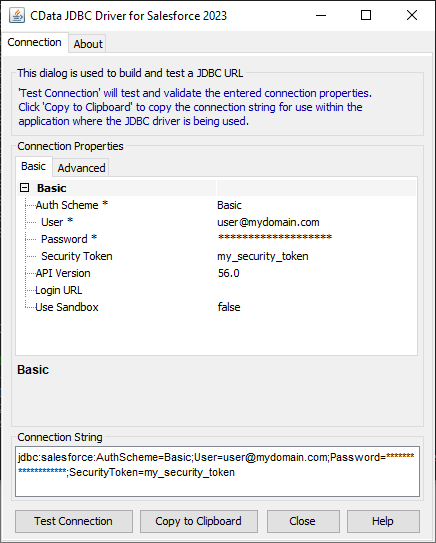
Below is a typical JDBC connection string for Mailjet:
jdbc:api:Profile=C:\profiles\Mailjet.apip;ProfileSettings='User=your_api_key;Password=your_api_secret';
Create a JRuby App with Connectivity to Mailjet Data
Create a new Ruby file (for example: APISelect.rb) and open it in a text editor. Copy the following code into your file:
require 'java'
require 'rubygems'
require 'C:/Program Files/CData/CData JDBC Driver for Mailjet 2018/lib/cdata.jdbc.api.jar'

url = "jdbc:api:Profile=C:\profiles\Mailjet.apip;ProfileSettings='User=your_api_key;Password=your_api_secret';"
conn = java.sql.DriverManager.getConnection(url)
stmt = conn.createStatement
rs = stmt.executeQuery("SELECT ID, Name FROM ApiKey")
while (rs.next) do
  puts rs.getString(1) + ' ' + rs.getString(2)
end
With the file completed, you are ready to display your Mailjet data with JRuby. To do so, simply run your file from the command line:
jruby -S APISelect.rb
Writing SQL-92 queries to Mailjet allows you to quickly and easily incorporate Mailjet data into your own JRuby applications. Download a free trial today!