






Query PabblySubscriptions Data as a MySQL Database in Node.js

You can use the SQL Gateway from the ODBC Driver for PabblySubscriptions to query PabblySubscriptions data through a MySQL interface. Follow the procedure below to start the MySQL remoting service of the SQL Gateway and start querying using Node.js.
Connect to PabblySubscriptions Data
If you have not already done so, provide values for the required connection properties in the data source name (DSN). You can use the built-in Microsoft ODBC Data Source Administrator to configure the DSN. This is also the last step of the driver installation. See the "Getting Started" chapter in the help documentation for a guide to using the Microsoft ODBC Data Source Administrator to create and configure a DSN.
Start by setting the Profile connection property to the location of the PabblySubscriptions Profile on disk (e.g. C:\profiles\PabblySubscriptions.apip). Next, set the ProfileSettings connection property to the connection string for PabblySubscriptions (see below).
PabblySubscriptions API Profile Settings
Navigate to Settings > API Settings > Regenerate API in your Pabbly Subscriptions account to obtain your API Key and Secret Key.
Configure the SQL Gateway
See the SQL Gateway Overview to set up connectivity to PabblySubscriptions data as a virtual MySQL database. You will configure a MySQL remoting service that listens for MySQL requests from clients. The service can be configured in the SQL Gateway UI.
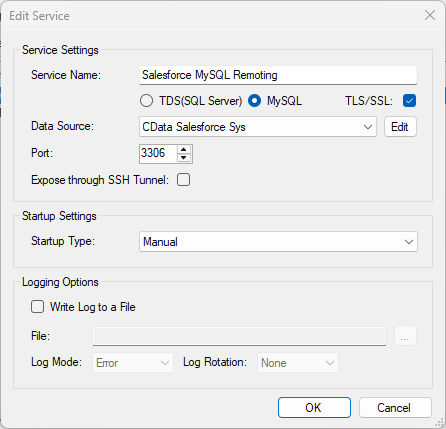
Query PabblySubscriptions from Node.js
The following example shows how to define a connection and execute queries to PabblySubscriptions with the mysql module. You will need the following information:
- Host name or address, and port: The machine and port where the MySQL remoting service is listening for MySQL connections.
- Username and password: The username and password of a user you authorized on the Users tab of the SQL Gateway.
- Database name: The DSN you configured for the MySQL remoting service.
Connect to PabblySubscriptions data and start executing queries with the code below:
var mysql      = require('mysql');
var connection = mysql.createConnection({
  host     : 'localhost',
  database : 'CData API Sys',
  port	   : '3306',
  user     : 'mysql_user',
  password : 'test'
});
connection.connect();
connection.query('SELECT * FROM CustomerInvoices', function(err, rows, fields) {
  if (err) throw err;
  console.log(rows);
});

connection.end();