






Visualize Live Scrapfly Data in Tableau

Tableau is a visual analytics platform transforming the way businesses use data to solve problems. When paired with the CData API Driver for Tableau, you can easily get access to live Scrapfly data within Tableau. This article shows how to connect to Scrapfly in Tableau and build a simple chart.
The CData Tableau Connectors enable high-speed access to live Scrapfly data in Tableau. Once you install the connector, you simply authenticate with Scrapfly and you can immediately start building responsive, dynamic visualizations and dashboards. By surfacing Scrapfly data using native Tableau data types and handling complex filters, aggregations, & other operations automatically, CData Tableau Connectors grant seamless access to Scrapfly data.
NOTE: The CData Tableau Connectors require Tableau 2020.3 or higher. If you are using an older version of Tableau, you will need to use the CData JDBC Driver.
Connect to Scrapfly in Tableau
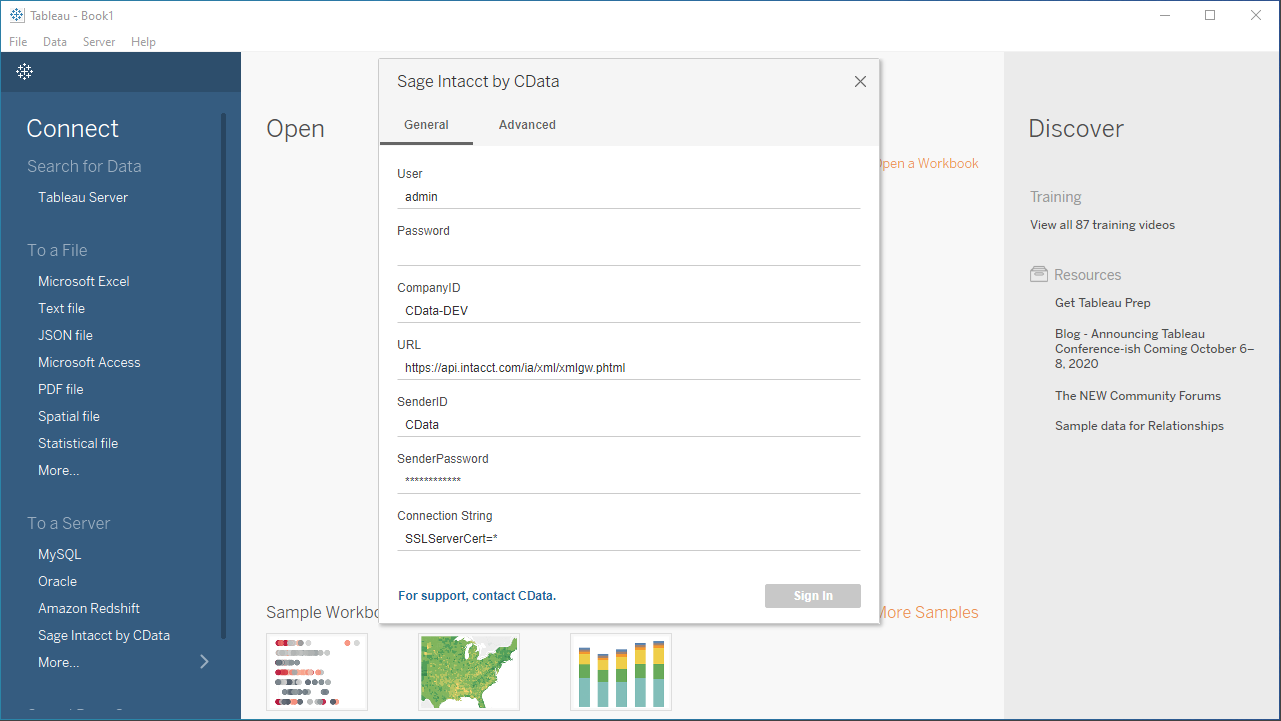
Open Tableau and click More under Connect -> To a Server. Select "Scrapfly by CData," then configure the connection and click "Sign In."
The Scrapfly API uses API Key authentication. The API key is passed as the key query parameter on every request.
Using API Key Authentication
Your Scrapfly API key is required to create a connection. To obtain your API key:
- Log into your Scrapfly account at scrapfly.io.
- Navigate to Dashboard and select API Keys.
- Copy your API key (begins with scp-live- for production or scp-test- for the test environment).
After obtaining your API key, set the following connection properties:
- AuthScheme: Set this to APIKey.
- APIKey: Set this to your Scrapfly API key.
Example connection string:
Profile=C:\profiles\Scrapfly.apip;AuthScheme=APIKey;ProfileSettings='APIKey=your_api_key';
Discover Schemas and Query Data
- Select CData from the Database pull-down menu.
- Select API from the Schema pull-down menu.
- Drag the tables and views you wish to visualize onto the join area. You can include multiple tables.
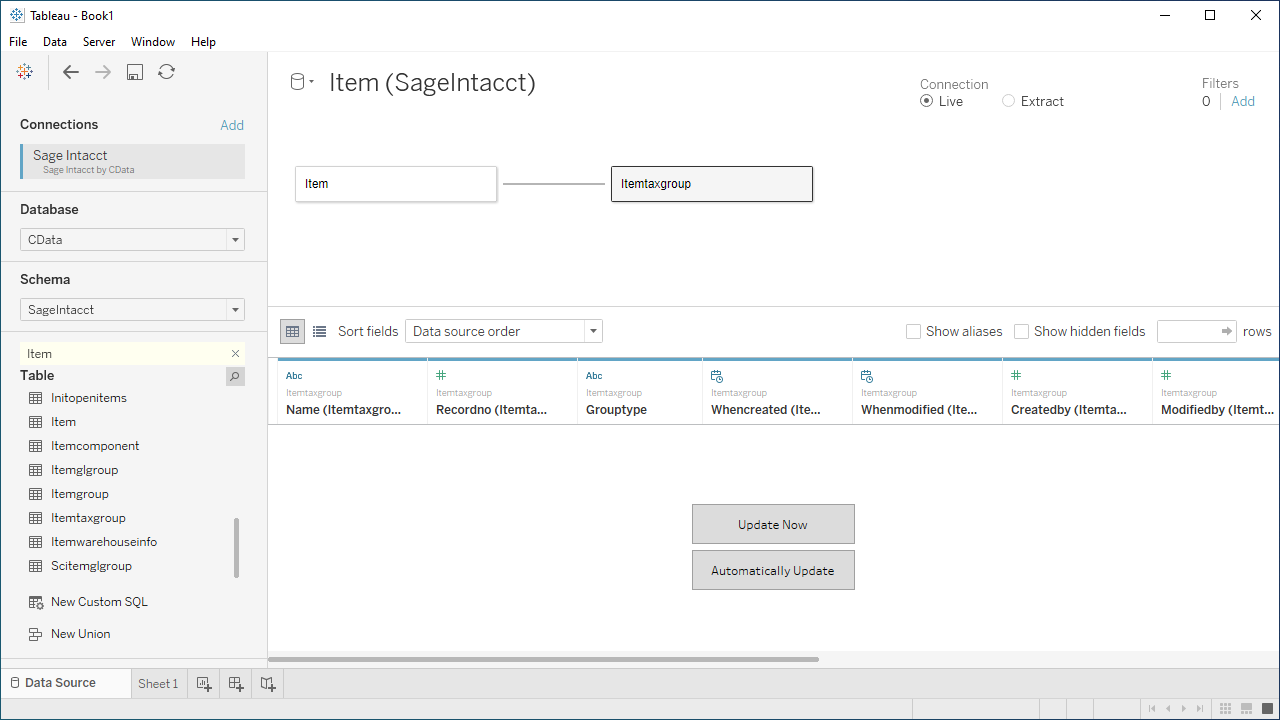
- Select Update Now or Automatically Update. Update Now lets you preview the first 10,000 rows of the data source (or enter the number of rows you want to see in the Rows text box). Automatically Update automatically reflects the changes in the preview area.
- Click the tab for your worksheet. Columns are listed as Dimensions and Measures, depending on the data type. The CData Tableau Connector discovers data types automatically, allowing you to leverage the powerful data processing and visualization features of Tableau.
- Drag a field from the Dimensions or Measures area to Rows or Columns. Tableau creates column or row headers.
- Select one of the chart types from the Show Me tab. Tableau displays the chart type that you selected.
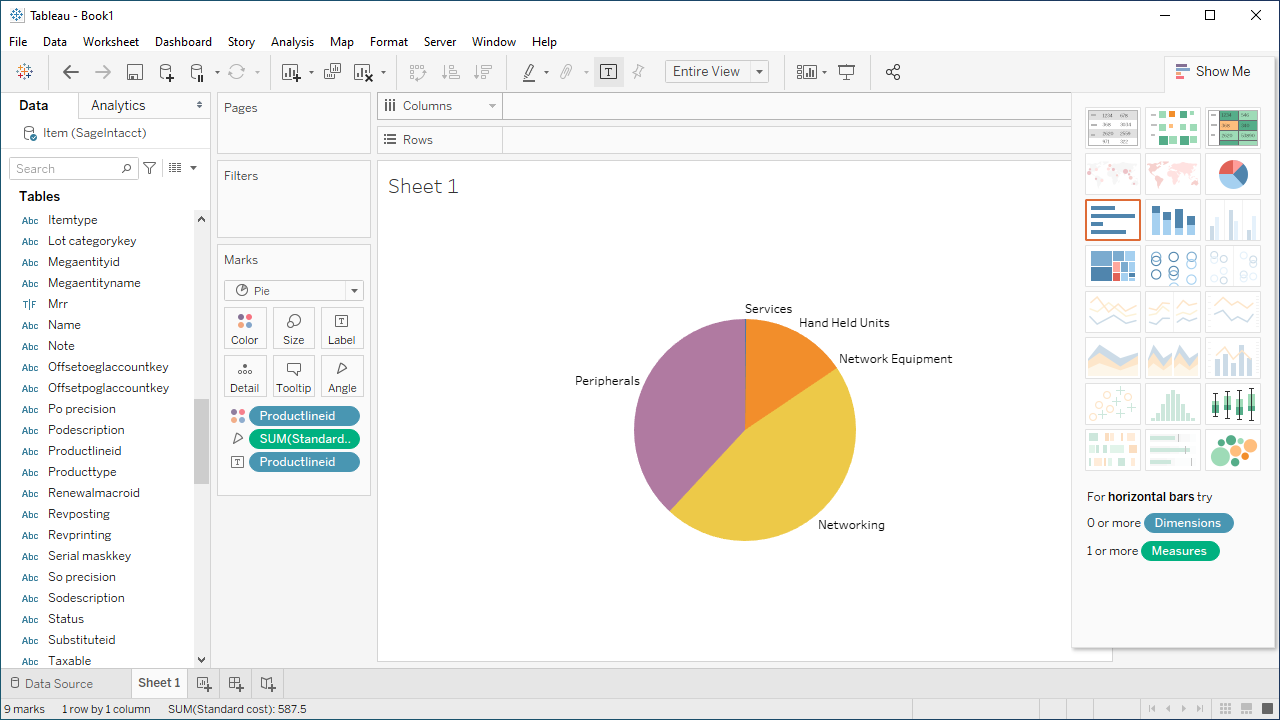
Using the CData API Driver for Tableau with Tableau, you can easily create robust visualizations and reports on Scrapfly data. Download a free, 30-day trial and get started today.