




How to Query Talkdesk Data in MySQL Workbench

You can use the SQL Gateway from the ODBC Driver for Talkdesk to query Talkdesk data through a MySQL interface. Follow the procedure below to start the MySQL remoting service of the SQL Gateway and work with live Talkdesk data in MySQL Workbench.
Connect to Talkdesk Data
If you have not already done so, provide values for the required connection properties in the data source name (DSN). You can use the built-in Microsoft ODBC Data Source Administrator to configure the DSN. This is also the last step of the driver installation. See the "Getting Started" chapter in the help documentation for a guide to using the Microsoft ODBC Data Source Administrator to create and configure a DSN.
Talkdesk uses the OAuth 2.0 Client Credentials grant. There is no browser-based authorization step and no callback URL.
Set the following connection properties:
- AccountName: The name of your Talkdesk account.
- Region: The region where your Talkdesk instance is deployed. Supported values are US (default), EU, CA, AU, UK, and FedRamp.
- OAuthClientId: The Client Id assigned when you registered your custom OAuth application.
- OAuthClientSecret: The Client Secret assigned to your custom OAuth application.
Creating a Custom OAuth Application
- Log in to your Talkdesk account and select OAuth Clients from the navigation menu.
- Click Create OAuth Client and give the client a descriptive name.
- Set Grant Type to Client Credentials.
- Click Add scopes and select the scopes for the data you want to access.
- Click Create and copy the Client Id and Client Secret.
When you connect, the driver automatically requests an access token from Talkdesk, caches it, and refreshes it when it expires. Make sure the scopes selected for the application match the views you plan to query, or the token request can fail.
Configure the SQL Gateway
See the SQL Gateway Overview to set up connectivity to Talkdesk data as a virtual MySQL database. You will configure a MySQL remoting service that listens for MySQL requests from clients. The service can be configured in the SQL Gateway UI.
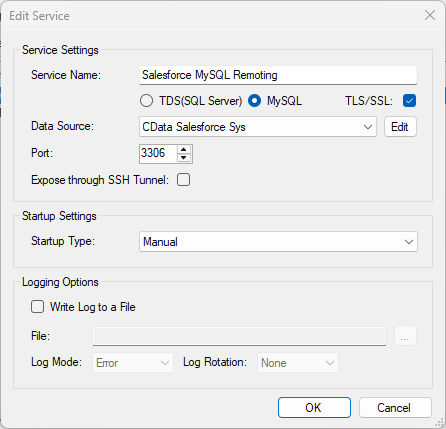
Query Talkdesk from MySQL Workbench
The steps below outline connecting to the virtual Talkdesk database created in the SQL Gateway from MySQL Workbench and issuing basic queries to work with live Talkdesk data.
Connect to Talkdesk through the SQL Gateway
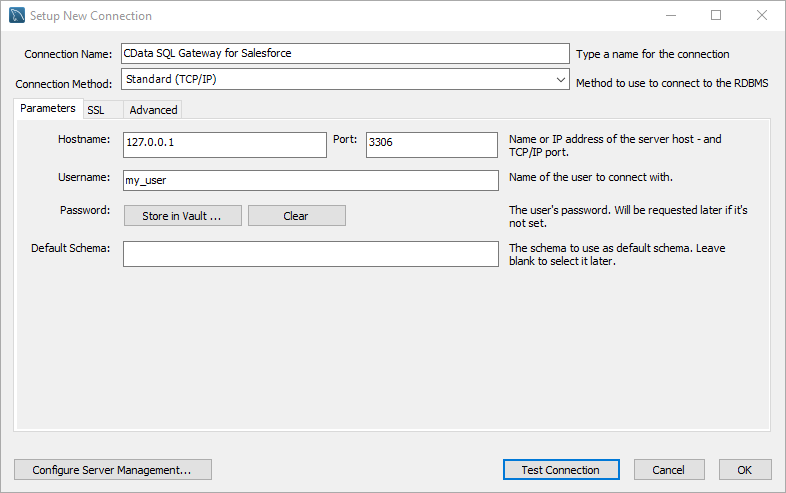
- In MySQL Workbench, click to add a new MySQL connection.
- Name the connection (CData SQL Gateway for Talkdesk).
- Set the Hostname, Port, and Username parameters to connect to the SQL Gateway.
- Click Store in Vault to set and store the password.
- Click Test Connection to ensure the connection is configured properly and click OK.
NOTE: When we refer to Username and Password, we mean the credentials for the user(s) created for the SQL Gateway.
Query Talkdesk Data
- Open the connection you just created (CData SQL Gateway for Talkdesk).
- Click File -> New Query Tab.
- Write a SQL query to retrieve Talkdesk data, like SELECT * FROM `CData Talkdesk Sys`.Users;
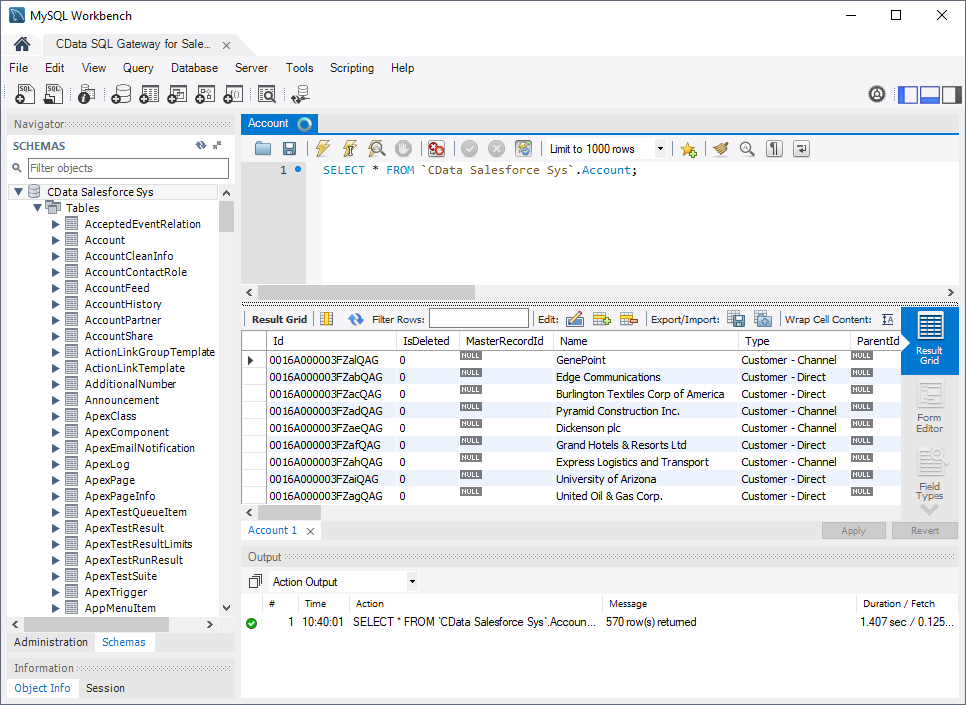
With access to live Talkdesk data from MySQL Workbench, you can easily work with Talkdesk, just like you would a MySQL database. Get started now with a free, 30-day trial of the CData ODBC Driver for Talkdesk and the CData SQL Gateway.
Ready to get started?
Download a free trial of the Talkdesk ODBC Driver to get started:
Download NowLearn more:
 Talkdesk ODBC Driver
The Talkdesk ODBC Driver is a powerful tool that allows you to connect with live data from Talkdesk, directly from any applications that support ODBC connectivity.
Access Talkdesk data like you would a database - read Talkdesk Accounts, Attributes, BillingAccounts, Callbacks, Campaigns, Cases, Contacts, GuardianUsers, Invoices, Products, Subscriptions, Teams, Users, Wallets, etc. through a standard ODBC Driver interface.