






How to Access Live VWO Data in Power Automate Desktop via ODBC

The CData ODBC Driver for VWO enables you to access live VWO data in workflow automation tools like Power Automate. This article shows how to integrate VWO data into a simple workflow, moving VWO data into a CSV file.
Through optimized data processing, CData ODBC Drivers offer unmatched performance for interacting with live VWO data in Microsoft Power Automate. When you issue complex SQL queries from Power Automate to VWO, the driver pushes supported SQL operations, like filters and aggregations, directly to VWO and utilizes the embedded SQL engine to process unsupported operations client-side (e.g. SQL functions and JOIN operations).
Connect to VWO as an ODBC Data Source
If you have not already, first specify connection properties in an ODBC DSN (data source name). This is the last step of the driver installation. You can use the Microsoft ODBC Data Source Administrator to create and configure ODBC DSNs.
Start by setting the Profile connection property to the location of the VWO Profile on disk (e.g. C:\profiles\VWO.apip). Next, set the ProfileSettings connection property to the connection string for VWO (see below).
VWO API Profile Settings
Generate your VWO API authentication token by visiting app.vwo.com/#/developers/tokens.
When you configure the DSN, you may also want to set the Max Rows connection property. This will limit the number of rows returned, which is especially helpful for improving performance when designing workflows.
Integrate VWO Data into Power Automate Workflows
After configuring the DSN for VWO, you are ready to integrate VWO data into your Power Automate workflows. Open Microsoft Power Automate, add a new flow, and name the flow.
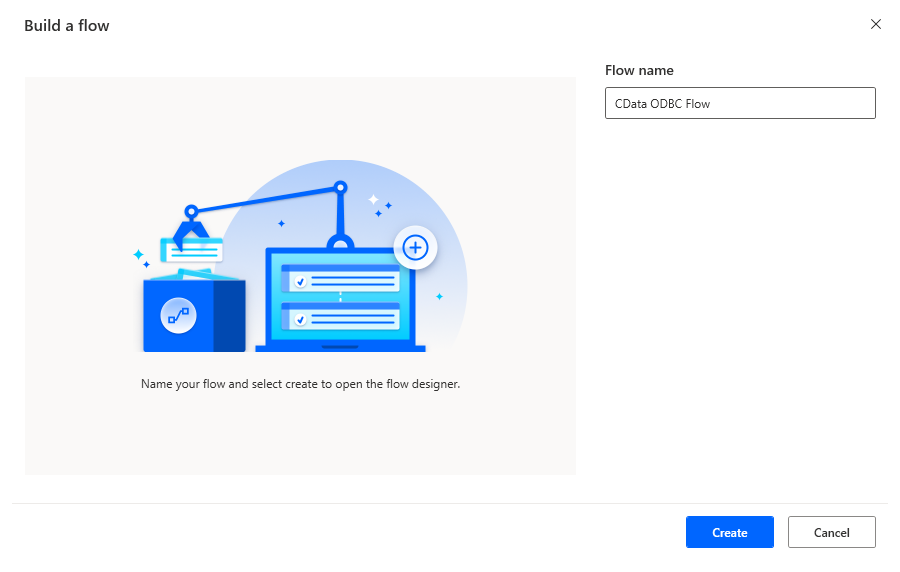
In the flow editor, you can add the actions to connect to VWO, query VWO using SQL, and write the query results to a CSV document.
Add an Open SQL Connection Action
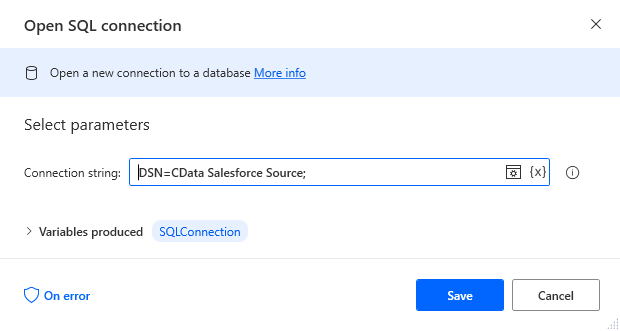
Add an "Open SQL connection" action (Actions -> Database) and configure the properties.
- Connection string: DSN=CData VWO Source
After configuring the action, click Save.
Add an Execute SQL Statement Action
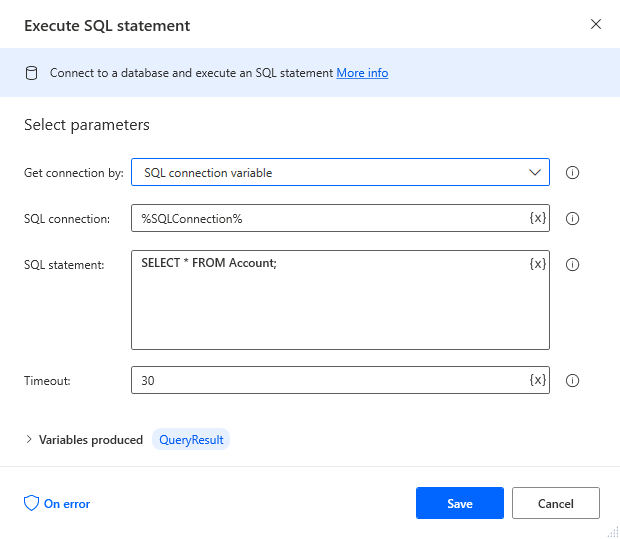
Add an "Execute SQL statement" action (Actions -> Database) and configure the properties.
- Get connection by: SQL connection variable
- SQL connection: %SQLConnection% (the variable from the "Open SQL connection" action above)
- SQL statement: SELECT * FROM Accounts
After configuring the action, click Save.
Add a Write to CSV File Action
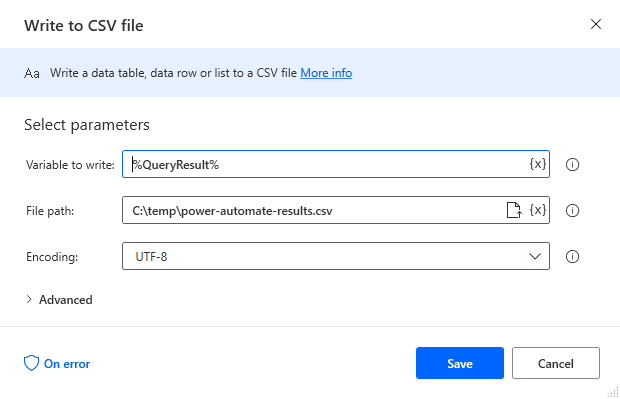
Add a "Write to CSV file" action (Actions -> File) and configure the properties.
- Variable to write to: %QueryResult% (the variable from the "Execute SQL statement" action above)
- File path: set to a file on disk
- Configure Advanced settings as needed.
After configuring the action, click Save.
Add a Close SQL Connection Action
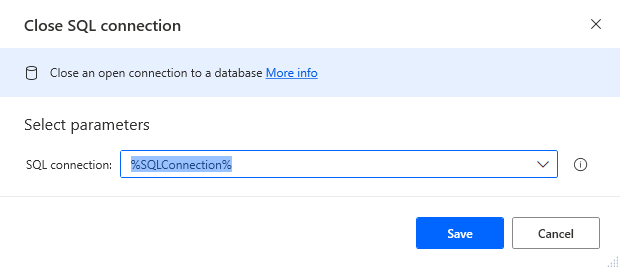
Add a "Close SQL connection" action (Actions -> Database) and configure the properties.
- SQL Connection: %SQLConnection% (the variable from the "Open SQL connection" action above)
After configuring the action, click Save.
Save & Run the Flow
Once you have configured all the actions for the flow, click the disk icon to save the flow. Click the play icon to run the flow.
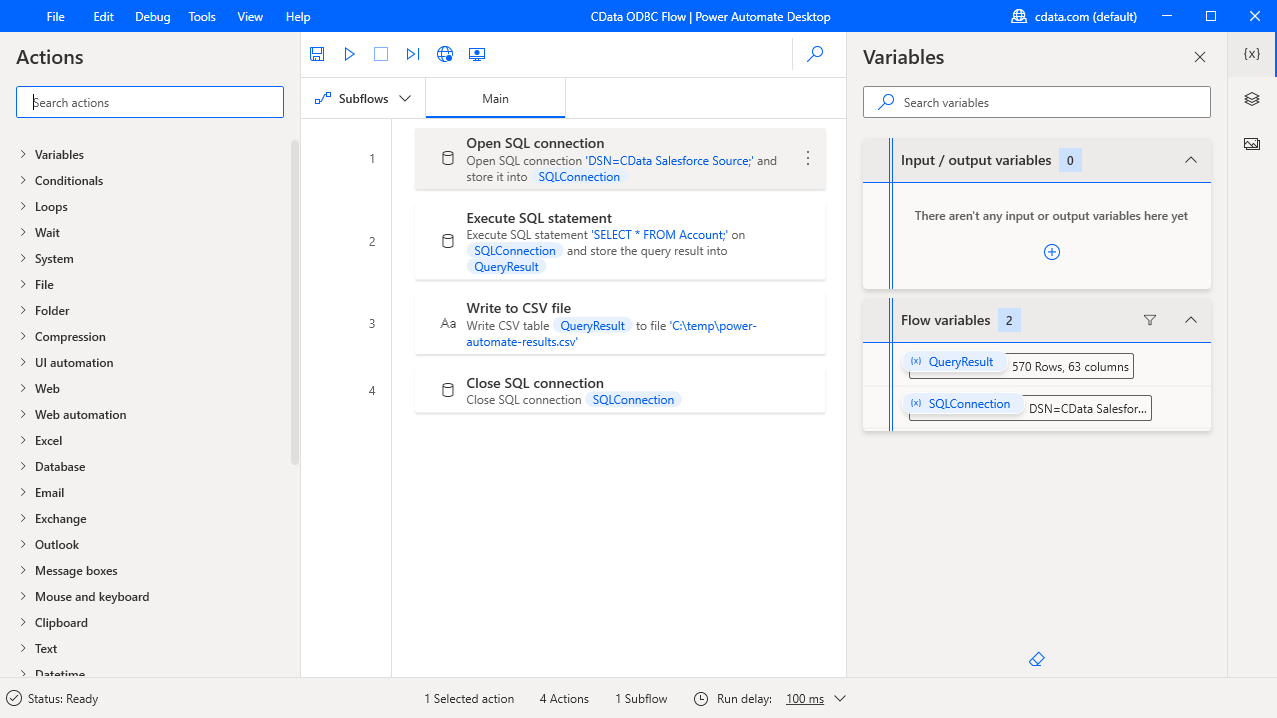
Now you have a workflow to move VWO data into a CSV file.
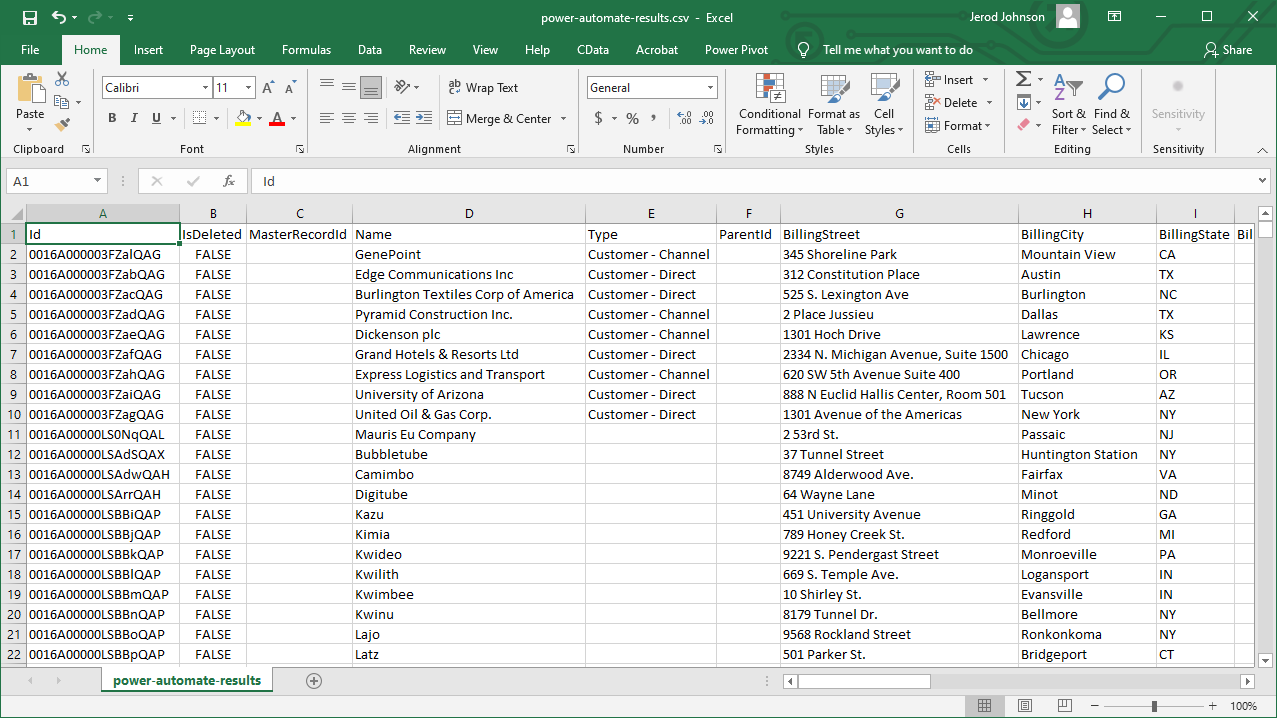
With the CData ODBC Driver for VWO, you get live connectivity to VWO data within your Microsoft Power Automate workflows.
Related Power Automate Articles
This article explains how to use the CData ODBC Driver for VWO with Power Automate Desktop. Check out our other articles for more ways to work with Power Automate (Desktop & Online):