






How to publish and share Webex Data dashboards with Tableau Server

Integrate connectivity to Webex data into your enterprise reporting capabilities. The CData ODBC Driver for Webex enables you to access live Webex data in business intelligence tools like Tableau Server. Connectivity to Webex APIs enables you to monitor changes to your data in real time. Other members of your organization can access your dashboards from a Web browser and get updates from their mobile phone.
This article explains how to configure a DSN on the client and server machines, publish a data source for Webex to Tableau Server, and publish an entire Workbook to Tableau Server (including the data source). If you publish a data source, you will be able to create new, refreshable workbooks in Tableau Server.
Connect to Webex as an ODBC Data Source
To create a data source or workbook in Tableau Desktop and publish the data source or workbook to Tableau server, you will need to configure a DSN on each machine (Desktop and Server), specifying connection properties and creating DSNs using the same name on each machine. Information for connecting to Webex follows, along with different instructions for configuring a DSN in Windows and Linux environments.
To authenticate to Webex, and connect to your own data or to allow other users to connect to their data, you can use the OAuth standard.
Using OAuth Authentication
First, you will need to register an OAuth application with Webex. To do so, navigate to the Webex Developer Portal and create a new integration. Your OAuth application will be assigned a client id and a client secret.
After setting the following connection properties, you are ready to connect:
- AuthScheme: Set this to OAuth.
- InitiateOAuth: Set this to GETANDREFRESH. You can use InitiateOAuth to manage the process to obtain the OAuthAccessToken.
- OAuthClientId: Set this to the client_id that is specified in your app settings.
- OAuthClientSecret: Set this to the client_secret that is specified in your app settings.
- CallbackURL: Set this to the Redirect URI that is specified in your app settings.
- Scope: Set this in ProfileSettings to specify the OAuth scopes requested during authorization. Multiple scopes can be space-separated (e.g. ProfileSettings='Scope=spark:all spark:kms').
Example connection string:
Profile=C:\profiles\Webex.apip;Authscheme=OAuth;InitiateOAuth=GETANDREFRESH;OAuthClientId=your_client_id;OAuthClientSecret=your_client_secret;CallbackUrl=your_callback_url;ProfileSettings='Scope=your_scopes';
When you configure the DSN, you may also want to set the Max Rows connection property. This will limit the number of rows returned, which is especially helpful for improving performance when designing reports and visualizations.
Windows
If you are installing the CData ODBC Driver for Webex on Windows, DSN configuration is the last step of the driver installation. If you already have the driver installed, or you wish to configure new DSNs, you can use the Microsoft ODBC Data Source Administrator.
Linux
If you are installing the CData ODBC Driver for Webex in a Linux environment, the driver installation predefines a system DSN. You can modify the DSN by editing the system data sources file (/etc/odbc.ini) and defining the required connection properties.
/etc/odbc.ini
[CData API Source]
Driver = CData ODBC Driver for Webex
Description = My Description
Profile = C:\profiles\Webex.apip
Authscheme = OAuth
InitiateOAuth = GETANDREFRESH
OAuthClientId = your_client_id
OAuthClientSecret = your_client_secret
CallbackUrl = your_callback_url
ProfileSettings = 'Scope = your_scopes'
For specific information on using these configuration files, please refer to the help documentation (installed and found online).
Publish the Webex Data Source to Tableau Server
With the connections to Webex data configured, you are ready to publish a Webex data source on Tableau, ready to be leveraged by users in your organization to create workbooks based on Webex data.
Create and Publish a Data Source
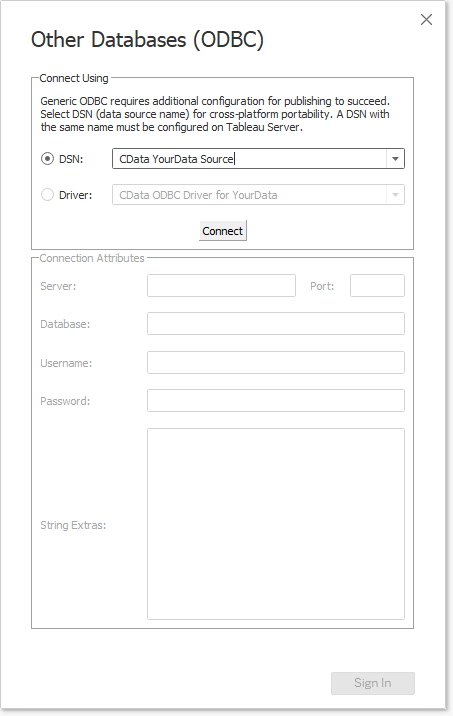
In the Connect pane, click More -> Other Databases (ODBC). Select CData API Sys, the system DSN.
The driver installation automatically creates matching user and system DSNs: The system DSN is needed to connect from Tableau Server.
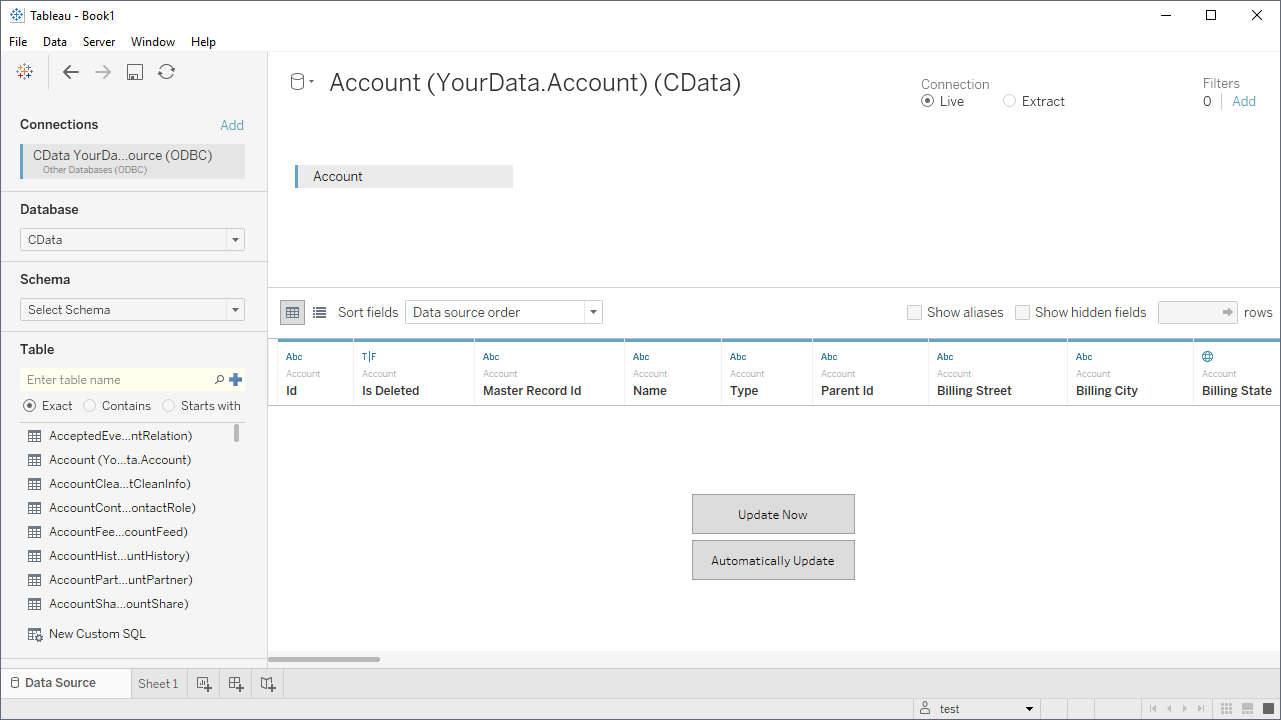
- In the Database menu, select CData.
- In the Table box, enter a table name or click New Custom SQL to enter an SQL query.
- Drag the table onto the join area.
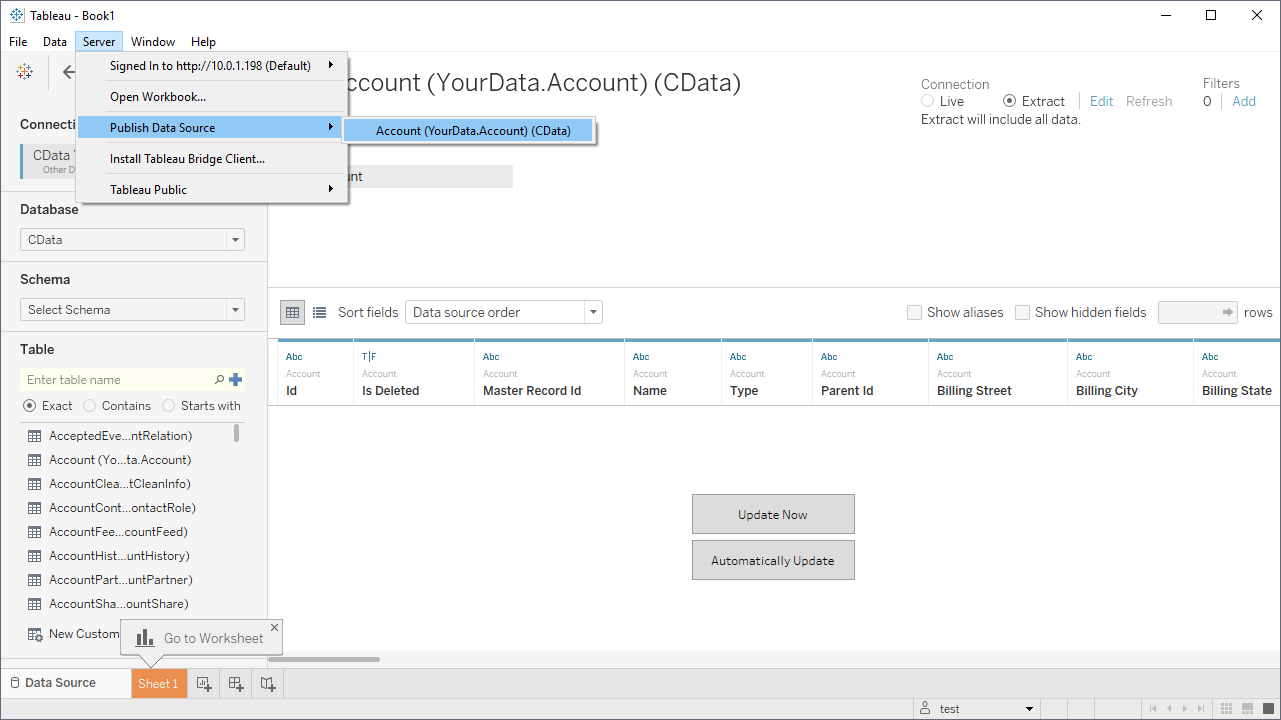
- From the Server menu, click Publish Data Source -> (YOUR DATA SOURCE).
- Enter the URL to the server. For most instances, you will authenticate with the Tableau Server username and password. Other authentication scenarios can be found below:
- If Tableau is configured to use Kerberos and your computer has valid Active Directory credentials, Tableau connects to the server.
- If Tableau is configured to use SAML, a login prompt for your external identity provider is displayed.
- If Tableau is configured to use Active Directory, enter your Windows username and password.
- In the resulting dialog, set the Project, Data Source, and other properties. If you want to schedule refreshes, select Embedded Password in the Authentication menu. Click Publish.
You and other users in your organization can now create and share workbooks based on the published data source.
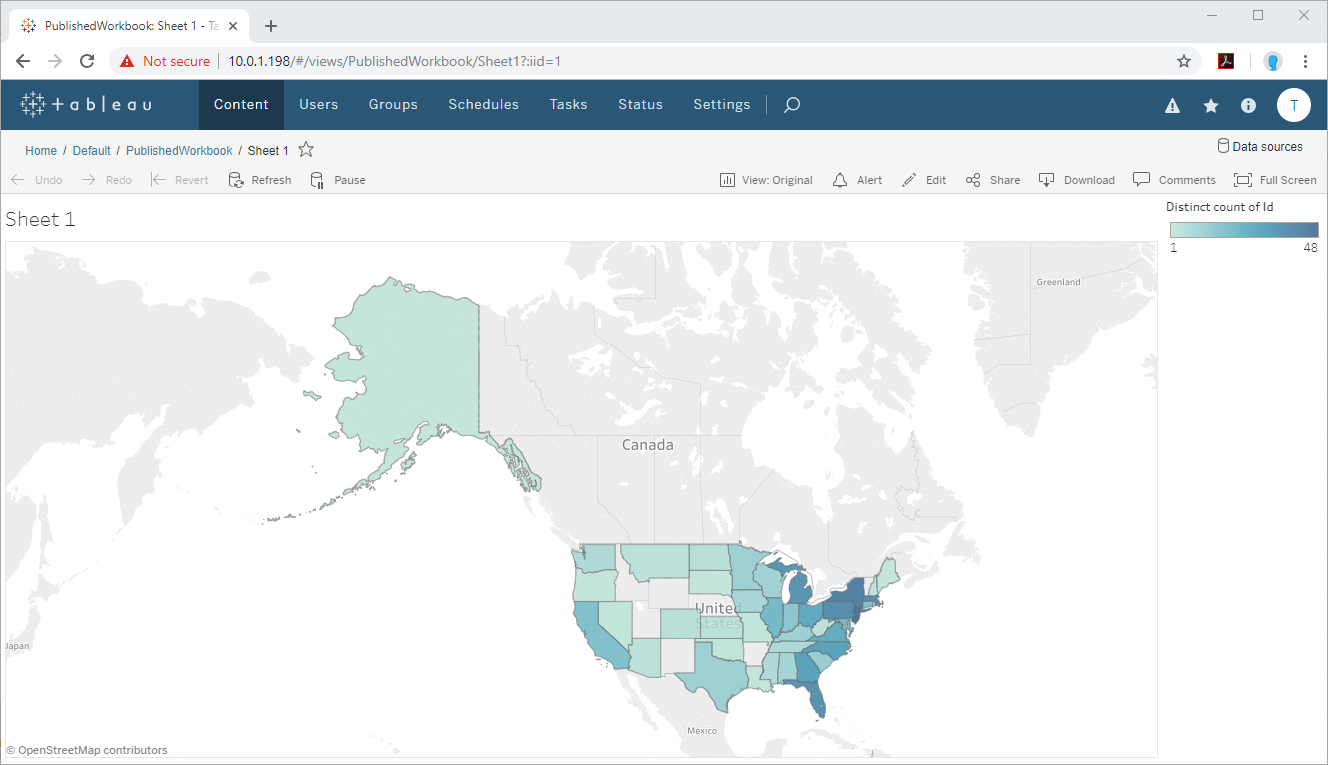
Refresh Workbooks
With a system DSN configured on the client (Tableau Desktop) machine and server (Tableau Server) machine, you can refresh workbooks connected to the Webex data source. From the Web interface for Tableau Sever, click Data -> (YOUR DATA SOURCE) -> Refresh.

Publish a Completed Workbook with Webex Data to Tableau Server
If you have a specific Workbook that you wish to share with your organization, you can create the Workbook on Tableau Desktop and publish the Workbook directly to Tableau Server.
- To connect to Webex and select data, follow steps 1-5 above.
- Click Server -> Sign in and configure the connection to the server. For most instances, you will authenticate with the Tableau Server username and password. Other authentication scenarios can be found below:
- If Tableau is configured to use Kerberos and your computer has valid Active Directory credentials, Tableau connects to the server.
- If Tableau is configured to use SAML, a login prompt for your external identity provider is displayed.
- If Tableau is configured to use Active Directory, enter your Windows username and password.
- With the data selected, select dimensions and measures to visualize and select a type of chart or graph to build your visualization(s).
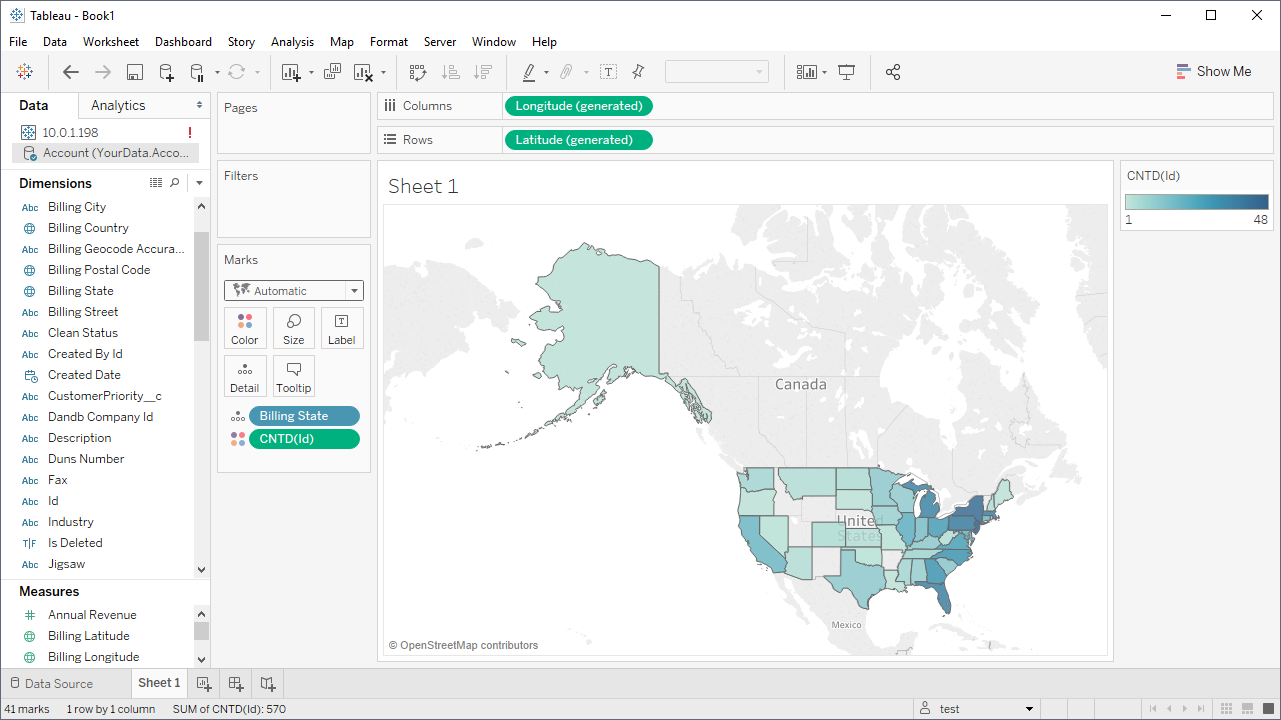
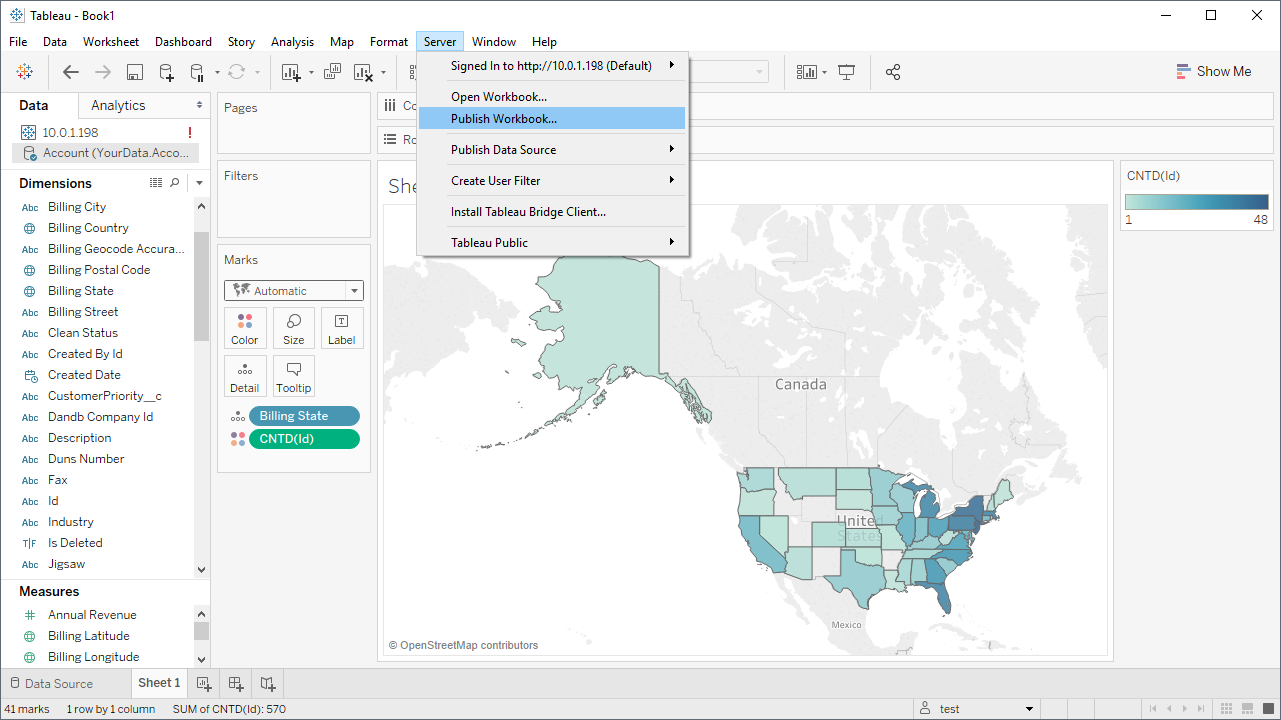
- Once the Workbook is complete, click Server -> Publish Workbook to publish the Workbook to Tableau Server.
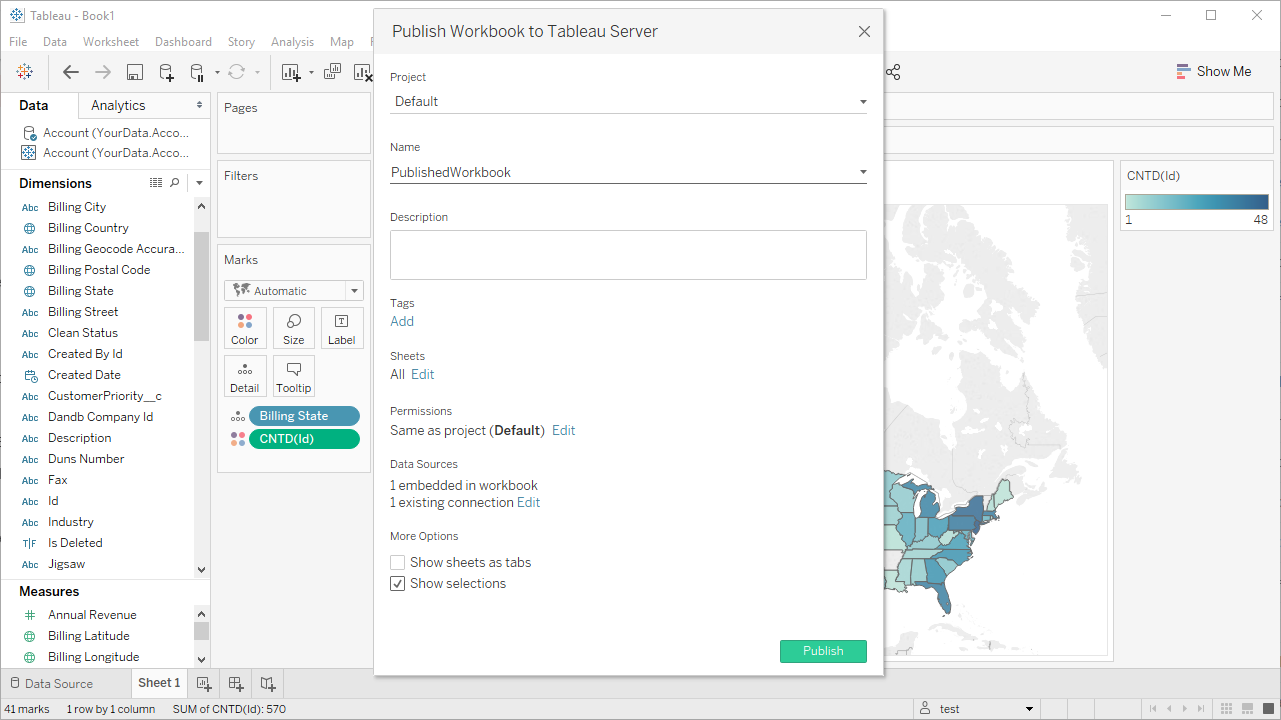
- In the resulting dialog, set the Project, Name, Description and other properties. If you want to schedule refreshes, click Edit under Data Sources and change the Authentication option to Embedded Password. Click Publish.
You and other users in your organization can now review the published workbook from Tableau Server.
