




Getting Started with the CData Power BI Connector for WooCommerce

This guide explains everything you need to get started with the CData Power BI Connector for WooCommerce. You'll learn how to install and license the connector, configure your first connection, and explore next steps for working with WooCommerce data in your applications.
Installation & Licensing
The CData Power BI Connector for WooCommerce enables Power BI Desktop and the Power BI On-premises Data Gateway to connect directly to live WooCommerce data. This section details installation prerequisites, platform support, connector deployment, and licensing requirements.
System Requirements
The connector is supported in environments where Microsoft Power BI Desktop and Power BI Gateway are available. Because these components are Windows-only, the Power BI Connector is supported exclusively on Windows platforms.
Operating System Support
- Windows 10 (64-bit)
- Windows 11 (64-bit)
- Windows Server 2016, 2019, or 2022 (recommended for Power BI Gateway deployments)
Power BI Components
- Power BI Desktop (latest version recommended): Used for report design, data modeling, and connector configuration.
- Power BI On-premises Data Gateway: Required for scheduled refresh or cloud-published datasets.
Software Dependencies
Microsoft Visual C++ 2015-2022 Redistributable (installed automatically if not already present).
Installing the Power BI Connector
Windows
- Download the CData Power BI Connector for WooCommerce.
- Run the installer and follow the installation wizard.
- The installer will guide you through the setup process and deploy the connector to the default installation directory.
- During installation, you may be prompted to enter your license key.
- You should have received your license key via email from the CData Orders Team.
- The license key looks like this: XXXX-XXXX-XXXX-XXXX-XXXX.
Note: If you are running a trial, select the Trial Key option.
- After installation, locate the connector file in the given location: C:\Program Files\CData\CData Power BI Connector for WooCommerce\CData.WooCommerce.pqx
- Copy the .pqx file into the Power BI Desktop Custom Connectors folder (one-time process): Documents\Power BI Desktop\Custom Connectors
- Restart Power BI Desktop. If prompted to enable custom extensions:
- Go to File -> Options and Settings -> Options
- Select Security
- Under Data Extensions, choose "Allow any extension to load without validation"
- Restart Power BI Desktop
- For Power BI Gateway deployments, copy the same .pqx file to the gateway's custom connectors directory and restart the gateway service to load it.
Activating Your License
You should have received your license key via email from the CData Orders Team. The license key looks like this: XXXX-XXXX-XXXX-XXXX-XXXX
Windows License Activation
Your license will typically be activated during installation. However, there are cases where you may need to activate it manually. The steps below walk you through manual activation for the Power BI Connector:
- Open the ODBC driver application (DSN) from the Start menu.
- Select User DSN or System DSN, and open CData PBI WooCommerce Source/Sys.
- Navigate to the About tab.
- Enter the license key in the Activation field under the License Information section, and click Activate!.
- Once activation succeeds, the connector will display a "Licensed" status. Click OK.
Common Licensing Questions
Can I use my license on multiple machines?
Yes, depending on your subscription tier. Check your order confirmation or contact your account representative for details. If you are unsure of who your account representative is, contact [email protected].
I lost my license key. How do I retrieve it?
Email [email protected] with your order number, and we'll resend your license key.
Can I transfer my license to a different machine?
Yes. When transferring the license to a different machine, you will need to submit a License Transfer Request on our site linked below:
https://www.cdata.com/lic/transfer/
After the License Transfer Request is submitted and successfully processed, an activation will be added to your Product Key, and you will be able to activate the full license on the other machine. Once this process is finished, the license on the previous machine will be invalid.
For additional licensing questions, contact [email protected]. Viewing and upgrading your license can now be done through our self-service portal at portal.cdata.com.
Connection Configuration
Once your driver is installed and licensed, you're ready to configure a connection to WooCommerce. The CData Power BI Connector for WooCommerce is built on top of an ODBC driver, so it uses a DSN (Data Source Name) to store connection properties.
Creating a DSN
Windows: Using ODBC Data Source Administrator
- Open the ODBC Data Source Administrator (64-bit)
Note: CData Power BI connectors use the 64-bit version.
- Search for "ODBC" in the Windows Start menu
- Or navigate to: Control Panel -> Administrative Tools -> ODBC Data Sources
- Click the System DSN or User DSN tab
- System DSN: Available to all users on the machine (recommended for services)
- User DSN: Available only to the current user
- Select CData PBI WooCommerce Source or Sys from the list (depending on User DSN or System DSN) or click Add to create a new data source.
- Click Finish to open the connection configuration dialog.
Configuring Connection Properties
WooCommerce supports the following authentication methods: one-legged OAuth1.0 Authentication and standard OAuth2.0 Authentication.
Connecting using one-legged OAuth 1.0 Authentication
Specify the following properties (NOTE: the below credentials are generated from WooCommerce settings page and should not be confused with the credentials generated by using WordPress OAuth2.0 plugin):
- ConsumerKey
- ConsumerSecret
Connecting using WordPress OAuth 2.0 Authentication
After having configured the plugin, you may connect to WooCommerce by providing the following connection properties:
In either case, set the Url property to the URL of the WooCommerce instance.
Solution: Verify your credentials are current. For OAuth applications, you may need to authorize CData in your application's security settings. Contact [email protected] for authorization assistance. Solution: Check firewall & proxy settings. Contact [email protected] for specific port requirements. Solution: Verify database and schema names. Use the Data Model tab in the DSN configuration to browse available tables. For additional connection troubleshooting, contact [email protected] with your specific error message. Now that you have installed, licensed, and configured the driver, here are some scenarios you can use to explore our Power BI Connectors: Yes. Administrator rights are required to install the CData Power BI Connector because the installer writes to system directories and registers required components. No. Power BI Desktop is 64-bit only, and all CData Power BI Connectors are distributed as 64-bit only MSI installers. If you need assistance at any point: System DSNs are available to all users on a machine and are required when using the Power BI On-premises Data Gateway. User DSNs are only available to the Windows user who created them and are suitable for local Power BI Desktop use. Yes. The underlying ODBC driver supports DSN-less connection strings, and Power BI can use DSN-less configuration when connecting through the ODBC connector. Example: (Exact properties depend on your WooCommerce authentication method.) Create separate DSNs, one for each WooCommerce account, or create separate connection entries inside Power BI using different authentication credentials. Each DSN or connection stores its own settings. Yes. Proxy settings can be configured in the connection properties of your DSN or through the connector's Advanced Settings in Power BI. Refer to the Firewall & Proxy section of the documentation for required properties and supported proxy scenarios. Check the following: Logging can be enabled through the connector's advanced connection properties in Power BI Desktop. In the connection dialog: Be prepared to upload the log file when contacting [email protected] for analysis securely. Most WooCommerce connections require outbound HTTPS (port 443) access. Ensure your firewall allows outbound secure traffic to WooCommerce endpoints. For environments using proxies or additional security layers, consult the Firewall & Proxy section of the connector documentation. No. The CData Power BI Connector cannot be used in Linux containers because: The Power BI Connector is a Windows-only component. Refer to the SQL Compliance section of the WooCommerce connector documentation.
Note that available SQL features may differ between Import and DirectQuery mode due to Power BI engine limitations. CData releases major updates to the Power BI Connector annually, with periodic maintenance updates as needed. Check your CData Account Portal or contact [email protected] for the latest version. Refer to the Power BI Getting Started and Examples sections in the help documentation. (Note: Power BI connectors do not use programming-language code samples like ODBC or JDBC drivers.) For questions not covered in this FAQ, contact [email protected].
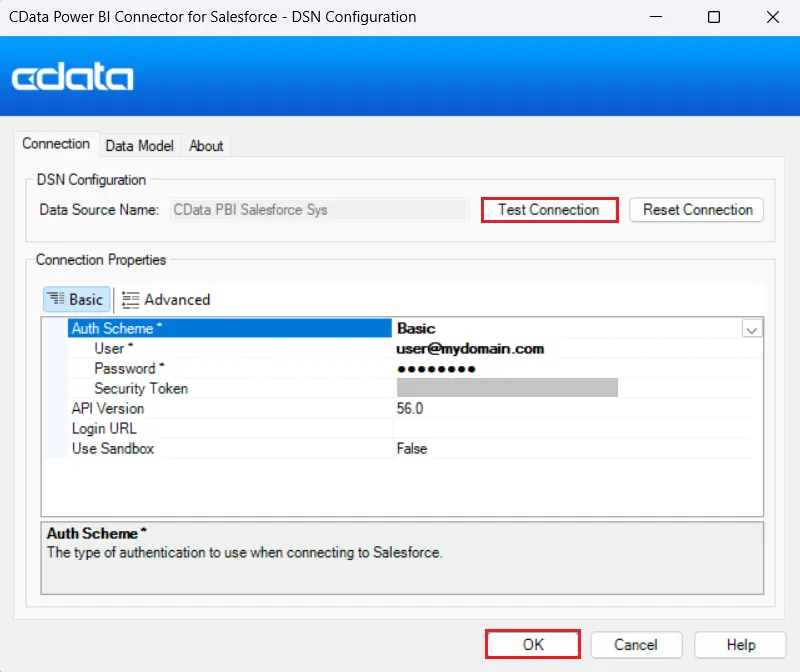
Testing Your Connection
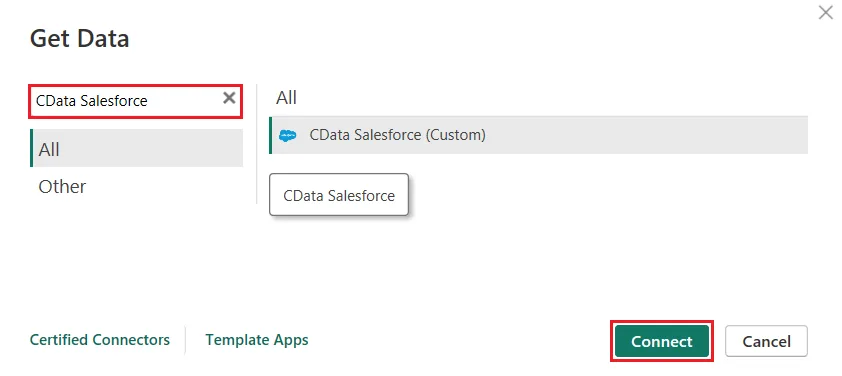
Creating a Connection in Power BI Desktop
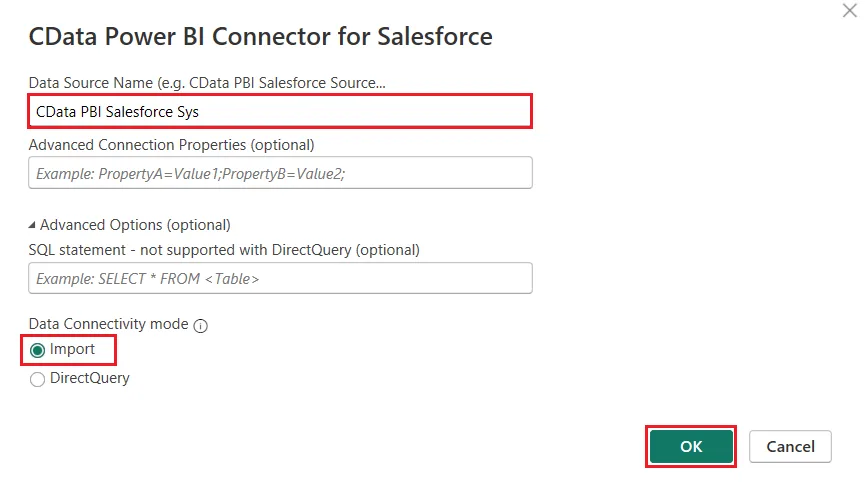

Common Connection Issues
Authentication Failed
Cannot Reach Server
Table Not Found
What's Next
Power BI Article Title Power BI Desktop Author Power BI Reports on Real-Time WooCommerce
Installation & Licensing
Do I need administrator rights to install the connector?
Is the connector available in 32-bit and 64-bit versions?
Get Support
Connecting
What's the difference between System DSN and User DSN?
Can I use a DSN-less connection string instead of creating a DSN?
Driver={CData Power BI Connector for WooCommerce};User=Value1;Password=Value2;SecurityToken=Value3;
How do I connect to multiple WooCommerce accounts?
Can I connect through a proxy server?
Performance & Troubleshooting
Why are my queries slow?
How do I enable logging for troubleshooting?
What ports does the connector need access to?
Can I use the connector in a Linux container or Docker?
General
Where can I find the complete list of supported SQL operations?
How often is the connector updated?
Where can I find examples of using the connector?
Ready to get started?
Download a free trial of the WooCommerce Power BI Connector to get started:
Download NowLearn more:
 WooCommerce Power BI Connector
The fastest and easiest way to connect Power BI to WooCommerce data. Includes comprehensive high-performance data access, real-time integration, extensive metadata discovery, and robust SQL-92 support.
