








How to Build an ETL App for Adobe Target Data in Python with CData Connect AI

The rich ecosystem of Python modules lets you get to work quickly and integrate your systems more effectively. With the CData Connect AI Python SDK and the petl framework, you can build Adobe Target-connected applications and pipelines for extracting, transforming, and loading Adobe Target data. This article shows how to connect to Connect AI and use petl to extract, transform, and load Adobe Target data.
The Connect AI Python SDK (cdata-connect-ai) is a DB-API 2.0 (PEP 249) compliant client, so petl can read directly from the SDK connection with etl.fromdb. There is no driver to install per source: connect with a Personal Access Token and build your pipeline.
Connect to Adobe Target in Connect AI
CData Connect AI uses a straightforward, point-and-click interface to connect to data sources.
- Log into Connect AI, click Sources, and then click Add Connection
- Select "Adobe Target" from the Add Connection panel
-
Adobe Target uses OAuth to authenticate. Click "Sign in" to authenticate with Adobe Target.
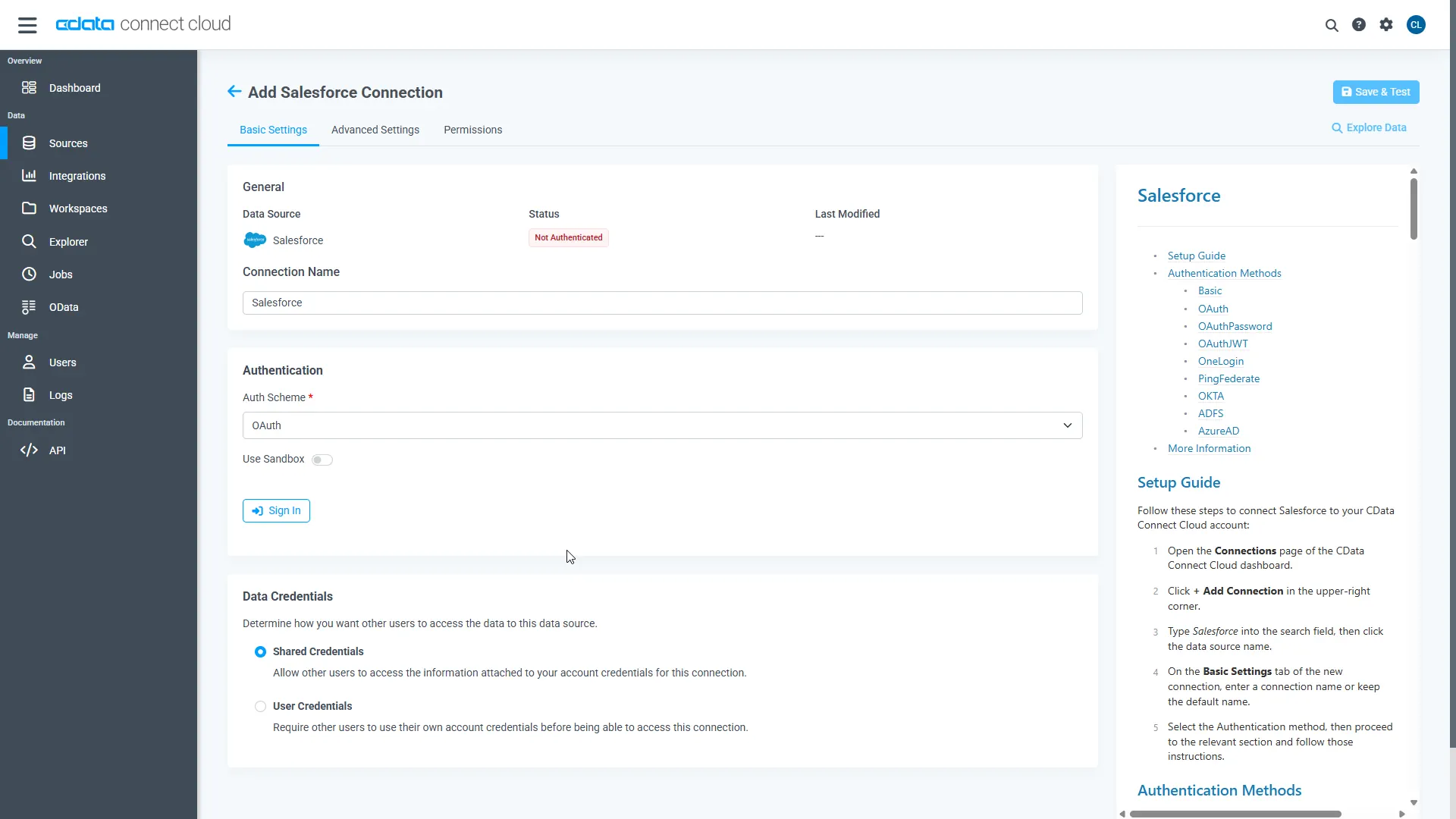
- Navigate to the Permissions tab and update the user-based permissions.



Generate a Personal Access Token (PAT)
The Python SDK authenticates to Connect AI with your account email and a Personal Access Token (PAT). It is best practice to create a separate PAT for each application to maintain granularity of access.
- Click the Gear icon () at the top right of the Connect AI app to open the Settings page.
- On the Settings page, go to the Access Tokens section and click Create PAT.
- Give the PAT a name and click Create.

- The PAT is only visible at creation, so copy it and store it securely.
Install Required Modules
Install the SDK and the petl framework using the pip utility:
pip install cdata-connect-ai
pip install petl
Build an ETL App for Adobe Target Data in Python
Once the required modules are installed, you are ready to build the ETL app. Code snippets follow, but the full source code is available at the end of the article.
First, import the modules and connect to Connect AI with your account email and PAT:
import petl as etl
import cdata_connect_ai

conn = cdata_connect_ai.connect(
    username="[email protected]",
    password="<your_pat>",
)
Create a SQL Statement to Query Adobe Target
Use SQL to create a statement for querying Adobe Target. In this article, we read data from the Activities entity. Identifiers are three-part: <Connection>.<Schema>.<Table>, where the connection name defaults to the source name (for example, AdobeTarget1).
sql = (
    "SELECT Id, Name "
    "FROM [AdobeTarget1].[AdobeTarget].[Activities] "
    "WHERE Type = 'AB'"
)
Extract, Transform, and Load the Adobe Target Data
With a connection and query in hand, use petl to extract, transform, and load the Adobe Target data. In this example, we extract Adobe Target data, sort the data by the Name column, and load the data into a CSV file.
table1 = etl.fromdb(conn, sql)

table2 = etl.sort(table1, 'Name')

etl.tocsv(table2, 'activities_data.csv')
Adobe Target is a read-only source in Connect AI, so this pipeline can extract and transform Adobe Target data but not load rows back. Close the connection when the extract is complete:
conn.close()
With the CData Connect AI Python SDK, you can work with Adobe Target data just like you would with any database, including direct access to data in ETL packages like petl.
More Information and Free Trial
Now you can pipe live Adobe Target data through petl using the CData Connect AI Python SDK. For more information on connecting to Adobe Target (and hundreds of other data sources), visit the Connect AI page. Sign up for a free trial and start building data pipelines for live Adobe Target data in Python.
Full Source Code
import petl as etl
import cdata_connect_ai

conn = cdata_connect_ai.connect(
    username="[email protected]",
    password="<your_pat>",
)

sql = (
    "SELECT Id, Name "
    "FROM [AdobeTarget1].[AdobeTarget].[Activities] "
    "WHERE Type = 'AB'"
)

table1 = etl.fromdb(conn, sql)

table2 = etl.sort(table1, 'Name')

etl.tocsv(table2, 'activities_data.csv')
conn.close()