








Connect to Azure Data Catalog Data from HeidiSQL

HeidiSQL is an open-source database administration tool that natively supports MariaDB, MySQL, SQL Server, and PostgreSQL. When paired with CData Connect AI, HediSQL reach extends to include access to live Azure Data Catalog data. This article demonstrates how to connect to Azure Data Catalog using Connect AI and query Azure Data Catalog data in HeidiSQL.
CData Connect AI provides a pure SQL Server interface for Azure Data Catalog, allowing you to query data from Azure Data Catalog without replicating the data to a natively supported database. Using optimized data processing out of the box, CData Connect AI pushes all supported SQL operations (filters, JOINs, etc.) directly to Azure Data Catalog, leveraging server-side processing to return the requested Azure Data Catalog data quickly.
Configure Azure Data Catalog Connectivity for HeidiSQL
Connectivity to Azure Data Catalog from HeidiSQL is made possible through CData Connect AI. To work with Azure Data Catalog data from HeidiSQL, we start by creating and configuring a Azure Data Catalog connection.
- Log into Connect AI, click Sources, and then click Add Connection
- Select "Azure Data Catalog" from the Add Connection panel
-
Enter the necessary authentication properties to connect to Azure Data Catalog.
You can optionally set the following to read the different catalog data returned from Azure Data Catalog.
Connect Using OAuth Authentication
You must use OAuth to authenticate with Azure Data Catalog. OAuth requires the authenticating user to interact with Azure Data Catalog using the browser. For more information, refer to the OAuth section in the help documentation.

- Click Save & Test
-
Navigate to the Permissions tab in the Add Azure Data Catalog Connection page and update the User-based permissions.



Add a Personal Access Token
When connecting to Connect AI through the REST API, the OData API, or the Virtual SQL Server, a Personal Access Token (PAT) is used to authenticate the connection to Connect AI. It is best practice to create a separate PAT for each service to maintain granularity of access.
- Click on the Gear icon () at the top right of the Connect AI app to open the settings page.
- On the Settings page, go to the Access Tokens section and click Create PAT.
-
Give the PAT a name and click Create.

- The personal access token is only visible at creation, so be sure to copy it and store it securely for future use.
With the connection configured and a PAT generated, you are ready to connect to Azure Data Catalog data from HeidiSQL.
Connect to Azure Data Catalog from HeidiSQL using Connect AI
To establish a connection from HeidiSQL to the CData Connect AI Virtual SQL Server API, follow these steps.
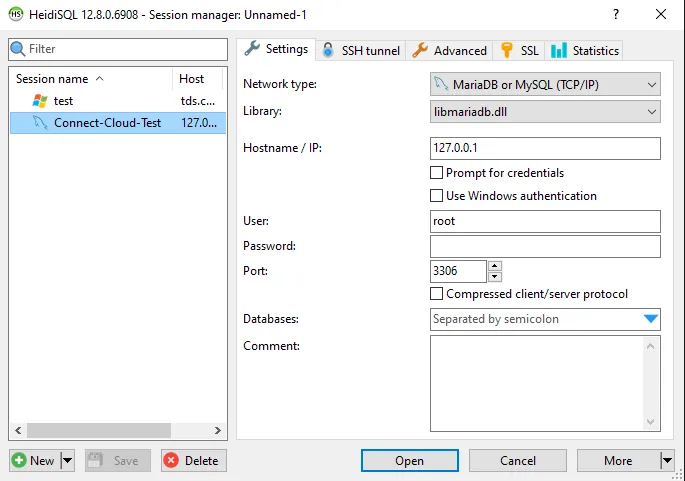
Create a new HeidiSQL Session
- In the Session Manager, select New in the bottom-left
- Give the new session a descriptive name, e.g. Connect-Cloud-Azure Data Catalog
Configure a SQL Server Connection to Connect AI
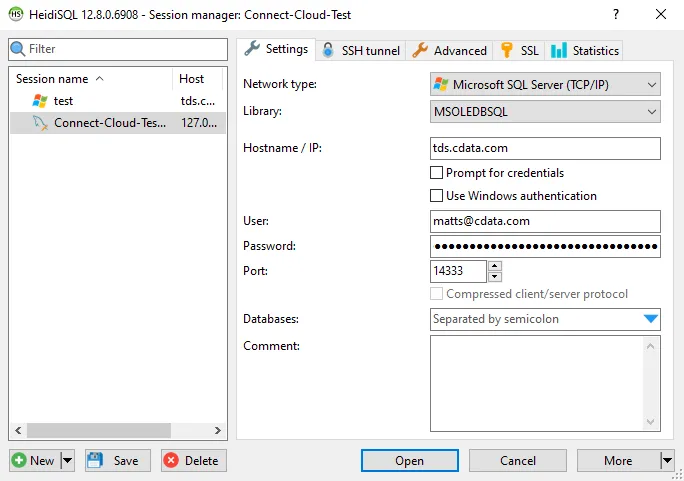
- In the session settings, set the Network type to Microsoft SQL Server (TCP/IP)
- The Library DLL should automatically update to MSOLEDBSQL
- Set the Hostname/IP to tds.cdata.com
- Set the User to your CData Connect AI username. This is displayed in the top-right corner of the CData Connect AI interface. For example, [email protected]
- Set the Password to your PAT created in Connect AI in the previous section.
- Set the Port to 14333
Query Azure Data Catalog from HeidiSQL
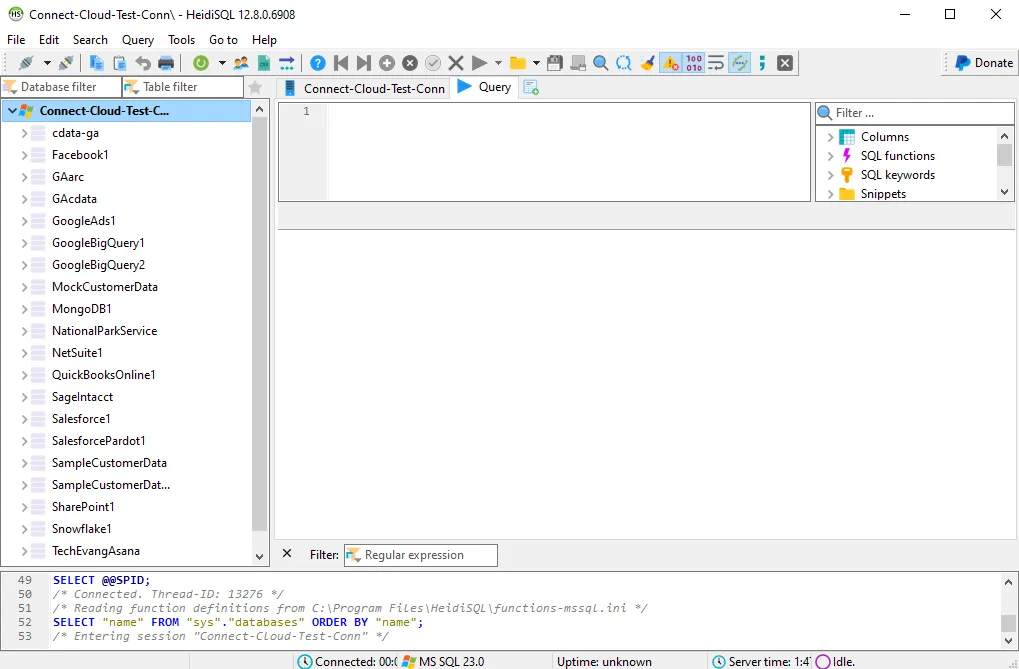
- In the database listing on the left, find your connection to Azure Data Catalog configured earlier.
- Expand this connection to view individual tables or data objects present within Azure Data Catalog.
- Write custom SQL queries targeting these tables, treating the data source like any SQL Server database, or visually explore each tabular data set by selecting the relevant tables
Get CData Connect AI
To get live data access to hundreds of SaaS, Big Data, and NoSQL sources directly from your SQL Server database, try CData Connect AI today!