








Build Automated Azure Data Catalog-Connected Workflows in Zapier

Zapier is an online automation tool that connects your apps and services. When paired with CData Connect AI, you get access to live Azure Data Catalog data for your workflows. This article shows how to connect to Azure Data Catalog and build workflows with live Azure Data Catalog data in Zapier.
Connect to Azure Data Catalog from Zapier
To work with Azure Data Catalog in Zapier, we need to connect to Azure Data Catalog from Connect AI, provide user access to the connection, and create a Workspace for the Azure Data Catalog data.
Connect to Azure Data Catalog from Connect AI
CData Connect AI uses a straightforward, point-and-click interface to connect to data sources.
- Log into Connect AI, click Sources, and then click Add Connection
- Select "Azure Data Catalog" from the Add Connection panel
-
Enter the necessary authentication properties to connect to Azure Data Catalog.
You can optionally set the following to read the different catalog data returned from Azure Data Catalog.
Connect Using OAuth Authentication
You must use OAuth to authenticate with Azure Data Catalog. OAuth requires the authenticating user to interact with Azure Data Catalog using the browser. For more information, refer to the OAuth section in the help documentation.

- Click Save & Test
-
Navigate to the Permissions tab in the Add Azure Data Catalog Connection page and update the User-based permissions.



Add a Personal Access Token
When connecting to Connect AI through the REST API, the OData API, or the Virtual SQL Server, a Personal Access Token (PAT) is used to authenticate the connection to Connect AI. It is best practice to create a separate PAT for each service to maintain granularity of access.
- Click on the Gear icon () at the top right of the Connect AI app to open the settings page.
- On the Settings page, go to the Access Tokens section and click Create PAT.
-
Give the PAT a name and click Create.

- The personal access token is only visible at creation, so be sure to copy it and store it securely for future use.
Configure Azure Data Catalog Endpoints for Zapier
After connecting to Azure Data Catalog, create a workspace for your desired table(s).
-
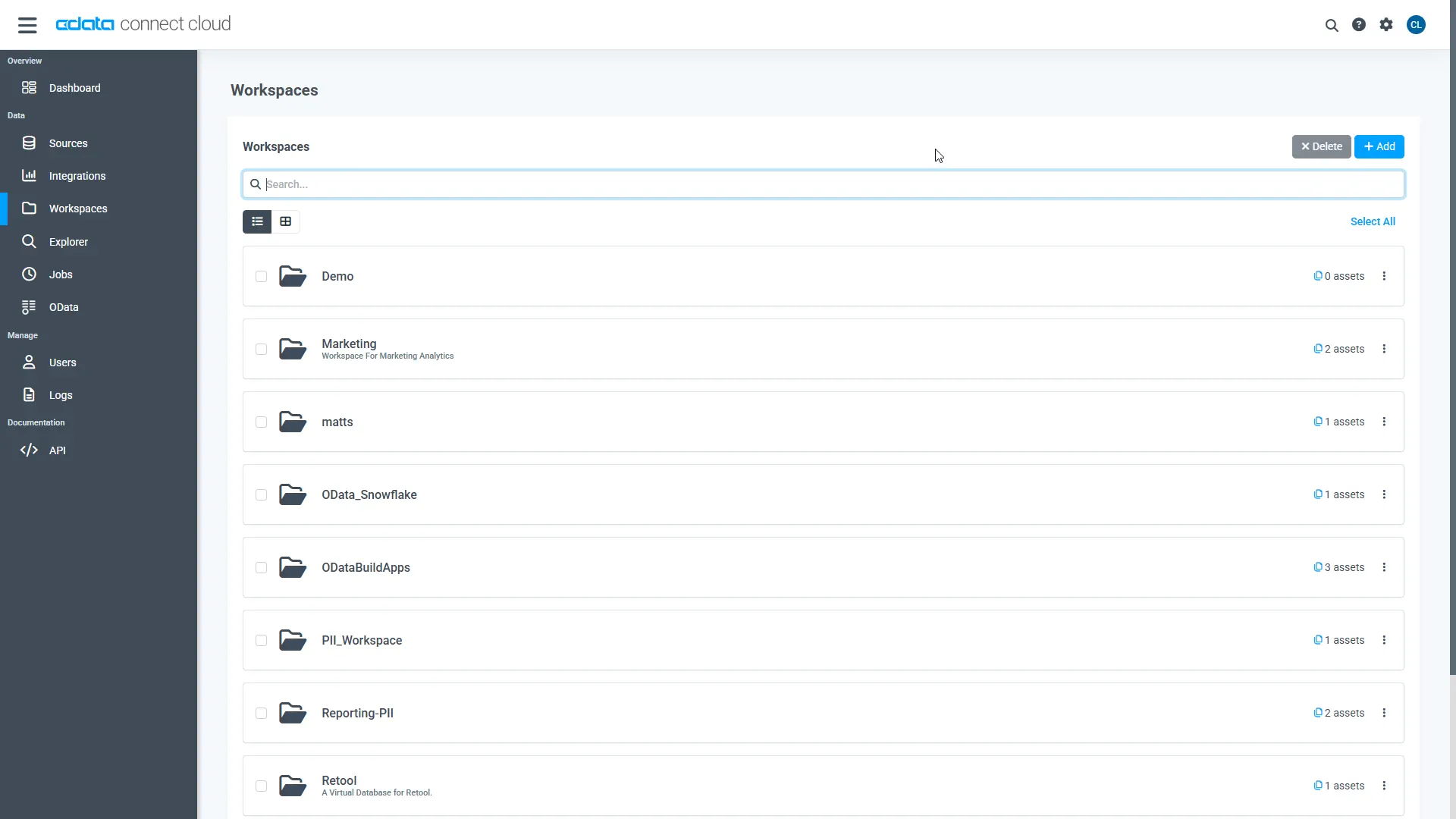
Navigate to the Workspaces page and click Add to create a new Workspace (or select an existing workspace).
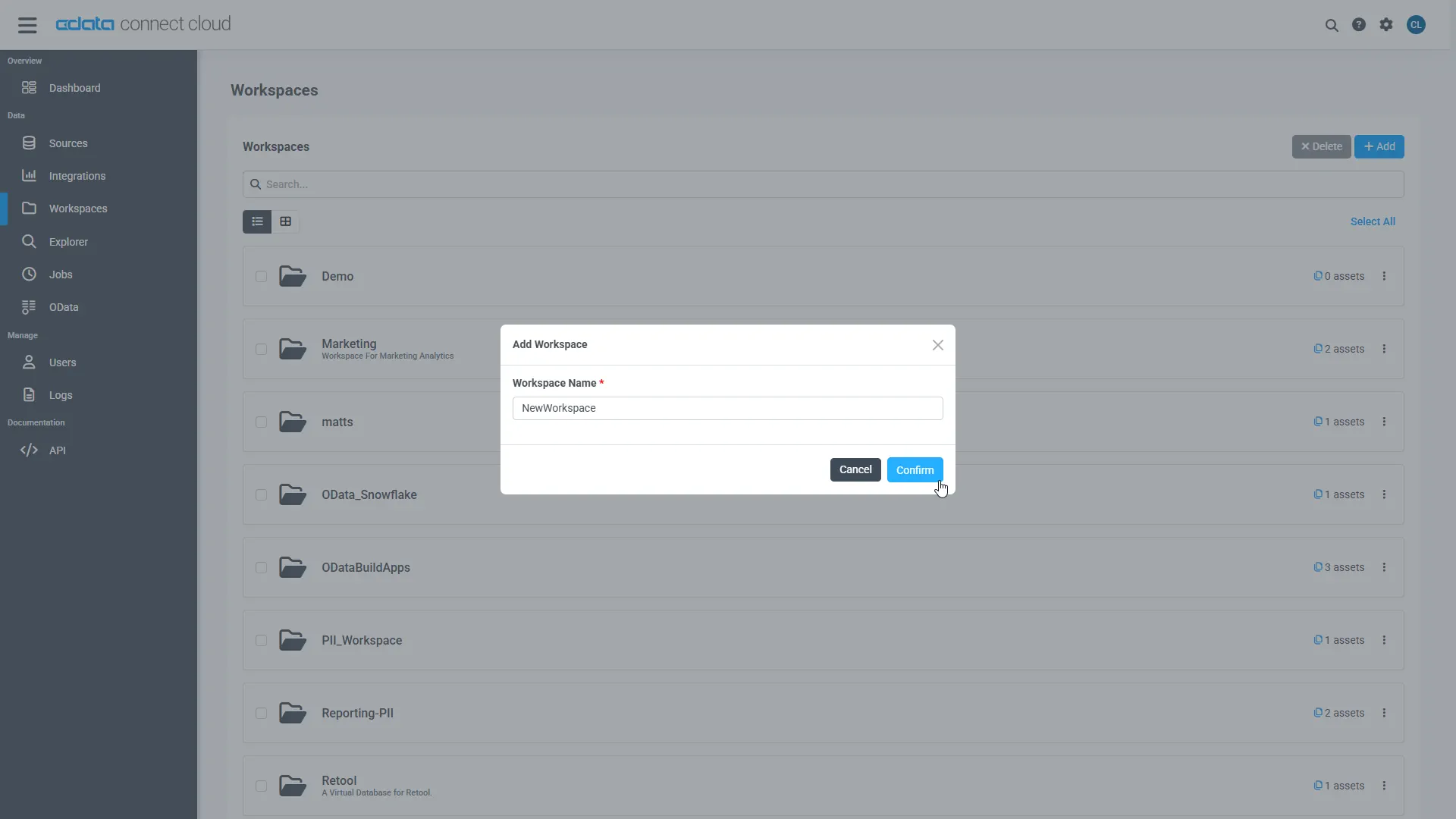
- Click Add to add new assets to the Workspace.
-
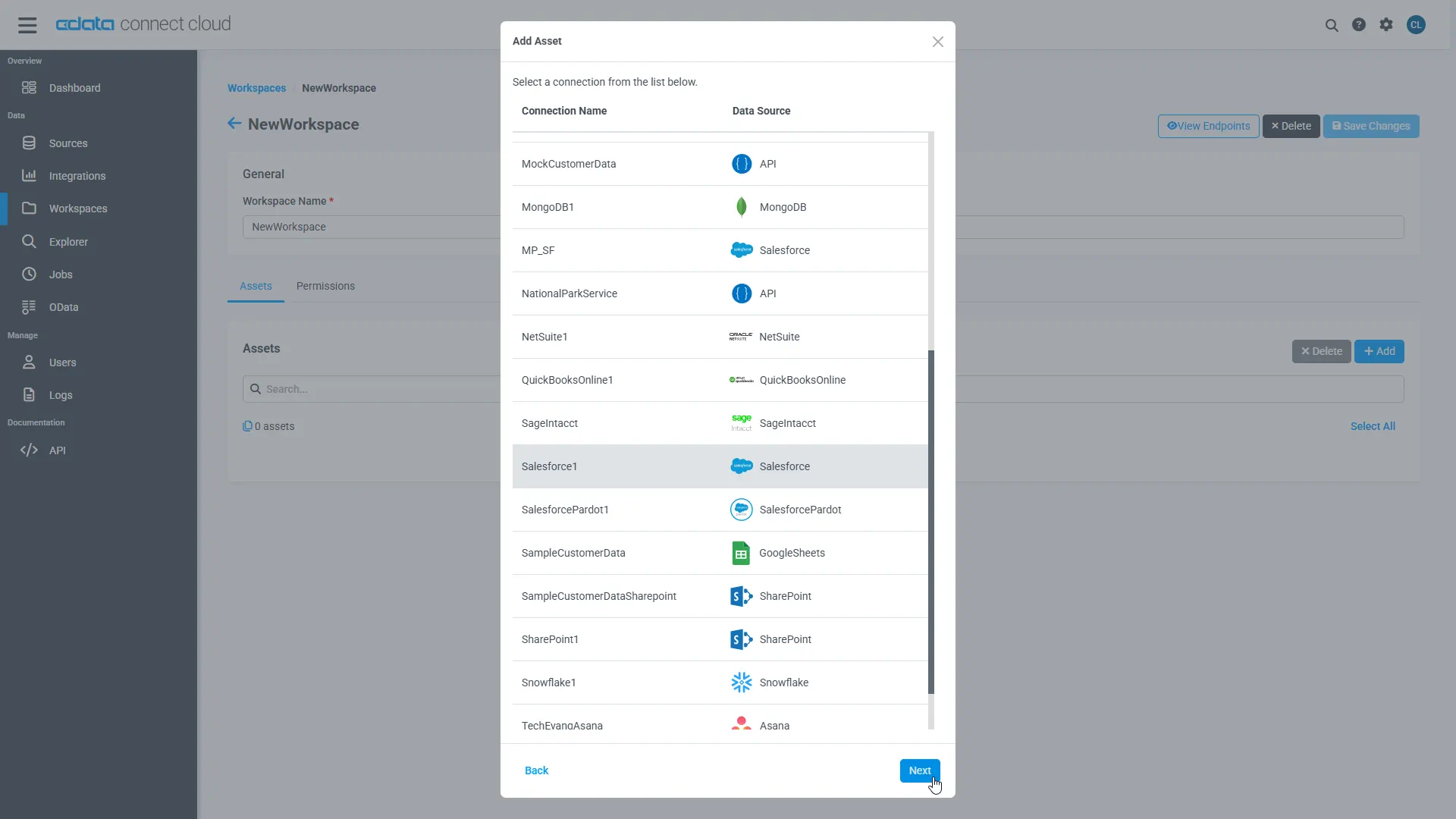
Select the Azure Data Catalog connection (e.g. AzureDataCatalog1) and click Next.
-
Select the table(s) you wish to work with and click Confirm.
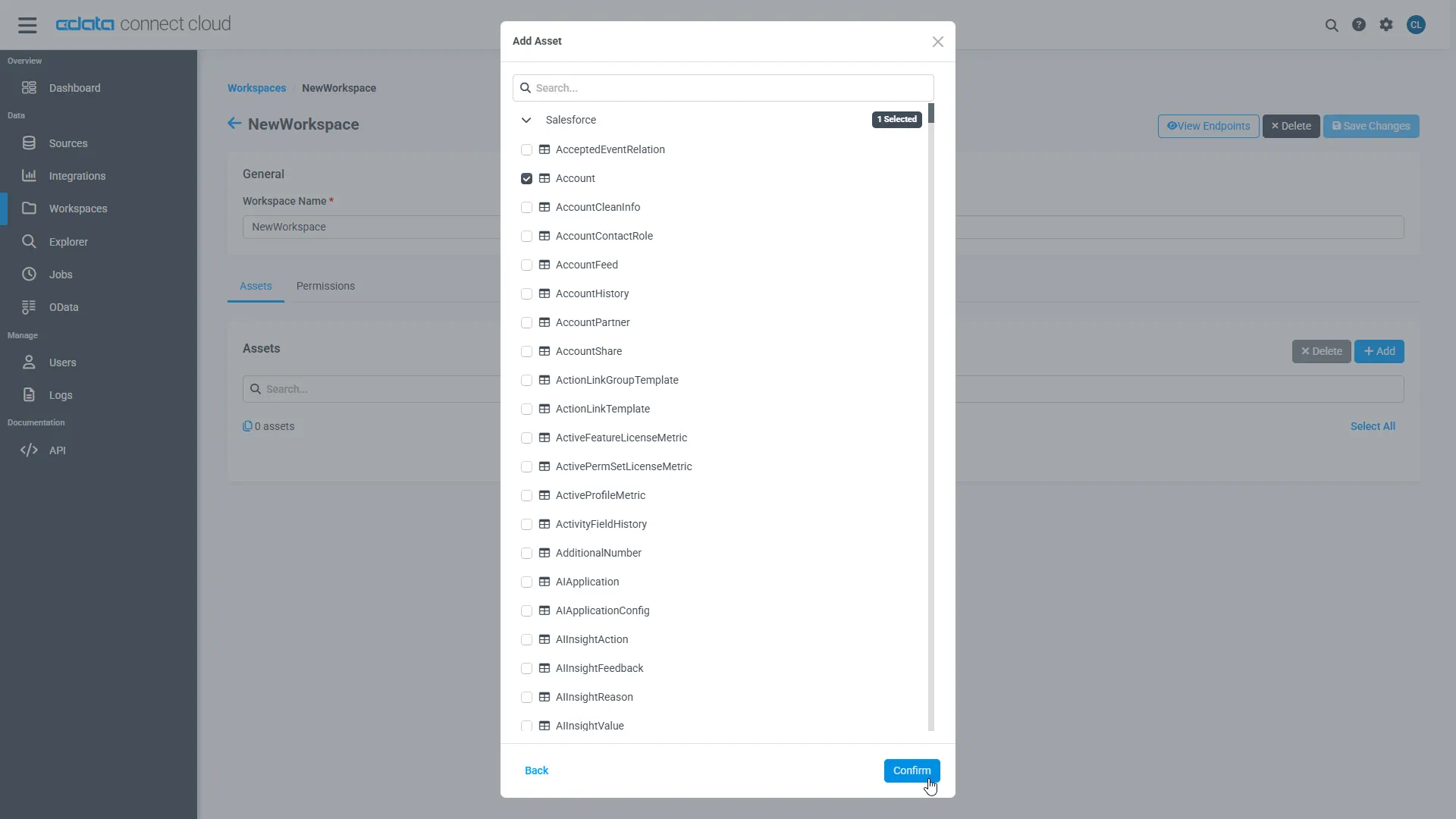
- Make note of the OData Service URL for your workspace, e.g. https://cloud.cdata.com/api/odata/{workspace_name}
With the connection, PAT, and Workspace configured, you are ready to connect to Azure Data Catalog data from Zapier.
Connect to Azure Data Catalog Data in Zapier Workflows
To establish a connection from Zapier to CData Connect AI using the OData protocol, follow these steps.
- Log into Zapier.
- Click Create Zap.
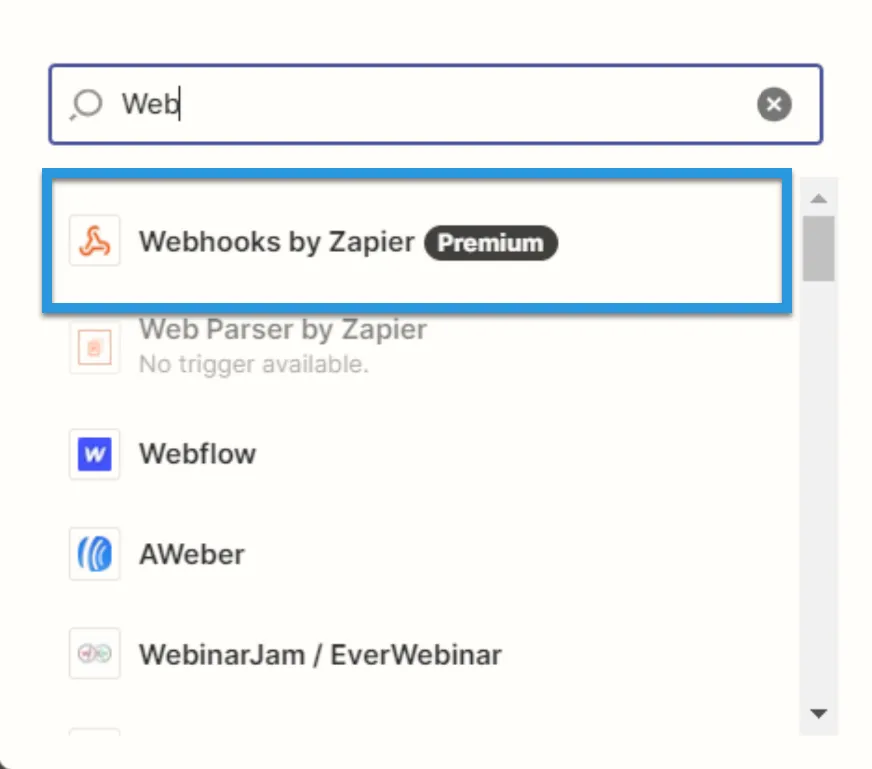
- In the dialog that appears, search for "Webhooks by Zapier", and click the option underneath.
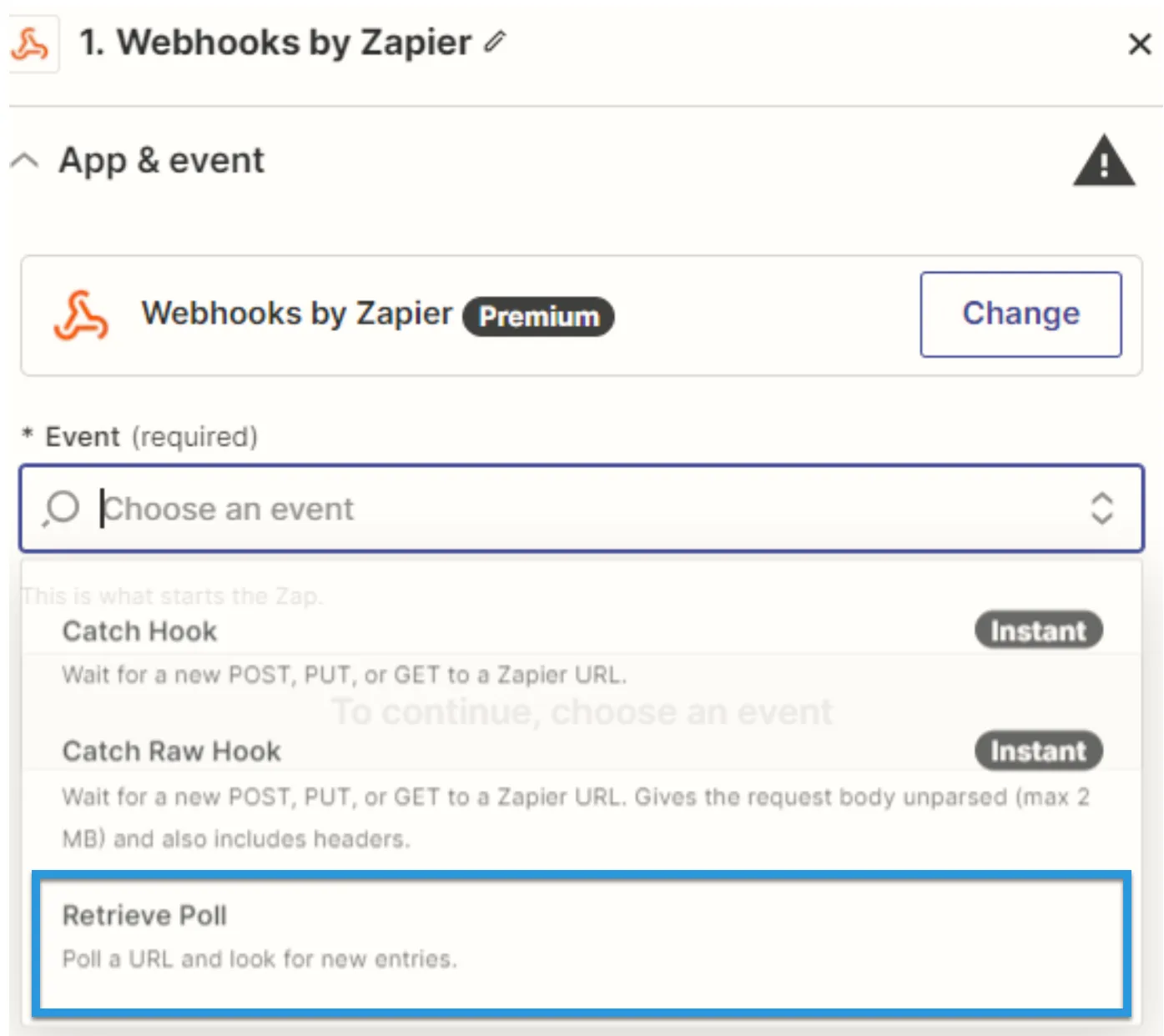
- Under Event, select Retrieve Poll.
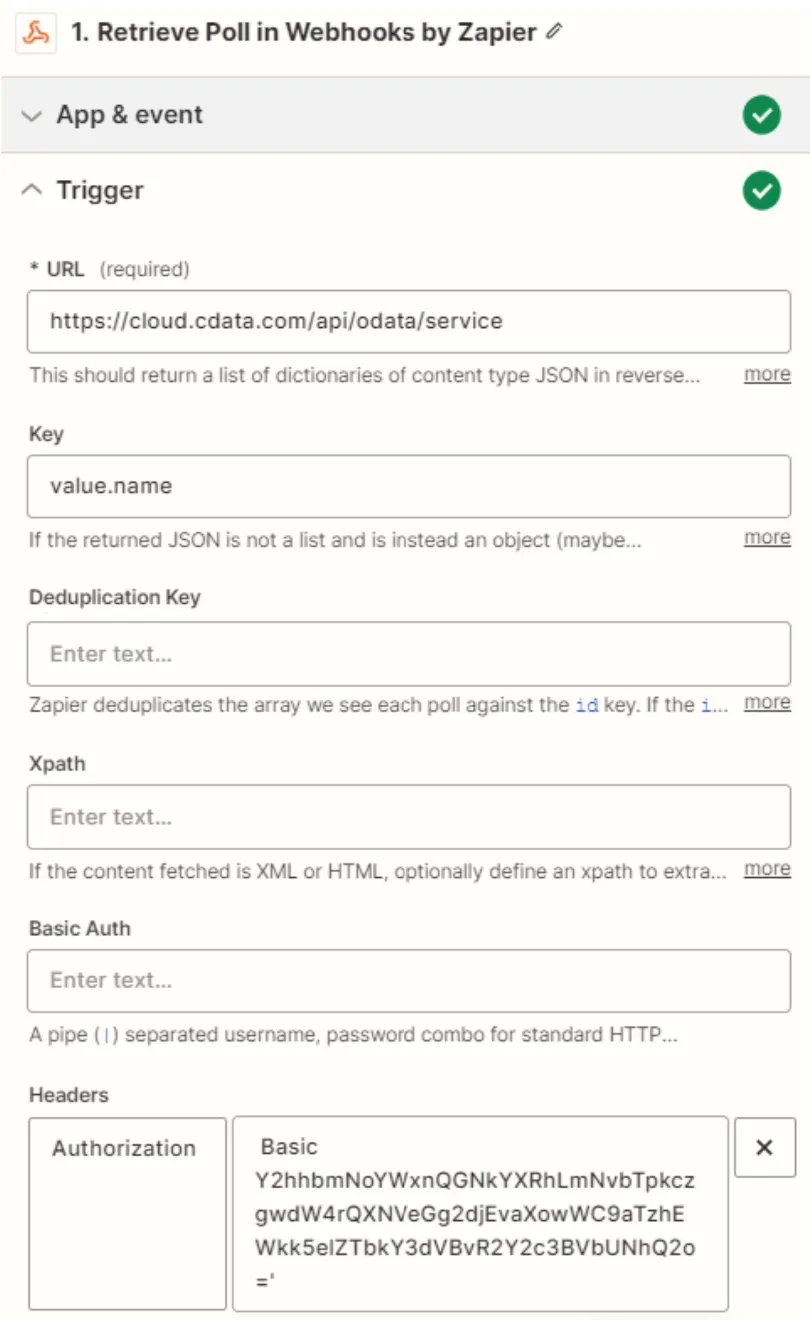
- Fill in the connection details:
- URL: Enter the OData URL (e.g. https://cloud.cdata.com/api/odata/{workspace_name}).
- Key: Enter "value.name."
- Authentication details: Fill in the Basic Auth or Headers. The basic option requires a user (your Connect AI username, e.g. [email protected]) and password (the PAT you've previously created) separated by a pipe symbol: |. The headers option requires a request type header with encoded credentials.
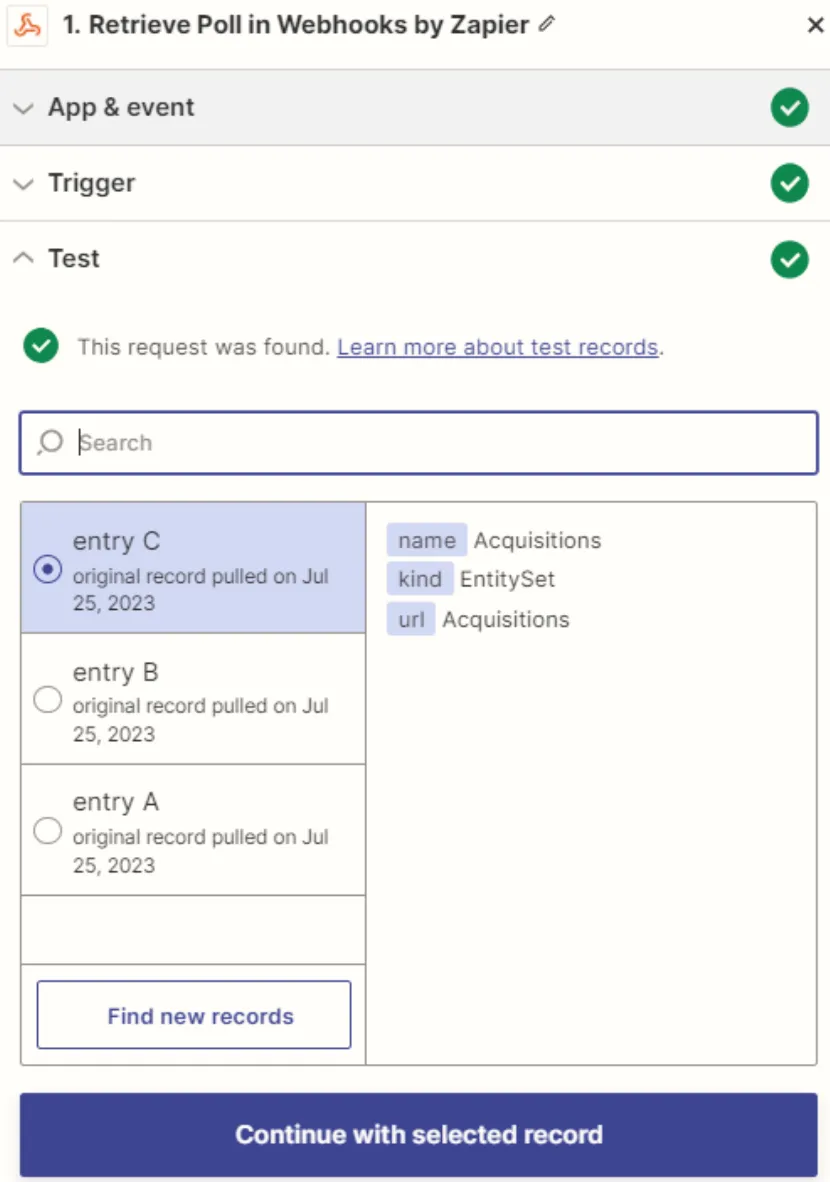
- Click Test. If the connection is set up properly, sample records will appear.
Simplified Access to Azure Data Catalog Data from Cloud Applications
At this point, you have a direct, cloud-to-cloud connection to live Azure Data Catalog data from Zapier. For more information on gaining simplified access to data from more than 100 SaaS, Big Data, and NoSQL sources in cloud applications like Zapier, refer to our Connect AI page.