








How to connect Amazon QuickSight to LDAP Objects

Amazon QuickSight allows users to build interactive dashboards in the cloud. When paired with CData Connect AI, you get cloud-to-cloud access to LDAP objects for visualizations, dashboards, and more. This article shows how to connect to LDAP in Connect AI and build dashboards in Amazon QuickSight with access to LDAP objects.
CData Connect AI provides a pure cloud-to-cloud interface for LDAP, allowing you to allowing build visualizations from LDAP objects in Amazon QuickSight. By importing your LDAP objects into the Amazon QuickSight "Super-fast, Parallel, In-memory Calculation Engine" (SPICE), you can leverage the powerful data processing features of the Amazon ecosystem to build responsive dashboards. And with the ability to schedule refreshes of the data stored in SPICE, you control how up-to-date your dashboards are.
Configure LDAP Connectivity for Amazon QuickSight
Connectivity to LDAP from Amazon QuickSight is made possible through CData Connect AI. To work with LDAP objects from Amazon QuickSight, we start by creating and configuring a LDAP connection.
- Log into Connect AI, click Sources, and then click Add Connection
- Select "LDAP" from the Add Connection panel
-
Enter the necessary authentication properties to connect to LDAP.
To establish a connection, the following properties under the Authentication section must be provided:
- Valid User and Password credentials (e.g., Domain\BobF or cn=Bob F,ou=Employees,dc=Domain).
- Server information, including the IP or host name of the Server, as well as the Port.
BaseDN: This will limit the scope of LDAP searches to the height of the distinguished name provided.
Note: Specifying a narrow BaseDN may greatly increase performance; for example, cn=users,dc=domain will only return results contained within cn=users and its children.

- Click Save & Test
-
Navigate to the Permissions tab in the Add LDAP Connection page and update the User-based permissions.



Add a Personal Access Token
When connecting to Connect AI through the REST API, the OData API, or the Virtual SQL Server, a Personal Access Token (PAT) is used to authenticate the connection to Connect AI. It is best practice to create a separate PAT for each service to maintain granularity of access.
- Click on the Gear icon () at the top right of the Connect AI app to open the settings page.
- On the Settings page, go to the Access Tokens section and click Create PAT.
-
Give the PAT a name and click Create.

- The personal access token is only visible at creation, so be sure to copy it and store it securely for future use.
With the connection configured and a PAT generated, you are ready to connect to LDAP objects from Amazon QuickSight.
Import LDAP Objects into SPICE and Create Interactive Dashboards
The steps below outline creating a new data set based on the connection to LDAP in Connect AI, importing the dataset into SPICE, and building a simple visualization from the data.
- Log into Amazon QuickSight and click "Manage data."
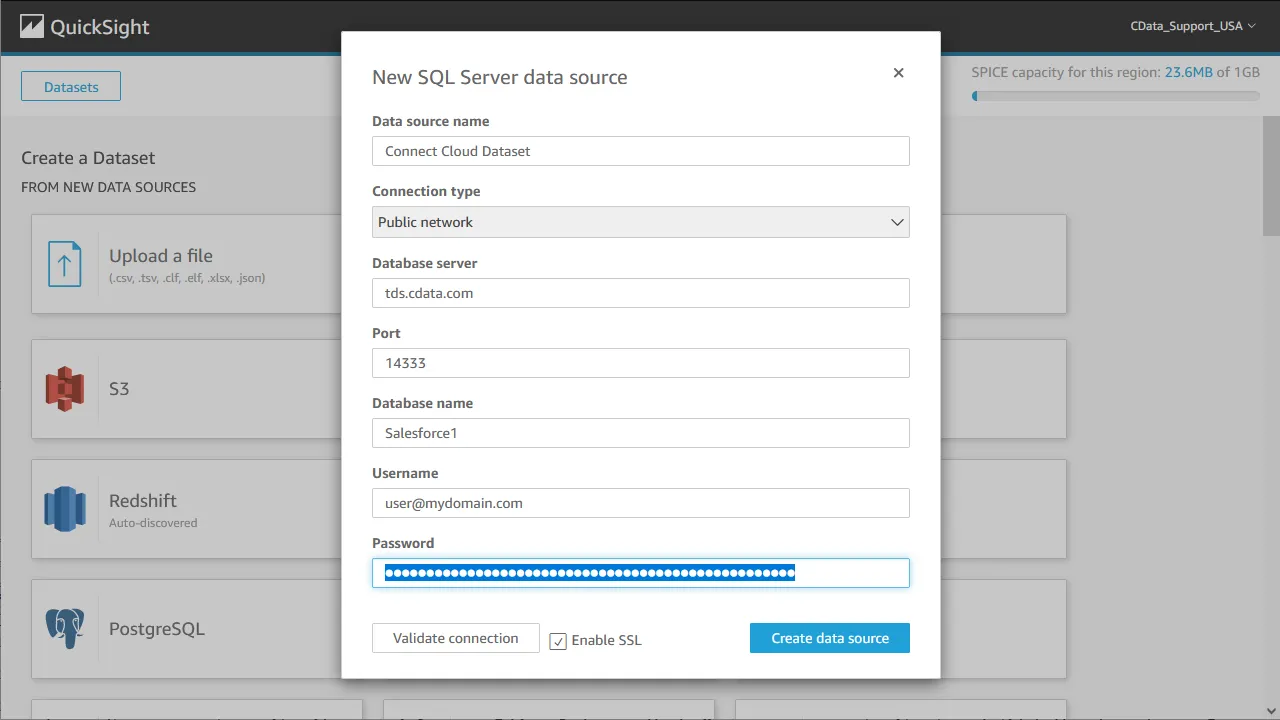
- Click "Now data set," select SQL Server as the data source, configure the connection to your Connect AI instance, and click "Create data source."
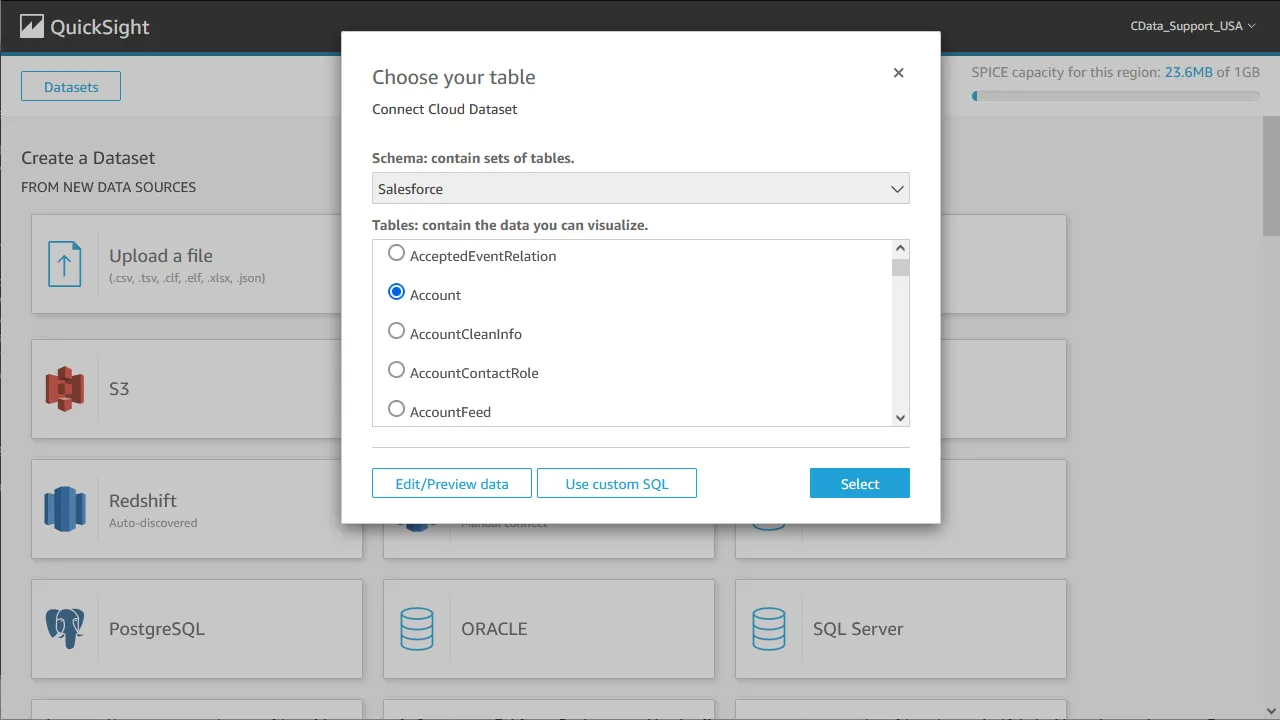
- Select a table to visualize (or subait a custom SQL query for your data).
- Click "Edit/Preview data" to customize the data set.
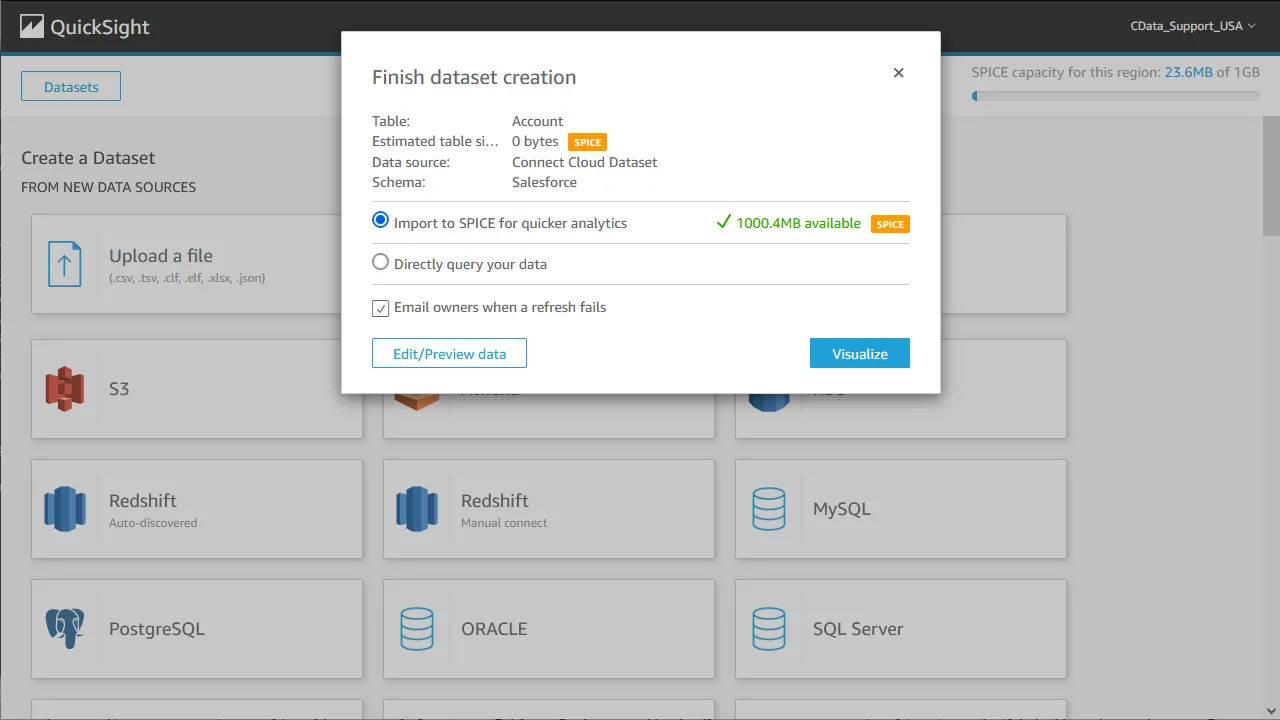
- Select "Import to SPICE for quicker analytics" and click "Visualize."
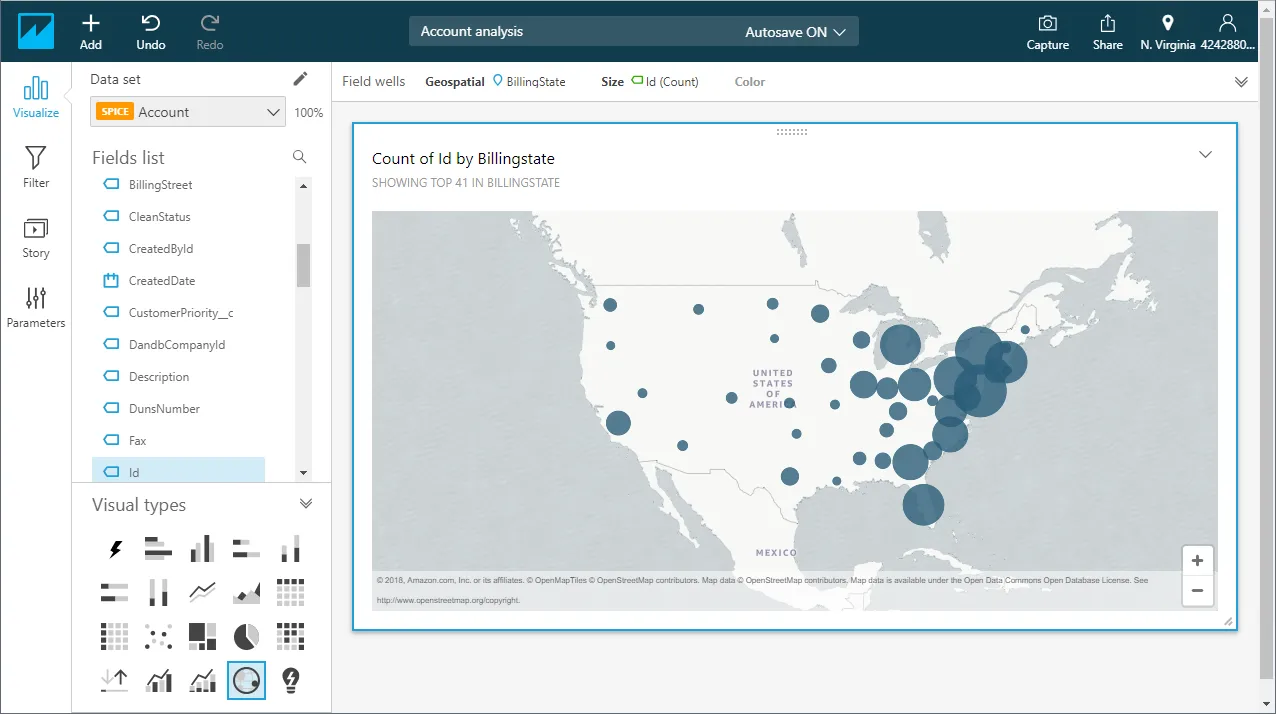
- Select fields to visualize and a visual type.
Schedule Refreshes for SPICE Data Sets
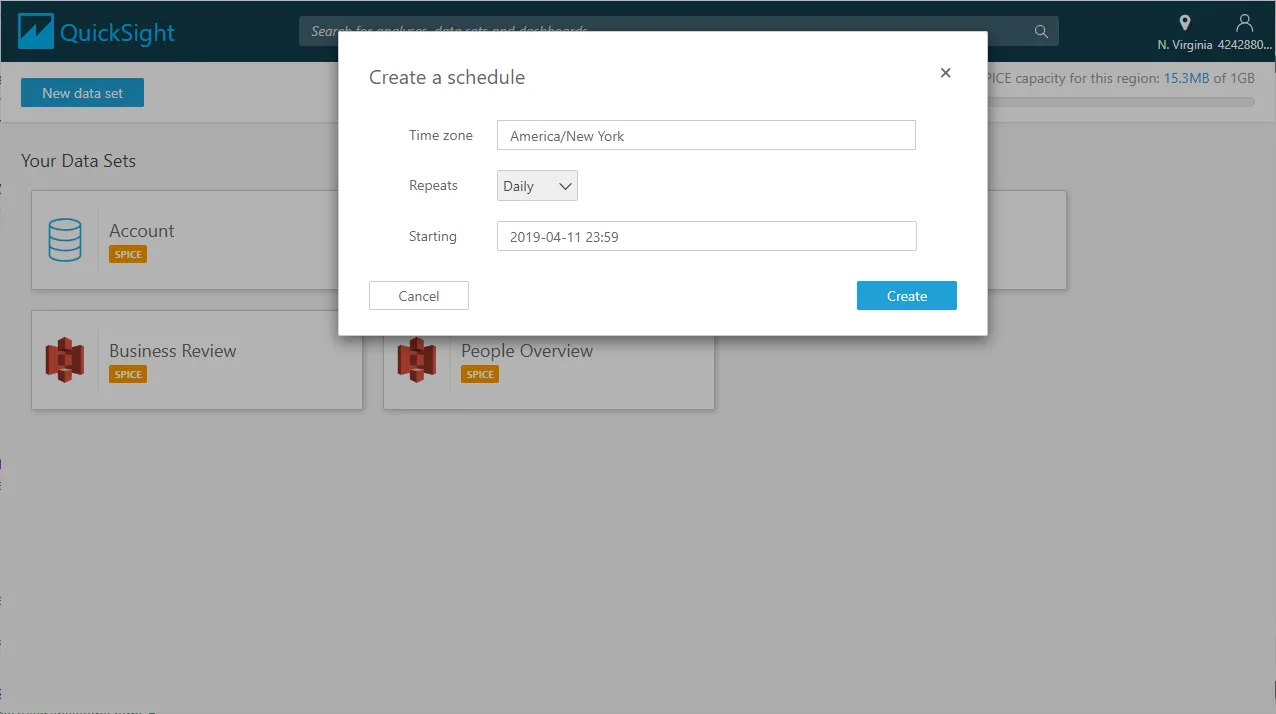
QuickSight users can schedule refreshes for data sets that are imported into SPICE, ensuring that data being analyzed is only as old as the most recent refresh.
- Navigate to the QuickSight home page.
- Click "Manage data."
- Select the data set you wish to refresh.
- Click "Schedule refresh."
- Click Create, configure the refresh settings (time zone, repeat frequency, and starting datetime), and click Create.
Live Access to LDAP Objects from Cloud Applications
At this point, you have a direct, cloud-to-cloud connection to LDAP objects from your Amazon QuickSight dashboard. You can create new visualizations, build interactive dashboards, and more. For more information on gaining live access to data from more than 100 SaaS, Big Data, and NoSQL sources from cloud applications like Amazon QuickSight, refer to our Connect AI page.