








Access Live XML Data in Excel (Desktop) via Connect AI

Microsoft Excel is a widely used spreadsheet software application, primarily used for tasks related to data management, analysis, and visualization. When combined with CData Connect AI, you gain immediate access to XML data directly within Excel, facilitating data analysis, collaboration, calculations, and more.This article shows how to connect to XML in your Connect AI instance and access and update live XML data in Excel spreadsheets.
CData Connect AI provides a pure cloud-to-cloud interface for XML, allowing you to easily access live XML data in Excel for the web. Simply use the Connect AI Add-In to query live data (or write your own). Using optimized data processing out of the box, CData Connect AI pushes all supported query operations (filters, JOINs, etc) directly to XML, leveraging server-side processing to quickly return XML data.
This setup requires a CData Connect AI instance and the CData Connect AI Add-In for Excel. To get started, sign up a free trial of Connect AI and install the free Connect AI Excel Add-In.
Configure XML Connectivity for Excel
Connectivity to XML from Excel is made possible through CData Connect AI. To work with XML data from Excel, we start by creating and configuring a XML connection.
- Log into Connect AI, click Sources, and then click Add Connection
- Select "XML" from the Add Connection panel
-
Enter the necessary authentication properties to connect to XML.
Connecting to Local or Cloud-Stored (Box, Google Drive, Amazon S3, SharePoint) XML Files
CData Drivers let you work with XML files stored locally and stored in cloud storage services like Box, Amazon S3, Google Drive, or SharePoint, right where they are.
Setting connection properties for local files
Set the URI property to local folder path.
Setting connection properties for files stored in Amazon S3
To connect to XML file(s) within Amazon S3, set the URI property to the URI of the Bucket and Folder where the intended XML files exist. In addition, at least set these properties:
- AWSAccessKey: AWS Access Key (username)
- AWSSecretKey: AWS Secret Key
Setting connection properties for files stored in Box
To connect to XML file(s) within Box, set the URI property to the URI of the folder that includes the intended XML file(s). Use the OAuth authentication method to connect to Box.
Dropbox
To connect to XML file(s) within Dropbox, set the URI proprerty to the URI of the folder that includes the intended XML file(s). Use the OAuth authentication method to connect to Dropbox. Either User Account or Service Account can be used to authenticate.
SharePoint Online (SOAP)
To connect to XML file(s) within SharePoint with SOAP Schema, set the URI proprerty to the URI of the document library that includes the intended XML file. Set User, Password, and StorageBaseURL.
SharePoint Online REST
To connect to XML file(s) within SharePoint with REST Schema, set the URI proprerty to the URI of the document library that includes the intended XML file. StorageBaseURL is optional. If not set, the driver will use the root drive. OAuth is used to authenticate.
Google Drive
To connect to XML file(s) within Google Drive, set the URI property to the URI of the folder that includes the intended XML file(s). Use the OAuth authentication method to connect and set InitiateOAuth to GETANDREFRESH.
The DataModel property is the controlling property over how your data is represented into tables and toggles the following basic configurations.
- Document (default): Model a top-level, document view of your XML data. The data provider returns nested elements as aggregates of data.
- FlattenedDocuments: Implicitly join nested documents and their parents into a single table.
- Relational: Return individual, related tables from hierarchical data. The tables contain a primary key and a foreign key that links to the parent document.
See the Modeling XML Data chapter for more information on configuring the relational representation. You will also find the sample data used in the following examples. The data includes entries for people, the cars they own, and various maintenance services performed on those cars.

- Click Save & Test
-
Navigate to the Permissions tab in the Add XML Connection page and update the User-based permissions.



With the connection configured, you are ready to connect to XML data from Excel.
Access Live XML Data in Excel
The steps below outline connecting to CData Connect AI from Excel to access live XML data.
- Open Excel, create a new sheet (or open an existing one).
- Click Insert and click Get Add-ins. (if you have already installed the Add-In, jump to step 4).
- Search for CData Connect AI Add-In and install the Add-in.
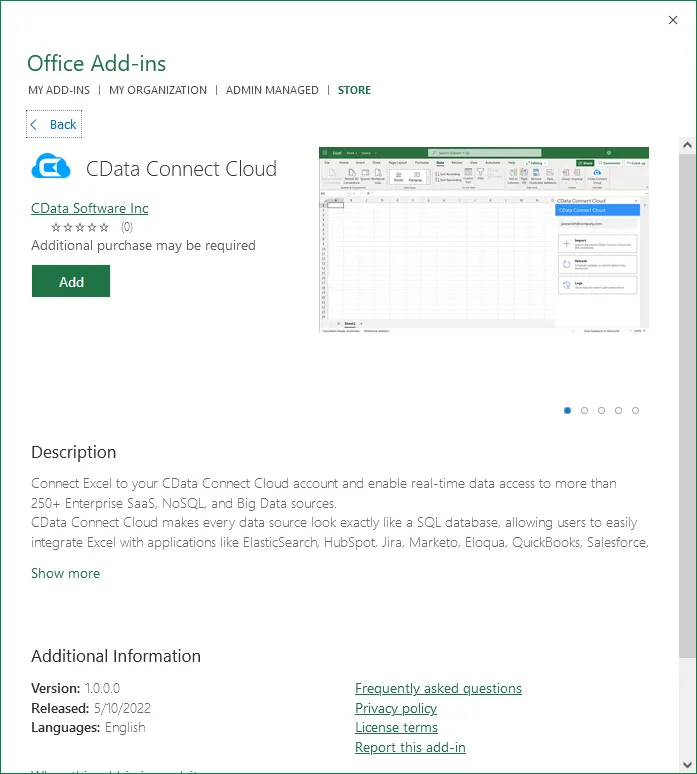
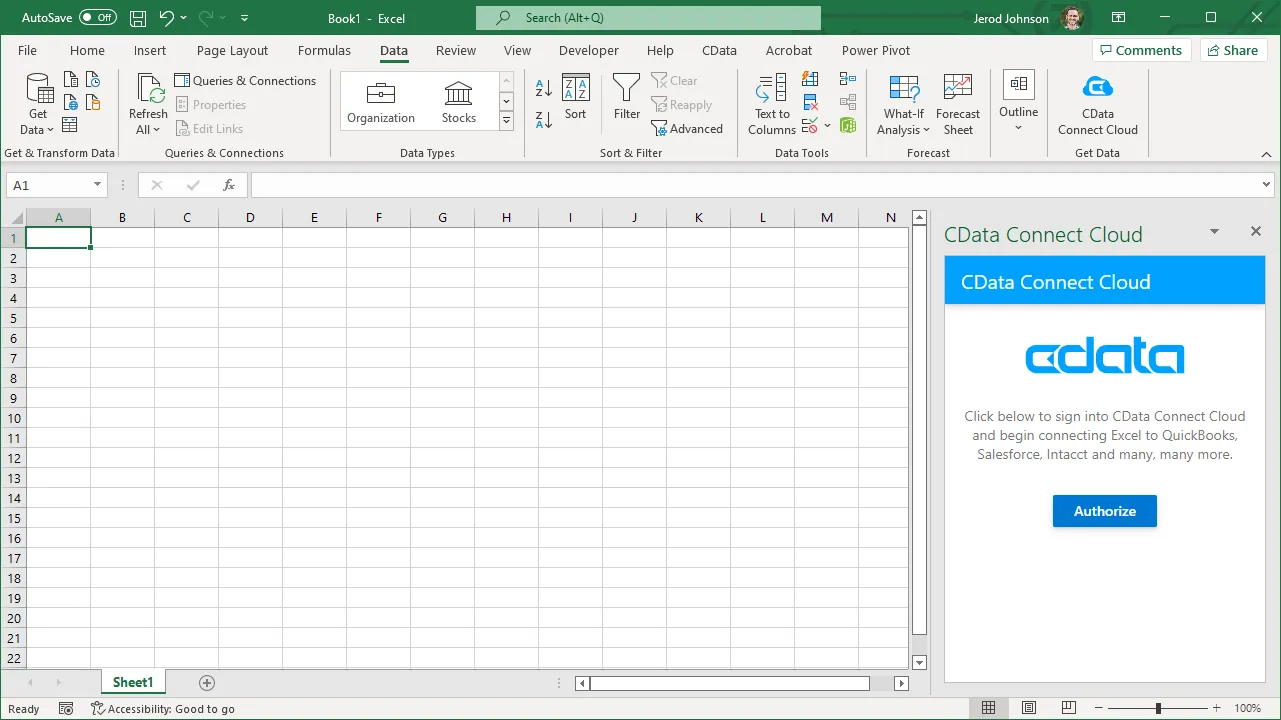
- Click Data and open the CData Connect AI Add-In.
- In the Add-In panel, click Authorize to authenticate with your CData Connect AI instance
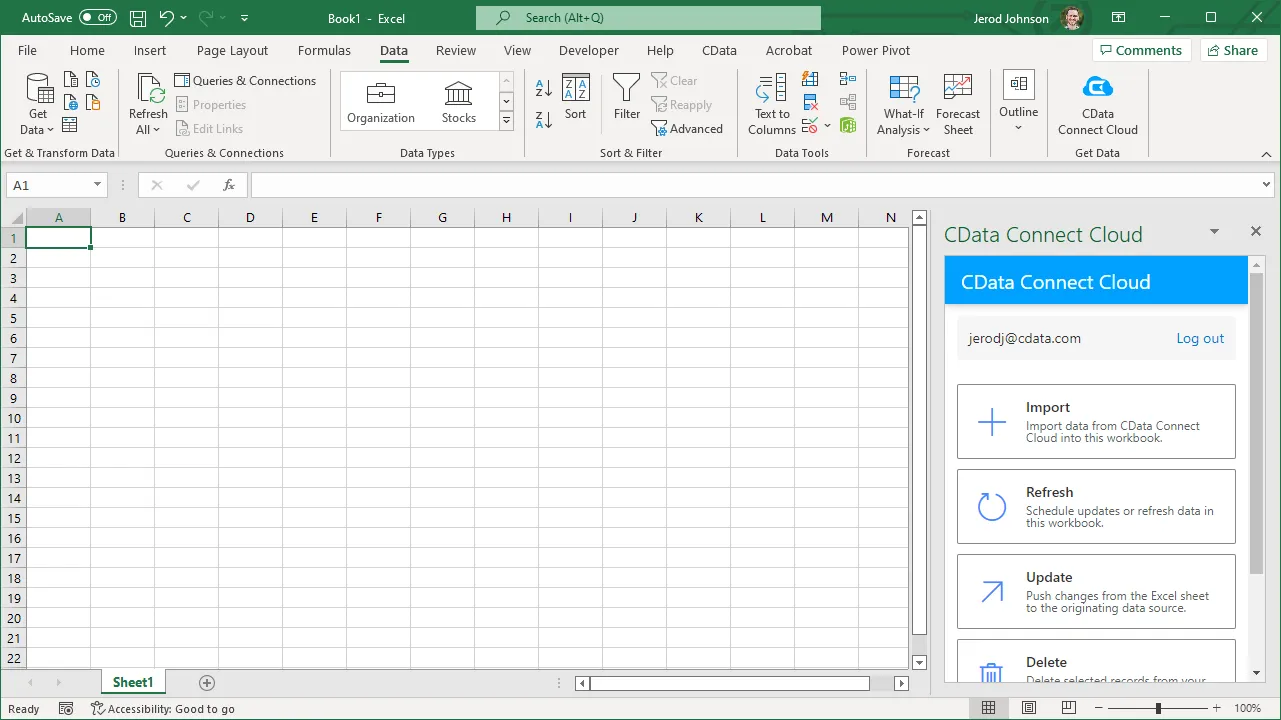
- In the CData Connect AI panel in Excel, click Import
- Choose a Connection (e.g. XML1), Table (e.g. people), and Columns to import
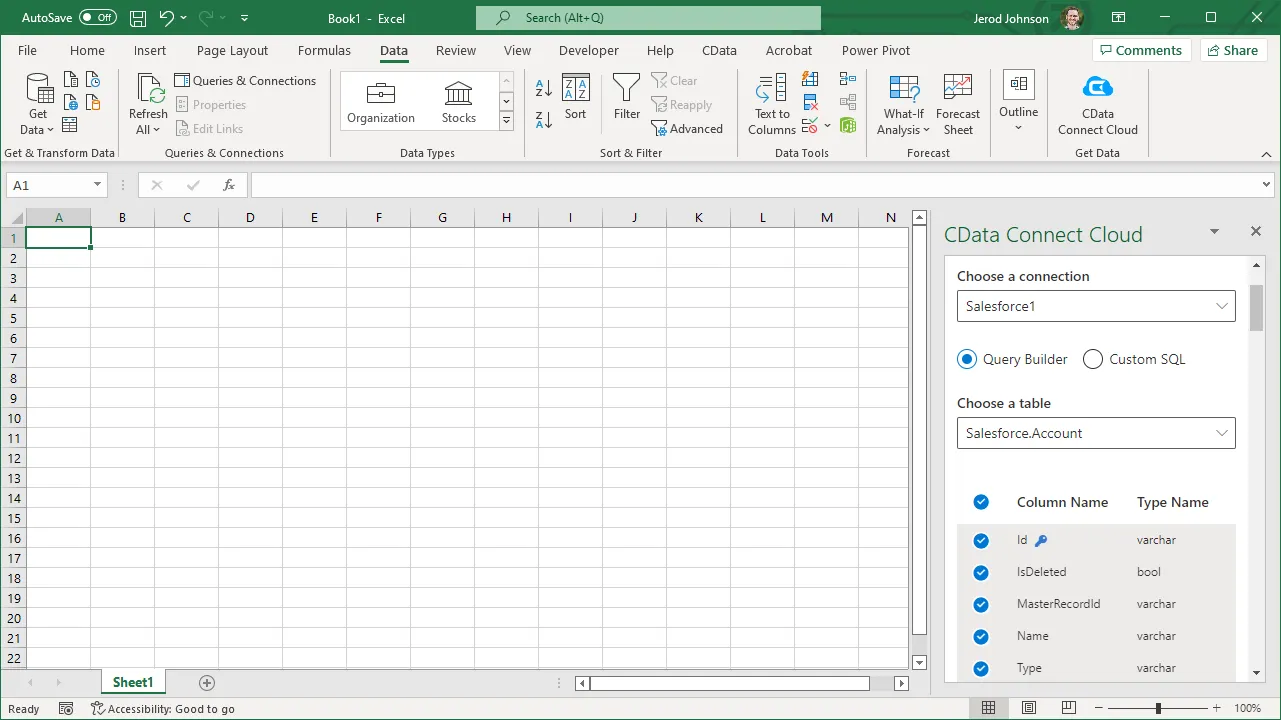
- Optionally add Filters, Sorting, and a Limit
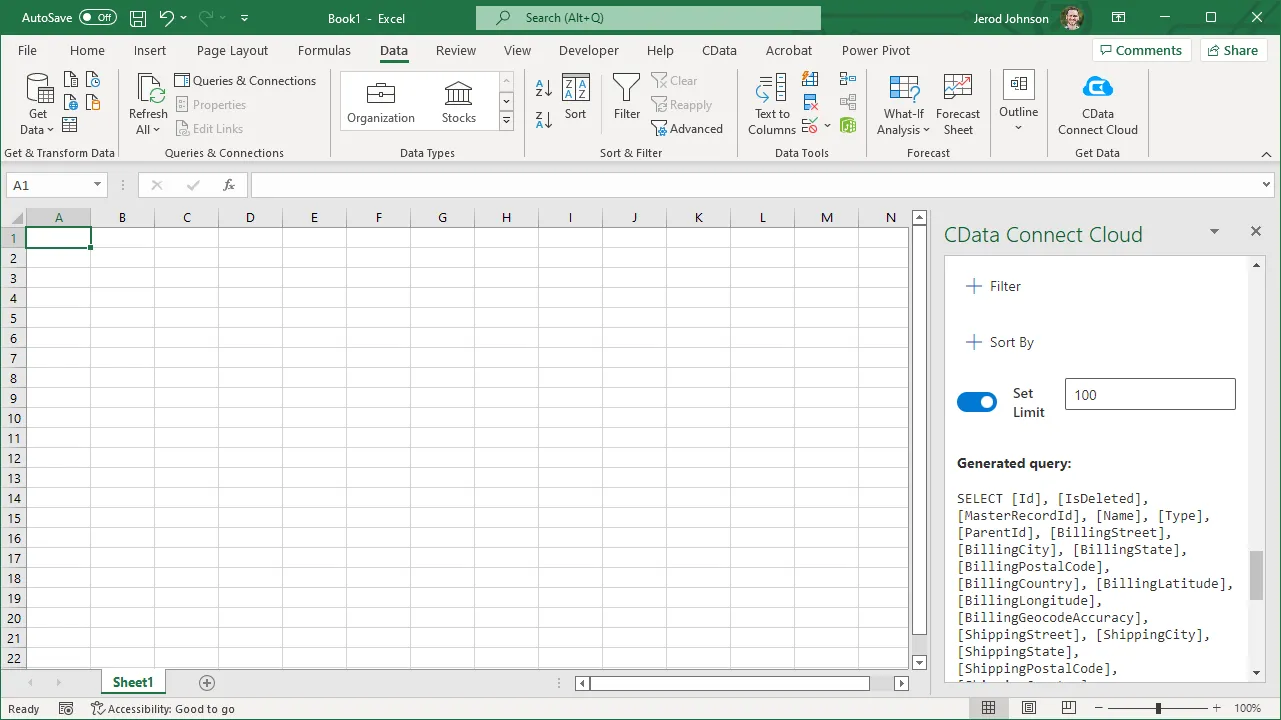
- Click Execute to import the data
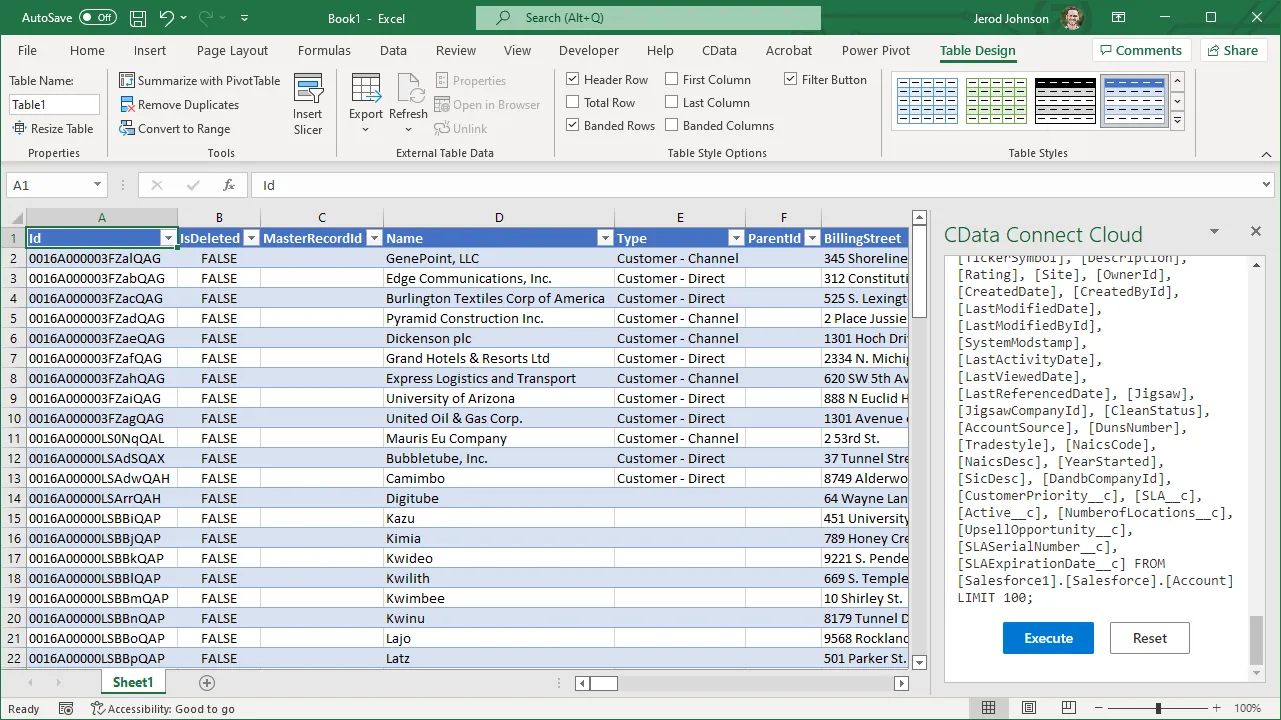
Update XML Data from Excel
In addition to viewing XML data in Excel, CData Connect AI also lets you update and delete XML data. Begin by importing data (as described above).
- Update any cell or cells with changes you want to push to XML (your changes will be in red)
- In the CData Connect AI Add-In panel, select Update
- Optionally highlight the cell(s) you wish to update and select an update option ("Update All" or "Update Selected")
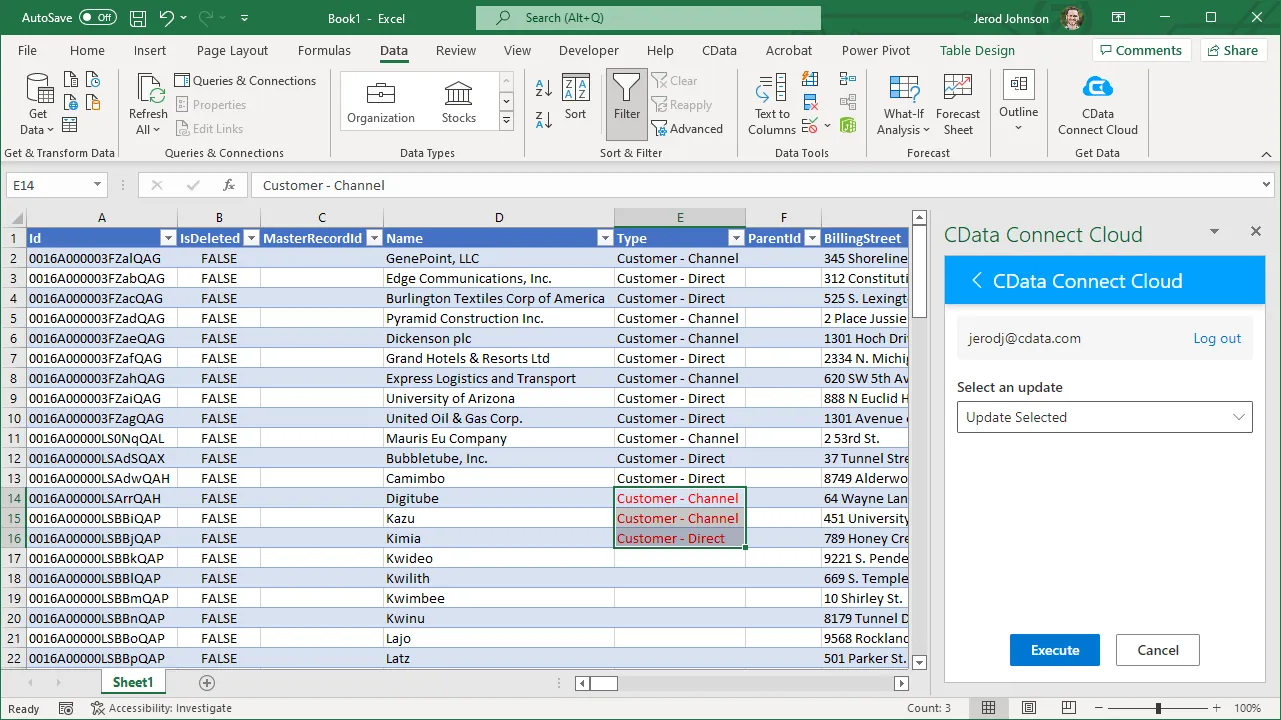
- Click Execute to push the updates to XML, and a notification will appear when the update is complete
Live Access to XML Data from Cloud Applications
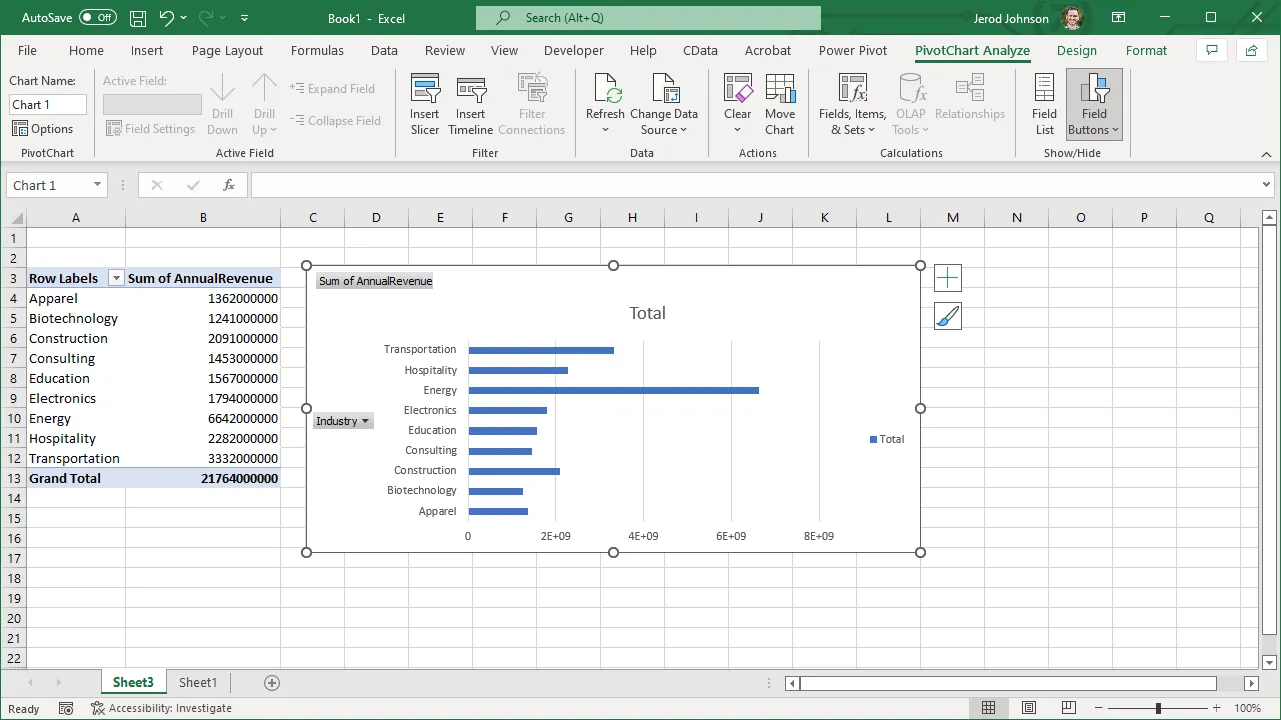
Now, you have a direct, cloud-to-cloud connection to live XML data from your Excel workbook. You can add more data to your workbook for calculations, aggregations, collaboration, and more.
Try CData Connect AI and get real-time data access to hundreds of SaaS, Big Data, and NoSQL sources directly from your cloud applications.