





Microsoft Exchange drivers & connectors for data integration
Connect to Microsoft Exchange through easy-to-use, bi-directional drivers. Easily integrate Microsoft Exchange data with BI, reporting, analytics, ETL tools, and custom solutions.




Microsoft Exchange data integration
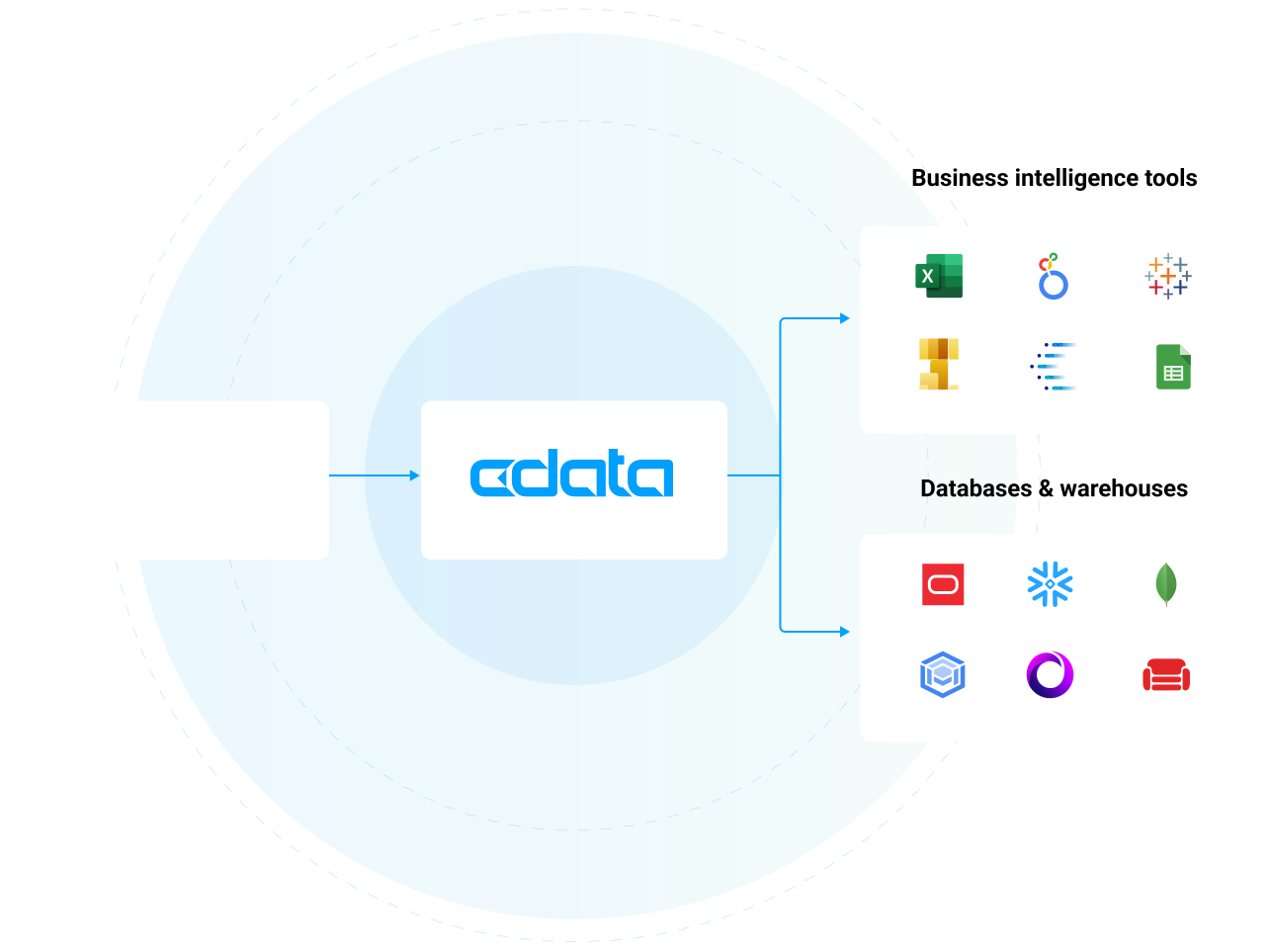
Access Microsoft Exchange data in all of the systems you use every day, including BI & analytics tools, databases, data warehouses, and custom apps. Customers commonly use CData's Microsoft Exchange connectivity to:
- Provide a logical data layer of abstraction that shields users from the complexity of data access and integration.
- Get blazing-fast access to data for BI, reporting, and data integration with highly optimized read/write performance.
- Securely explore tables, columns, keys, data, and full meta-data based on user identity.
Try CData Microsoft Exchange Connectors
Trusted by Microsoft Exchange users worldwide

Office Depot Leverages CData to 'Lift and Shift' Critical Data and Enable Analytics Integration
Office Depot IT Architect

Belden Supports Growing Marketing Requests by Centralizing Data Access in the Cloud
Belden D&A IT Supervisor

Logi Analytics Brings Real-Time Data to Analytics Dashboards for SaaS
VP of Product & Development for Logi Analytics
The CData difference
Our standards-based approach to connectivity streamlines data access and insulates usrs from the complexities of integrating BigQuery data.
Unparalleled Microsoft Exchange Connectivity Get full access to your Microsoft Exchange data wherever you need it. CData is the undisputed leader in Microsoft Exchange connectivity providing the most comprehensive access to live Microsoft Exchange data anywhere. Thousands of customers and hundreds of leading data ISVs rely on our connectivity to make the most of their data.
Fastest time to value Reduce development cycles and accelerating the overall time to market. Our pre-built, optimized connectors eliminate the need for complex custom development, allowing for fast, secure access to Microsoft Exchange data.
Unbeatable price-performance By standardizing and streamlining how systems interact with Microsoft Exchange our products reduce development costs and timelines, slash architectural complexity.
Blazing data access Our Microsoft Exchange connectivity is fast— really fast. In fact, over twice as fast as other solutions. Our engineers have optimized our drivers for maximum performance all the way down to the socket level, delivering truly exceptional data access.
Future-proof integration We continuously test against changes in the Microsoft Exchange APIs & protocols used to connect, preventing downtime in your data and analytics processes.
Enterprise-class technical support CData is dedicated to helping you find success with Microsoft Exchange. We work as an extension of your team to help solve your toughest data challenges. Thousands of customers and hundreds of ISVs rely on our services to make the most of their data.
AI Integrations
Microsoft Exchange data for AI agents and assistants
Microsoft Exchange MCP server connectivity for AI
Enable AI agents, assistants, and workflows to access Microsoft Exchange data to improve output, tailoring responses to your actual business data and reducing hallucinations.
- One MCP connection from Microsoft Exchange to every AI agent, assistant, copilot, or LLM that could use it.
- Maintain security and user permissions with pass-through user-based access and read/write controls
- Platform solution to control and monitor user access via AI across your organization.


BI & Analytics
Microsoft Exchange connectivity for BI & analytics
Live Microsoft Exchange access for analytics
Access Microsoft Exchange data in all of the systems you use every day, including BI & analytics tools, databases, data warehouses, and custom apps.
- Connect Microsoft Exchange (and any other data source) to your favorite analytics, automation, or data management app without moving data
- Bi-directional Microsoft Exchange connectivity through common data endpoints
- Enable Microsoft Exchange governability and data privacy with user-level permissioning at the source level.
Data Warehousing
Microsoft Exchange ETL, replication, & data warehousing
Automate Microsoft Exchange data replication
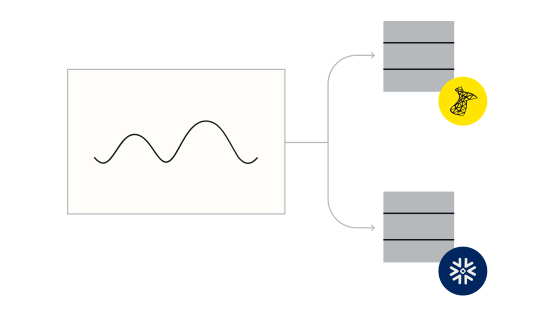
CData Sync automatically replicates data from hundreds of on-premises and cloud data sources — like Microsoft Exchange— to any modern database, data lake, or data warehouse.
- Create automated Microsoft Exchange data flows in minutes with point-and-click data replication
- Facilitate reporting, business intelligence, and analytics for decision support
- Archive data for disaster recovery

Data Management
Consolidate Microsoft Exchange data management
Data management integration enables organizations to better manage their human resources data, optimize decision-making, and ensure compliance with data governance policies. Technologies like ODBC, JDBC, and ADO easily connect with all kinds of popular data management applications.
Connect Microsoft Exchange to data management systems to:
- Provide a single, accurate source of truth for employee and resource data.
- Ensure consistency, data quality, and integration across systems.
- Improve data discoverability, governance, and compliance, allowing for easy tracking, auditing, and efficient data use across the organization.
No Code
Connect to Microsoft Exchange with no-code
Microsoft Exchange is often at the center of a wide range of repetitive tasks. With low-code/no-code tools, users can automate these tasks reducing manual effort and errors.
- Customize Microsoft Exchange and integrate it with other systems (like CRM, HR, or accounting software) without writing complex code.
- Create custom dashboards, reports, or data visualizations by integrating Microsoft Exchange data with other systems.


Custom Apps
Build fully-integrated custom applications
From custom AI and analytics to performance managemement and learning platforms, developers are leveraging our drivers to power all kinds of real-time integrations with Microsoft Exchange.
- What is a Microsoft Exchange driver?
- What is a Microsoft Exchange connector?
- How is developing with a Microsoft Exchange driver different?
- Pragmatic API Integration: from SDKs to Data Drivers
- Data APIs: Gateway to Data Driven Operation & Digital Transformation
Embedding CData Connectivity
Data Virtualization
Virtualize access to Microsoft Exchange data
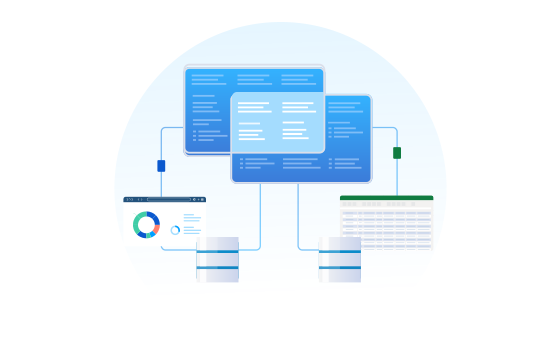
Data virtualization tools helps organizations achieve better data access, more agile decision-making, and greater efficiency in managing data across diverse systems.
Integrating Microsoft Exchange with data virtualization tools allows organizations to combine this data with other sources like ERP systems, CRM platforms, or financial databases without physically moving or duplicating data. This unified access enables faster, more efficient decision-making.
Spreadsheets
Connect to live Microsoft Exchange data in spreadsheets
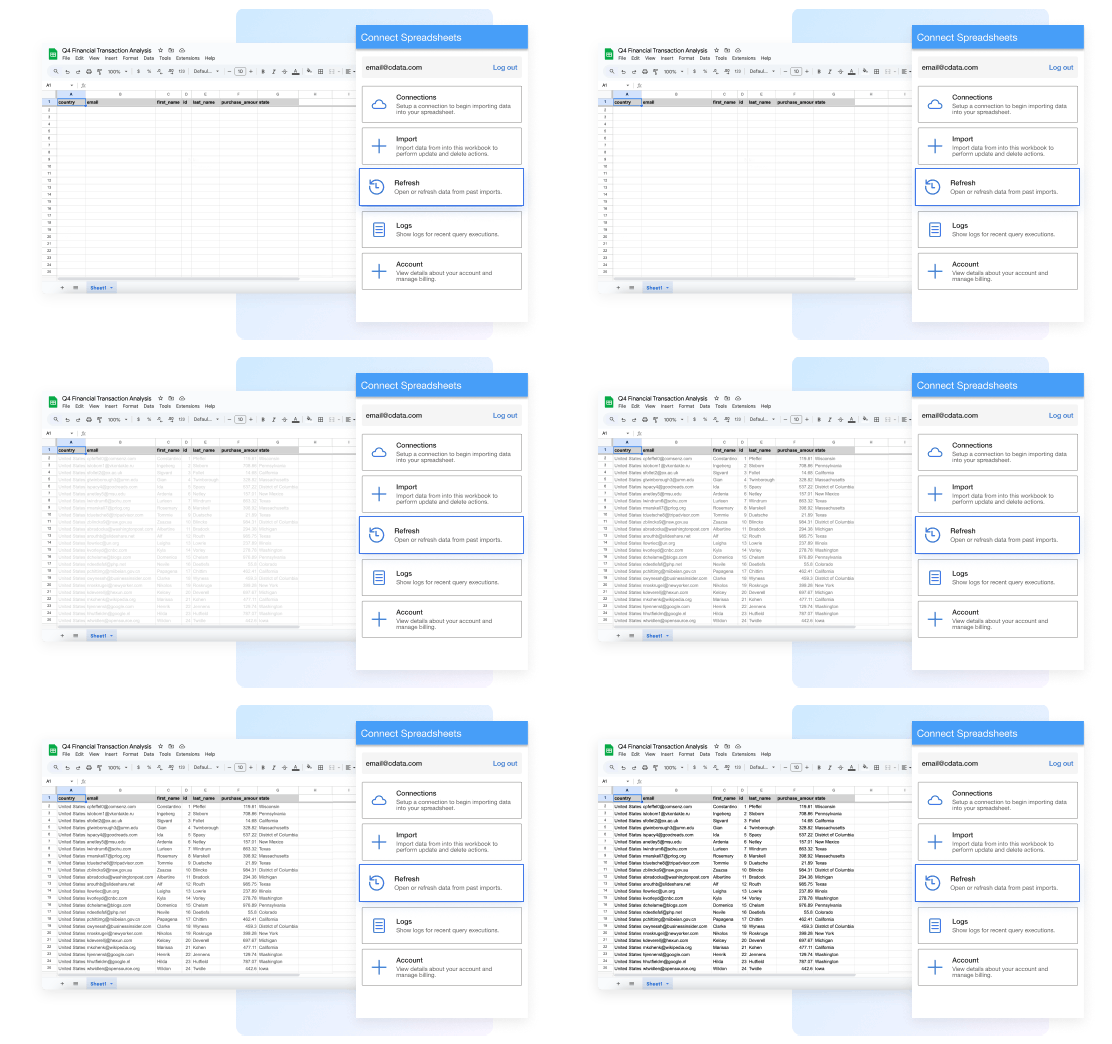
Work with live Microsoft Exchange data seamlessly in Excel and Google Sheets:
- Always work with live Microsoft Exchange data— no more downloading, copying, and pasting
- Filter and get just the attributes and data you actually need
- Refresh data with a click or set a schedule
- Update Microsoft Exchange records right from your spreadsheet
FAQs
Frequently asked Microsoft Exchange integration questions
Common questions about Microsoft Exchange drivers & connectors for data and analytics integration
- How does the Microsoft Exchange Driver work?
- How is using the Microsoft Exchange Driver different than connecting to the Microsoft Exchange API?
- How is a Microsoft Exchange Driver different than a Microsoft Exchange connector?
- Is Microsoft Exchange SQL based?
- What data can I access with the Microsoft Exchange driver?
- What does Microsoft Exchange integrate with?
- How can I enable Microsoft Exchange Analytics?
- How can I support Microsoft Exchange Data Integration?
- Does Microsoft Exchange Integrate with Excel?
Additional Microsoft Exchange connectivity resources
Technical articles
Using the Microsoft Exchange drivers
- Microsoft Exchange Integration Guides and Tutorials
- Query Microsoft Exchange Data through ODBC in Node.js
- Publish Microsoft Exchange-Connected Dashboards in Tableau Server via JDBC
- How to Connect DBeaver to Microsoft Exchange via a JDBC Driver
- Use ChatGPT to Talk to Your Microsoft Exchange Data via CData Connect AI
- Integrating Microsoft Exchange Data in Talend Cloud Data Management Platform
- Build Microsoft Exchange Visualizations in Tableau Desktop
- Build Data Flows from SQL Server to Microsoft Exchange through SSIS
- Query Microsoft Exchange Data as a MySQL Database in Node.js
Blog
Related blog articles
- Web EDI: Definition, How It Works, Benefits, and Why You Need It
- EDI Shipping: How It Works in Logistics & 3 Key Benefits
- EDI vs API: Differences, Advantages, and Why You Need Both
- What is EDI for Inventory Management? All You Need to Know
- Free Webinar: Automate Compliant EDI Workflows with CData Arc
- Business Systems Integration: Why Your Business Needs It
- EDI in the Supply Chain: Overview, Benefits, and How CData Can Help with a Seamless Integration
- AS2 vs. SFTP: What Are the Main Benefits & Key Differences of Each?
- Benefits of EDI: 5 Advantages You Need to Know
- Cloud EDI Solutions: A Complete Overview, Key Benefits, and Why Companies are Moving Toward Them
