







Integrate with Live Authorize.Net Data in MuleSoft (via CData Connect AI)

The MuleSoft Anypoint Platform enables the building, deployment, and management of APIs and integrations, facilitating seamless connectivity across applications and systems. When combined with CData Connect AI, it provides access to Authorize.Net data for visualizations, dashboards, and more. This article explains how to use CData Connect AI to create a live connection to Authorize.Net and how to connect and access live Authorize.Net data from the MuleSoft Anypoint Platform.
Prerequisites
Before configuring and using MuleSoft with CData Connect AI, you must first connect a data source to your CData Connect AI account. For more information, see the Connections section.
Additionally, you need to generate a Personal Access Token (PAT) on the Settings page. Be sure to copy it down, as it serves as your password during authentication.
Configure Authorize.Net Connectivity for MuleSoft
Connectivity to Authorize.Net from MuleSoft is made possible through CData Connect AI. To work with Authorize.Net data from MuleSoft, we start by creating and configuring a Authorize.Net connection.
- Log into Connect AI, click Sources, and then click Add Connection
- Select "Authorize.Net" from the Add Connection panel
-
Enter the necessary authentication properties to connect to Authorize.Net.
You can obtain the necessary connection properties on the Security Settings -> General Settings page after logging into your Merchant Account.
- UseSandbox: The Authorize.Net API to be used to process transactions. If you are using a production account, this property can be left blank. If you are using a developer test account, set this to 'TRUE'.
- LoginID: The API login Id associated with your payment gateway account. This property is used to authenticate that you are authorized to submit website transactions. Note that this value is not the same as the login Id that you use to log in to the Merchant Interface.
- TransactionKey: The transaction key associated with your payment gateway account. This property is used to authenticate that you are authorized to submit website transactions.

- Click Save & Test
-
Navigate to the Permissions tab in the Add Authorize.Net Connection page and update the User-based permissions.



Add a Personal Access Token
When connecting to Connect AI through the REST API, the OData API, or the Virtual SQL Server, a Personal Access Token (PAT) is used to authenticate the connection to Connect AI. It is best practice to create a separate PAT for each service to maintain granularity of access.
- Click on the Gear icon () at the top right of the Connect AI app to open the settings page.
- On the Settings page, go to the Access Tokens section and click Create PAT.
-
Give the PAT a name and click Create.

- The personal access token is only visible at creation, so be sure to copy it and store it securely for future use.
With the connection configured and a PAT generated, you are ready to connect to Authorize.Net data from Mulesoft.
Connecting to CData Connect AI
Follow these steps to establish a connection from Mulesoft to CData Connect AI through the JDBC driver:
-
Download and install the CData Connect AI JDBC driver.
- Open the Integrations page of CData Connect AI.
- Search for and select JDBC.
- Download and run the setup file.
- When the installation is complete, the JAR file can be found in the installation directory (inside the lib folder).
- Log into Mulesoft Anypoint Studio or launch the desktop application.
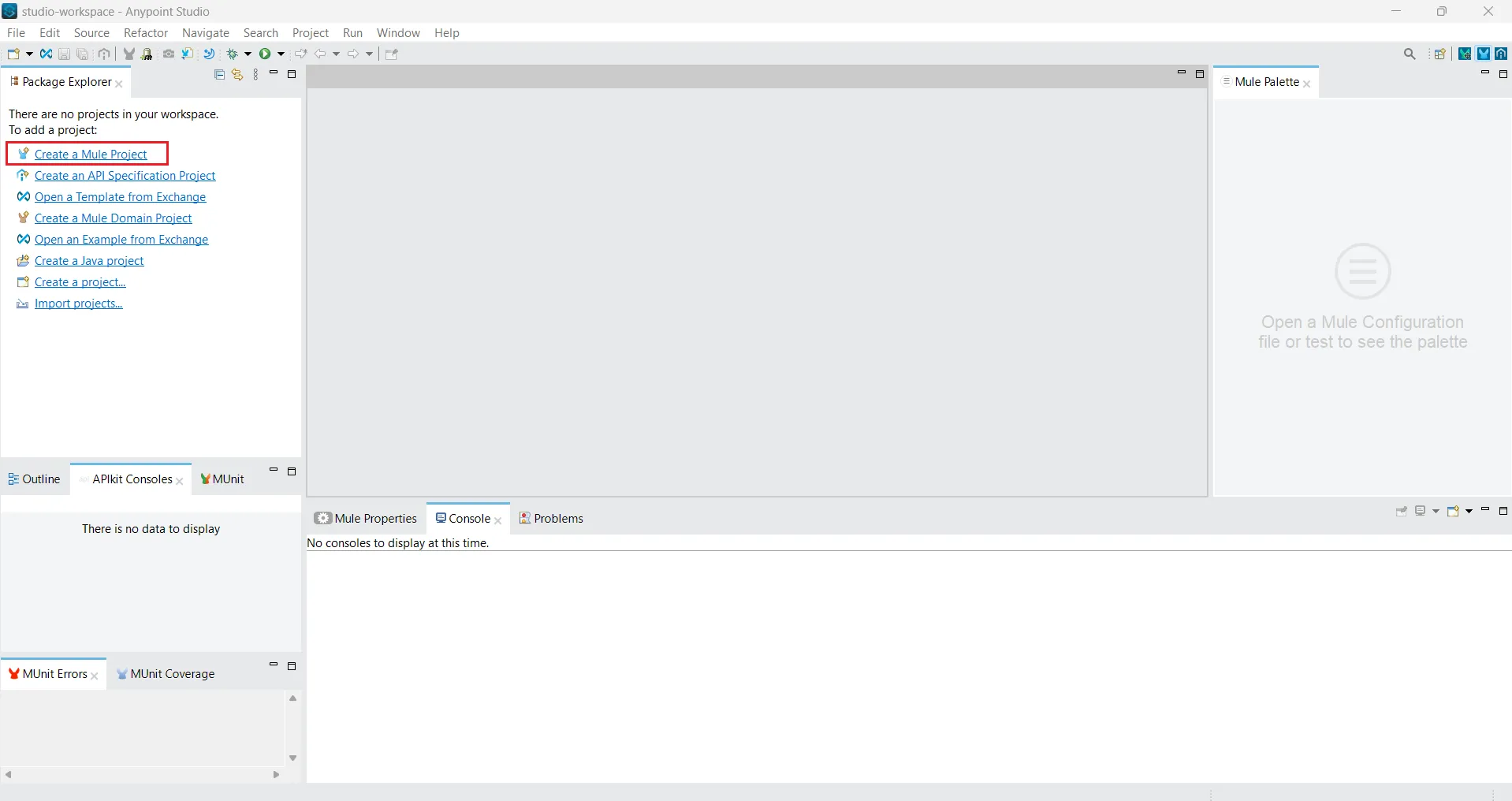
- Create a new Mulesoft project.
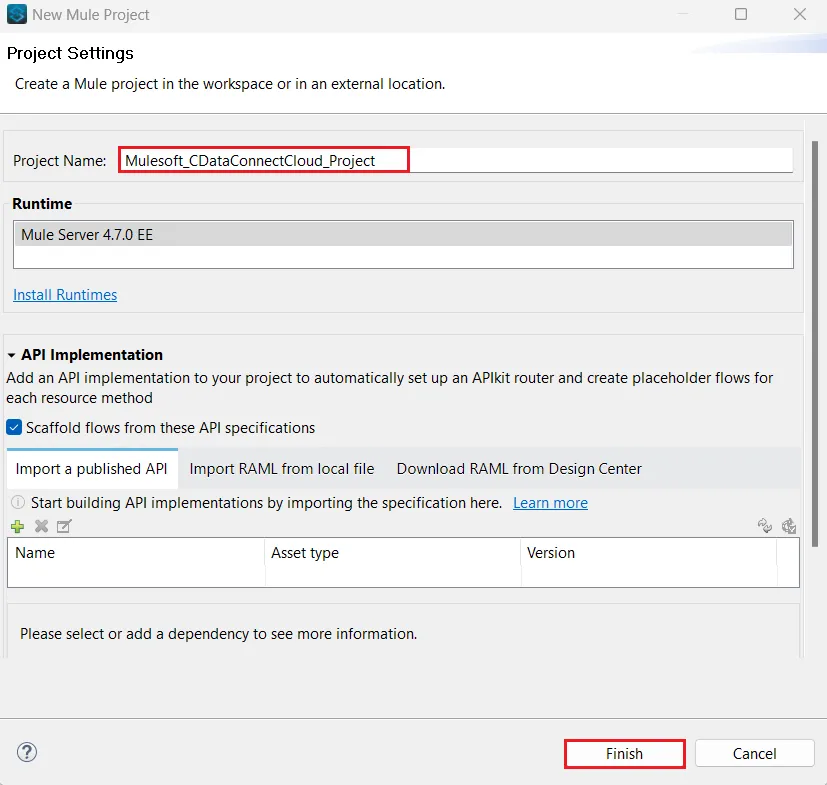 The new project appears in a project folder.
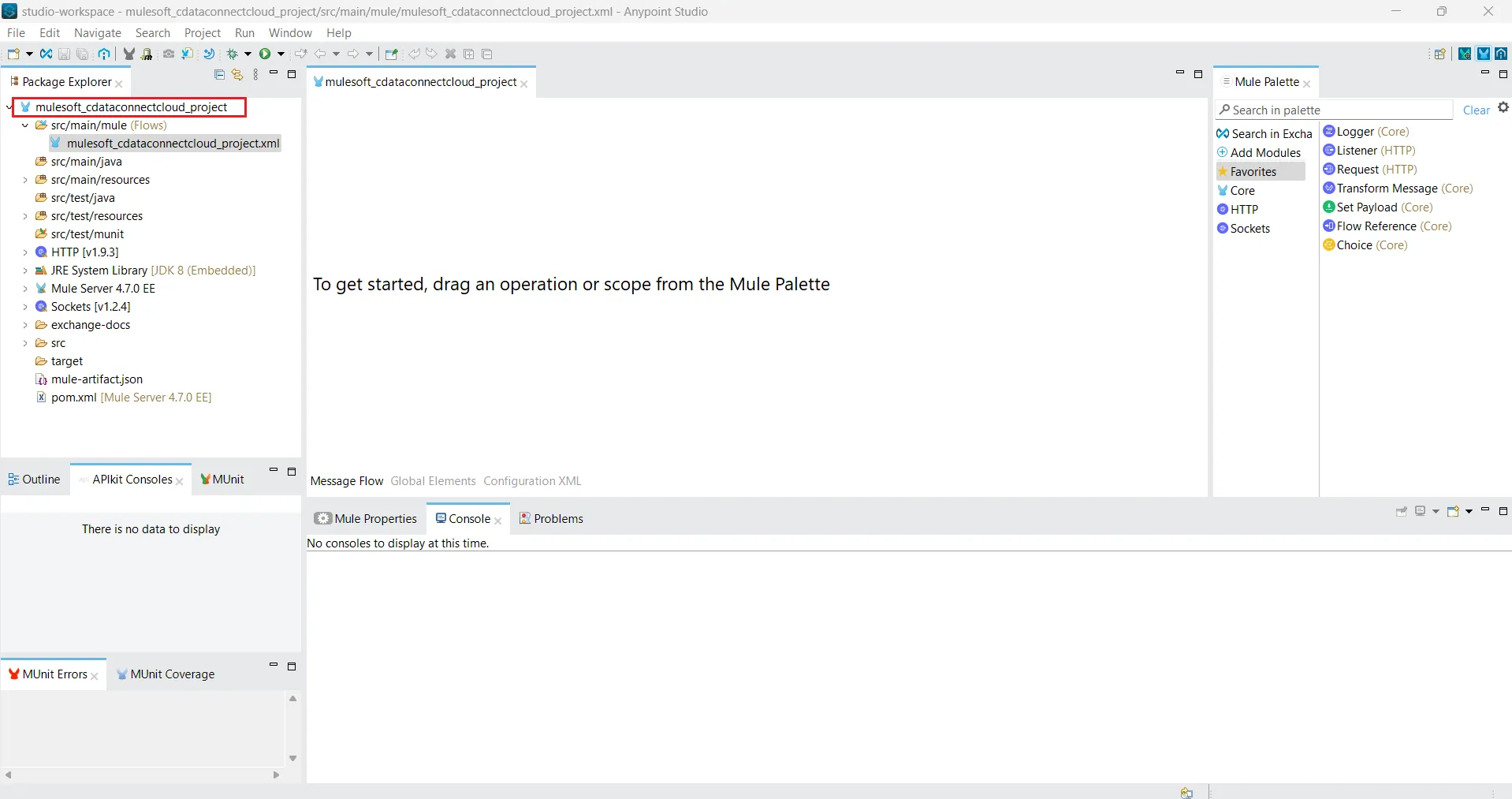
- In the Mule Palette located on the right, drag an HTTP Listener to the Message Flow area.
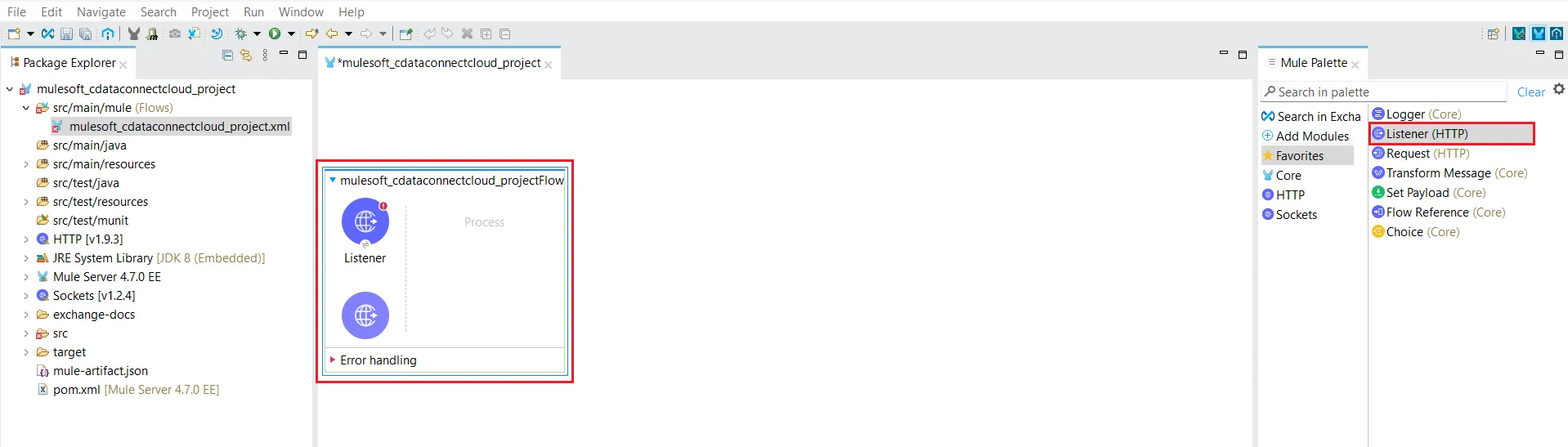
- Click on the HTTP Listener to configure it.
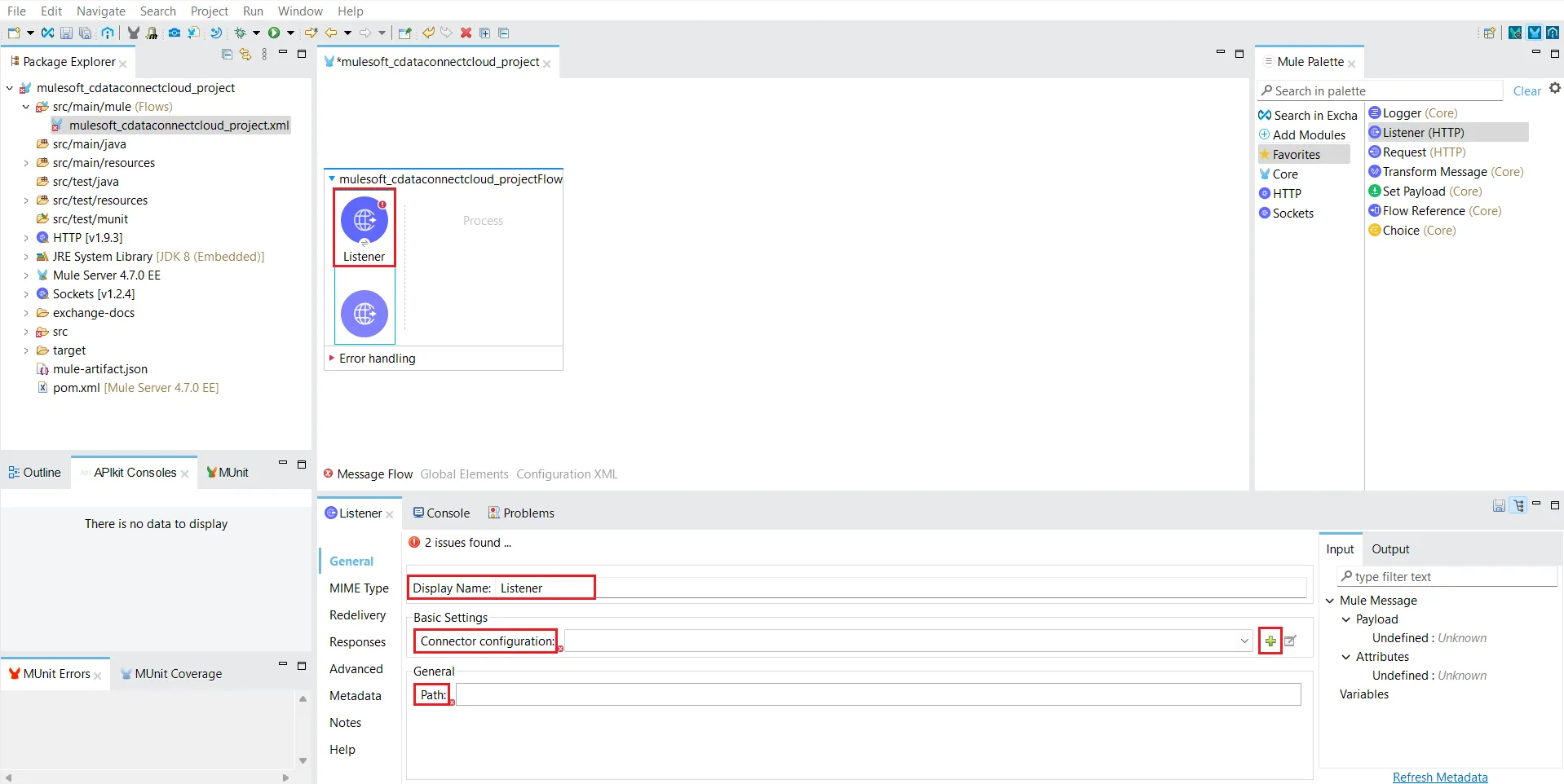
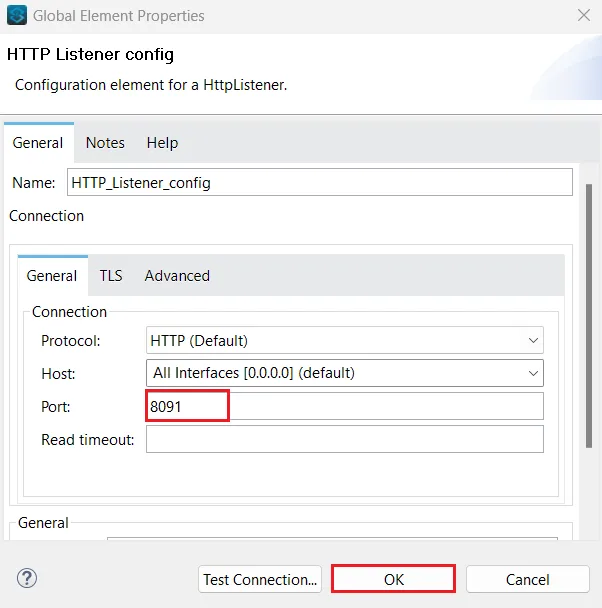
- Click the + sign on the right of Connector configuration. The HTTP Listener config dialog appears.
- Configure the HTTP Listener, providing a Port on which to query your data, and click OK.
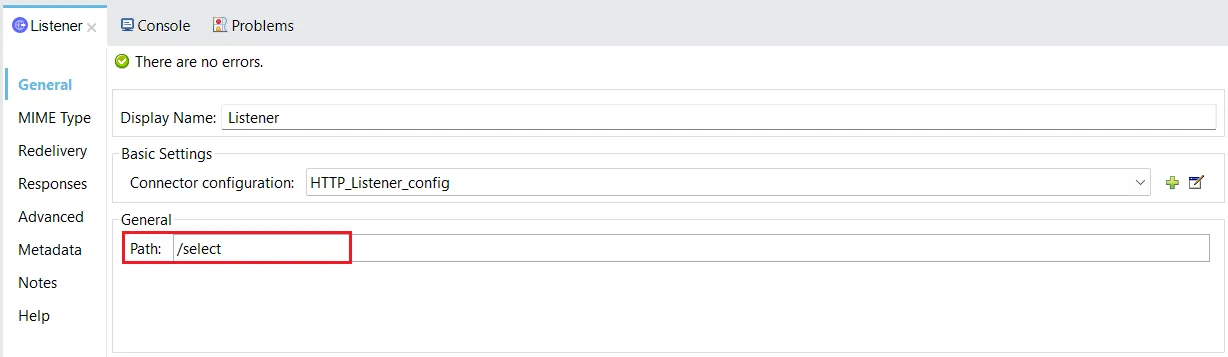
- Provide a path on which to perform the actions. The HTTP Listener is now configured.
- In the Mule Palette on the right, type database in the search bar.
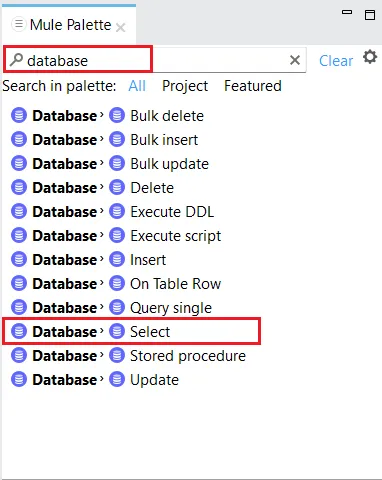
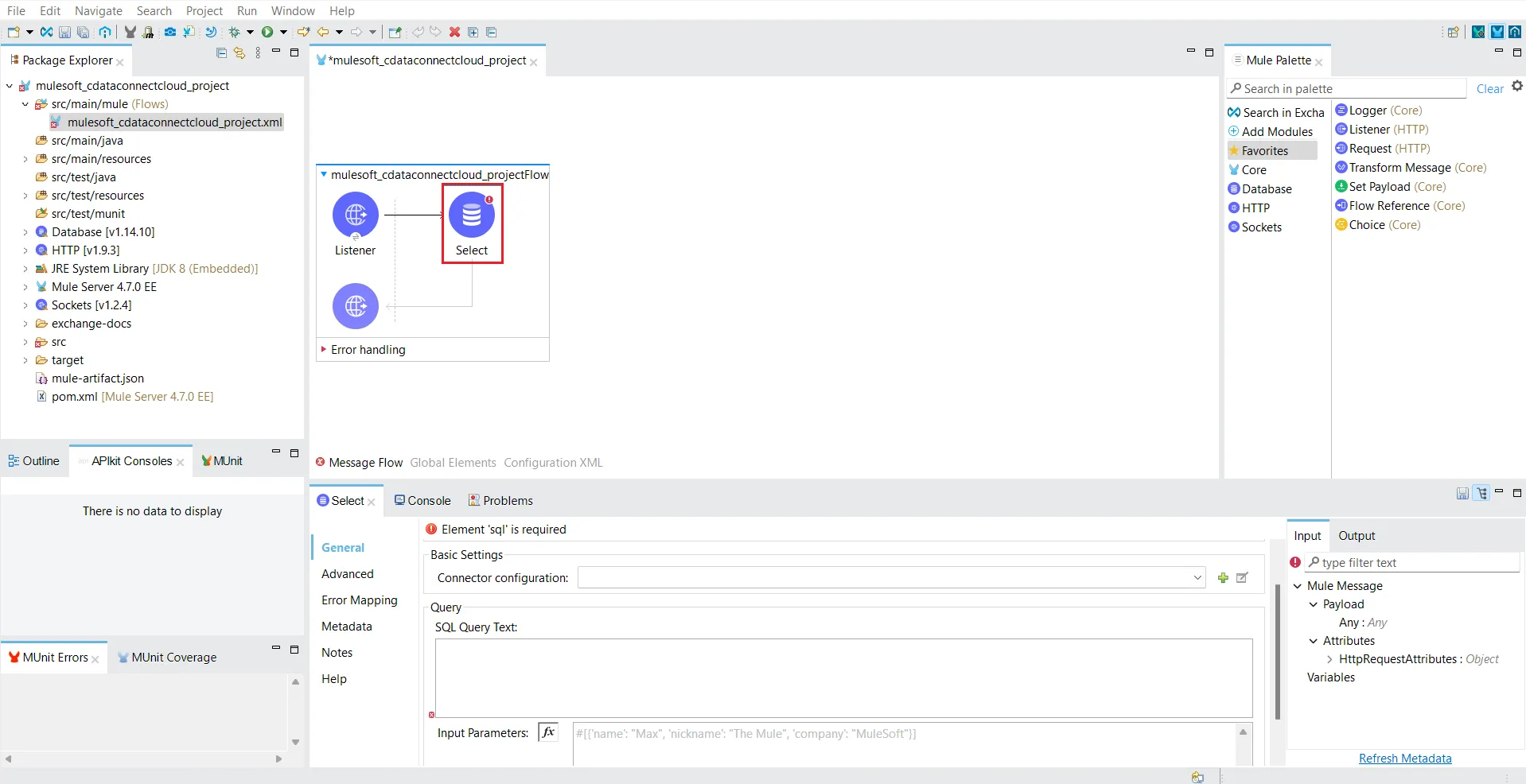
- Drag the database operation you want to perform to the Message Flow area. For this example, we choose Select.
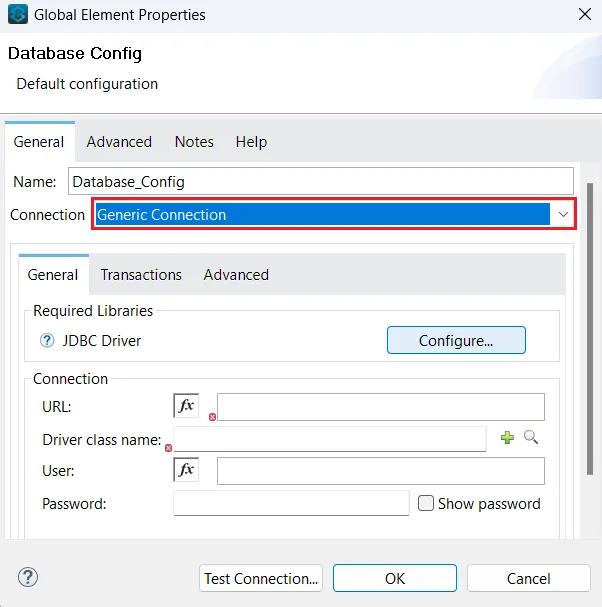
- Select Generic Connection from the Connection dropdown in the Database Config dialog.
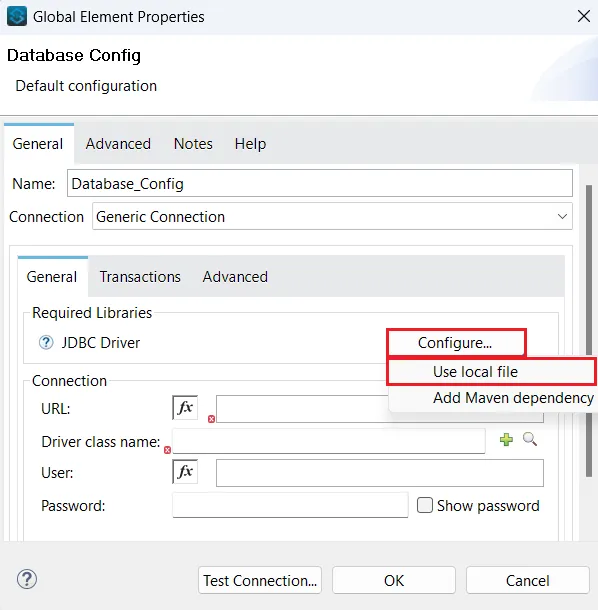
- Click the Configure button to configure the JDBC driver. Select Use local file from the drop-down list.
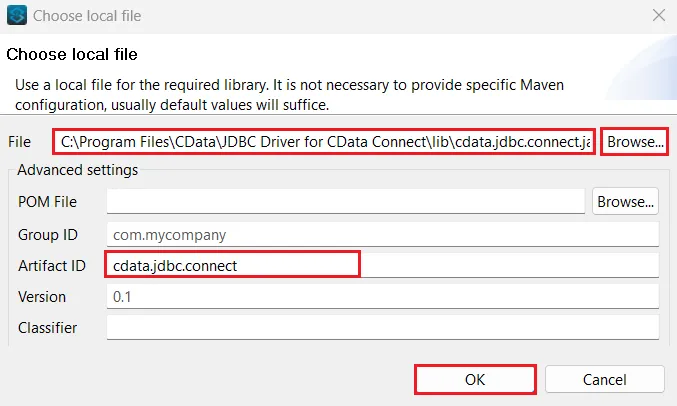
- Locate the CData Connect AI JAR file from the JDBC driver installation and click OK.
- Provide the following information:
- URL: the URL for the connection, for example:
jdbc:connect:Authscheme=Basic;user=username;password=PAT
Note: the password is the PAT created in the Prerequisites section. - Driver class name: Enter the Driver class name as:
cdata.jdbc.connect.ConnectDriver
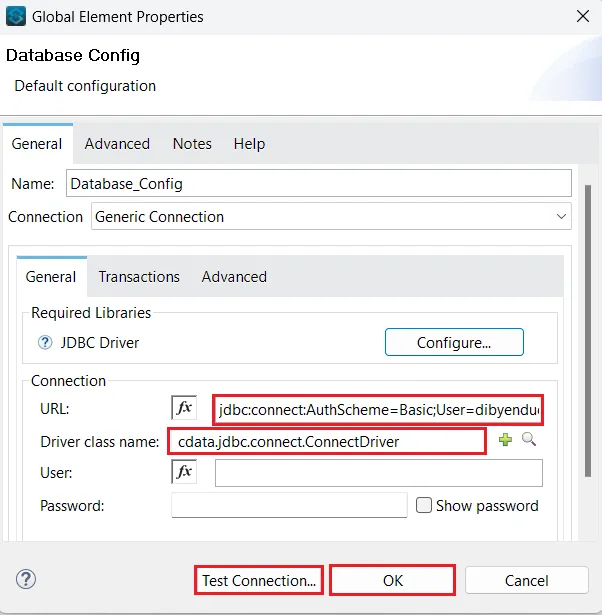
- URL: the URL for the connection, for example:
- Click Test Connection.
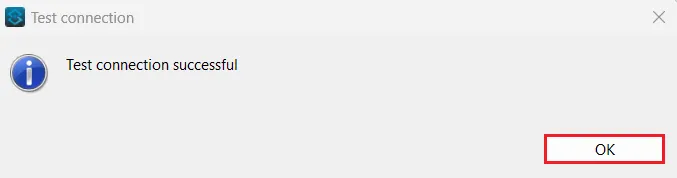
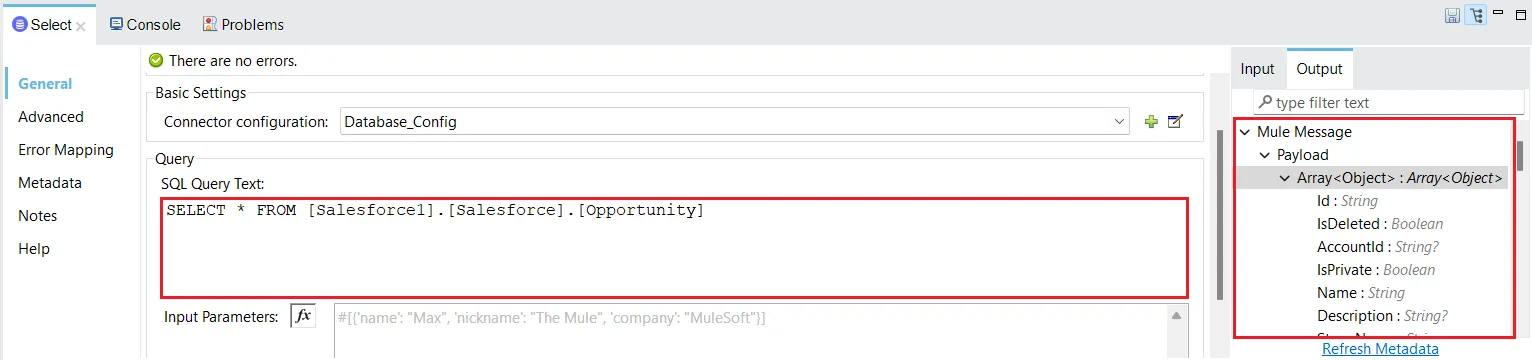
- If the connection is successful, provide the SQL Query Text in the editor. You can see the table metadata on the right side in the Output tab.
- In the Mule Palette, drag Transform Message to the Message Flow area.
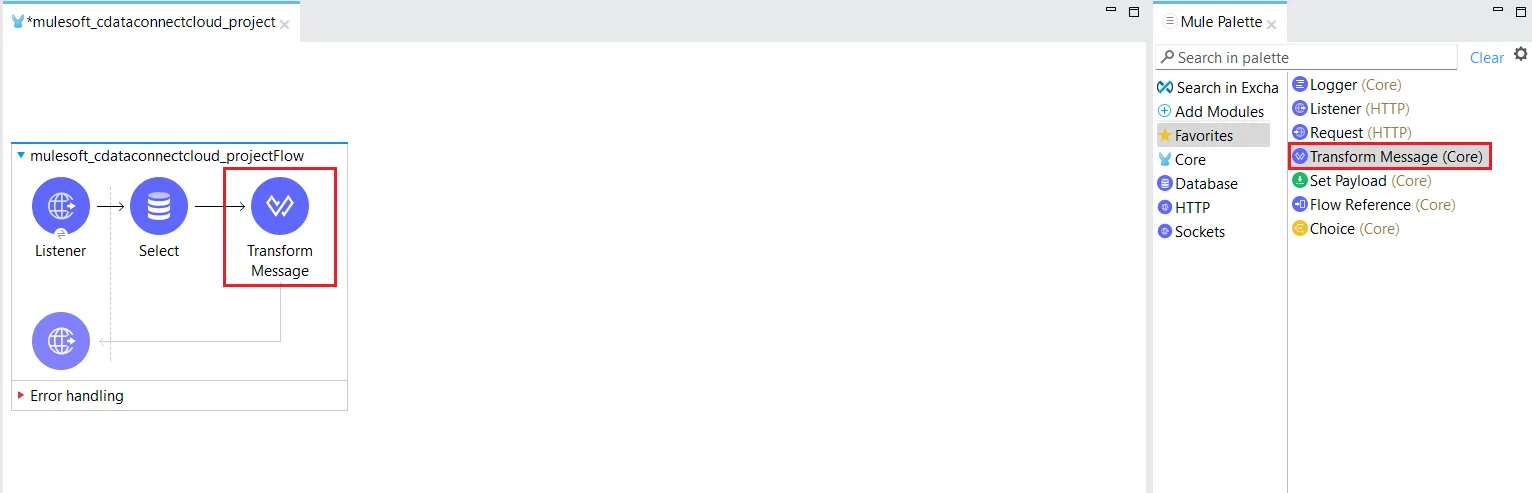
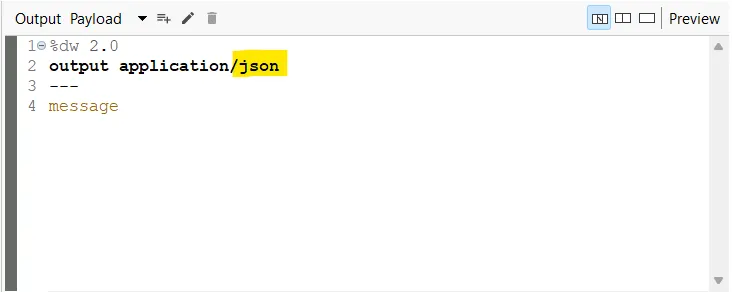
- Click Transform Message to configure it. Change the Output as follows:
- Save your project and run it. In the console, Mulesoft starts initializing the dependencies.
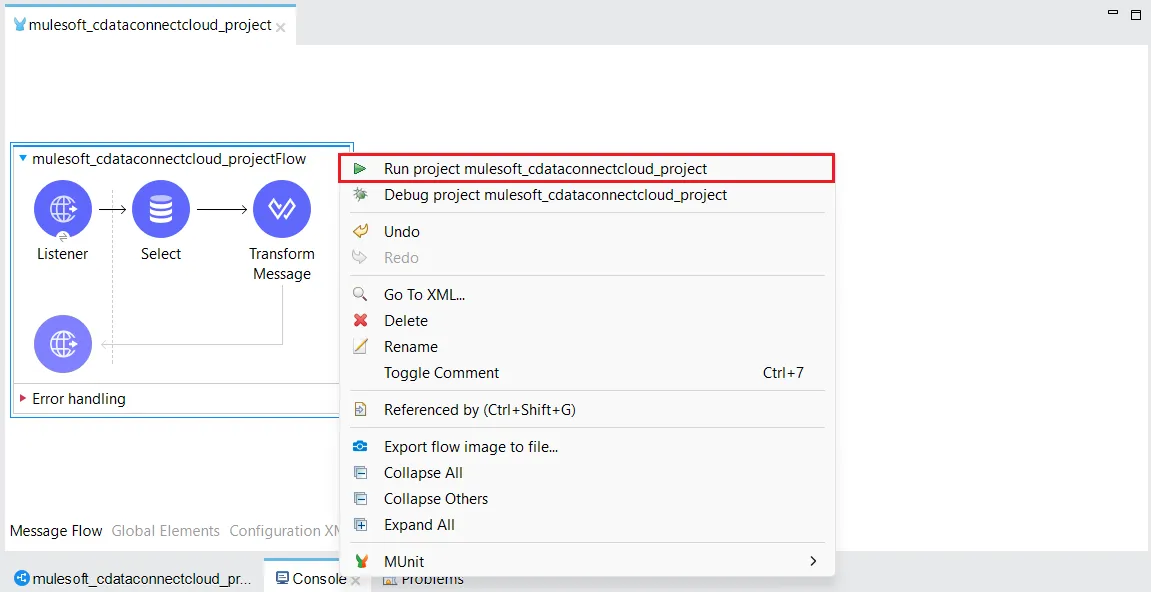
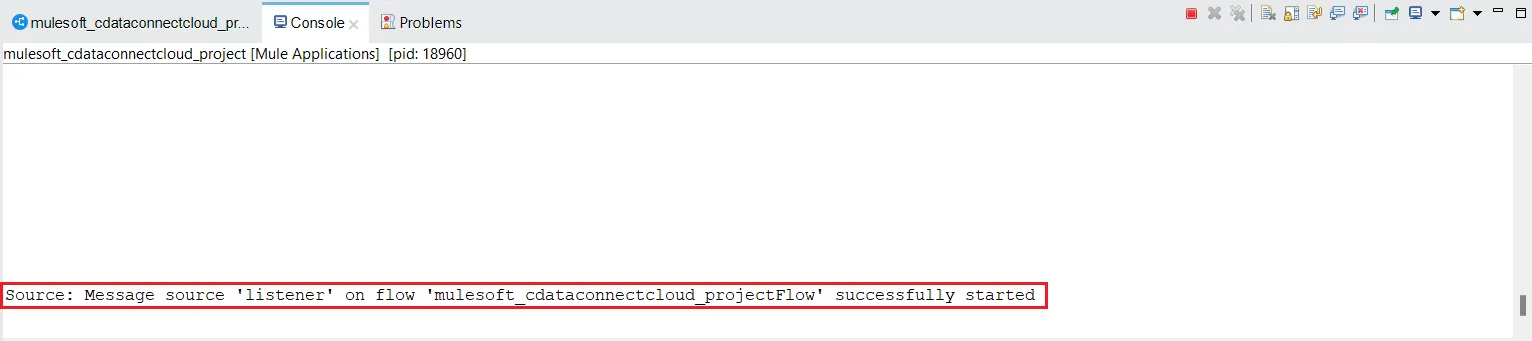
- Once you see the message, "Message source 'listener' on flow your_project_name successfully started", you can start querying your data at the endpoint you provided.
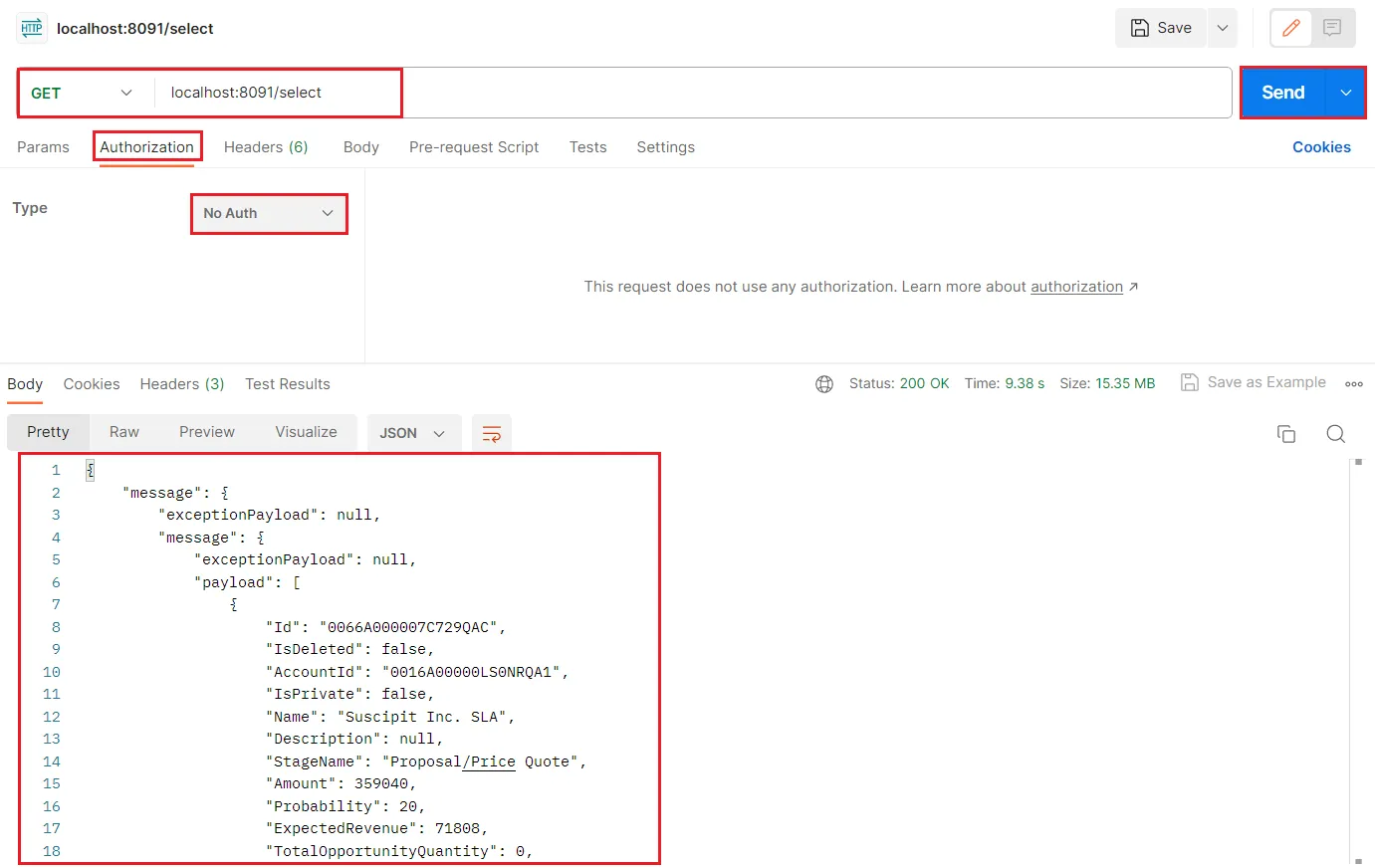
- Query to check out the data using the Postman application (as shown below).
SQL Access to Authorize.Net Data from Cloud Applications
Now you have a direct connection to live Authorize.Net data from MuleSoft Anypoint Platform. You can create more connections to ensure seamless data flow, automate business processes, and manage APIs - all without replicating Authorize.Net data.
To get real-time data access to hundreds of SaaS, Big Data, and NoSQL sources (including Authorize.Net) directly from your cloud applications, explore the CData Connect AI.