







Integrate Live Azure Data Lake Storage Data in the Windsurf IDE via CData Connect AI

Windsurf is an AI-native IDE built around Cascade, an autonomous coding agent that understands project context and executes multi-step tasks directly inside the editor. Cascade supports the Model Context Protocol (MCP), allowing the agent to discover and call external tools and data sources without leaving the development environment.
By integrating Windsurf with CData Connect AI through the built-in MCP server, the Cascade agent gains governed, real-time access to live Azure Data Lake Storage data. This enables developers to list catalogs, inspect schemas, and query records from Azure Data Lake Storage data within the IDE using natural language prompts.
This article explains how to configure Azure Data Lake Storage connectivity in Connect AI, generate the required personal access token, configure the Connect AI MCP Server in Windsurf, and verify the integration by querying live Azure Data Lake Storage data from the Cascade chat.
Step 1: Configure Azure Data Lake Storage connectivity for Windsurf
Connectivity to Azure Data Lake Storage from Windsurf is made possible through Connect AI's Remote MCP Server. To interact with Azure Data Lake Storage data from Windsurf, start by creating and configuring a Azure Data Lake Storage connection in Connect AI.
- Log into Connect AI, click Sources, and then click Add Connection
- Select Azure Data Lake Storage from the Add Connection panel
-
Enter the necessary authentication properties to connect to Azure Data Lake Storage.
Authenticating to a Gen 1 DataLakeStore Account
Gen 1 uses OAuth 2.0 in Entra ID (formerly Azure AD) for authentication.
For this, an Active Directory web application is required. You can create one as follows:
To authenticate against a Gen 1 DataLakeStore account, the following properties are required:
- Schema: Set this to ADLSGen1.
- Account: Set this to the name of the account.
- OAuthClientId: Set this to the application Id of the app you created.
- OAuthClientSecret: Set this to the key generated for the app you created.
- TenantId: Set this to the tenant Id. See the property for more information on how to acquire this.
- Directory: Set this to the path which will be used to store the replicated file. If not specified, the root directory will be used.
Authenticating to a Gen 2 DataLakeStore Account
To authenticate against a Gen 2 DataLakeStore account, the following properties are required:
- Schema: Set this to ADLSGen2.
- Account: Set this to the name of the account.
- FileSystem: Set this to the file system which will be used for this account.
- AccessKey: Set this to the access key which will be used to authenticate the calls to the API. See the property for more information on how to acquire this.
- Directory: Set this to the path which will be used to store the replicated file. If not specified, the root directory will be used.

- Click Save & Test
- Navigate to the Permissions tab and update user-based permissions



Add a Personal Access Token
A Personal Access Token (PAT) is used to authenticate the connection to Connect AI from Windsurf. It is best practice to create a separate PAT for each integration to maintain granular access control.
- Click the gear icon () at the top right of the Connect AI app to open Settings
- On the Settings page, go to the Access Tokens section and click Create PAT
- Give the PAT a descriptive name and click Create
- Copy the token when displayed and store it securely. It will not be shown again

With the Azure Data Lake Storage connection configured and a PAT generated, Windsurf can now connect to Azure Data Lake Storage data.
Step 2: Configure Connect AI MCP in Windsurf
Next, configure the Connect AI Remote MCP Server in Windsurf so that the Cascade agent can discover and call live data tools through Connect AI.
- Download and install the Windsurf IDE
-
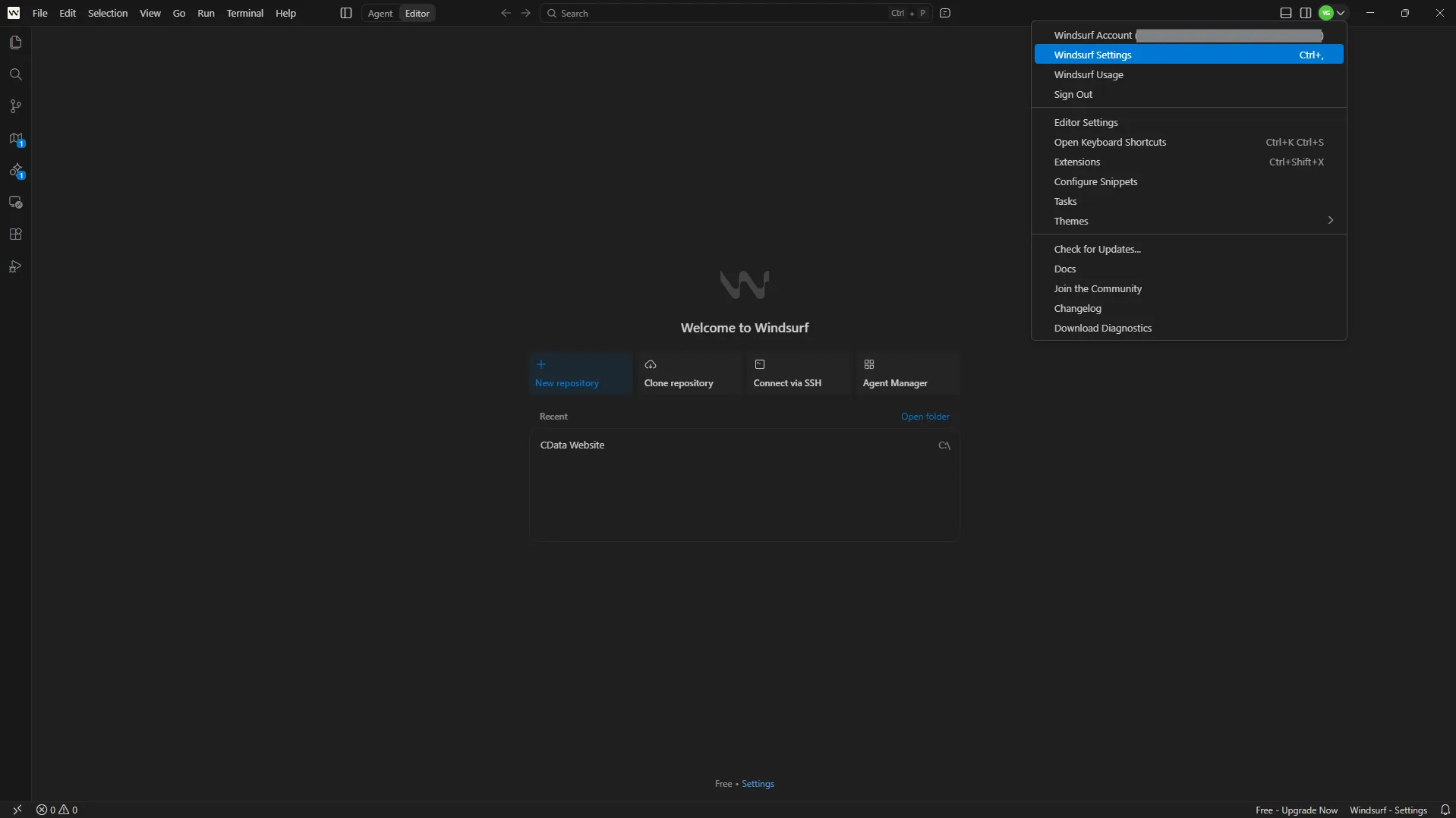
Open Windsurf, click your profile icon in the top right, and select Windsurf Settings
-
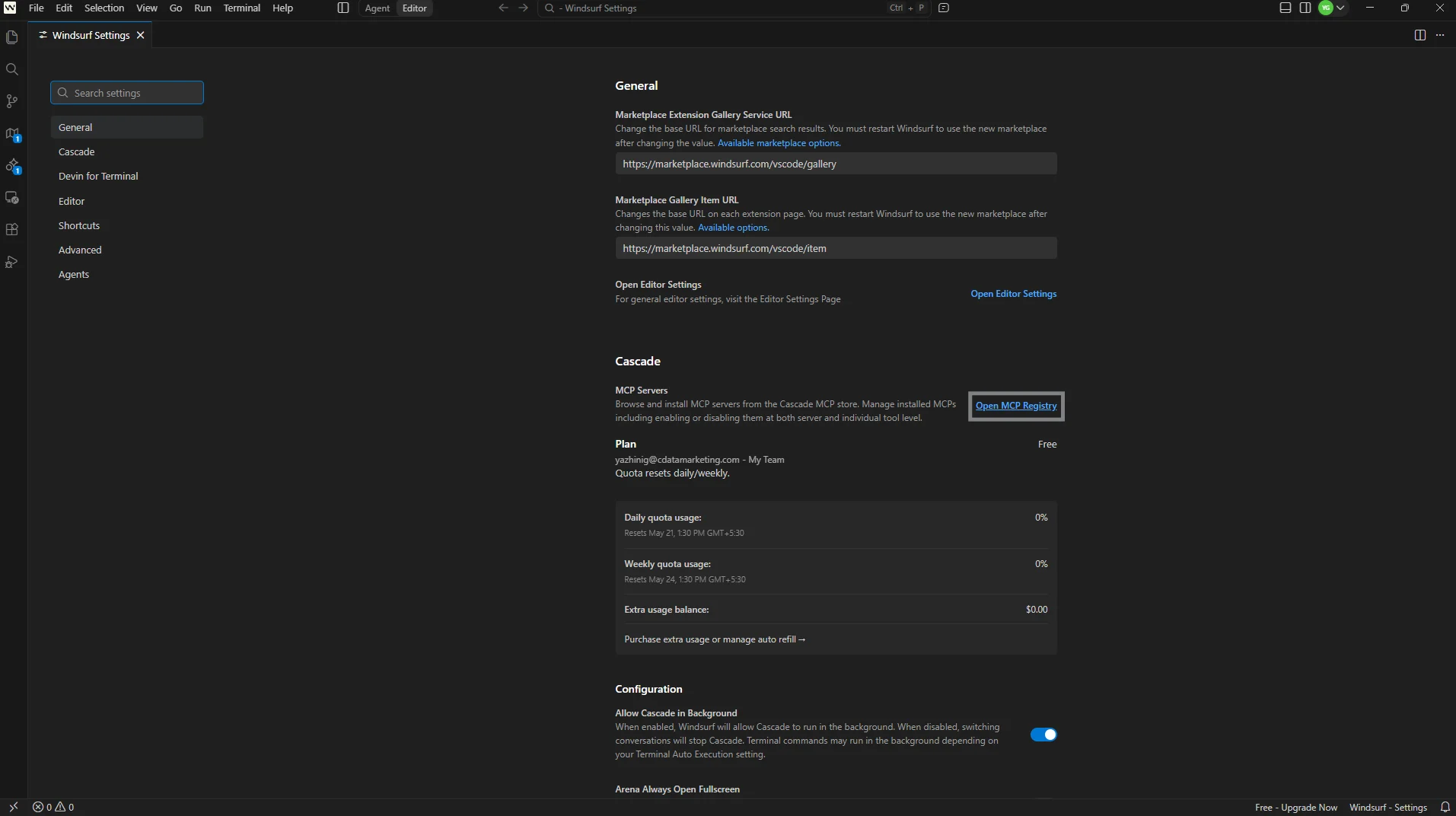
Under the Cascade section, locate MCP Servers and click Open MCP Registry
-
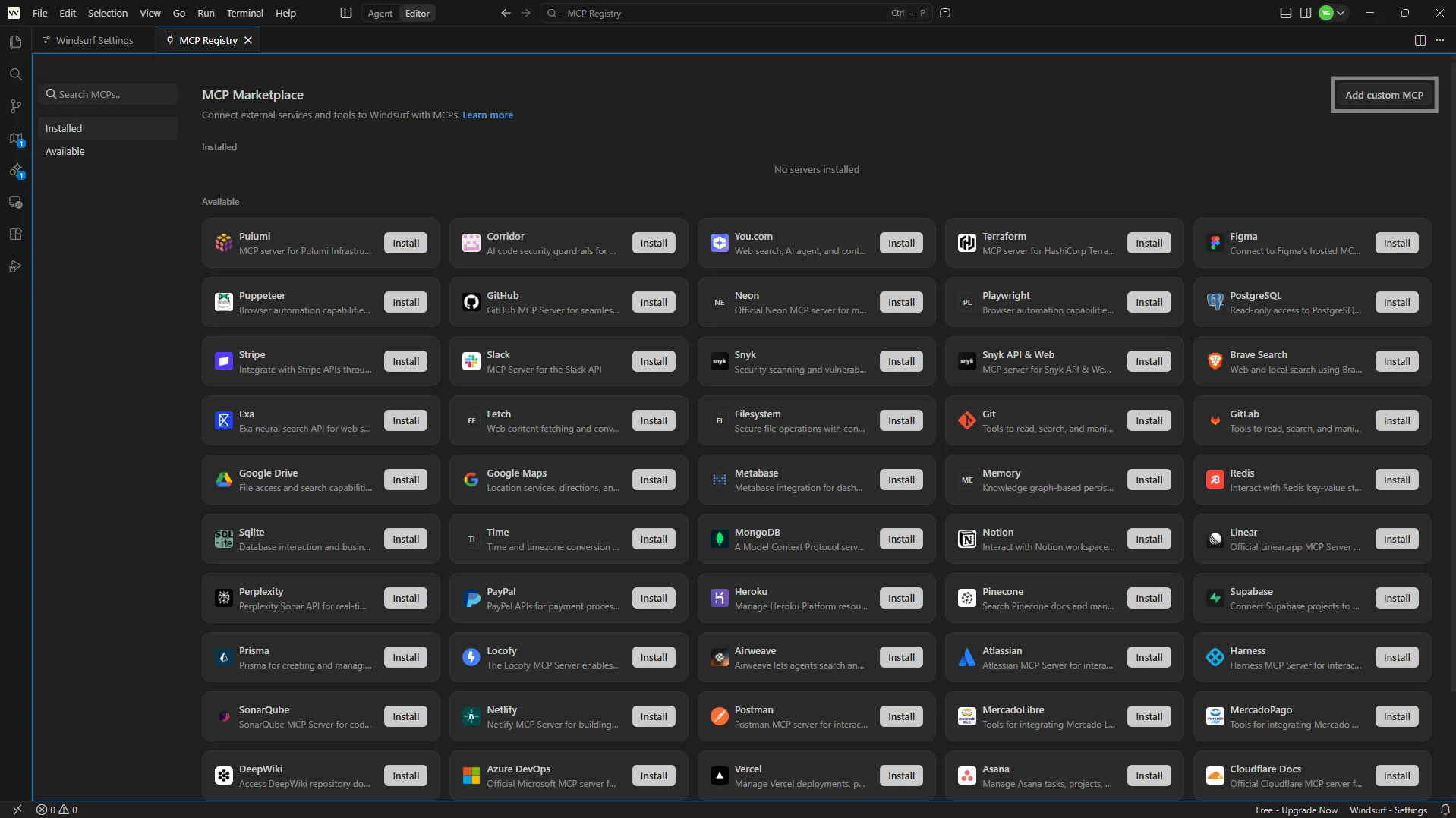
In the MCP Marketplace, click Add custom MCP in the top right
-
This opens the mcp_config.json file. Paste the following JSON:
{
    "mcpServers": {
        "cdata-mcp": {
            "serverUrl": "https://mcp.cloud.cdata.com/mcp",
            "headers": {
                "Authorization": "Basic your_base64_encoded_email_PAT",
                "Content-Type": "application/json"
            }
        }
    }
}
Note: Windsurf will use Basic authentication with Connect AI. Combine your Connect AI user email and the PAT you created earlier in the format email:PAT, base64 encode the combined string, and prefix it with Basic. For example, given [email protected]:ABC123...XYZ789, the Authorization header value becomes something like: Basic dXNlckBkb21haW4uY29tOkFCQzEyMy4uLlhZWjc4OQ==
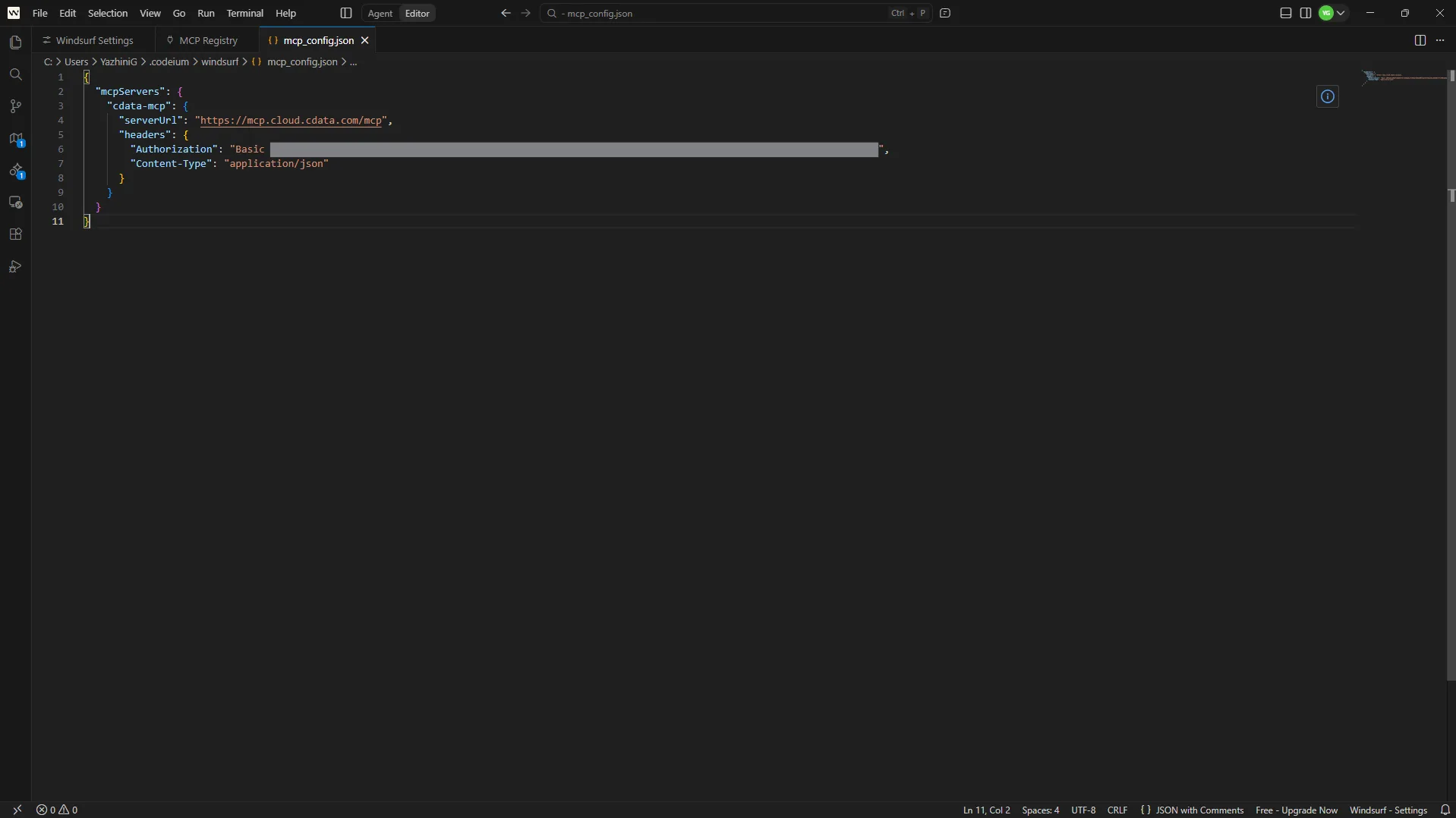
- Save the mcp_config.json file and return to the MCP Registry
-
Under Installed, confirm that cdata-mcp is listed and marked as Enabled
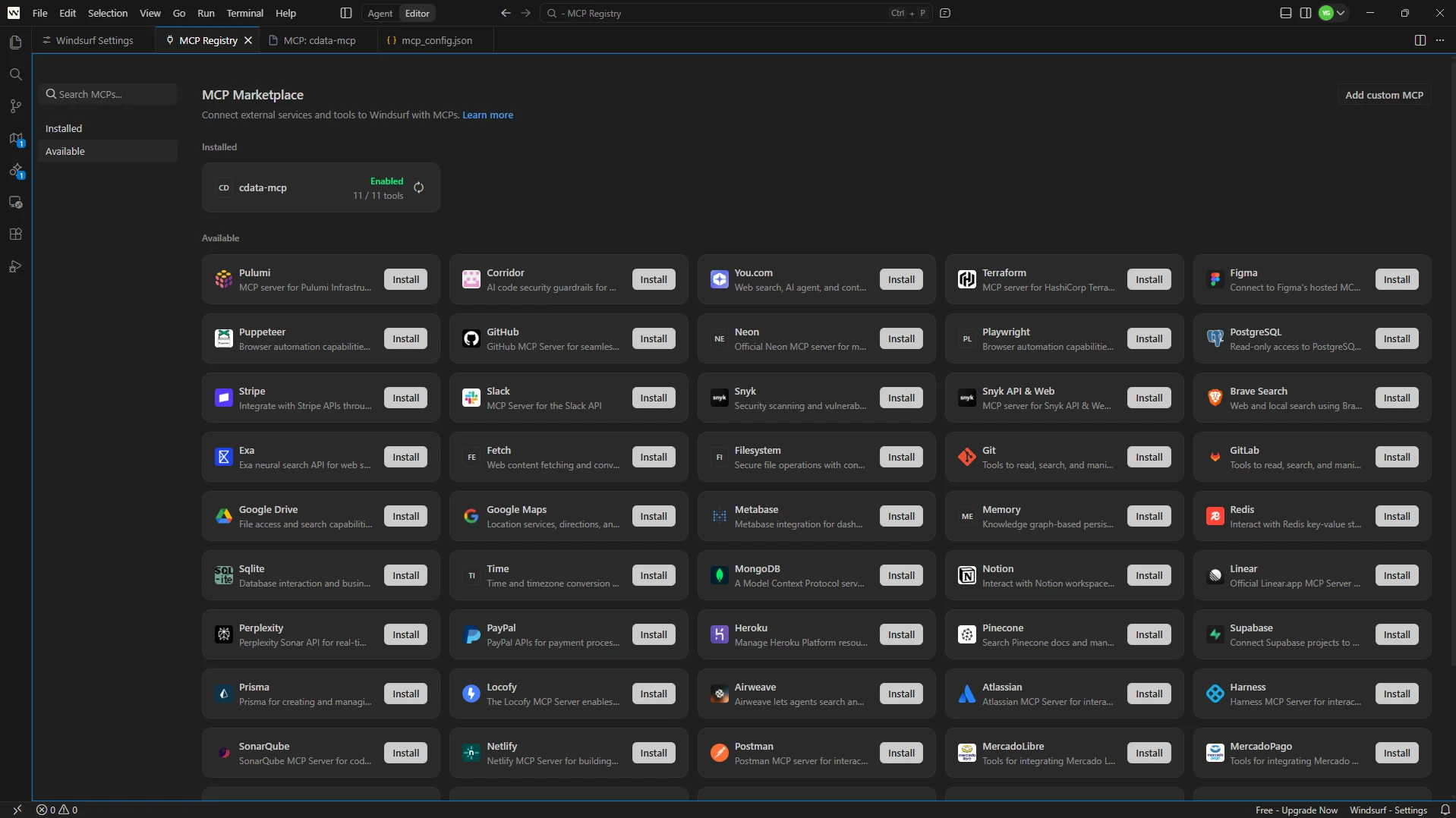
With the MCP server registered and enabled, Windsurf is ready to query live Azure Data Lake Storage data through Connect AI.
Step 3: Query live Azure Data Lake Storage data from Windsurf
With the integration complete, use the Cascade chat panel in Windsurf to interact with live Azure Data Lake Storage data through natural language prompts.
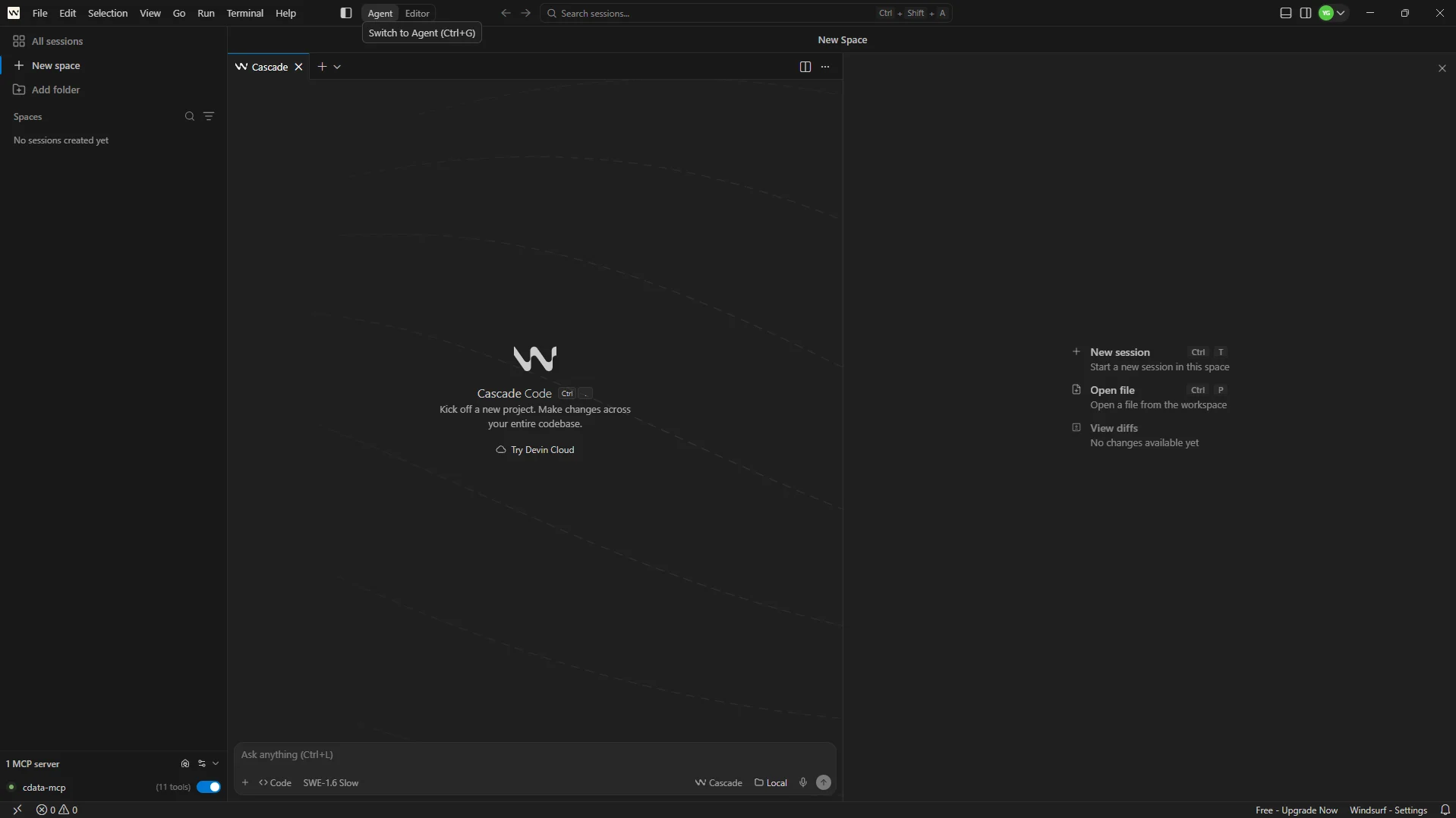
- On the top bar of Windsurf, switch from Editor to Agent to open a new Cascade chat
-
At the bottom of the chat panel, confirm that the cdata-mcp server is listed and the toggle is enabled
-
Start interacting with the agent by entering prompts like:
- List all catalogs in my cdata-mcp connection
- Show the available schemas and tables for Azure Data Lake Storage
- Query the top 5 records from a table in Azure Data Lake Storage data
-
The Cascade agent calls the Connect AI MCP Server and returns live results from Azure Data Lake Storage data
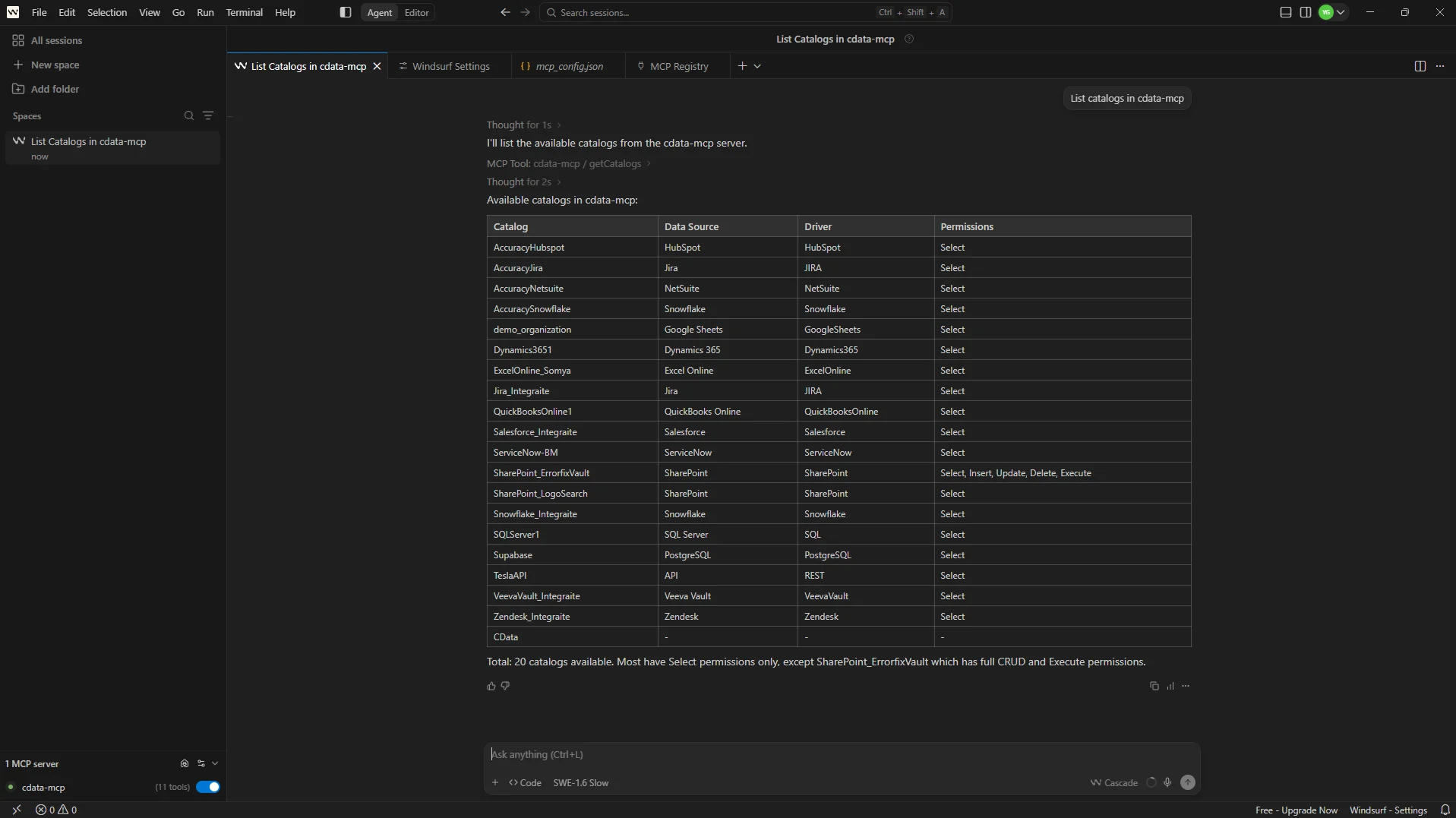
At this point, your Windsurf IDE communicates with the Connect AI MCP Server and retrieves live Azure Data Lake Storage data through remote MCP directly from the editor.
Get CData Connect AI
To access hundreds of SaaS, Big Data, and NoSQL sources directly from your cloud applications, try CData Connect AI today! Download a free 14-day trial of CData Connect AI today, and as always, our Support Team is available to assist you with any questions you may have.