







Visualize Live EnterpriseDB Data in Power BI (via CData Connect AI)

Power BI transforms your company's data into rich visuals for you to collect and organize so you can focus on what matters to you. When paired with CData Connect AI, you get access to EnterpriseDB data for visualizations, dashboards, and more. This article shows how to use CData Connect to create a live connection to EnterpriseDB, connect to EnterpriseDB data from Power BI and then create reports on EnterpriseDB data in Power BI.
Configure EnterpriseDB Connectivity for Power BI
Connectivity to EnterpriseDB from Power BI is made possible through CData Connect AI. To work with EnterpriseDB data from Power BI, we start by creating and configuring a EnterpriseDB connection.
- Log into Connect AI, click Sources, and then click Add Connection
- Select "EnterpriseDB" from the Add Connection panel
-
Enter the necessary authentication properties to connect to EnterpriseDB.
The following connection properties are required in order to connect to data.
- Server: The host name or IP of the server hosting the EnterpriseDB database.
- Port: The port of the server hosting the EnterpriseDB database.
You can also optionally set the following:
- Database: The default database to connect to when connecting to the EnterpriseDB Server. If this is not set, the user's default database will be used.
Connect Using Standard Authentication
To authenticate using standard authentication, set the following:
- User: The user which will be used to authenticate with the EnterpriseDB server.
- Password: The password which will be used to authenticate with the EnterpriseDB server.
Connect Using SSL Authentication
You can leverage SSL authentication to connect to EnterpriseDB data via a secure session. Configure the following connection properties to connect to data:
- SSLClientCert: Set this to the name of the certificate store for the client certificate. Used in the case of 2-way SSL, where truststore and keystore are kept on both the client and server machines.
- SSLClientCertPassword: If a client certificate store is password-protected, set this value to the store's password.
- SSLClientCertSubject: The subject of the TLS/SSL client certificate. Used to locate the certificate in the store.
- SSLClientCertType: The certificate type of the client store.
- SSLServerCert: The certificate to be accepted from the server.

- Click Save & Test
-
Navigate to the Permissions tab in the Add EnterpriseDB Connection page and update the User-based permissions.



With the connection configured, you are ready to connect to EnterpriseDB data from Power BI.
Query EnterpriseDB Tables
Follow the steps below to build a query to pull EnterpriseDB data into the report:
- Open Power BI Desktop and click Get Data -> Online Services -> CData Connect AI and click "Connect"
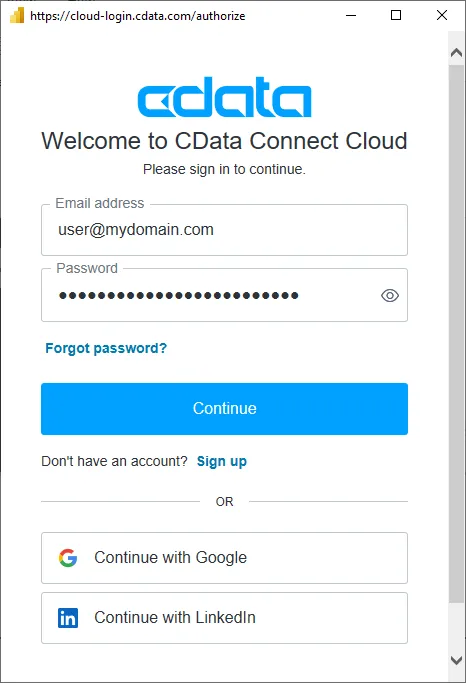
- Click "Sign in" and authenticate with your CData Connect AI account
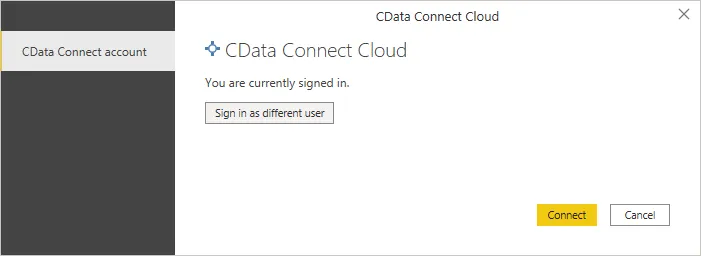
- After signing in, click "Connect"
- Select tables in the Navigator dialog
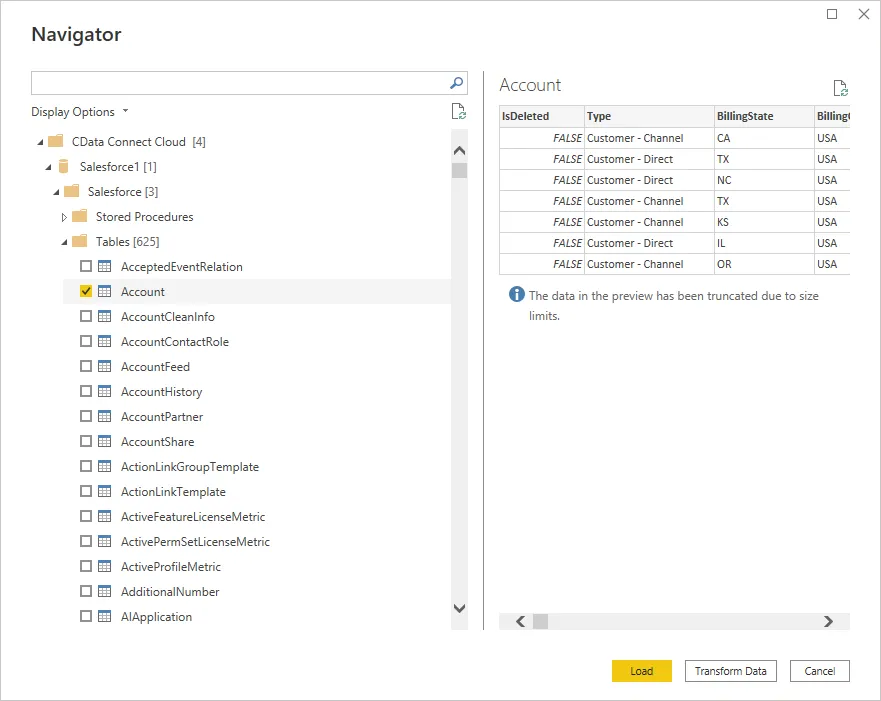
- Click Load to establish the connection to your EnterpriseDB data from Power BI
Create EnterpriseDB Data Visualizations
After connecting to the data into Power BI, you can create data visualizations in the Report view by dragging fields from the Fields pane onto the canvas. Select the dimensions and measures you wish to visualize along with the chart type.
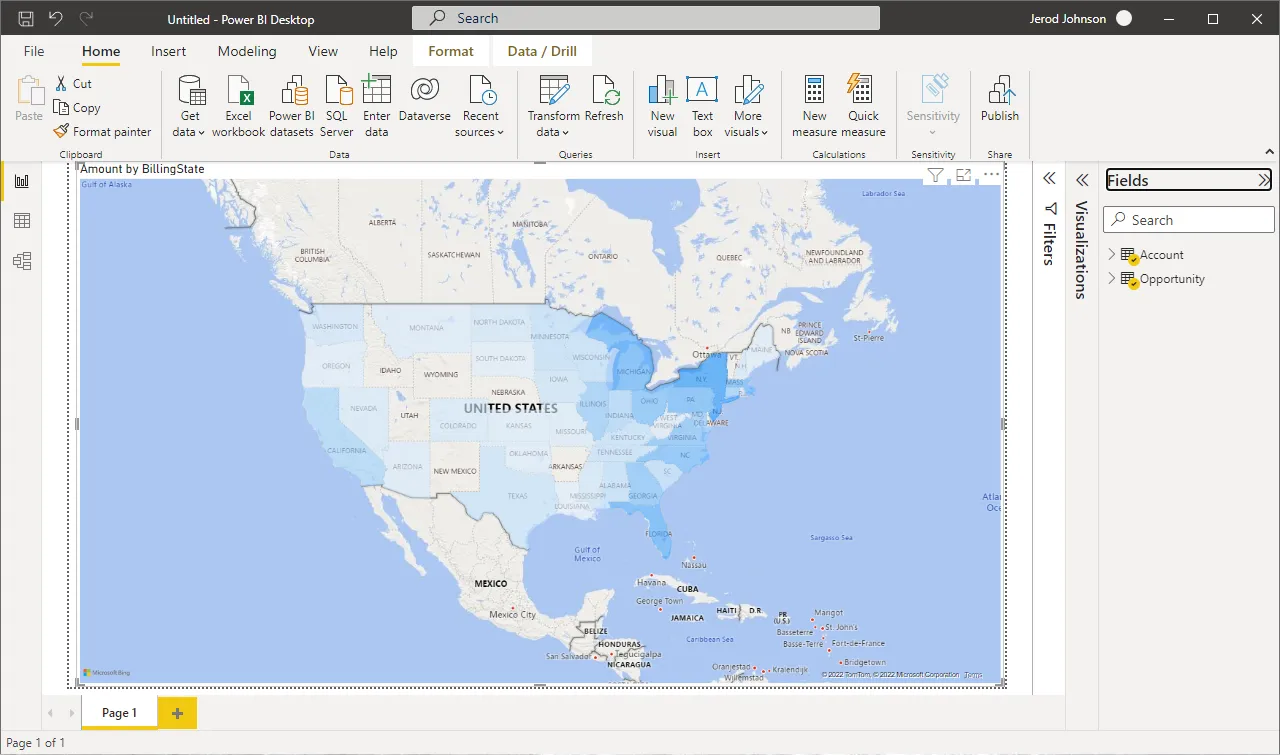
Click Refresh to synchronize your report with any changes to the data.
Live Access to EnterpriseDB Data from Data Applications
With CData Connect AI you have a direct connection to EnterpriseDB data from Power BI. You can import more data, create new visualizations, build reports, and more — all without replicating EnterpriseDB data.
To get SQL data access to hundreds of SaaS, Big Data, and NoSQL sources (including EnterpriseDB) directly from your on-premise BI, reporting, ETL and other data applications, visit the CData Connect AI page and start a free trial.