







How to integrate Metabase with IBM Cloud Object Storage Data

Metabase is an open source data visualization tool that allows users to create interactive dashboards. When paired with CData Connect AI, users can easily create visualizations and dashboards linked to live IBM Cloud Object Storage data. This article describes how to connect to IBM Cloud Object Storage and build a simple visualization using IBM Cloud Object Storage data.
CData Connect provides a pure cloud-to-cloud interface for IBM Cloud Object Storage, allowing you to easily integrate with live IBM Cloud Object Storage data in Metabase — without replicating the data. Connect looks exactly like a SQL Server database to Metabase and uses optimized data processing out of the box to push all supported SQL operations (filters, JOINs, etc) directly to IBM Cloud Object Storage, leveraging server-side processing to quickly return IBM Cloud Object Storage data.
Configure IBM Cloud Object Storage Connectivity for Metabase
Connectivity to IBM Cloud Object Storage from Metabase is made possible through CData Connect AI. To work with IBM Cloud Object Storage data from Metabase, we start by creating and configuring a IBM Cloud Object Storage connection.
- Log into Connect AI, click Sources, and then click Add Connection
- Select "IBM Cloud Object Storage" from the Add Connection panel
-
Enter the necessary authentication properties to connect to IBM Cloud Object Storage.
Register a New Instance of Cloud Object Storage
If you do not already have Cloud Object Storage in your IBM Cloud account, follow the procedure below to install an instance of SQL Query in your account:
- Log in to your IBM Cloud account.
- Navigate to the page, choose a name for your instance and click Create. You will be redirected to the instance of Cloud Object Storage you just created.
Connecting using OAuth Authentication
There are certain connection properties you need to set before you can connect. You can obtain these as follows:
API Key
To connect with IBM Cloud Object Storage, you need an API Key. You can obtain this as follows:
- Log in to your IBM Cloud account.
- Navigate to the Platform API Keys page.
- On the middle-right corner click "Create an IBM Cloud API Key" to create a new API Key.
- In the pop-up window, specify the API Key name and click "Create". Note the API Key as you can never access it again from the dashboard.
Cloud Object Storage CRN
If you have multiple accounts, specify the CloudObjectStorageCRN explicitly. To find the appropriate value, you can:
- Query the Services view. This will list your IBM Cloud Object Storage instances along with the CRN for each.
- Locate the CRN directly in IBM Cloud. To do so, navigate to your IBM Cloud Dashboard. In the Resource List, Under Storage, select your Cloud Object Storage resource to get its CRN.
Connecting to Data
You can now set the following to connect to data:
- InitiateOAuth: Set this to GETANDREFRESH. You can use InitiateOAuth to avoid repeating the OAuth exchange and manually setting the OAuthAccessToken.
- ApiKey: Set this to your API key which was noted during setup.
- CloudObjectStorageCRN (Optional): Set this to the cloud object storage CRN you want to work with. While the connector attempts to retrieve this automatically, specifying this explicitly is recommended if you have more than Cloud Object Storage account.
When you connect, the connector completes the OAuth process.
- Extracts the access token and authenticates requests.
- Saves OAuth values in OAuthSettingsLocation to be persisted across connections.

- Click Save & Test
-
Navigate to the Permissions tab in the Add IBM Cloud Object Storage Connection page and update the User-based permissions.



Add a Personal Access Token
When connecting to Connect AI through the REST API, the OData API, or the Virtual SQL Server, a Personal Access Token (PAT) is used to authenticate the connection to Connect AI. It is best practice to create a separate PAT for each service to maintain granularity of access.
- Click on the Gear icon () at the top right of the Connect AI app to open the settings page.
- On the Settings page, go to the Access Tokens section and click Create PAT.
-
Give the PAT a name and click Create.

- The personal access token is only visible at creation, so be sure to copy it and store it securely for future use.
With the connection configured and a PAT generated, you are ready to connect to IBM Cloud Object Storage data from Metabase.
Connect to CData Connect AI from Metabase
After creating the connection in Connect AI, navigate to your Metabase instance. Use the SQL Server interface to connect to Connect AI.
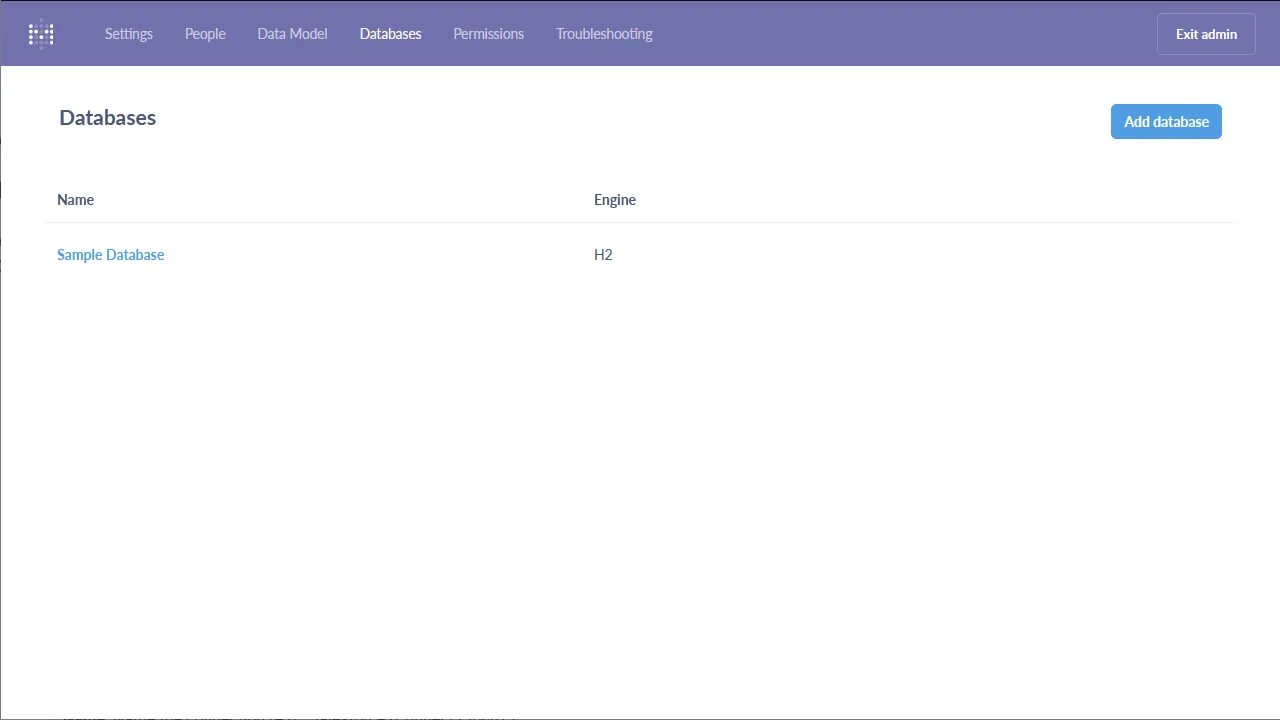
- Navigate to the administration screen (Settings -> Admin) and click "Add Database" from the "Databases" tab
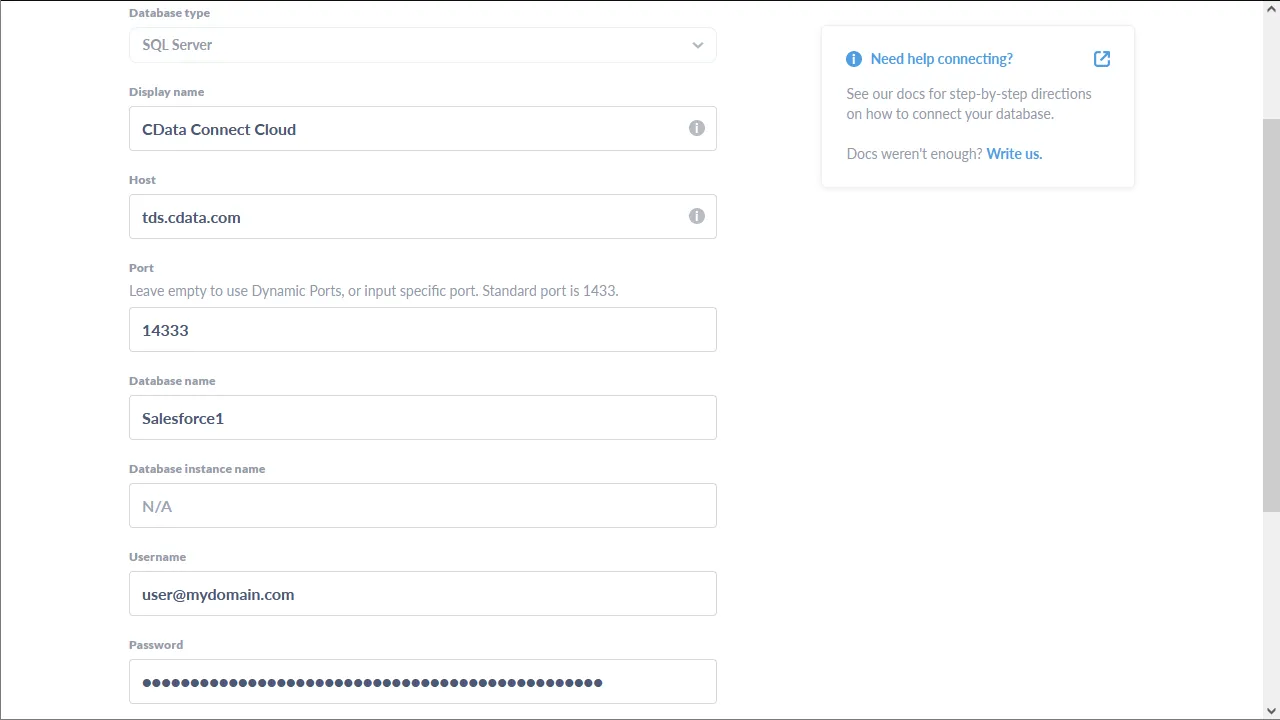
- Configure the connection to Connect AI and click "Save"
- Database type: Select "SQL Server"
- Name: Name the connection (e.g. "IBM Cloud Object Storage (Connect AI)")
- Host: tds.cdata.com
- Port: 14333
- Database name: The name of the connection you just created (e.g. IBMCloudObjectStorage1)
- Username: A Connect AI username (e.g. [email protected])
- Password: The PAT previously created
- Click to Use a secure connection (SSL)
Execute IBM Cloud Object Storage Data with Metabase
Once you configure the connection to Connect AI, you can query IBM Cloud Object Storage and build visualizations.
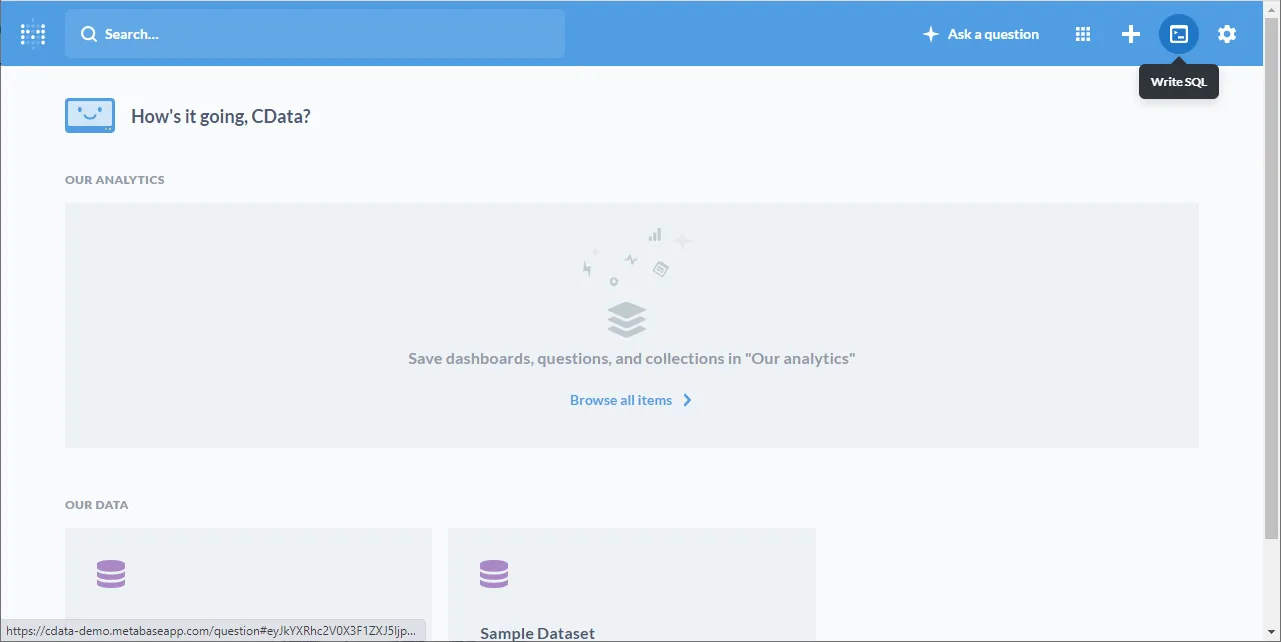
- Use the "Write SQL" tool to retrieve the IBM Cloud Object Storage data
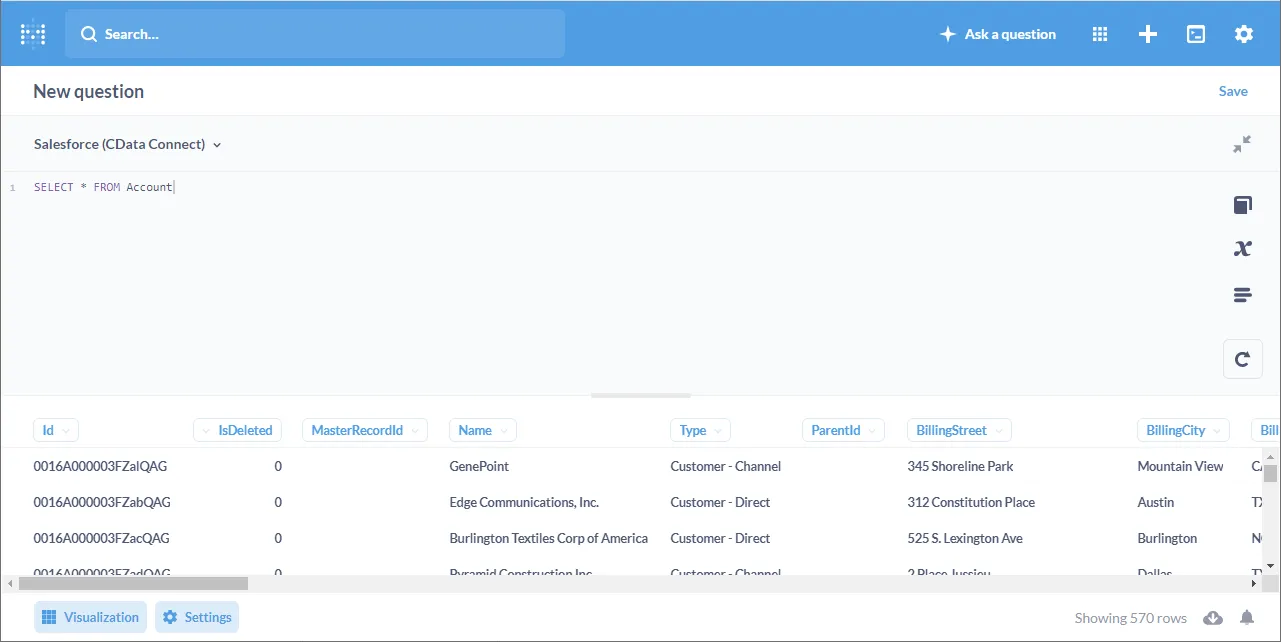
- Write a SQL query based on the IBM Cloud Object Storage connection in CData Connect AI, e.g.
SELECT Key, Etag FROM Objects WHERE Bucket = 'someBucket'
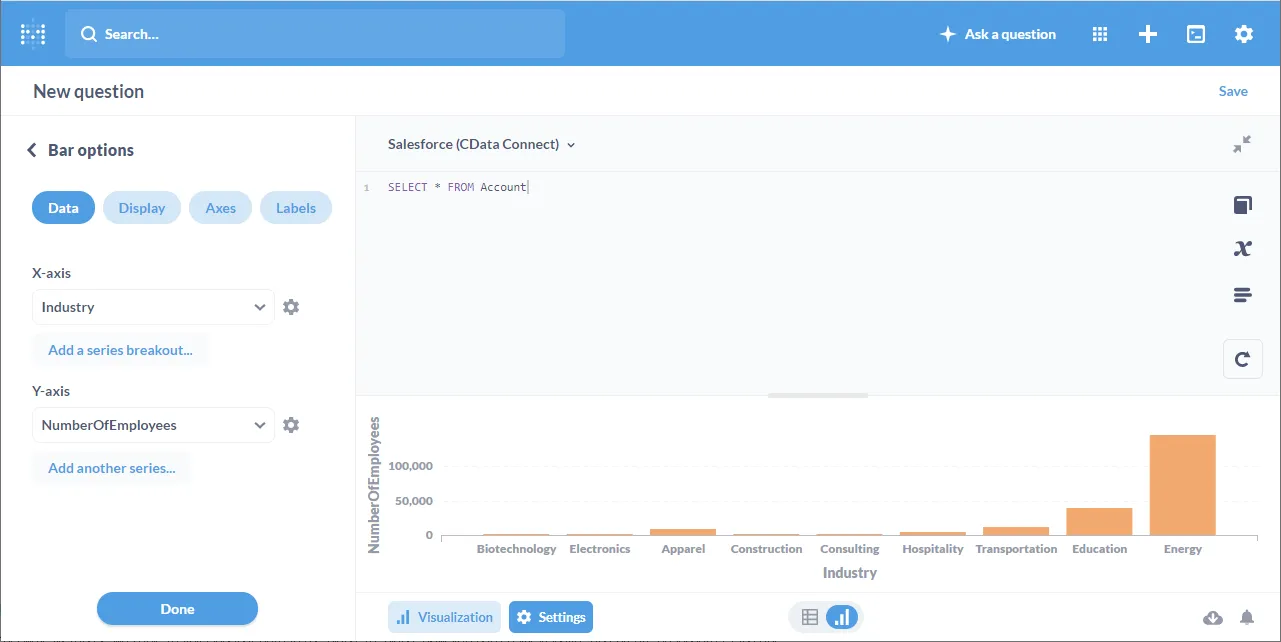
- Navigate to the "Visualization" screen, choose a visualization, and configure the visualization
More Information & Free Trial
At this point, you have built a simple visualization from IBM Cloud Object Storage data in Metabase. You can continue to work with live IBM Cloud Object Storage data in Metabase just like you would any SQL Server database. For more information on creating a live connection to IBM Cloud Object Storage (and more than 100 other data sources), visit the Connect AI page. Sign up for a free trial and start working with live IBM Cloud Object Storage data in Metabase today.