







Connect to Live Klaviyo Data in PostGresSQL Interface through CData Connect AI

There are a vast number of PostgreSQL clients available on the Internet. PostgreSQL is a popular interface for data access. When you pair PostgreSQL with CData Connect AI, you gain database-like access to live Klaviyo data from PostgreSQL. In this article, we walk through the process of connecting to Klaviyo data in Connect AI and establishing a connection between Connect AI and PostgreSQL using a TDS foreign data wrapper (FDW).
CData Connect AI provides a pure SQL Server interface for Klaviyo, allowing you to query data from Klaviyo without replicating the data to a natively supported database. Using optimized data processing out of the box, CData Connect AI pushes all supported SQL operations (filters, JOINs, etc.) directly to Klaviyo, leveraging server-side processing to return the requested Klaviyo data quickly.
Connect to Klaviyo in Connect AI
CData Connect AI uses a straightforward, point-and-click interface to connect to data sources.
- Log into Connect AI, click Sources, and then click Add Connection
- Select "Klaviyo" from the Add Connection panel
-
Enter the necessary authentication properties to connect to Klaviyo.
To authenticate to Klaviyo, provide an API Key. You can generate or view your API keys under 'My Account'
- Navigate to 'Settings' > 'API Keys'
- Click 'Create API Key'.
- Name your API key and choose the desired scopes.
To connect in your CData solutions, set API Key to your Klaviyo API key.
If you wish to use OAuth authentication, refer to the Help documenation.

- Click Save & Test
-
Navigate to the Permissions tab in the Add Klaviyo Connection page and update the User-based permissions.



Add a Personal Access Token
When connecting to Connect AI through the REST API, the OData API, or the Virtual SQL Server, a Personal Access Token (PAT) is used to authenticate the connection to Connect AI. It is best practice to create a separate PAT for each service to maintain granularity of access.
- Click on the Gear icon () at the top right of the Connect AI app to open the settings page.
- On the Settings page, go to the Access Tokens section and click Create PAT.
-
Give the PAT a name and click Create.
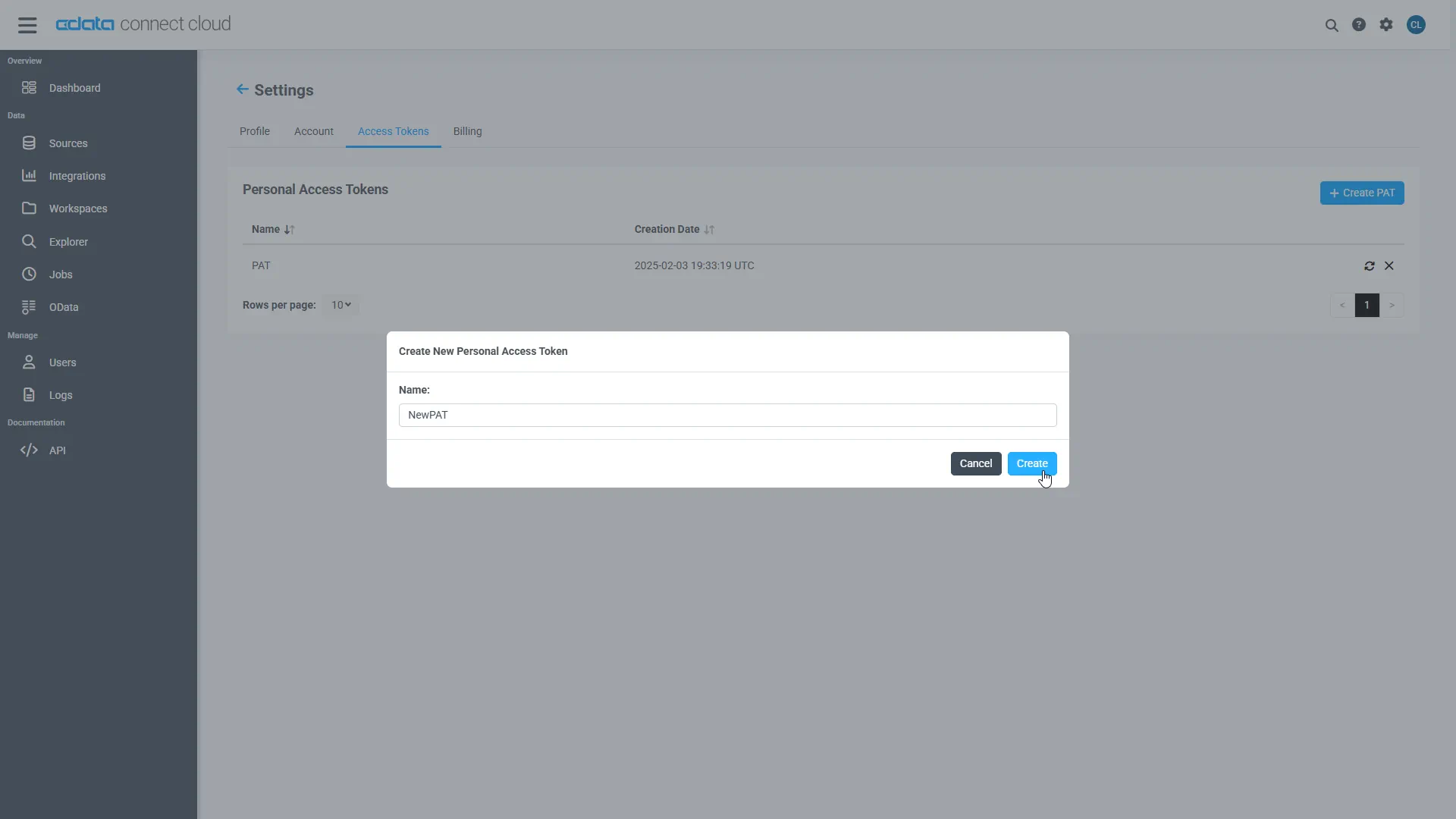
- The personal access token is only visible at creation, so be sure to copy it and store it securely for future use.
With the connection configured and a PAT generated, you are ready to connect to Klaviyo data from PostgreSQL.
Build the TDS Foreign Data Wrapper
The Foreign Data Wrapper can be installed as an extension to PostgreSQL, without recompiling PostgreSQL. The tds_fdw extension is used as an example (https://github.com/tds-fdw/tds_fdw).
- You can clone and build the git repository via something like the following view source:
sudo apt-get install git
git clone https://github.com/tds-fdw/tds_fdw.git
cd tds_fdw
make USE_PGXS=1
sudo make USE_PGXS=1 install
Note: If you have several PostgreSQL versions and you do not want to build for the default one, first locate where the binary for pg_config is, take note of the full path, and then append PG_CONFIG=after USE_PGXS=1 at the make commands. - After you finish the installation, then start the server:
sudo service postgresql start
- Then go inside the Postgres database
psql -h localhost -U postgres -d postgres
Note: Instead of localhost you can put the IP where your PostgreSQL is hosted.
Connect to Klaviyo data as a PostgreSQL Database and query the data!
After you have installed the extension, follow the steps below to start executing queries to Klaviyo data:
- Log into your database.
- Load the extension for the database:
CREATE EXTENSION tds_fdw;
- Create a server object for Klaviyo data:
CREATE SERVER "Klaviyo1" FOREIGN DATA WRAPPER tds_fdw OPTIONS (servername'tds.cdata.com', port '14333', database 'Klaviyo1');
- Configure user mapping with your email and Personal Access Token from your Connect AI account:
CREATE USER MAPPING for postgres SERVER "Klaviyo1" OPTIONS (username '[email protected]', password 'your_personal_access_token' );
- Create the local schema:
CREATE SCHEMA "Klaviyo1";
- Create a foreign table in your local database:
#Using a table_name definition:

CREATE FOREIGN TABLE "Klaviyo1".Campaigns  (
id varchar,
Name varchar)
SERVER "Klaviyo1"
OPTIONS(table_name 'Klaviyo.Campaigns', row_estimate_method 'showplan_all');

#Or using a schema_name and table_name definition:

CREATE FOREIGN TABLE "Klaviyo1".Campaigns (
id varchar,
Name varchar)
SERVER "Klaviyo1"
OPTIONS (schema_name 'Klaviyo', table_name 'Campaigns', row_estimate_method 'showplan_all');

#Or using a query definition:

CREATE FOREIGN TABLE  "Klaviyo1".Campaigns (
id varchar,
Name varchar)
SERVER "Klaviyo1"
OPTIONS (query 'SELECT * FROM Klaviyo.Campaigns', row_estimate_method 'showplan_all');

#Or setting a remote column name:

CREATE FOREIGN TABLE "Klaviyo1".Campaigns (
id varchar,
col2 varchar OPTIONS (column_name 'Name'))
SERVER "Klaviyo1"
OPTIONS (schema_name 'Klaviyo', table_name 'Campaigns', row_estimate_method 'showplan_all');
- You can now execute read/write commands to Klaviyo:
SELECT id, Name
FROM "Klaviyo1".Campaigns;
More Information & Free Trial
Now, you have created a simple query from live Klaviyo data. For more information on connecting to Klaviyo (and more than 200 other data sources), visit the Connect AI page. Sign up for a free trial and start working with live Klaviyo data in PostgreSQL.