







Import Okta Data Using Azure Data Factory

Microsoft Azure Data Factory (ADF) is a completely managed, serverless data integration service. When combined with CData Connect AI, ADF enables immediate cloud-to-cloud access to Okta data within data flows. This article outlines the process of connecting to Okta through Connect AI and accessing Okta data within ADF.
CData Connect AI offers a cloud-to-cloud interface tailored for Okta, granting you the ability to access live data from Okta data within Azure Data Factory without the need for data replication to a natively supported database. Equipped with optimized data processing capabilities by default, CData Connect AI seamlessly channels all supported SQL operations, including filters and JOINs, directly to Okta. This harnesses server-side processing to expedite the retrieval of the desired Okta data.
Configure Okta Connectivity for ADF
Connectivity to Okta from Azure Data Factory is made possible through CData Connect AI. To work with Okta data from Azure Data Factory, we start by creating and configuring a Okta connection.
CData Connect AI uses a straightforward, point-and-click interface to connect to data sources.
- Log into Connect AI, click Sources, and then click Add Connection
- Select "Okta" from the Add Connection panel
-
Enter the necessary authentication properties to connect to Okta.
To connect to Okta, set the Domain connection string property to your Okta domain.
You will use OAuth to authenticate with Okta, so you need to create a custom OAuth application.
Creating a Custom OAuth Application
From your Okta account:
- Sign in to your Okta developer edition organization with your administrator account.
- In the Admin Console, go to Applications > Applications.
- Click Create App Integration.
- For the Sign-in method, select OIDC - OpenID Connect.
- For Application type, choose Web Application.
- Enter a name for your custom application.
- Set the Grant Type to Authorization Code. If you want the token to be automatically refreshed, also check Refresh Token.
- Set the callback URL:
- For desktop applications and headless machines, use http://localhost:33333 or another port number of your choice. The URI you set here becomes the CallbackURL property.
- For web applications, set the callback URL to a trusted redirect URL. This URL is the web location the user returns to with the token that verifies that your application has been granted access.
- In the Assignments section, either select Limit access to selected groups and add a group, or skip group assignment for now.
- Save the OAuth application.
- The application's Client Id and Client Secret are displayed on the application's General tab. Record these for future use. You will use the Client Id to set the OAuthClientId and the Client Secret to set the OAuthClientSecret.
- Check the Assignments tab to confirm that all users who must access the application are assigned to the application.
- On the Okta API Scopes tab, select the scopes you wish to grant to the OAuth application. These scopes determine the data that the app has permission to read, so a scope for a particular view must be granted for the driver to have permission to query that view. To confirm the scopes required for each view, see the view-specific pages in Data Model < Views in the Help documentation.

- Click Save & Test
-
Navigate to the Permissions tab in the Add Okta Connection page and update the User-based permissions.



Add a Personal Access Token
When connecting to Connect AI through the REST API, the OData API, or the Virtual SQL Server, a Personal Access Token (PAT) is used to authenticate the connection to Connect AI. It is best practice to create a separate PAT for each service to maintain granularity of access.
- Click on the Gear icon () at the top right of the Connect AI app to open the settings page.
- On the Settings page, go to the Access Tokens section and click Create PAT.
-
Give the PAT a name and click Create.

- The personal access token is only visible at creation, so be sure to copy it and store it securely for future use.
With the connection configured and a PAT generated, you are ready to connect to Okta data from Azure Data Factory.
Access Live Okta Data in Azure Data Factory
To establish a connection from Azure Data Factory to the CData Connect AI Virtual SQL Server API, follow these steps.
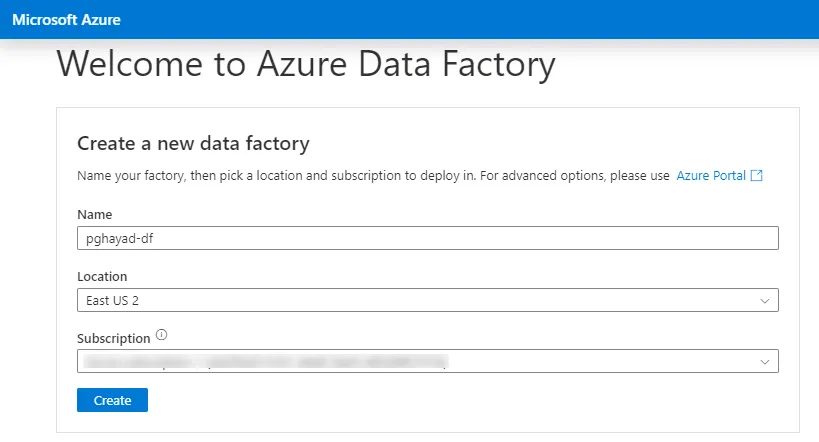
- Login to Azure Data Factory.
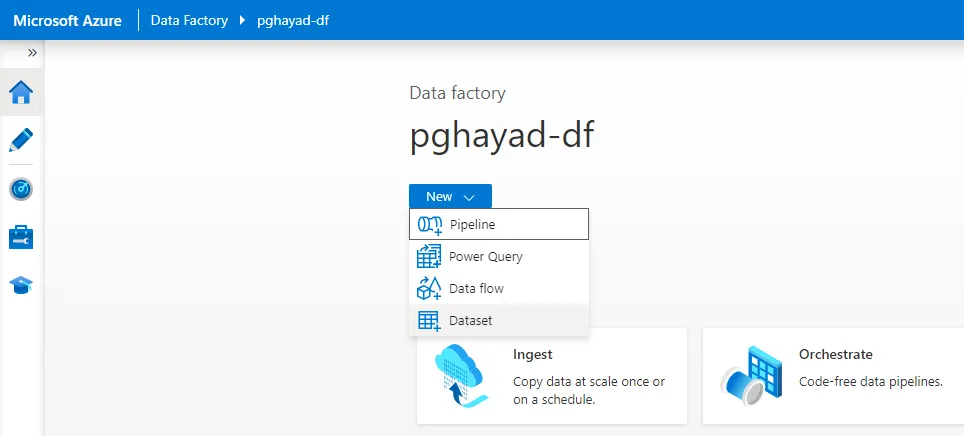
- If you have not yet created a Data Factory, Click New -> Dataset.
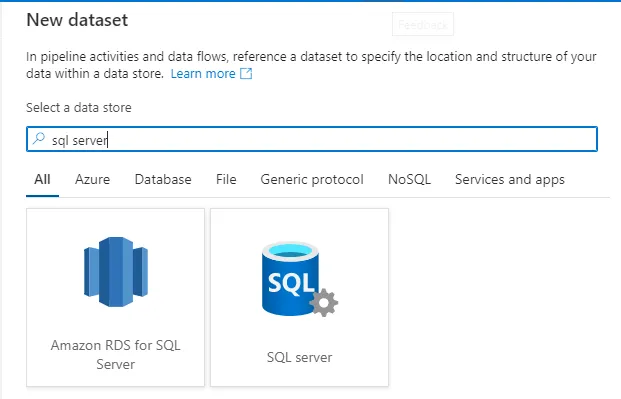
- In the search bar, enter SQL Server and select it when it appears. On the following screen, enter a name for the server. In the Linked service field, select New.
-
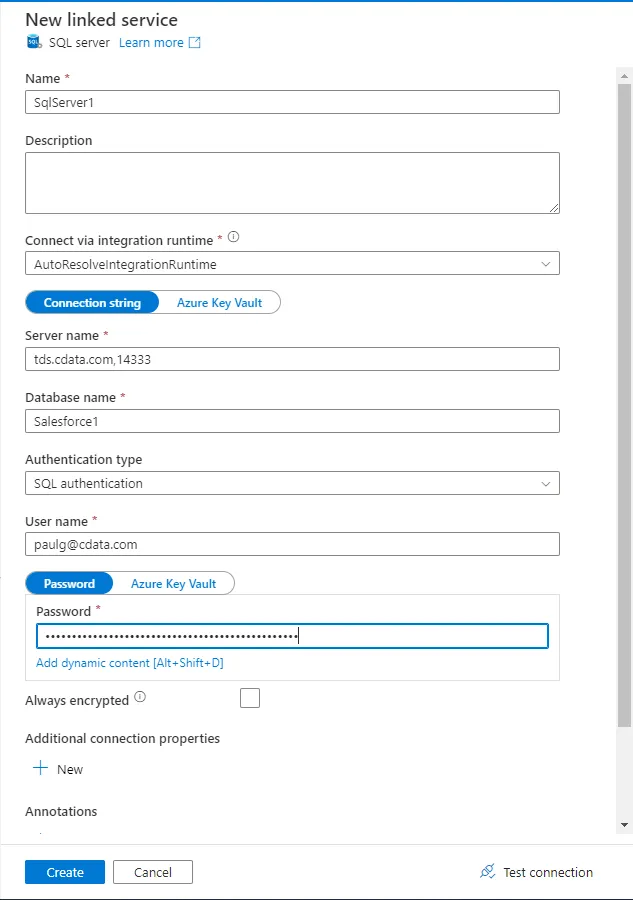
Enter the connection settings.
- Name - enter a name of your choice.
- Server name - enter the Virtual SQL Server endpoint and port separated by a comma: tds.cdata.com,14333
- Database name - enter the Connection Name of the CData Connect AI data source you want to connect to (for example, Okta1).
- User Name - enter your CData Connect AI username. This is displayed in the top-right corner of the CData Connect AI interface. For example, [email protected].
- Password - select Password (not Azure Key Vault) and enter the PAT you generated on the Settings page.
- Click Create.
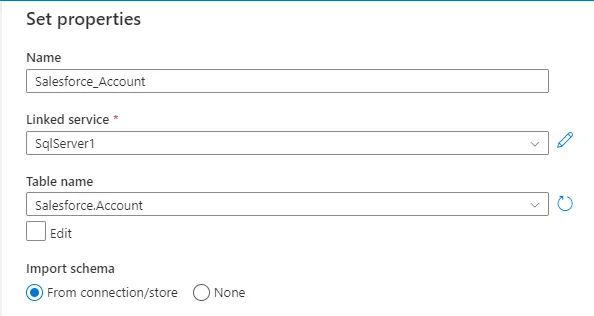
- In Set properties, set the Name, choose the Linked service we just created, select a Table name from those available, and Import schema from connection/store. Click OK.
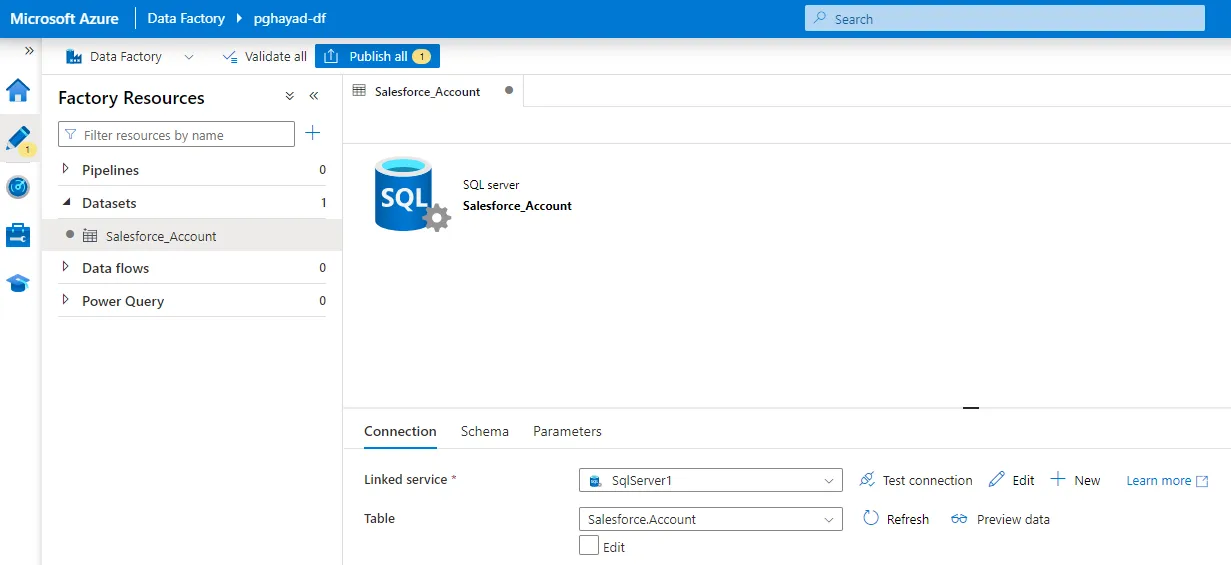
- After creating the linked service, the following screen should appear:
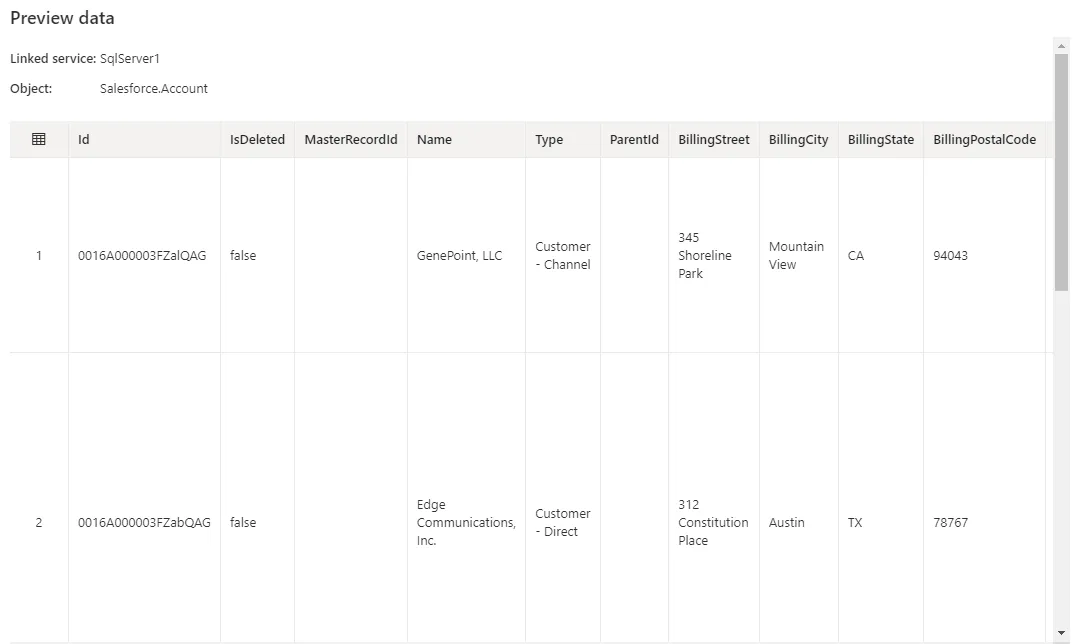
- Click preview data to see the imported Okta table.
 You can now use this dataset when creating data flows in Azure Data Factory.
Get CData Connect AI
To get live data access to hundreds of SaaS, Big Data, and NoSQL sources directly from your cloud applications, try CData Connect AI today!