







Build Apps with Live SQL Analysis Services data in Adalo using CData Connect AI

Adalo is a no-code platform used to build custom mobile and web applications without needing programming skills. It allows users to design interfaces, manage databases, and integrate functionality through simple drag-and-drop tools, making app development accessible and efficient. When combined with CData Connect AI, it provides access to SQL Analysis Services data to build custom applications and more.
This article explains how to use CData Connect AI to create a live connection to SQL Analysis Services and how to connect and access live SQL Analysis Services data from the Adalo platform.
Configure SQL Analysis Services connectivity for Adalo in CData Connect AI
To work with SQL Analysis Services data in Adalo, we need to connect to SQL Analysis Services from Connect AI, provide user access to the connection, and create OData endpoints for the SQL Analysis Services data.
Connect to SQL Analysis Services from Connect AI
CData Connect AI uses a straightforward, point-and-click interface to connect to data sources.
- Log into Connect AI, click Sources, and then click Add Connection
- Select "SQL Analysis Services" from the Add Connection panel
-
Enter the necessary authentication properties to connect to SQL Analysis Services.
To connect, provide authentication and set the Url property to a valid SQL Server Analysis Services endpoint. You can connect to SQL Server Analysis Services instances hosted over HTTP with XMLA access. See the Microsoft documentation to configure HTTP access to SQL Server Analysis Services.
To secure connections and authenticate, set the corresponding connection properties, below. The data provider supports the major authentication schemes, including HTTP and Windows, as well as SSL/TLS.
-
HTTP Authentication
Set AuthScheme to "Basic" or "Digest" and set User and Password. Specify other authentication values in CustomHeaders.
-
Windows (NTLM)
Set the Windows User and Password and set AuthScheme to "NTLM".
-
Kerberos and Kerberos Delegation
To authenticate with Kerberos, set AuthScheme to NEGOTIATE. To use Kerberos delegation, set AuthScheme to KERBEROSDELEGATION. If needed, provide the User, Password, and KerberosSPN. By default, the data provider attempts to communicate with the SPN at the specified Url.
-
SSL/TLS:
By default, the data provider attempts to negotiate SSL/TLS by checking the server's certificate against the system's trusted certificate store. To specify another certificate, see the SSLServerCert property for the available formats.
You can then access any cube as a relational table: When you connect the data provider retrieves SSAS metadata and dynamically updates the table schemas. Instead of retrieving metadata every connection, you can set the CacheLocation property to automatically cache to a simple file-based store.
See the Getting Started section of the CData documentation, under Retrieving Analysis Services Data, to execute SQL-92 queries to the cubes.

-
HTTP Authentication
- Click Save & Test
-
Navigate to the Permissions tab in the Add SQL Analysis Services Connection page and update the User-based permissions.



Add a Personal Access Token
When connecting to Connect AI through the REST API, Workspaces, or the Virtual SQL Server, a Personal Access Token (PAT) is used to authenticate the connection to Connect AI. It is best practice to create a separate PAT for each service to maintain granularity of access.
- Click on the Gear icon () at the top right of the Connect AI app to open the settings page.
- On the Settings page, go to the Access Tokens section and click Create PAT.
-
Give the PAT a name and click Create.

- The personal access token is only visible at creation, so be sure to copy it and store it securely for future use.
Configure SQL Analysis Services Endpoints for Adalo
After connecting to SQL Analysis Services, create a workspace for your desired table(s).
-
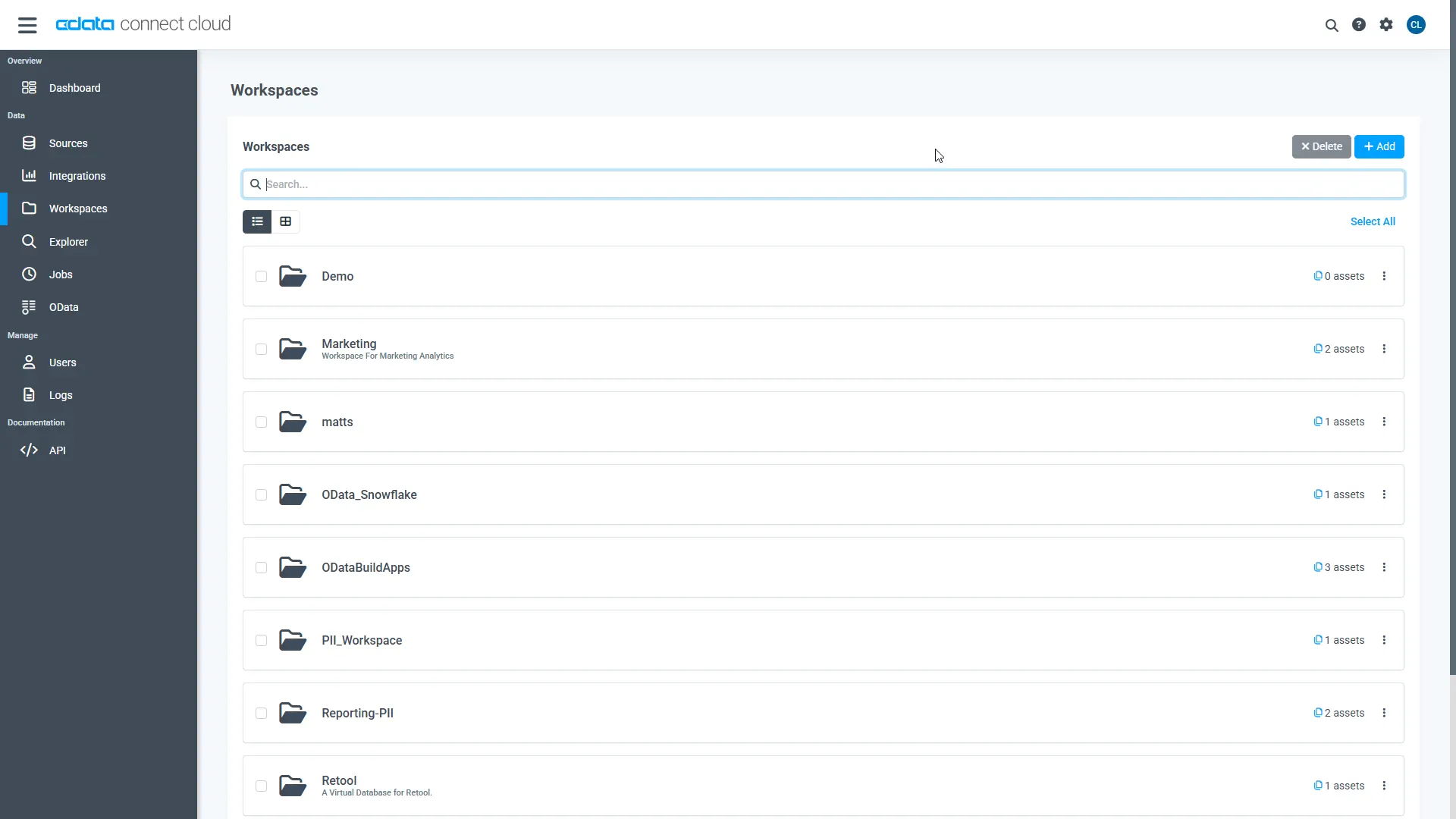
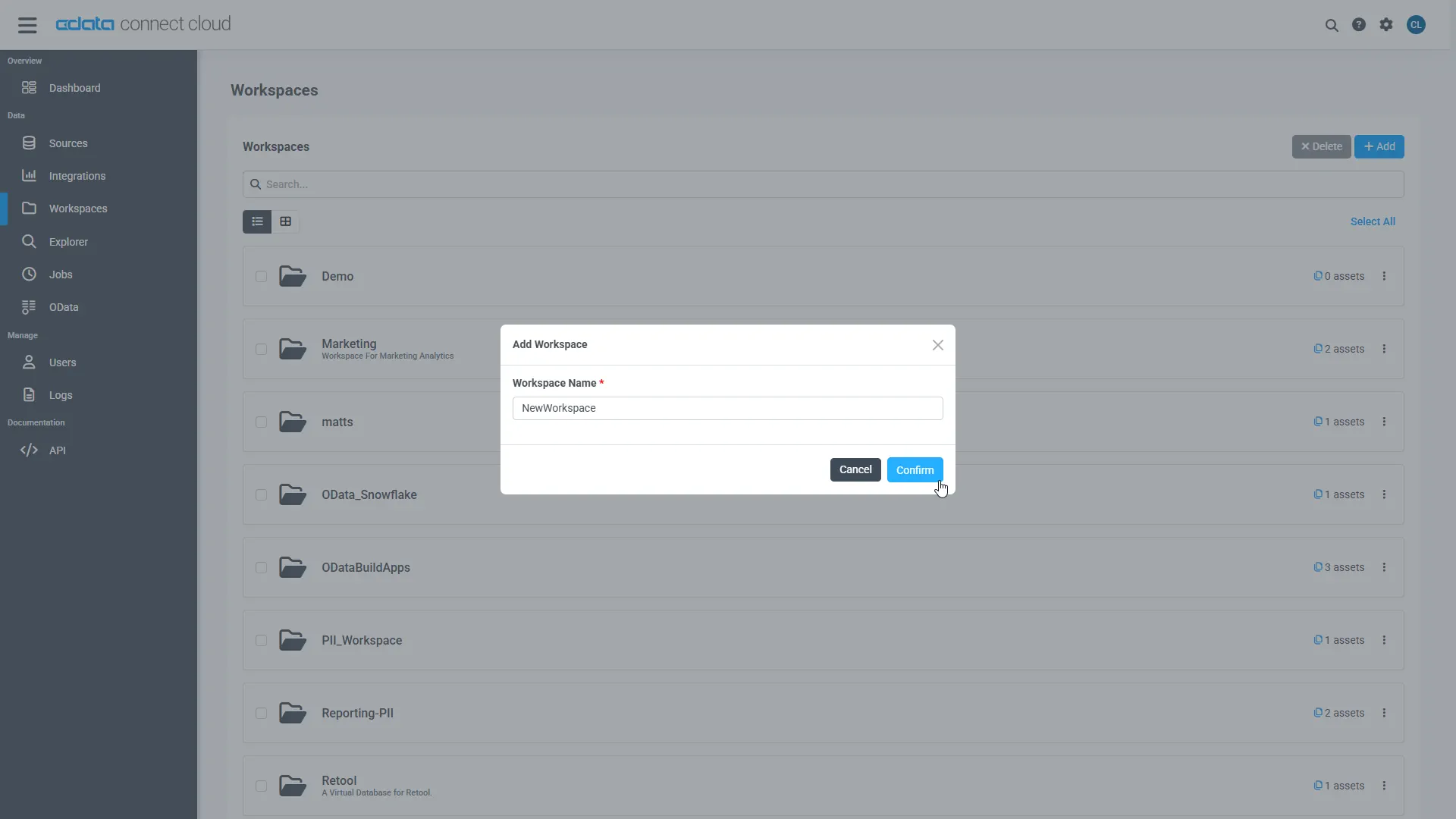
Navigate to the Workspaces page and click Add to create a new Workspace (or select an existing workspace).
- Click Add to add new assets to the Workspace.
-
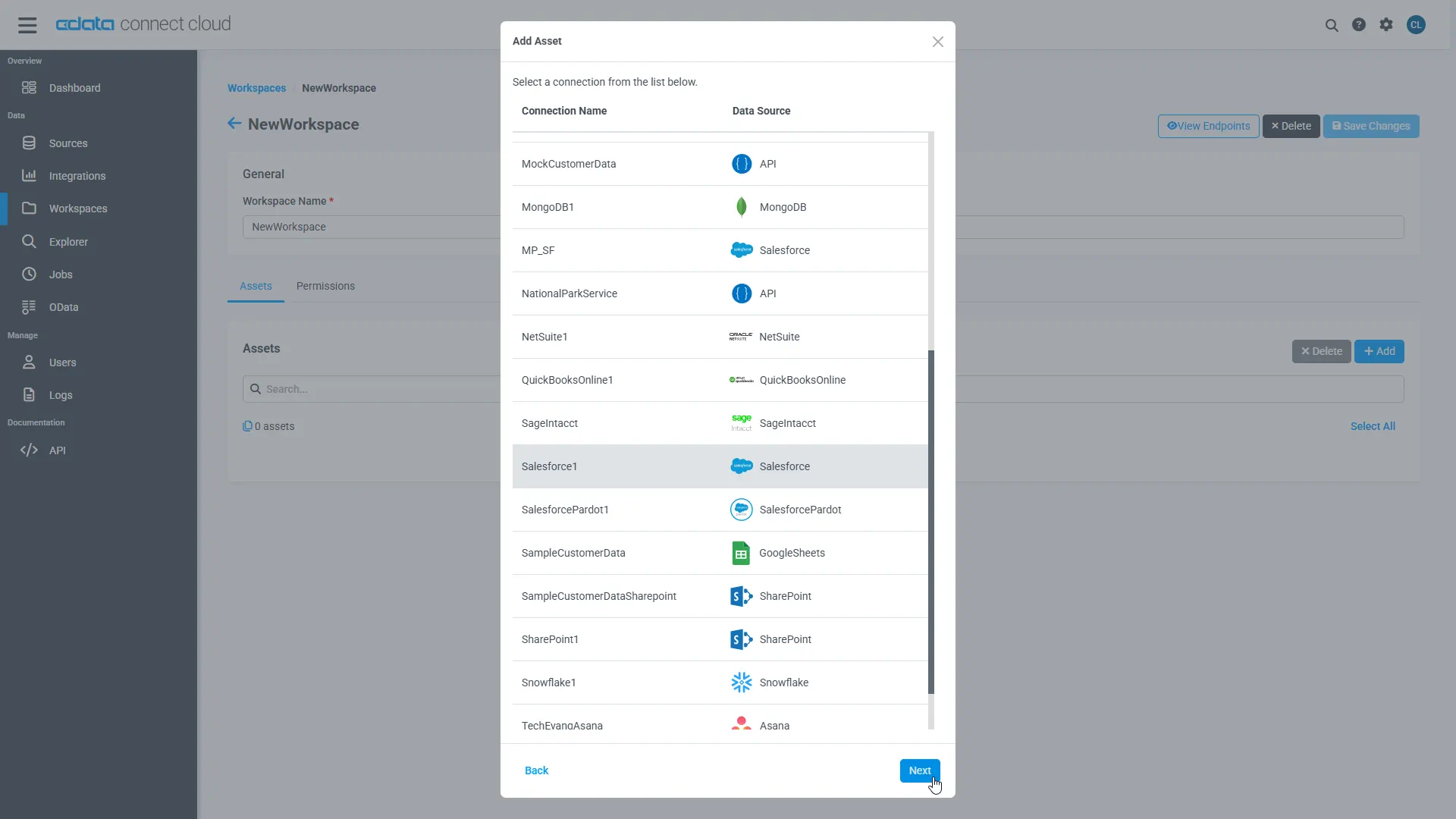
Select the SQL Analysis Services connection (e.g. SSAS1) and click Next.
-
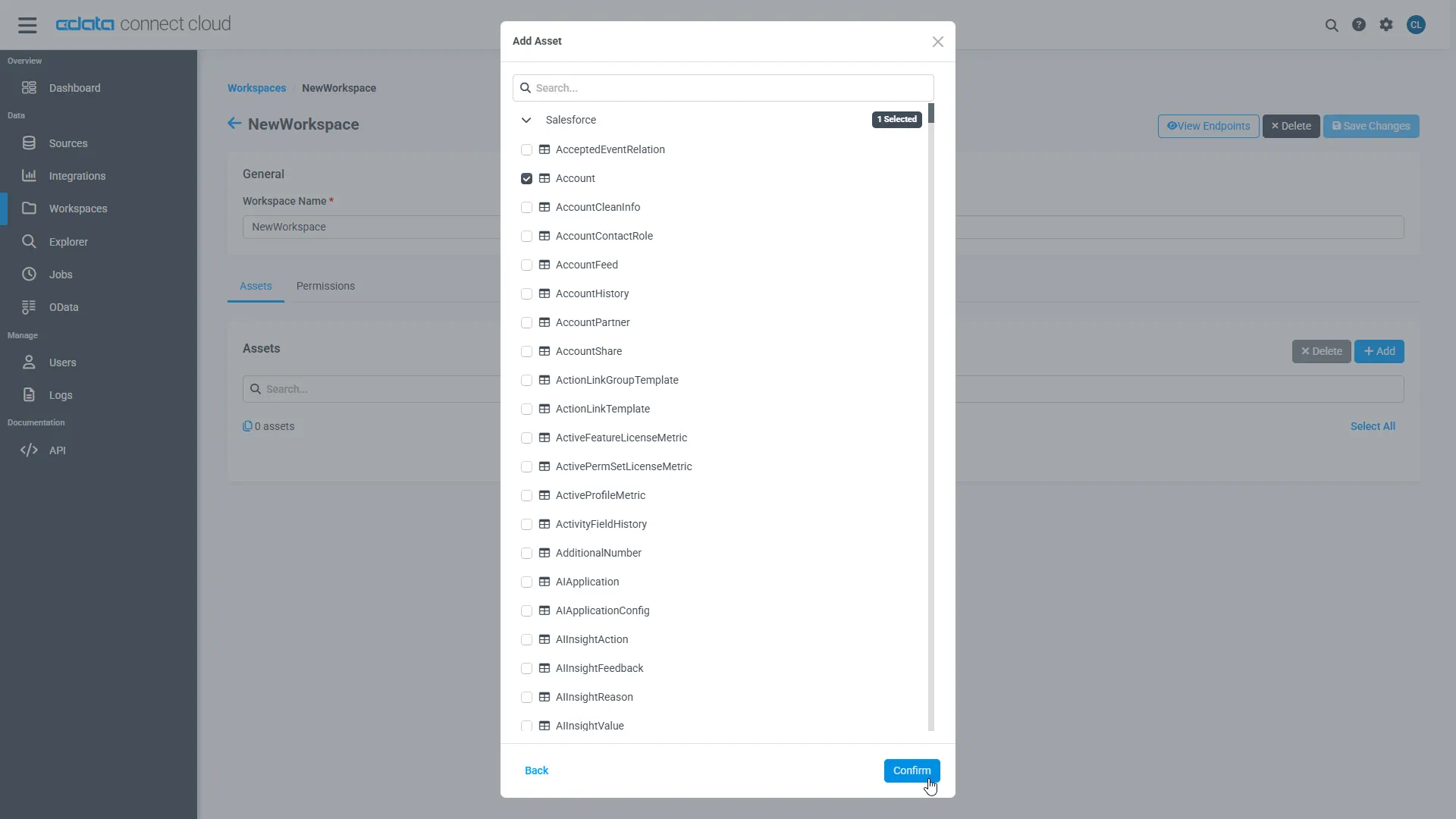
Select the table(s) you wish to work with and click Confirm.
- Make note of the OData Service URL for your workspace, e.g. https://cloud.cdata.com/api/odata/{workspace_name}
With the connection, PAT, and Workspace configured, you are ready to connect to SQL Analysis Services data from Adalo.
Build a custom app with Adalo
After configuring CData Connect AI, you can begin developing the Adalo app using SQL Analysis Services data.
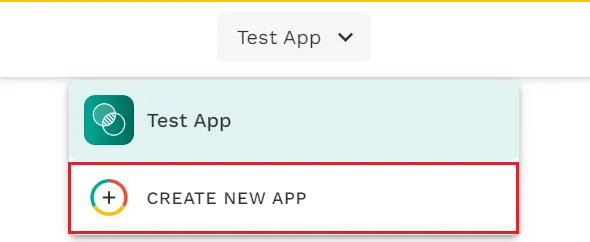
- Click on CREATE NEW APP.
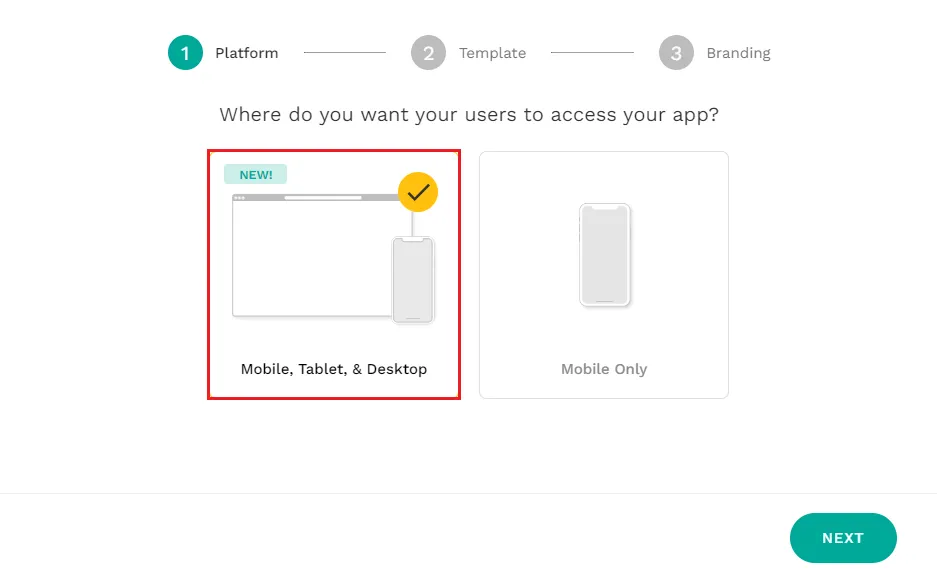
- Select Desktop Web App and click on Next.
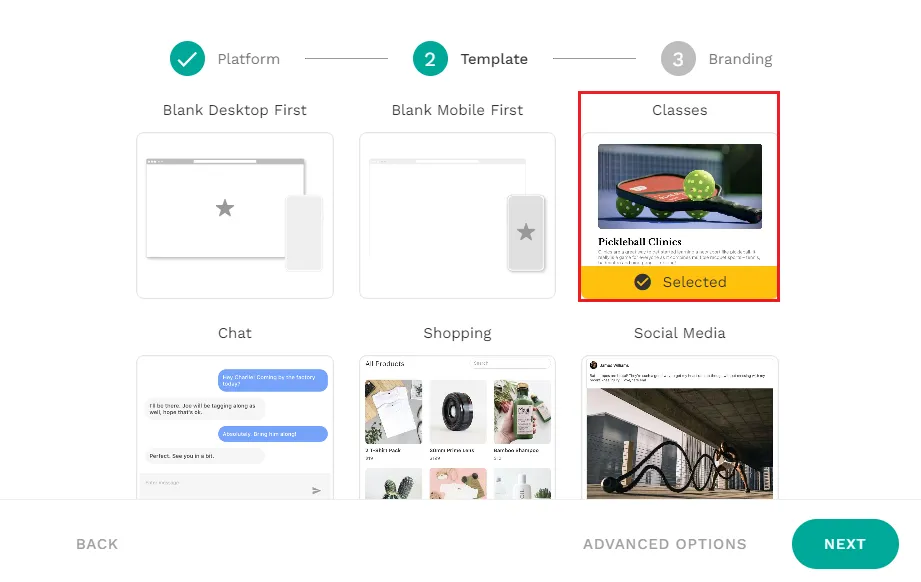
- You can choose any template, but for testing purposes, we've chosen a Blank template.
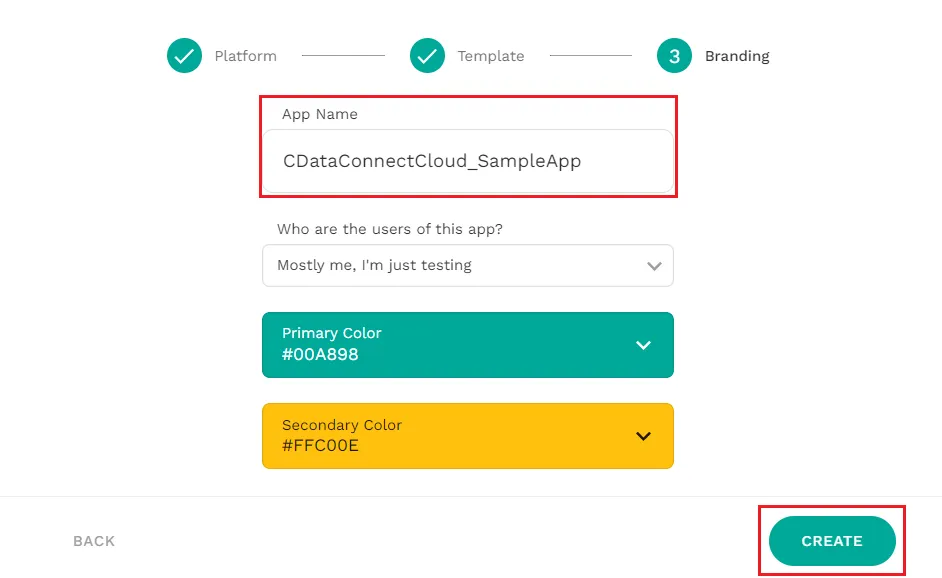
- Finally, add an app name and choose a color scheme, and your app is ready to go!
Registering external collections
Adalo uses a data structure called Collection to manage app data and offers a feature called External Collections with APIs, which lets you seamlessly integrate Collection with external APIs. Use this feature to connect to Connect AI.
- After creating an app, you first need to register a Collection, which is a definition for handling data within the Adalo app. There are two types of Collections: Database Collections, which are like Adalo's own internal database, and External Collections, which allow access to external APIs. In this case, we will access an external API, registering it as an External Collection.
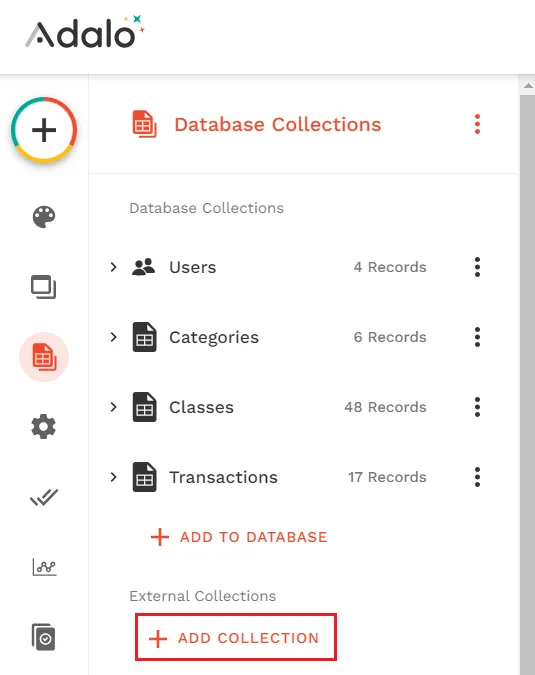
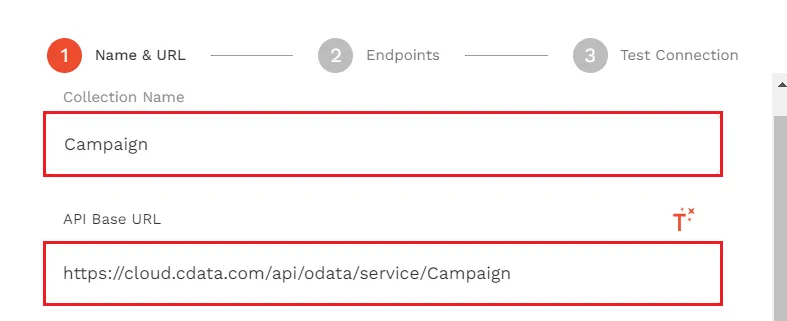
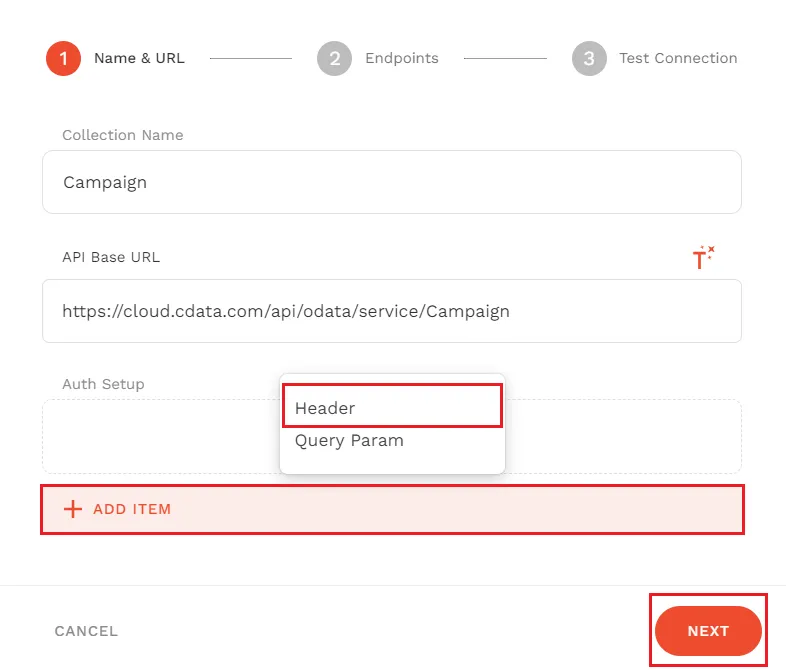
- On the External Collections registration screen, click on ADD COLLECTION to enter the collection name (any name of your choice), and provide the API base URL endpoint (OData endpoint registered on Connect AI). Make sure to add "/(table)" to the OData URL to access the specific endpoint. (Refer to the image given for reference)
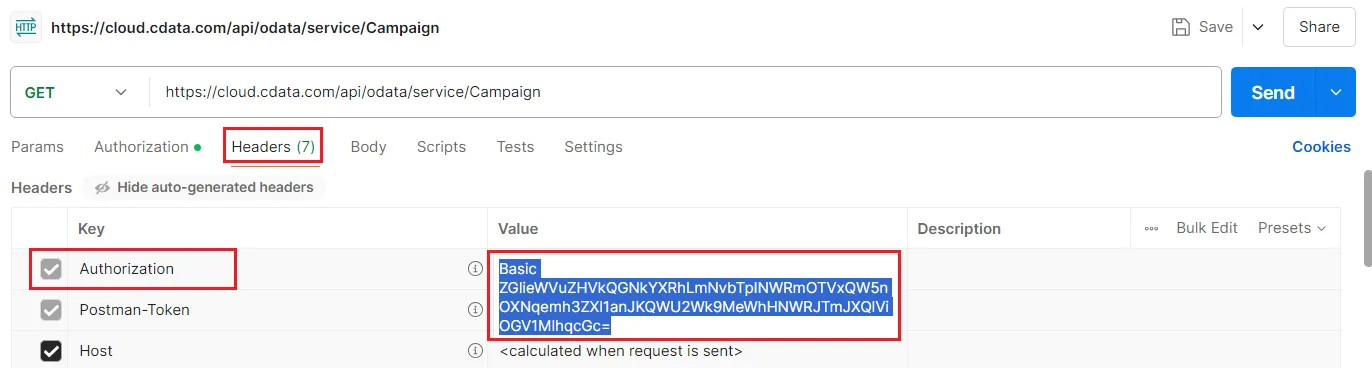
- In order to authenticate, you need a base64 authorization header comprising your username and PAT, joined by a colon. For example, [email protected]:MY_PAT. You can use a scripting tool, web tool, or other application to create this header.
Using Postman to generate the Authorization header
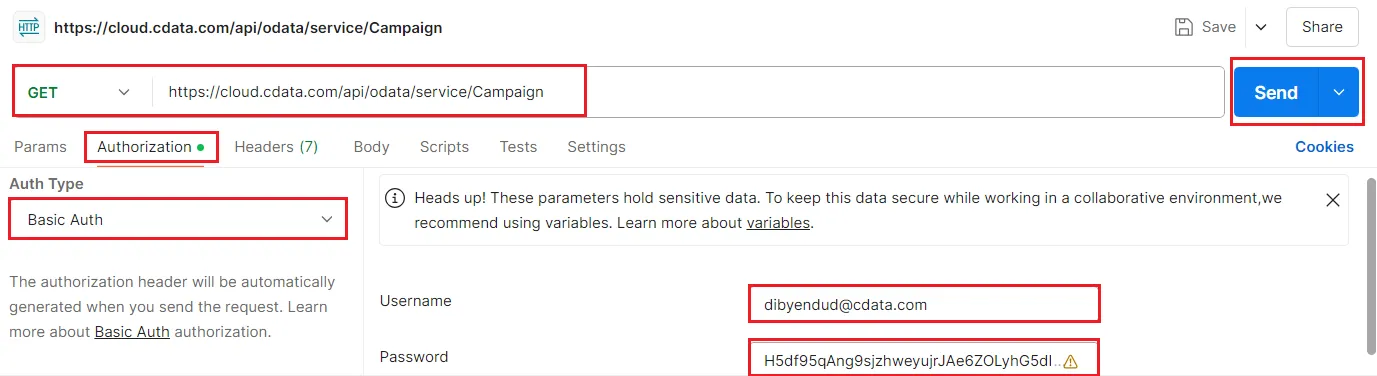
- Open the Postman application. Enter the OData URL mentioned in the previous step for a GET request on Postman. Click on the Authorization tab and select Auth Type as "Basic Auth". Enter the Username and Password as follows and click on Send:
- Username: Connect AI Username
- Password: PAT generated on Connect AI
- Go to the Headers tab and copy/save the value of the Authorization key.
- Open the Postman application. Enter the OData URL mentioned in the previous step for a GET request on Postman. Click on the Authorization tab and select Auth Type as "Basic Auth". Enter the Username and Password as follows and click on Send:
- Back in Adalo, click on ADD ITEM and select Header.
- Enter the details in the Header section as follows:
- Name: "Authorization"
- Value: Authorization key value copied in the previous step
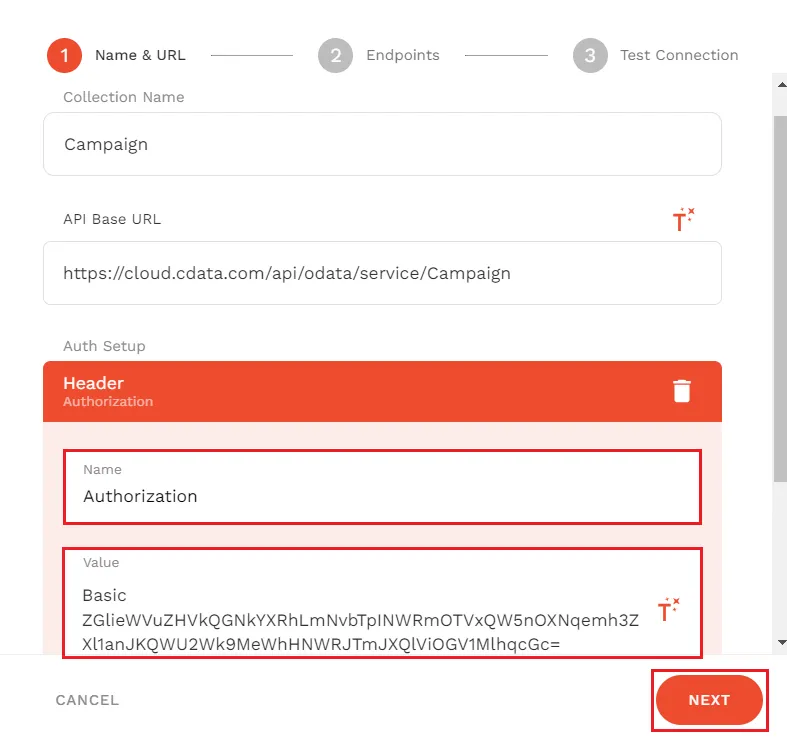
- Select Done and click on Next.
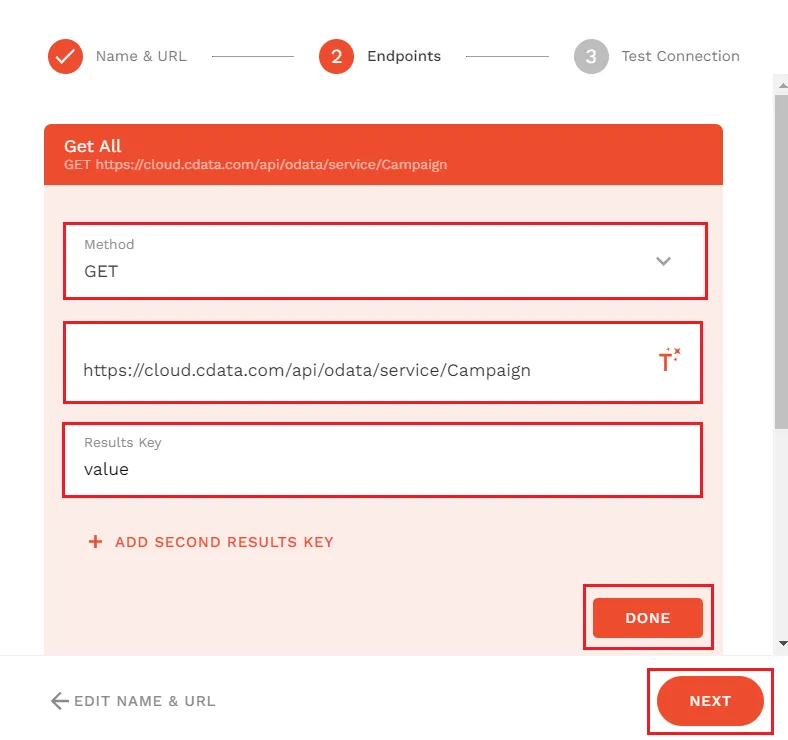
- Select Get All and enter "value" in the Results Key section. Click on Done and Next.
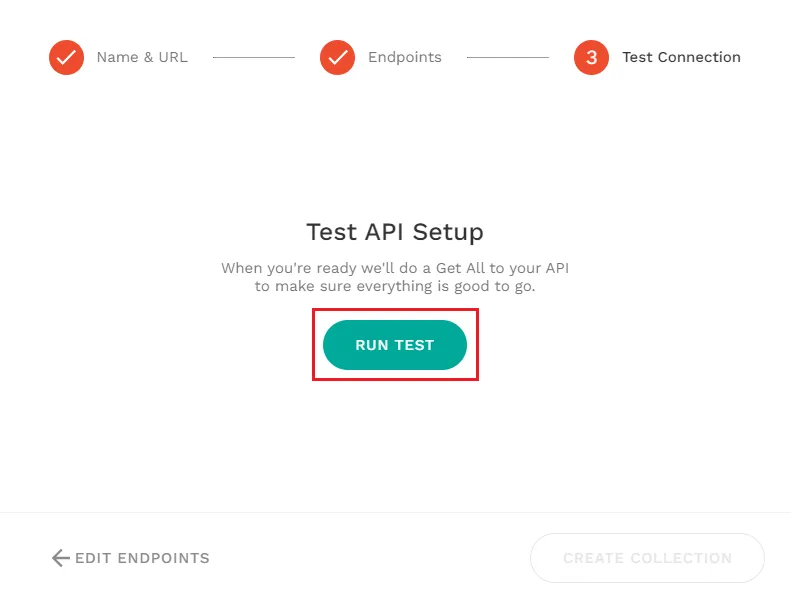
- Now, to test the API setup, click on RUN TEST. If you finally see the message and response shown below, the creation of External Collections is complete.
Creating a list screen
After configuring CData Connect AI, you can now begin developing the app on Adalo using SQL Analysis Services data.
- First, click the + button in the upper right corner of the Adalo screen to display the list screen, then drag and drop "Simple List" onto the screen.
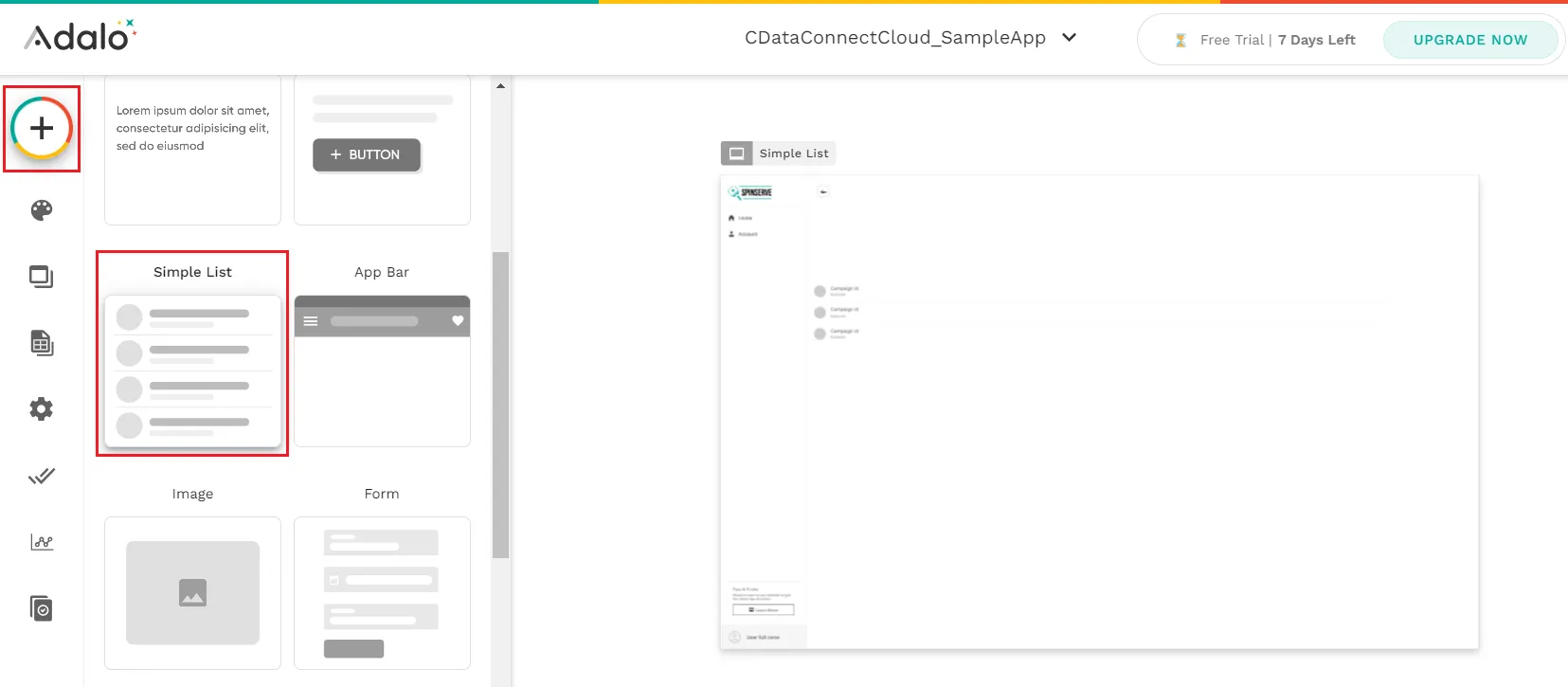
- Once the layout is complete as shown below, link the External Collections definition you created earlier to What is this a list of?
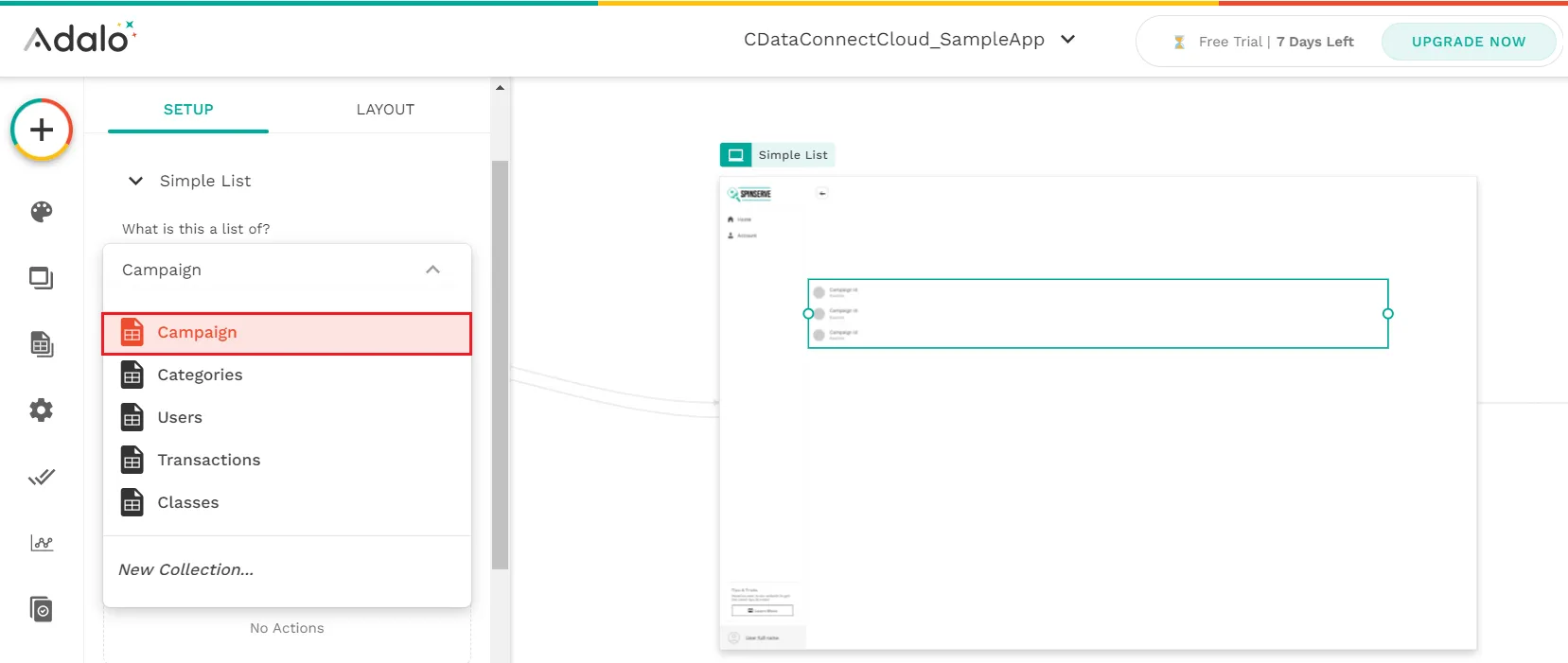
- Click on "Add Magic Text" button (as shown) to add the "Title" and "Subtitle" to the data items you want to obtain.
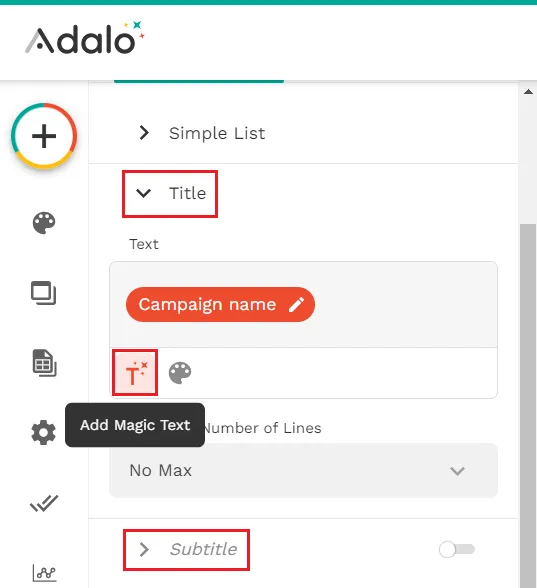
- Now, click on View App in the top right corner of the screen and select Staging Preview.
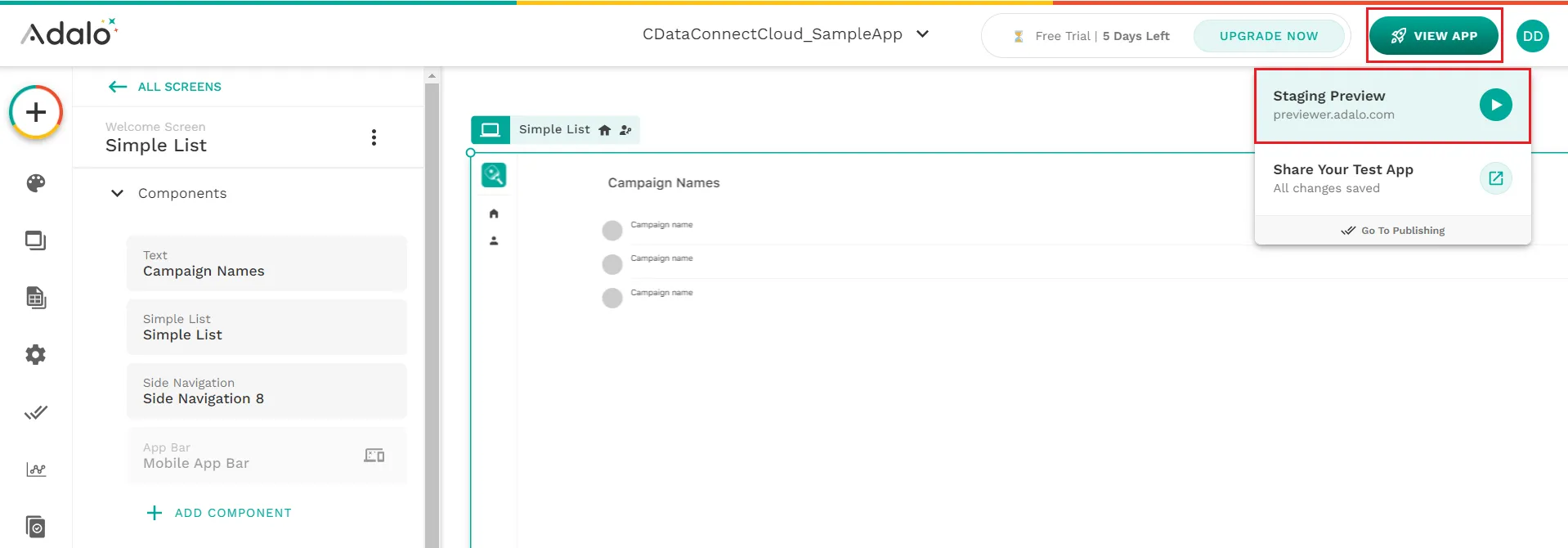
-
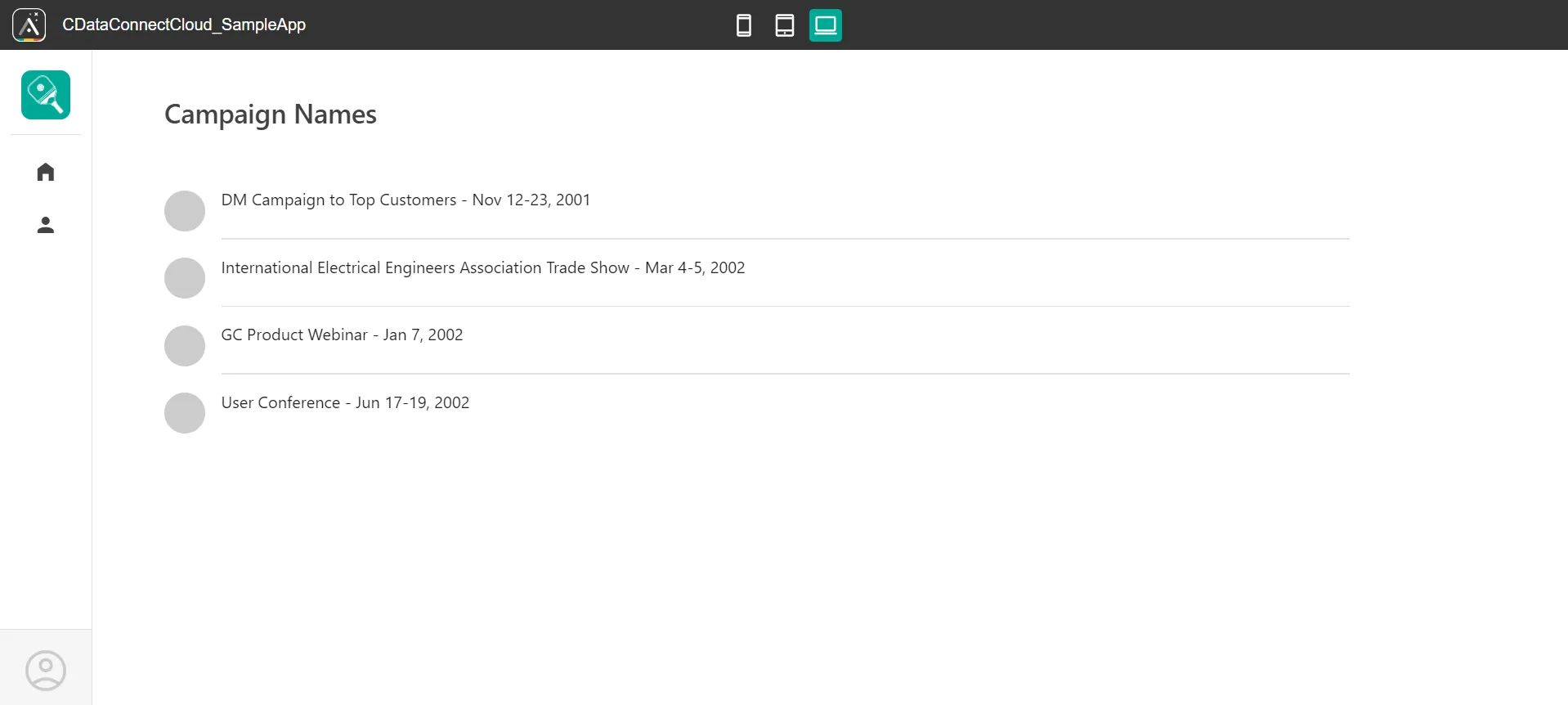
You can now view the SQL Analysis Services data in the app created on Adalo.
Live connections to SQL Analysis Services data from cloud applications
Adalo now allows you to connect to live SQL Analysis Services data directly, allowing you to create more connections and apps without duplicating SQL Analysis Services data.
To get real-time data access to over 100 SaaS, big data, and NoSQL sources directly from your cloud applications, visit CData Connect AI.