







Integrate SQL Analysis Services Data into Automated Tasks with Power Automate

Microsoft Power Automate is an online service that automates events (known as workflows) across the most common apps and services. When paired with CData Connect AI, you get instant, cloud-to-cloud access to SQL Analysis Services data for visualizations, dashboards, and more. This article shows how to connect to Connect AI from Power Automate and integrate live SQL Analysis Services data into your workflows and tasks.
CData Connect AI provides a pure SQL, cloud-to-cloud interface for SQL Analysis Services, allowing you to easily integrate with live SQL Analysis Services data in Power Automate — without replicating the data. CData Connect AI looks exactly like a SQL Server database to Power Automate and uses optimized data processing out of the box to push all supported SQL operations (filters, JOINs, etc) directly to SQL Analysis Services, leveraging server-side processing to quickly return SQL Analysis Services data.
Configure SQL Analysis Services Connectivity for Power Automate
Connectivity to SQL Analysis Services from Power Automate is made possible through CData Connect AI. To work with SQL Analysis Services data from Power Automate, we start by creating and configuring a SQL Analysis Services connection.
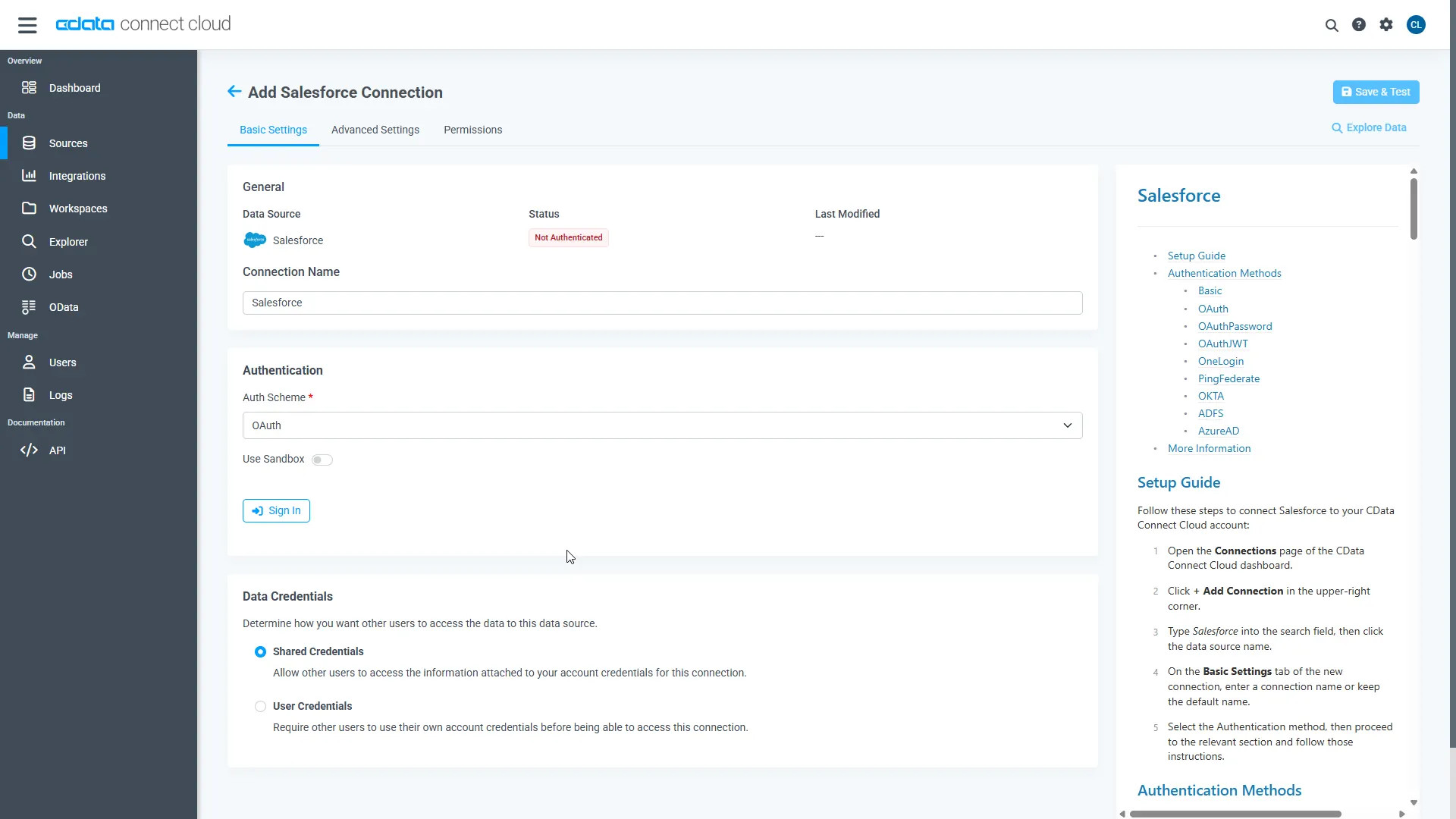
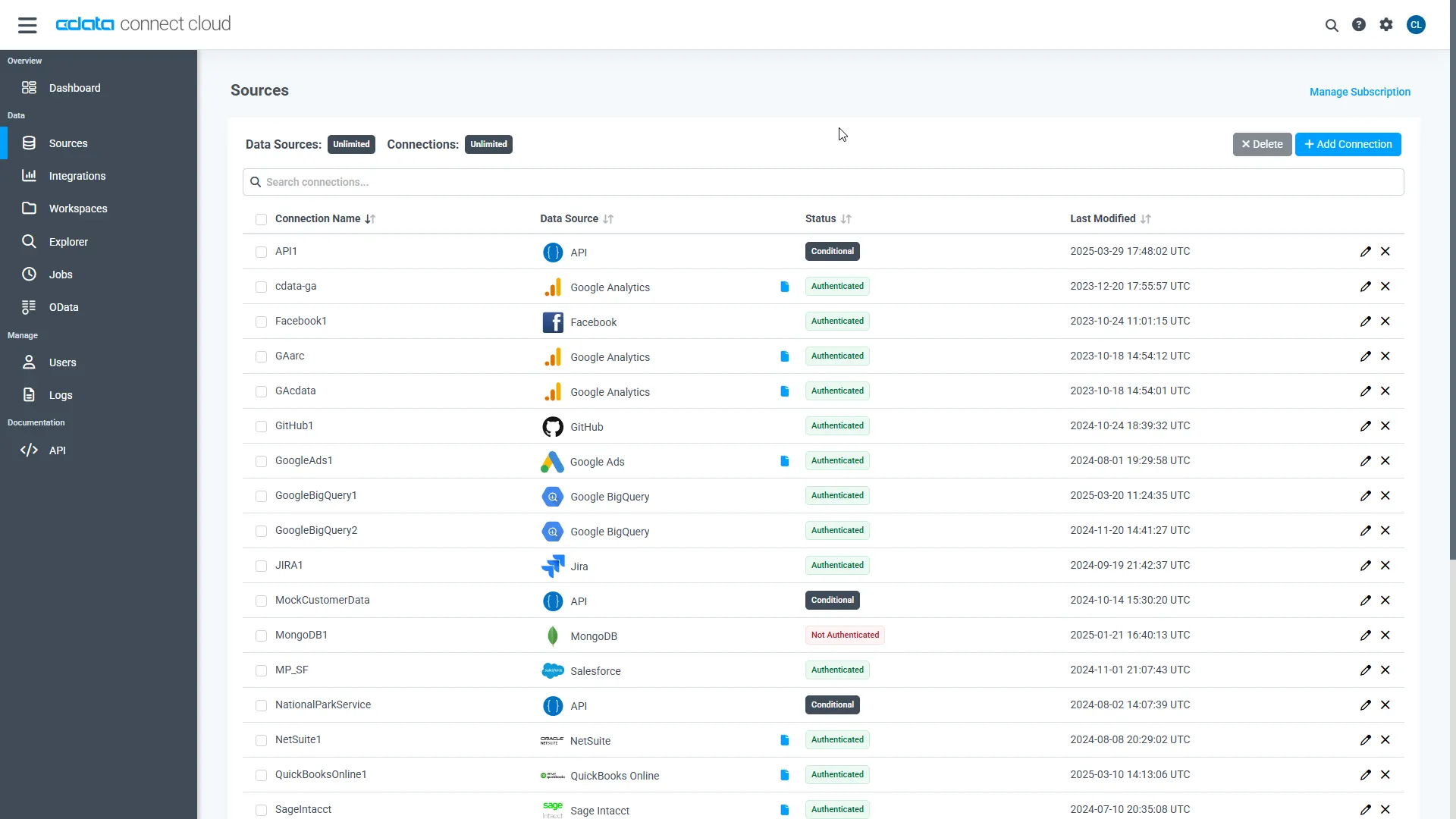
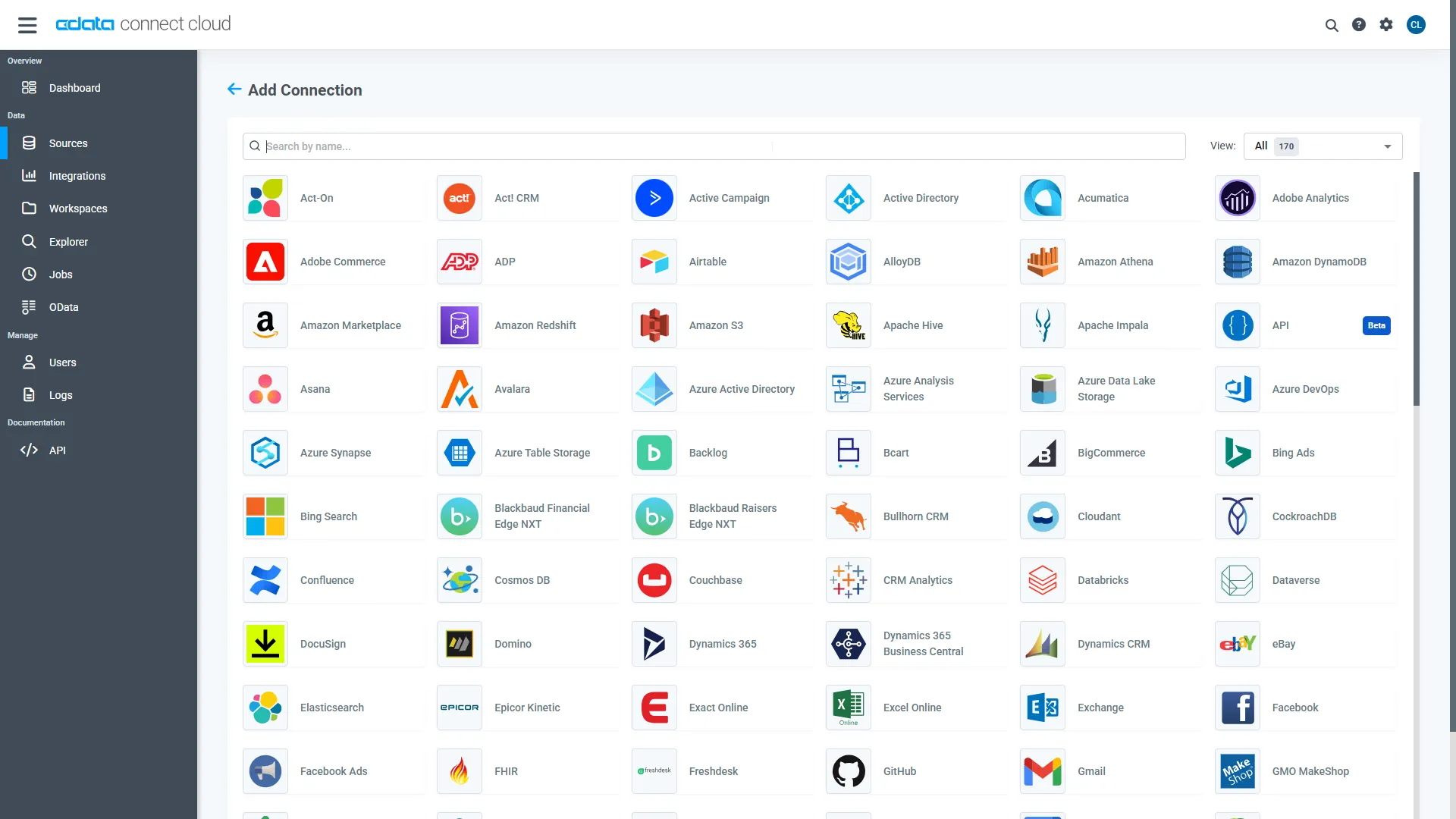
- Log into Connect AI, click Sources, and then click Add Connection
- Select "SQL Analysis Services" from the Add Connection panel
-
Enter the necessary authentication properties to connect to SQL Analysis Services.
To connect, provide authentication and set the Url property to a valid SQL Server Analysis Services endpoint. You can connect to SQL Server Analysis Services instances hosted over HTTP with XMLA access. See the Microsoft documentation to configure HTTP access to SQL Server Analysis Services.
To secure connections and authenticate, set the corresponding connection properties, below. The data provider supports the major authentication schemes, including HTTP and Windows, as well as SSL/TLS.
-
HTTP Authentication
Set AuthScheme to "Basic" or "Digest" and set User and Password. Specify other authentication values in CustomHeaders.
-
Windows (NTLM)
Set the Windows User and Password and set AuthScheme to "NTLM".
-
Kerberos and Kerberos Delegation
To authenticate with Kerberos, set AuthScheme to NEGOTIATE. To use Kerberos delegation, set AuthScheme to KERBEROSDELEGATION. If needed, provide the User, Password, and KerberosSPN. By default, the data provider attempts to communicate with the SPN at the specified Url.
-
SSL/TLS:
By default, the data provider attempts to negotiate SSL/TLS by checking the server's certificate against the system's trusted certificate store. To specify another certificate, see the SSLServerCert property for the available formats.
You can then access any cube as a relational table: When you connect the data provider retrieves SSAS metadata and dynamically updates the table schemas. Instead of retrieving metadata every connection, you can set the CacheLocation property to automatically cache to a simple file-based store.
See the Getting Started section of the CData documentation, under Retrieving Analysis Services Data, to execute SQL-92 queries to the cubes.
-
HTTP Authentication
- Click Save & Test
-
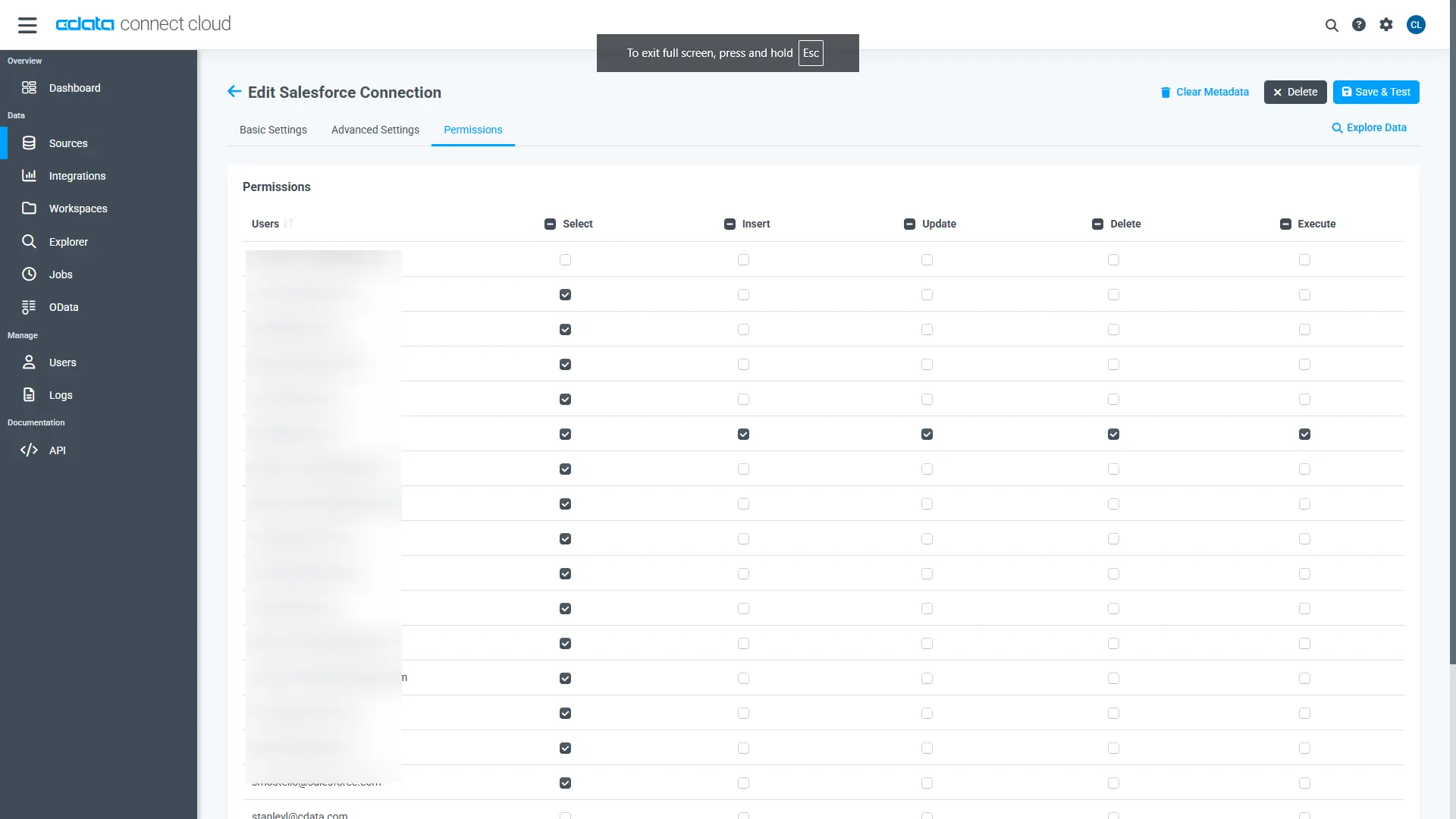
Navigate to the Permissions tab in the Add SQL Analysis Services Connection page and update the User-based permissions.
Add a Personal Access Token
When connecting to Connect AI through the REST API, the OData API, or the Virtual SQL Server, a Personal Access Token (PAT) is used to authenticate the connection to Connect AI. It is best practice to create a separate PAT for each service to maintain granularity of access.
- Click on the Gear icon () at the top right of the Connect AI app to open the settings page.
- On the Settings page, go to the Access Tokens section and click Create PAT.
-
Give the PAT a name and click Create.
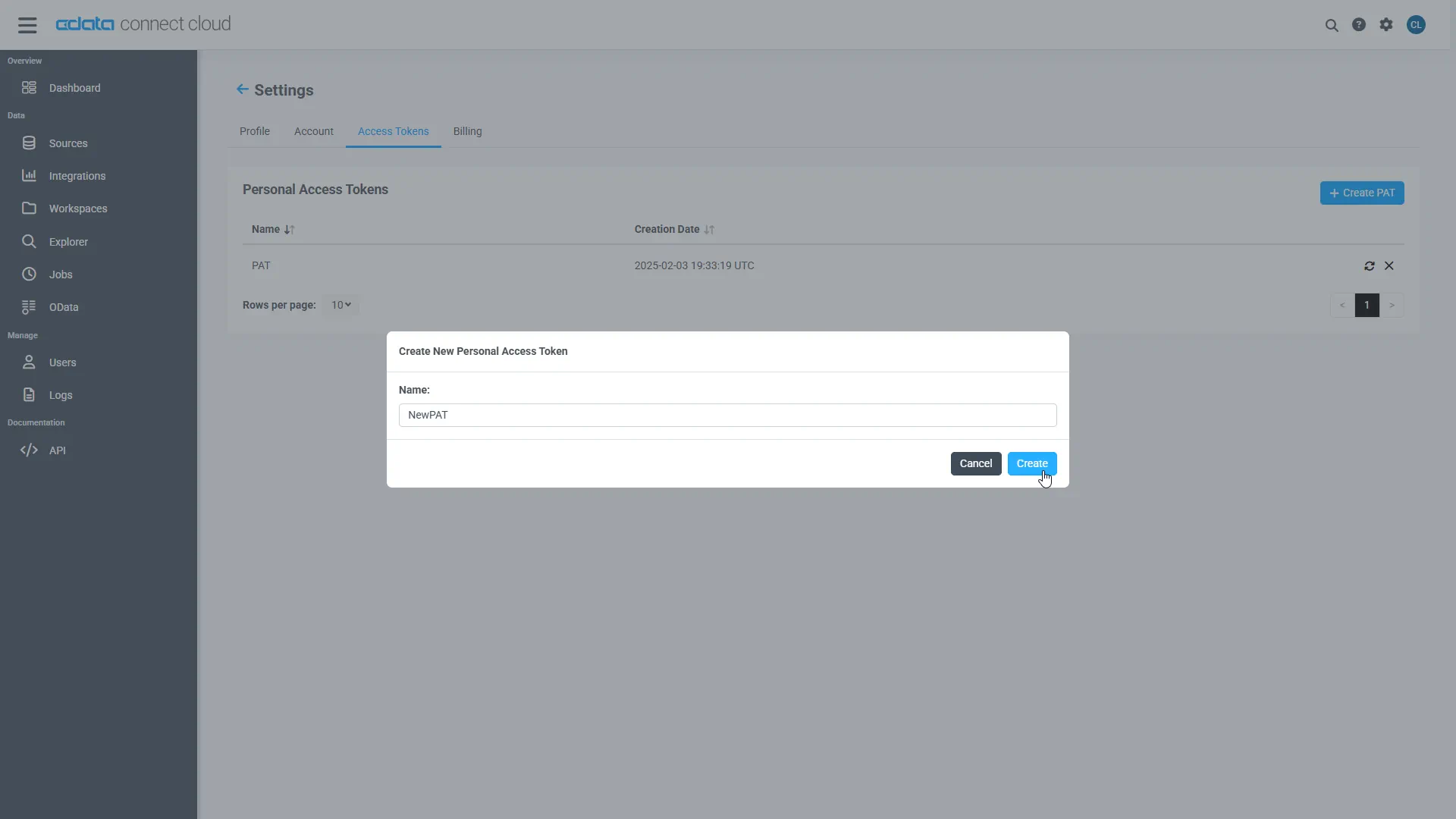
- The personal access token is only visible at creation, so be sure to copy it and store it securely for future use.
With the connection configured and a PAT generated, you are ready to connect to SQL Analysis Services data from Power Automate.
Connecting to CData Connect AI
To use Connect AI to integrate SQL Analysis Services data into your Power Automate tasks, you need a new SQL Server connection:
- Log in to Power Automate
- Click Data -> Connections -> New connection
- Select SQL Server
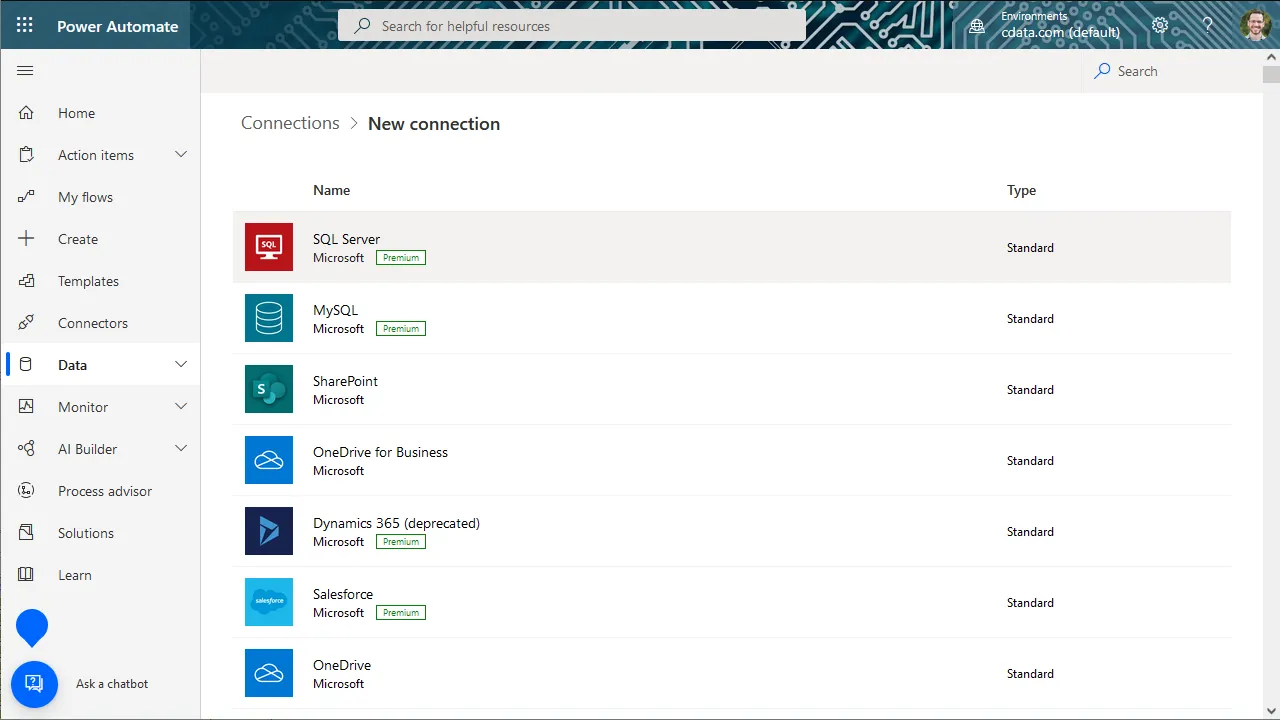
- In the connection wizard:
- Choose to connect directly
- Set SQL server name to tds.cdata.com,14333
- Set SQL database name to the name of the SQL Analysis Services connection (e.g. SSAS1)
- Set Username to a Connect AI user (e.g. [email protected])
- Set Password to the PAT for the above user
- Click Create
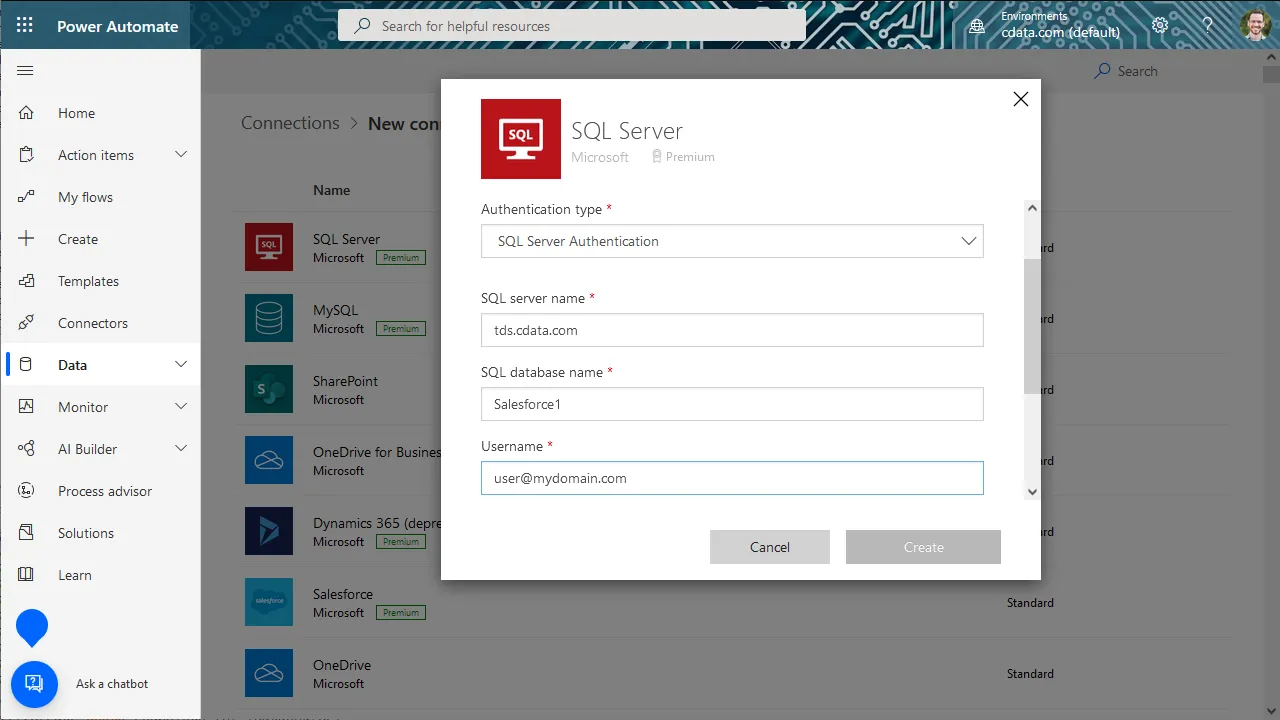
Integrating SQL Analysis Services Data into Power Automate Tasks
With the connection to Connect AI configured, you are ready to integrate live SQL Analysis Services data into your Power Automate tasks.
- Log in to Power Automate
- Click My flows -> New flow and choose to create the flow from blank or template
- Add (or configure) a SQL Server action (like Get rows) and configure the action to connect to your Connect AI connection
- Select a Table to work with (from the drop-down menu) and configure any advanced options (like filters, orders, etc)
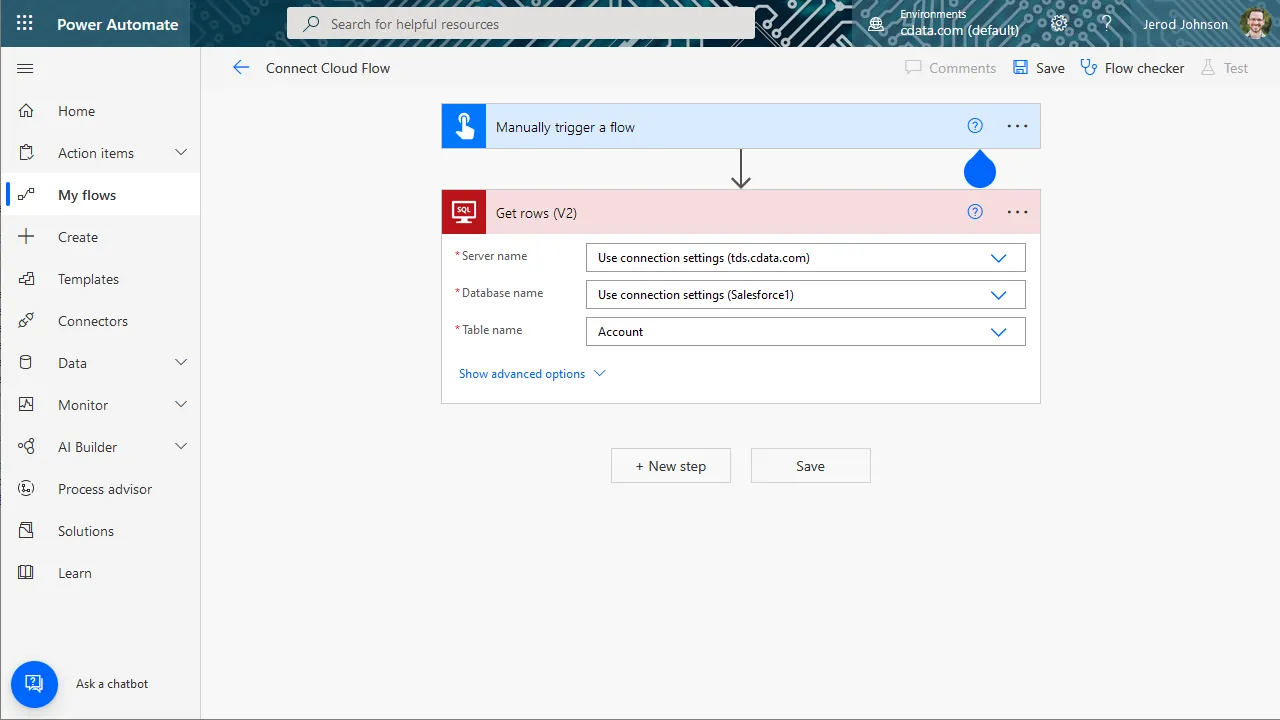
- Configure any actions to follow and test, then save the flow
SQL Access to SQL Analysis Services Data from Cloud Applications
Now you have a direct connection to live SQL Analysis Services data from Power Automate tasks. You can create more connections and workflows to drive business — all without replicating SQL Analysis Services data.
To get SQL data access to hundreds of SaaS, Big Data, and NoSQL sources directly from your cloud applications, sign up for a free trial of CData Connect AI.
Related Power Automate Articles
This article explains how to use CData Connect AI with Power Automate (Online). Check out our other articles for more ways to work with Power Automate Desktop: