







Creating Cvent-Connected Applications in Unqork

Unqork is a completely visual, no-code application development platform that helps large organizations build complex custom software. CData Connect AI exposes Cvent as a REST endpoint, which you can then query from Unqork with simple HTTP requests. This enables you to create your own custom application with Cvent data.
You can use CData Connect AI to feed Cvent data to Unqork. From there you can build custom business applications in a visual, drag-and-drop interface. This article shows how to connect to Cvent and build workflows with live Cvent data in Unqork.
Connect to Cvent from Unqork
To work with live Cvent data in Unqork, we need to connect to Cvent from Connect AI, provide user access to the connection, and create a Workspace for the Cvent data.
Connect to Cvent from Connect AI
CData Connect AI uses a straightforward, point-and-click interface to connect to data sources.
- Log into Connect AI, click Sources, and then click Add Connection
- Select "Cvent" from the Add Connection panel
-
Enter the necessary authentication properties to connect to Cvent.
Before you can authenticate to Cvent, you must create a workspace and an OAuth application.
Creating a Workspace
To create a workspace:
- Sign into Cvent and navigate to App Switcher (the blue button in the upper right corner of the page) >> Admin.
- In the Admin menu, navigate to Integrations >> REST API.
- A new tab launches for Developer Management. Click on Manage API Access in the new tab.
- Create a Workspace and name it. Select the scopes you would like your developers to have access to. Scopes control what data domains the developer can access.
- Choose All to allow developers to choose any scope, and any future scopes added to the REST API.
- Choose Custom to limit the scopes developers can choose for their OAuth apps to selected scopes. To access all tables exposed by the driver, you need to set the following scopes:
event/attendees:read event/attendees:write event/contacts:read event/contacts:write event/custom-fields:read event/custom-fields:write event/events:read event/events:write event/sessions:delete event/sessions:read event/sessions:write event/speakers:delete event/speakers:read event/speakers:write budget/budget-items:read budget/budget-items:write exhibitor/exhibitors:read exhibitor/exhibitors:write survey/surveys:read survey/surveys:write
Creating an OAuth Application
After you have set up a Workspace and invited them, developers can sign up and create a custom OAuth app. See the Creating a Custom OAuth Application section in the Help documentation for more information.
Connecting to Cvent
After creating an OAuth application, set the following connection properties to connect to Cvent:
- InitiateOAuth: GETANDREFRESH. Used to automatically get and refresh the OAuthAccessToken.
- OAuthClientId: The Client ID associated with the OAuth application. You can find this on the Applications page in the Cvent Developer Portal.
- OAuthClientSecret: The Client secret associated with the OAuth application. You can find this on the Applications page in the Cvent Developer Portal.

- Click Save & Test
-
Navigate to the Permissions tab in the Add Cvent Connection page and update the User-based permissions.



Add a Personal Access Token
When connecting to Connect AI through the REST API, the OData API, or the Virtual SQL Server, a Personal Access Token (PAT) is used to authenticate the connection to Connect AI. It is best practice to create a separate PAT for each service to maintain granularity of access.
- Click on the Gear icon () at the top right of the Connect AI app to open the settings page.
- On the Settings page, go to the Access Tokens section and click Create PAT.
-
Give the PAT a name and click Create.

- The personal access token is only visible at creation, so be sure to copy it and store it securely for future use.
Configure Cvent Endpoints for Unqork
After connecting to Cvent, create a workspace for your desired table(s).
-
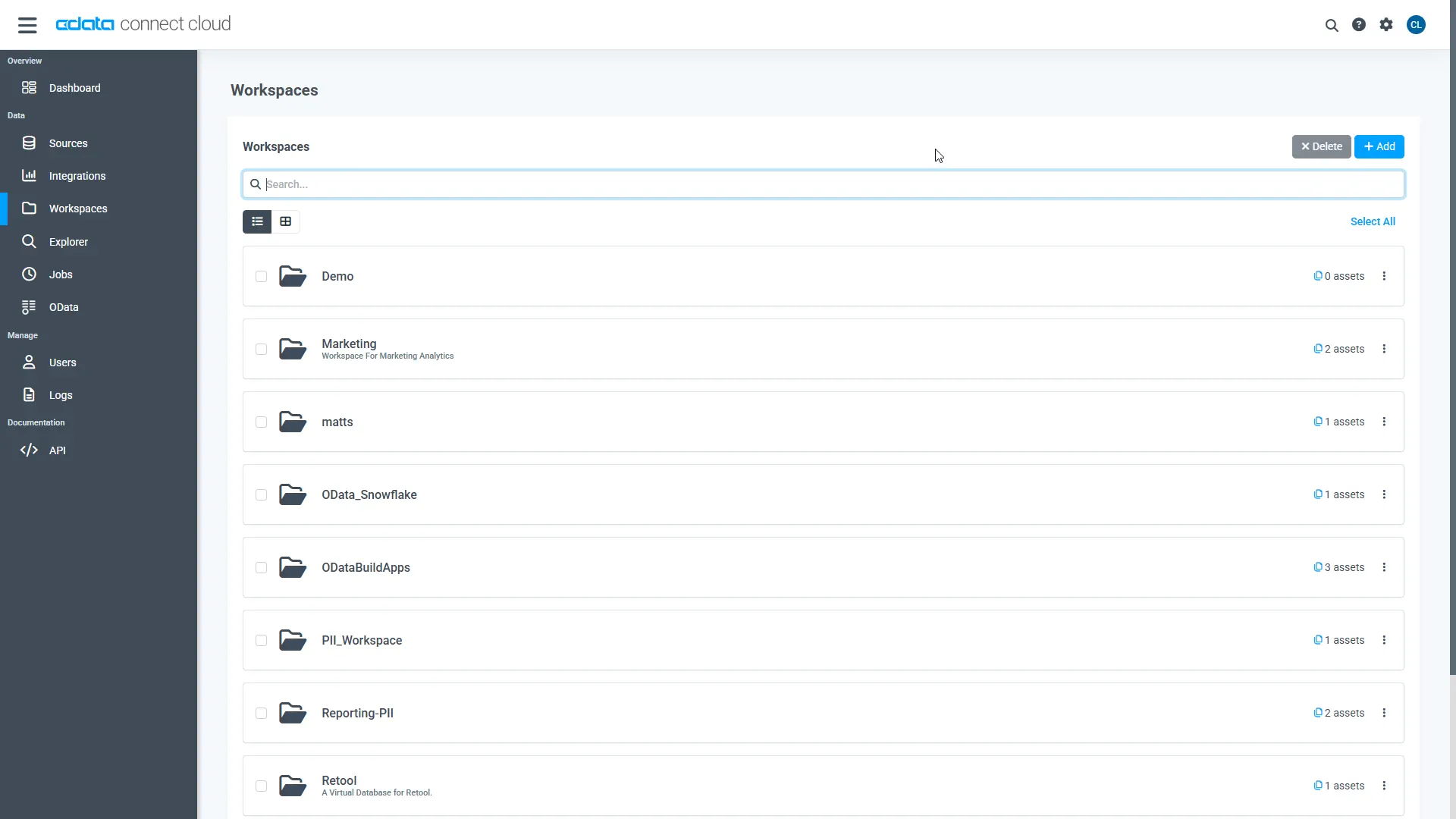
Navigate to the Workspaces page and click Add to create a new Workspace (or select an existing workspace).
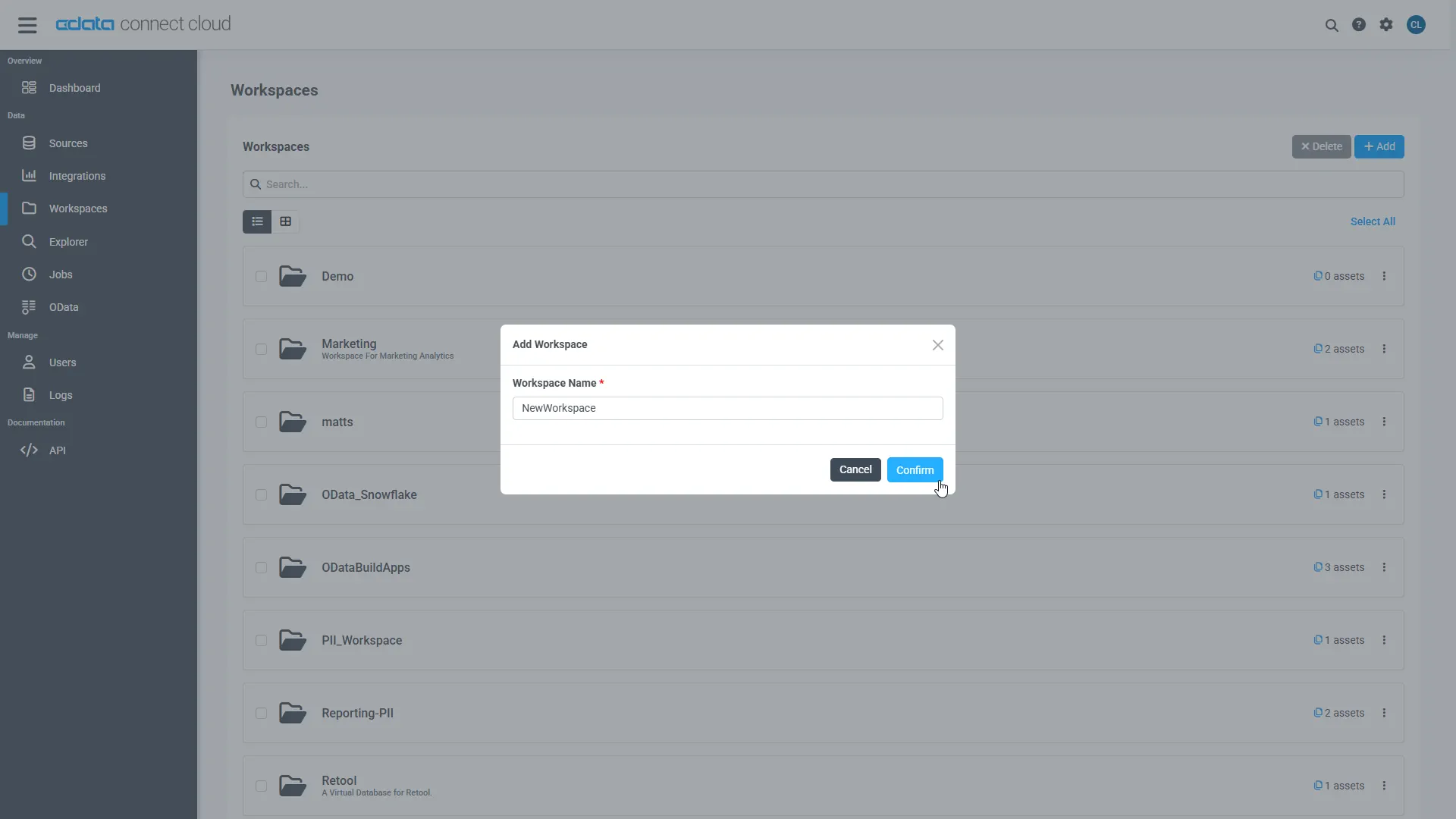
- Click Add to add new assets to the Workspace.
-
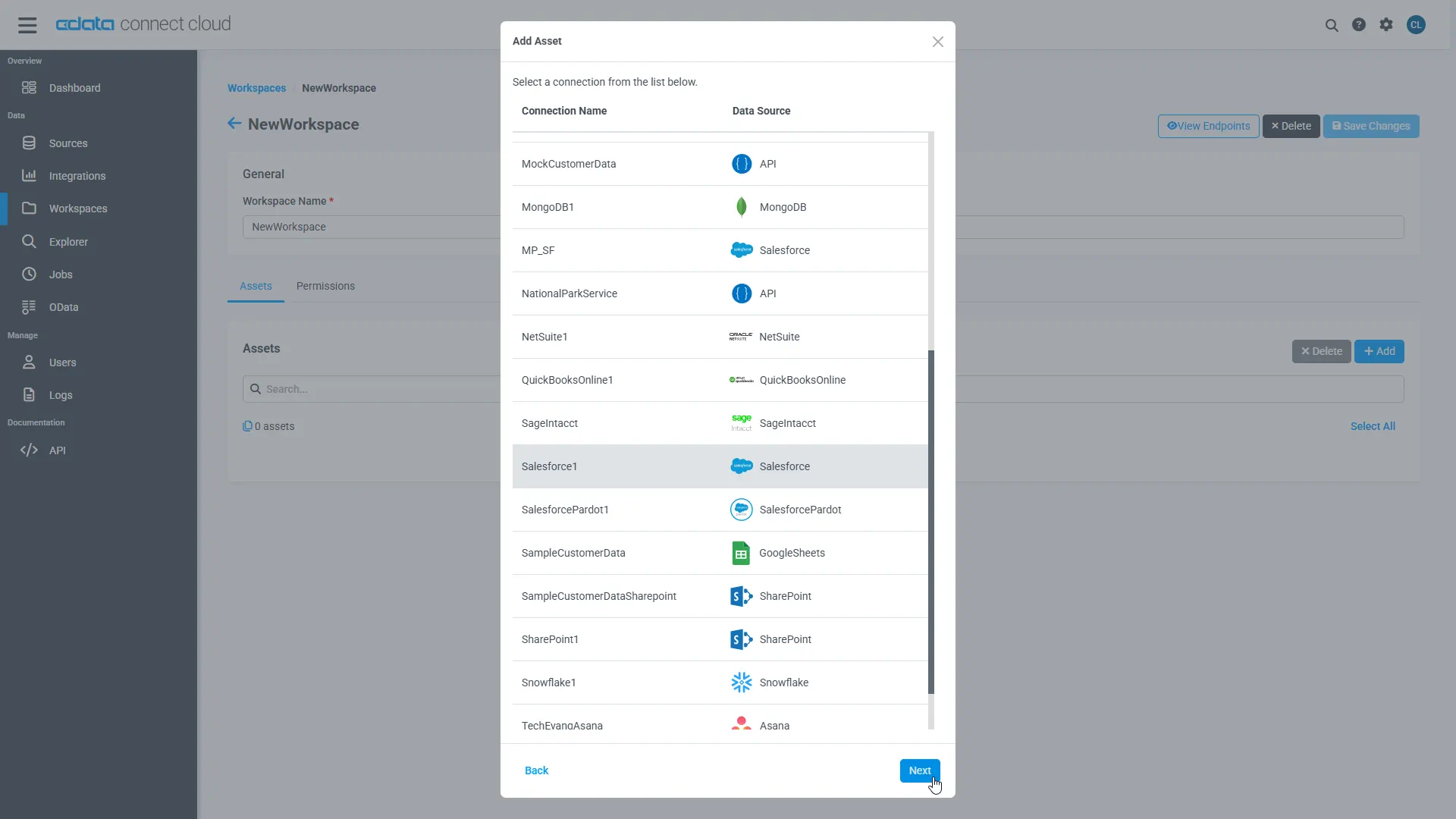
Select the Cvent connection (e.g. Cvent1) and click Next.
-
Select the table(s) you wish to work with and click Confirm.
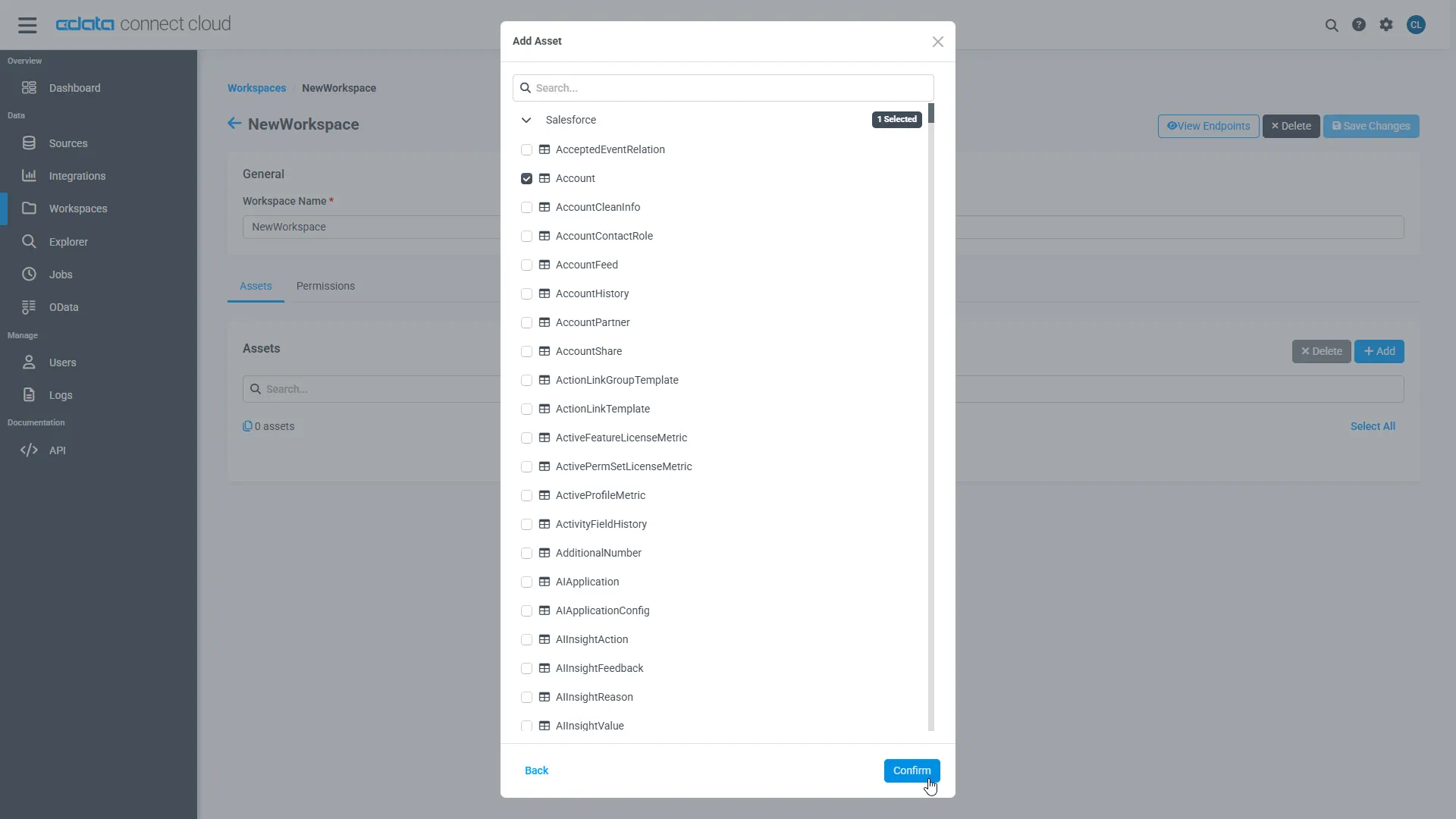
- Make note of the OData Service URL for your workspace, e.g. https://cloud.cdata.com/api/odata/{workspace_name}
With the connection, PAT, and Workspace configured, you are ready to connect to Cvent data from Unqork.
Create a Simple Application for Cvent Data
With the OData Endpoint configured for Cvent through Connect AI, you are ready to create a Cvent-connected application in Unqork. Here are the basic steps to this process:
- Register Cvent (via Connect AI) as an Unqork service
- Create a workspace in Unqork
- Create a module-type application
Register Cvent (via Connect AI) as an Unqork Service
To connect to Connect AI, you need to give your environment permission to connect with an external service. Do this through Services Administration.
- Click the Settings drop-down at the top right corner of the Unqork Designer Platform.
- Click Administration.
- Under Integrations, click Services Administration.
- Enter a Service Title, for example, Connect AI.
- Enter a Service Name, for example, cdataConnect.
- Enter a Service protocol + host. This is the API endpoint you want to reference. For example, https://cloud.cdata.com/api/odata/{workspace_name}.
- Select Basic Auth from the Type of Authentications drop-down.
- Enter the Connect AI user ID (e.g. [email protected]) in the User Name field.
- Enter the Connect AI user PAT in the Password field.
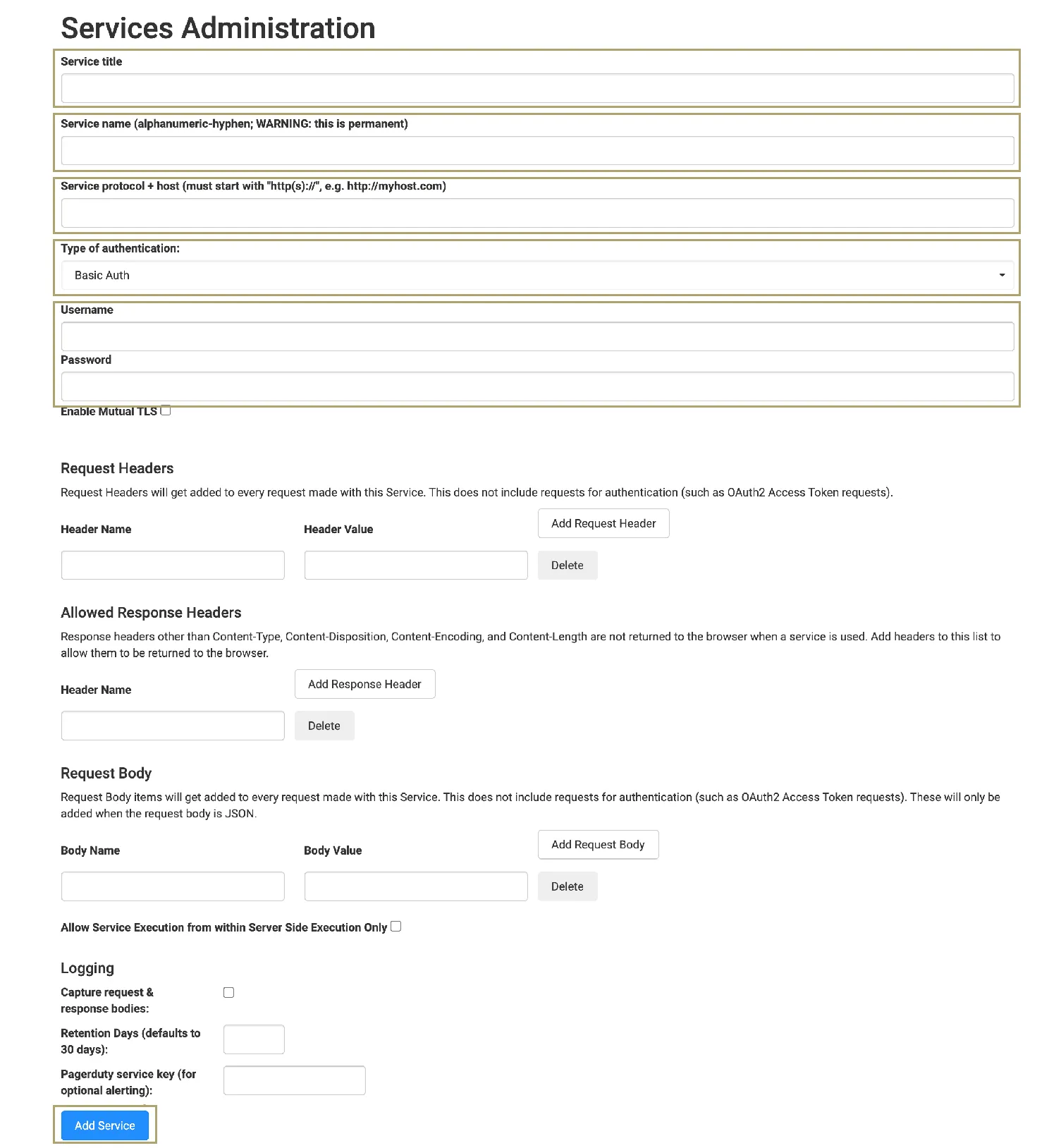
- Click Add Service.
Create a Workspace
Unqork lets you create your own workspace, which is a virtual container for you and your team to store and organize your applications. Once you build a workspace, you can add applications to it.
To create a workspace:
- Click Create Workspace
- Enter a unique Workspace Name
- Click Create
Your workspace tile appears under the Workspaces tab.
Create a Module-Type Application
With your workspace added, you are ready to create your application. You have the choice between a module-type and workflow-type application. For this use case, make a module-type application.
- Navigate to the Apps tab from your open workspace.
- Click Create App.
- Enter a unique App Name.
- Select a preview style from the Style drop-down. A style specifies your application's appearance to your and-users. If left blank, your application uses the environment's default style.
- Select Module from the App Type drop-down.
- Select New Entrypoint Module from the App Entrypoint Module drop-down.
- Click Create.
You will land on the Modules tab of your new application. It should look like the following:
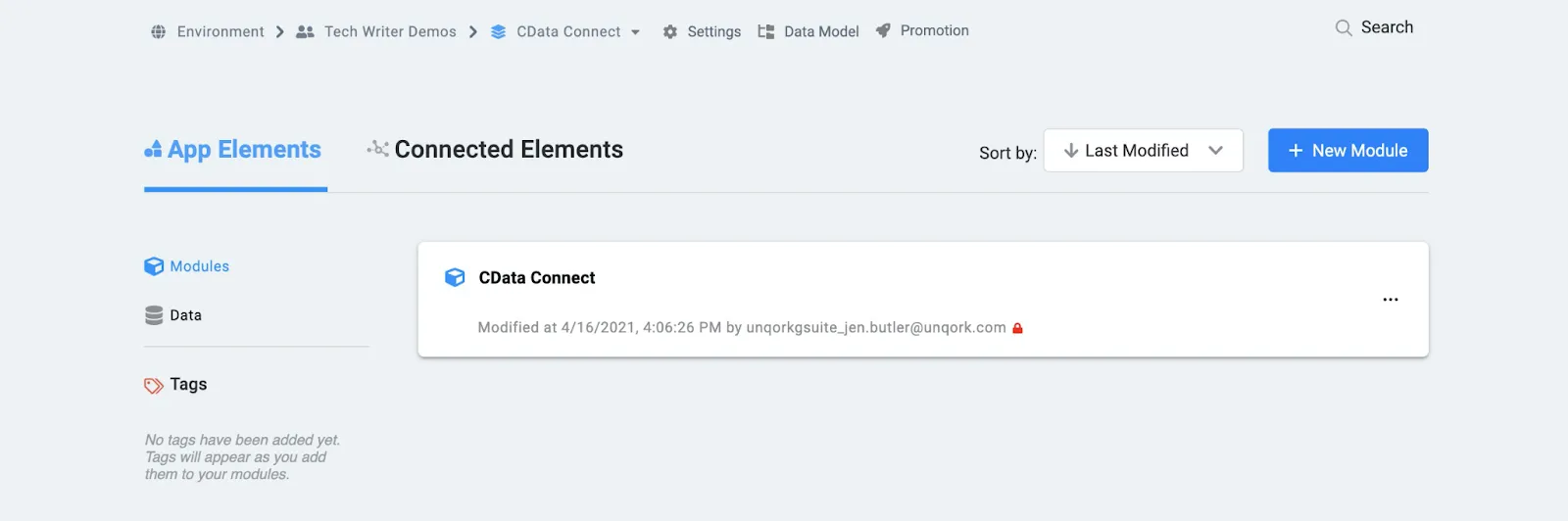
Click the title to name the module in the Module Editor.
To complete your application, you need the following components:
- Hidden component: stores the data retrieved by the Plug-In
- Initializer component: executes the Plug-In when displaying tables
- Plug-In component: retrieves Cvent data through Connect AI and stores it in the Hidden component
- ViewGrid component: creates on HTML table from the data stored in the Hidden component
Configure the Hidden Component
This Hidden component stores the Cvent data retrieved through Connect AI.
- Drag and drop a Hidden component onto your canvas.
- Enter a Property ID and Canvas Label Text.
- Click Save.
NOTE: Property IDs must be in Camel Case (stylized as camelCase). For example, hiddenComponent. Since the Hidden component is not visible to and-users, use your Property ID as the Canvas Label Text.
Configure the Plug-in Component
Next, add a Plug-In component to request data from Connect AI. This component connects with the service you set up in Services Administration.
- Drag and drop a Plug-In component onto your canvas, placing it below the Hidden component.
- Enter a Property ID and Canvas Label Text.
NOTE: You must use Camel Case (stylized as camelCase). For naming best practices, start your Plug-In's Property ID with plugin. For example, pluginGetAWProducts.
- Configure the Outputs table as follows:
- Enter the Property ID of your Hidden component in the Property ID column.
- Enter value in the Mapping column.
- Select External as the Service Type
- From the External Services drop-down, select your Connect AI service. This is the external service you set up in Services Administration.
- Add the specific endpoint for your Connect AI resources to the and of the Data Sources URL. For example, AdventureWorks2012_Production_Product.
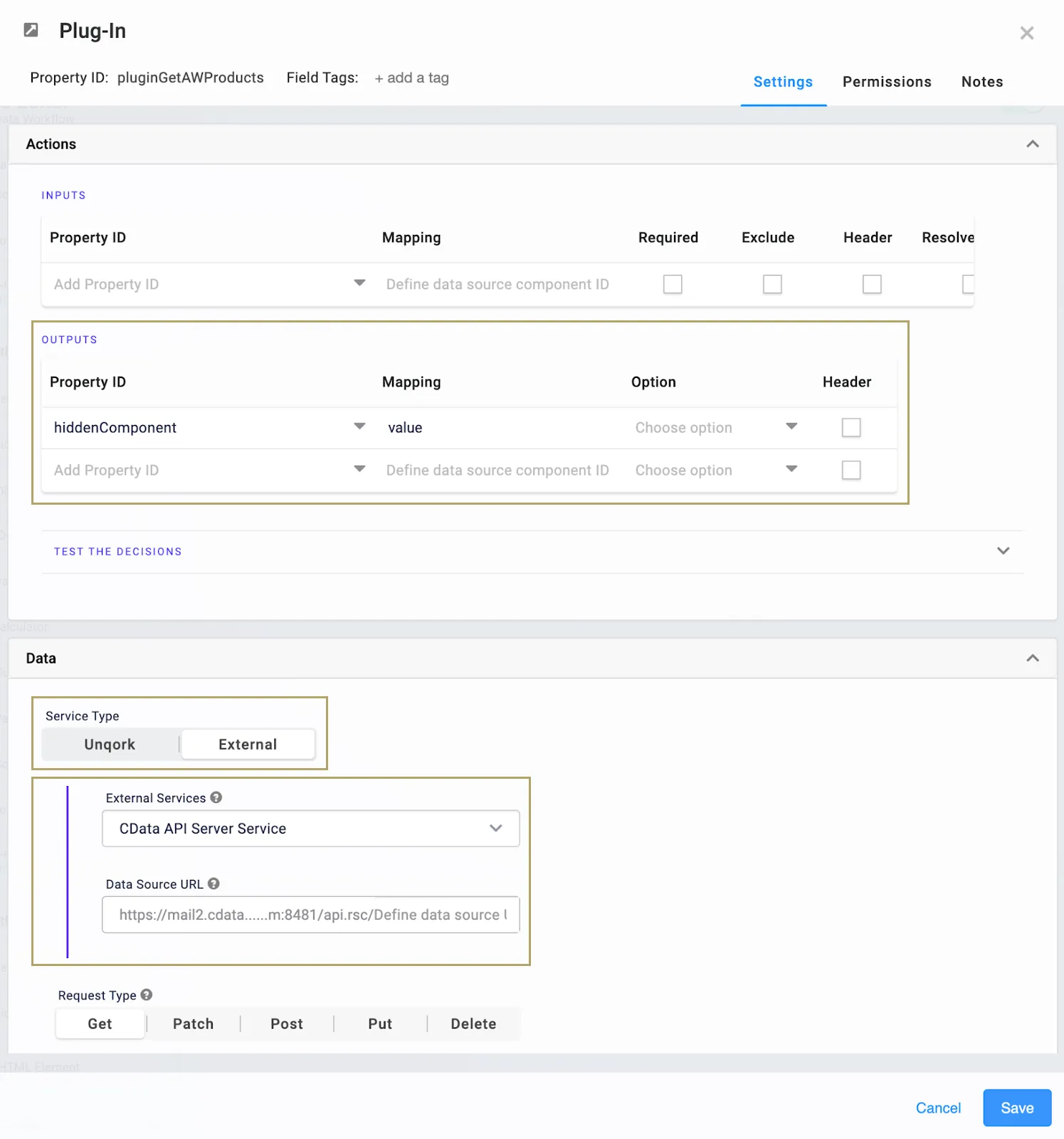
- Click Save.
NOTE: Your Data Sources URL will have a value similar to: https://cloud.cdata.com/api/odata/{workspace_name}/AdventureWorks2012_Production_Product.
Configure the Initializer Component
The Initializer component is what fires the Plug-In to retrieve your Cvent data.
- Drag and drop on Initializer component onto your canvas, placing it above the Plug-In component.
- Enter a Property ID and Canvas Label Text.
NOTE: You must use Camel Case (stylized as camelCase). For naming best practices, start your Initializer's Property Name with init. For example, initGetAWProducts.
- Set New Submission as the Trigger Type.
- In the Outputs table, enter the following:
- Enter the Property ID of your Plug-In in the Property ID column's field.
- Enter trigger in the Type column's field.
- Enter GO in the Value column's field.
- Click Save.
Configure the ViewGrid Component
The ViewGrid component references the data stored in your Hidden component. Then, it displays the Cvent data to your and-users in a dashboard (or table).
- Drag and drop a ViewGrid component onto your canvas, placing it below the Plug-In component.
- Enter a Label and Property Name.
NOTE: You must use Camel Case (stylized as camelCase). For naming best practices, start your ViewGrid's Property Name with vg. For example, vgAWProductView.
- In the Inputs table, set id to the Property ID of the hidden component.
- In the Display table:
- In the id column: enter the IDs of the fields you want to display.
- In the handing column: enter the title you want for each field. This is how the field will display to your and-users.
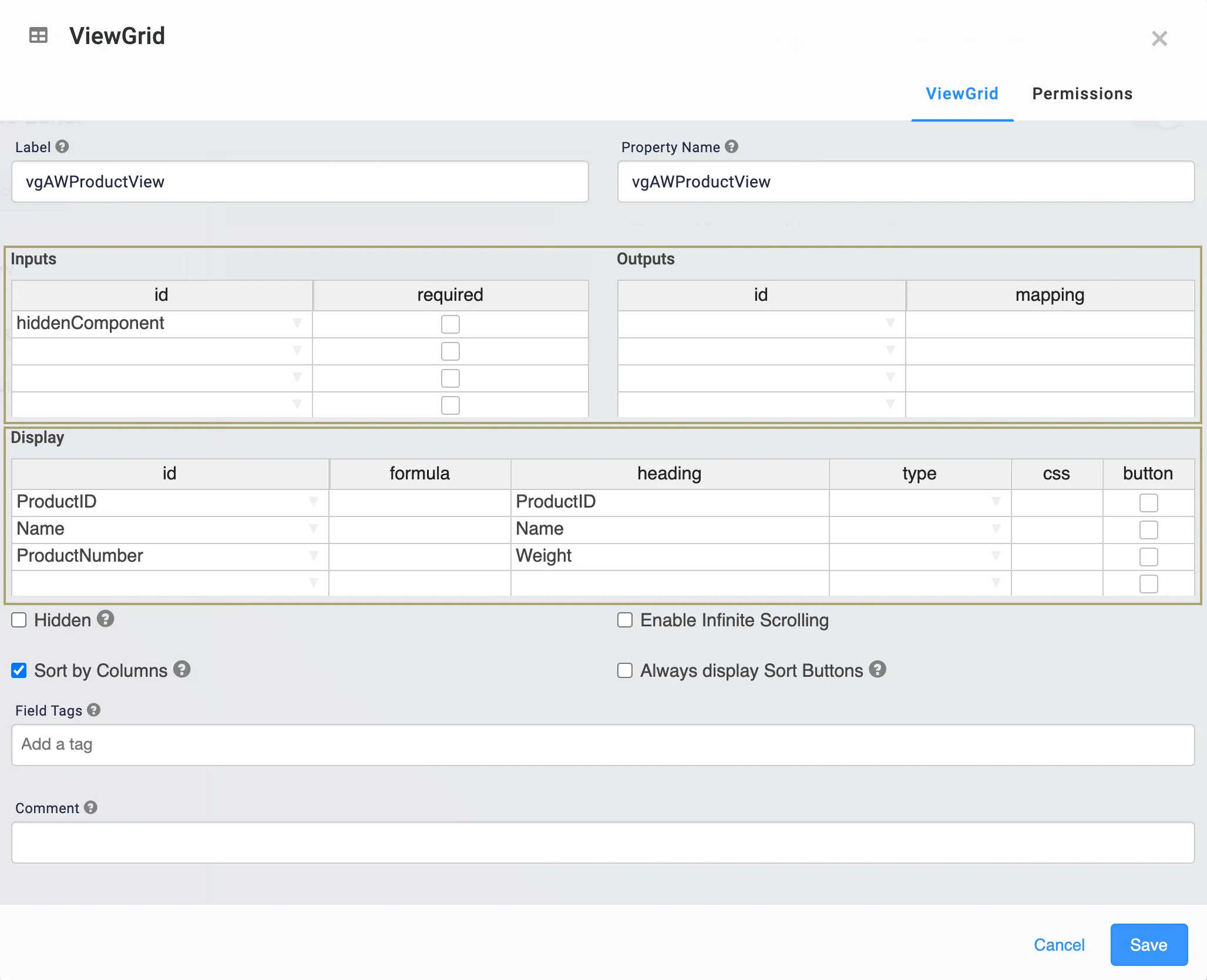
- Click Save.
- Save your module.
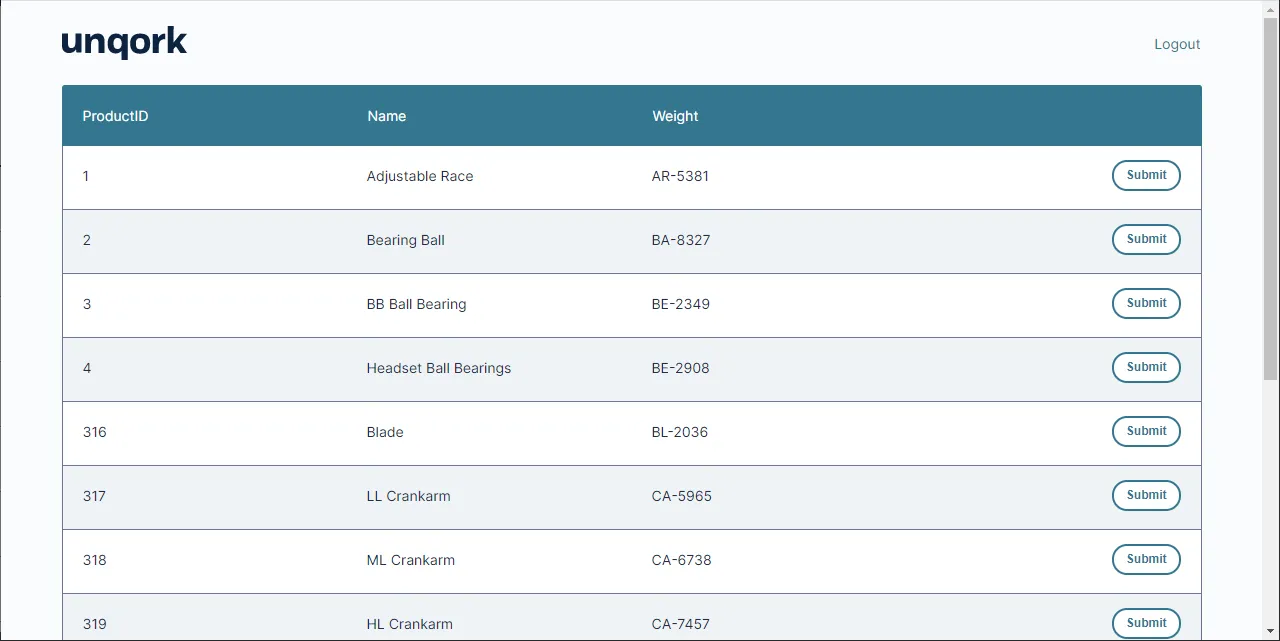
Once you add and configure the above components, you can preview how your application looks to and-users. In the Module Editor, click Preview Module to see the front-facing view (or "Express View") of the module.
Your Express View module should look something like this:
More Information & Free Trial
With Connect AI and Unqork, you can easily build Cvent-connected applications. Request a free trial of Connect AI and start working with Cvent data in Unqork today.