







Create Apps from DB2 Data in Qlik Sense Cloud

Qlik Sense Cloud allows you to create and share data visualizations and interact with information in new ways. CData Connect AI creates a live connection to DB2. By pairing Qlik Sense Cloud with CData Connect AI, you get true cloud-to-cloud connectivity to all of your SaaS and cloud-based Big Data and NoSQL sources — no need to migrate your data or write your integrations. Simply connect to Connect AI from Qlik Sense Cloud and get instant, live access to your DB2 data.
In this article, we walk through two connections:
- Connecting to DB2 in Connect AI
- Connecting to Connect AI from Qlik Sense Cloud to create a model and build a simple dashboard
Configure DB2 Connectivity for Qlik Sense Cloud
Connectivity to DB2 from Qlik Cloud is made possible through CData Connect AI. To work with DB2 data from Qlik Cloud, we start by creating and configuring a DB2 connection.
- Log into Connect AI, click Sources, and then click Add Connection
- Select "DB2" from the Add Connection panel
-
Enter the necessary authentication properties to connect to DB2.
Set the following properties to connect to DB2:
- Server: Set this to the name of the server running DB2.
- Port: Set this to the port the DB2 server is listening on.
- Database: Set this to the name of the DB2 database.
- User: Set this to the username of a user allowed to access the database.
- Password: Set this to the password of a user allowed to access the database.
You will also need to install the corresponding DB2 driver:
- Windows: Install the IBM Data Server Provider for .NET.
On Windows, installing the IBM Data Server Provider is sufficient, as the installation registers it in the machine.config.
- Java: Install the IBM Data Server Driver for JDBC.
In the Java version, place the IBM Data Server Driver JAR in the www\WEB-INF\lib\ folder for this application.

- Click Save & Test
-
Navigate to the Permissions tab in the Add DB2 Connection page and update the User-based permissions.



Add a Personal Access Token
When connecting to Connect AI through the REST API, the OData API, or the Virtual SQL Server, a Personal Access Token (PAT) is used to authenticate the connection to Connect AI. It is best practice to create a separate PAT for each service to maintain granularity of access.
- Click on the Gear icon () at the top right of the Connect AI app to open the settings page.
- On the Settings page, go to the Access Tokens section and click Create PAT.
-
Give the PAT a name and click Create.

- The personal access token is only visible at creation, so be sure to copy it and store it securely for future use.
With the connection configured and a PAT generated, you are ready to connect to DB2 data from Qlik Sense Cloud.
Create a Qlik Sense App from DB2 Data
This section explains how to add DB2 data to a Qlik Sense app for visualizations, analytics, reporting, and more.
Create a New App and Upload Data
- Log into your Qlik Sense instance and click the button to create a new app
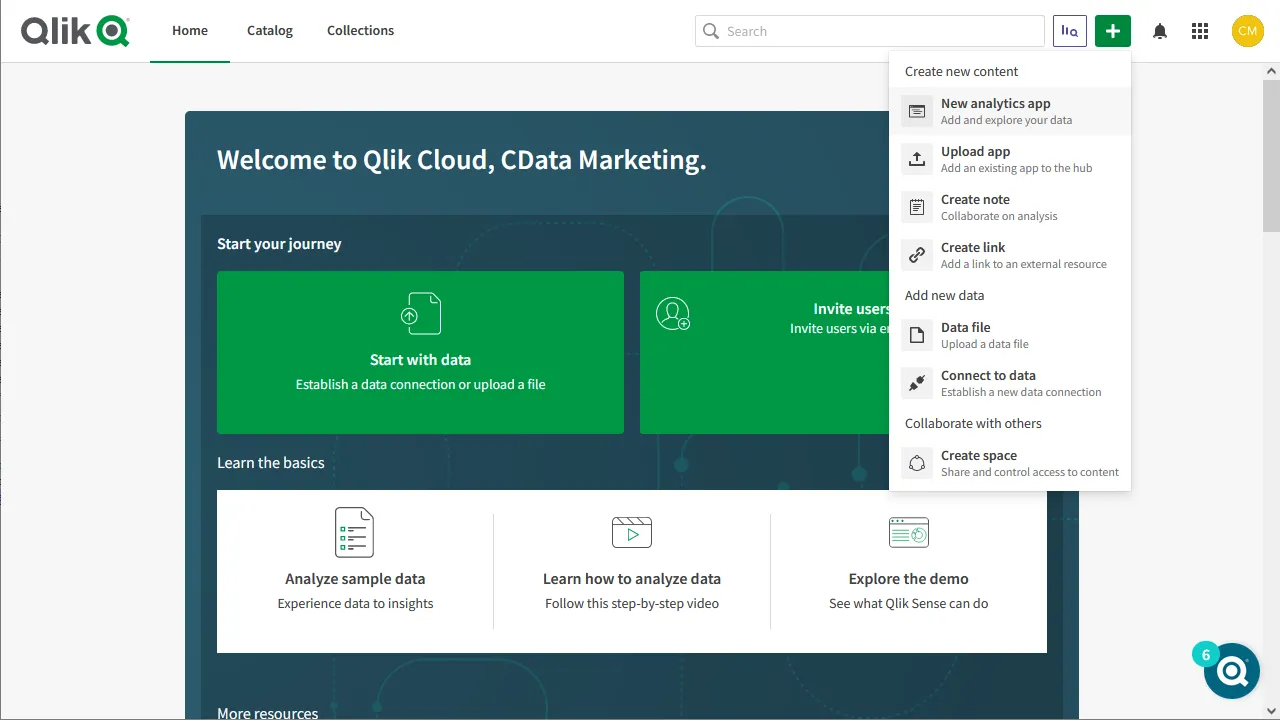
- Name and configure the new app and click "Create"
- In the workspace, click to open the new app
- Click to add data from files and other sources
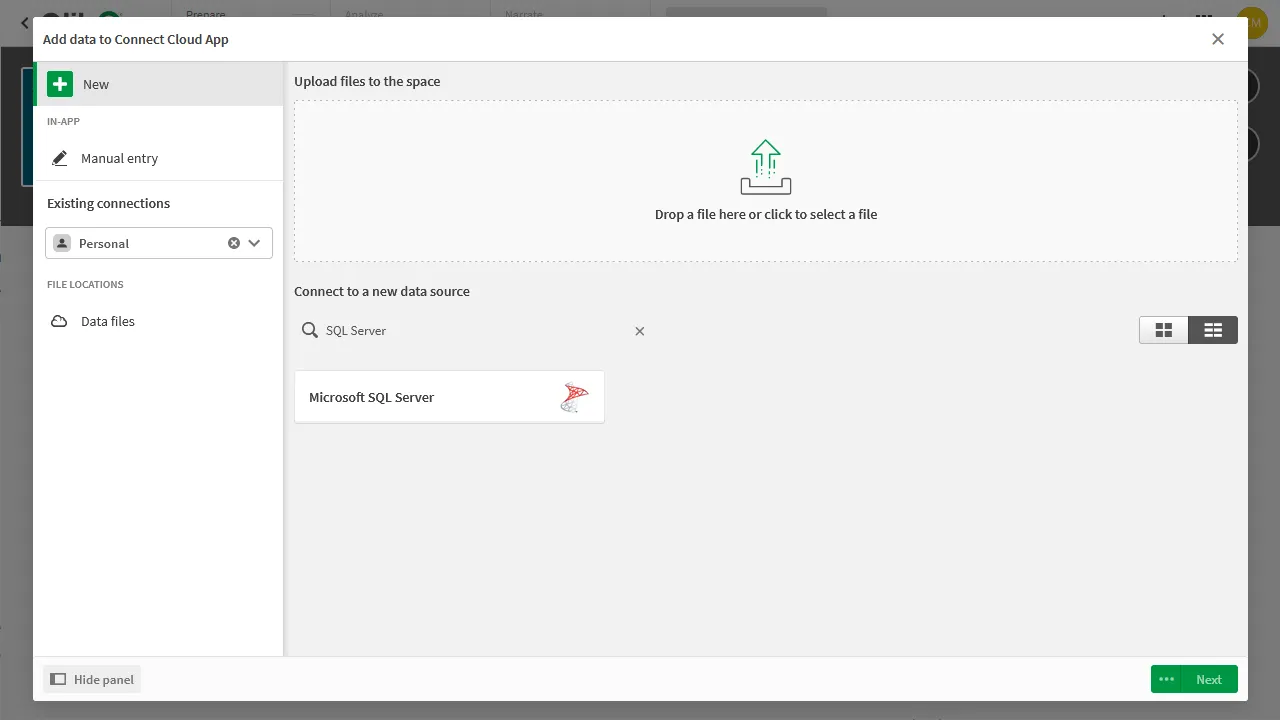
- Select the Microsoft SQL Server connector and set the configuration properties.
- Set Server to tds.cdata.com
- Set Port to 14333
- Set Database to the connection you created (e.g. DB21)
- Set User name to the Connect AI user (e.g. [email protected])
- Set Password to the PAT for the above user
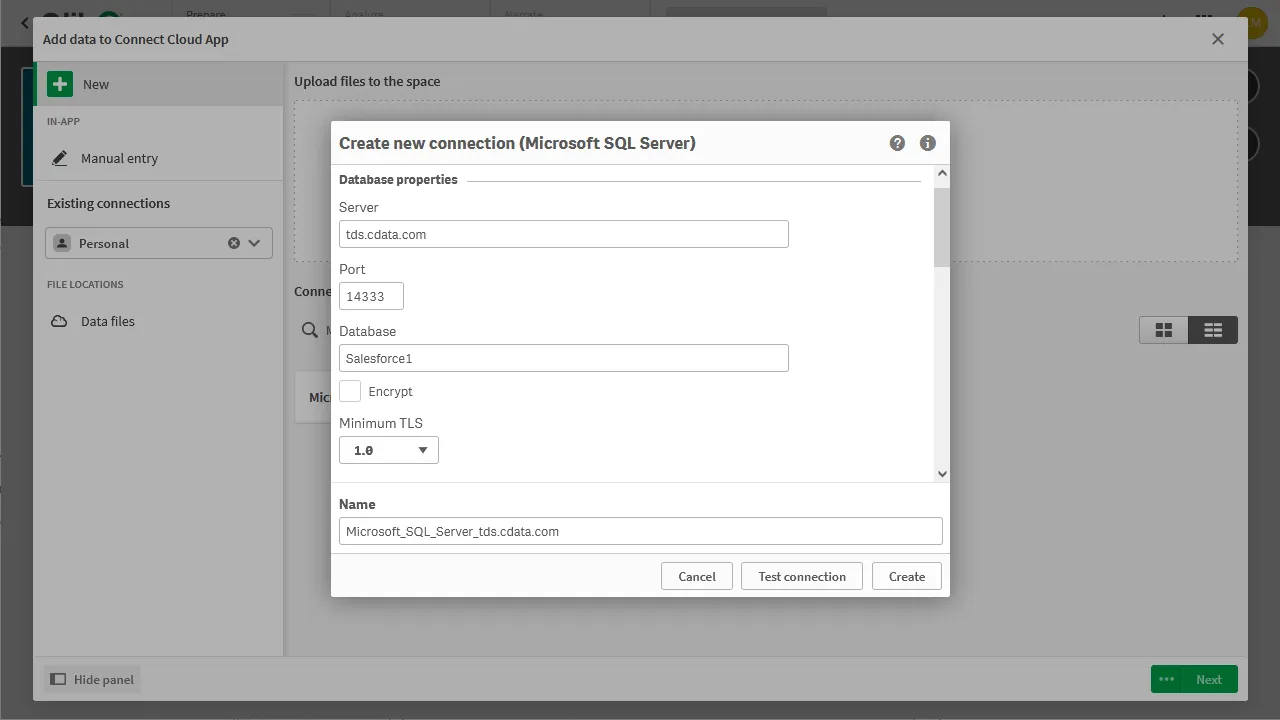
- Select an owner for the connection
- Select a DB2 entity (Table) to view
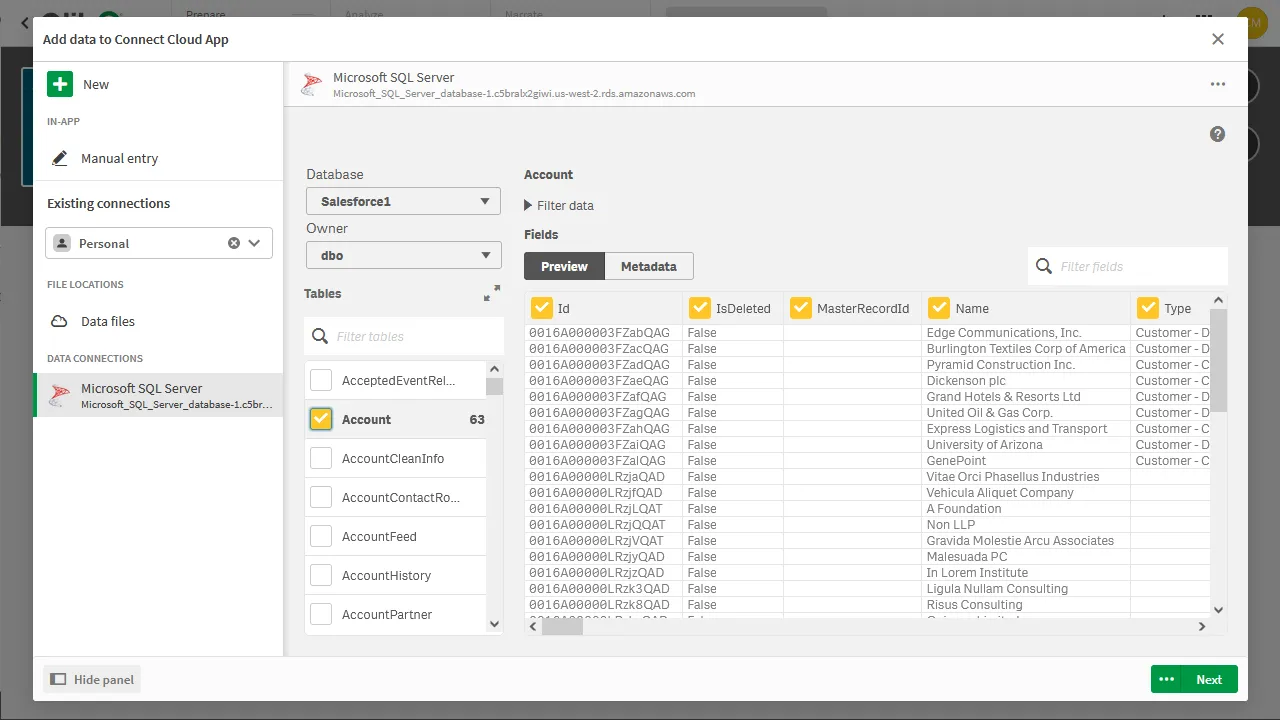
- Click Next, configure the model, and load the data into Qlik Sense.
Generate Insights or Customize Your App
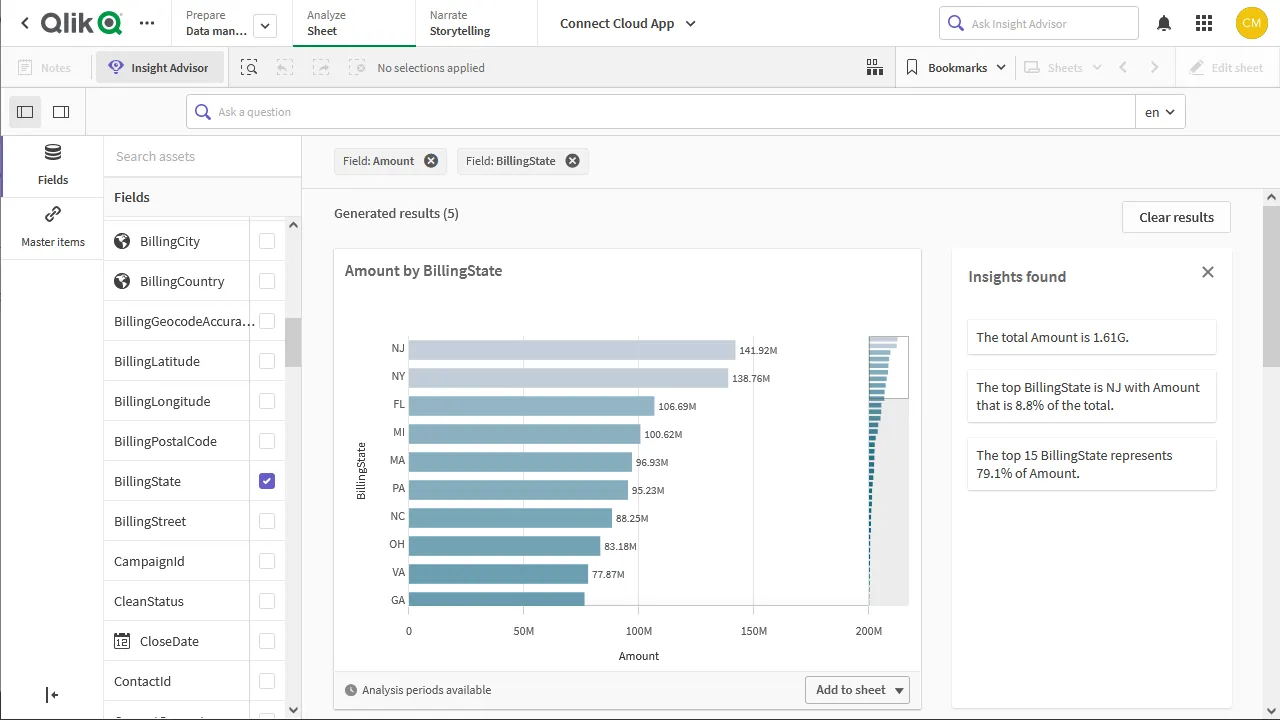
With the data loaded into Qlik Sense, you are ready to begin discovering insights. You can build custom visualizations, reports, and dashboards engineered to gain actionable insights into your DB2 data.
More Information & Free Trial
Now, you have created a simple but powerful dashboard from live DB2 data. For more information on creating OData feeds from DB2 (and more than 100 other data sources), visit the Connect AI page. Sign up for a free trial and start working with live DB2 data in Qlik Sense Cloud.