







Model, Search, and Visualize Live Microsoft OneDrive Data in ThoughtSpot

ThoughtSpot is a cloud-based analytics platform that uses artificial intelligence (AI) and natural language processing (NLP) to help users analyze data and make decisions. When paired with CData Connect AI, you get instant, cloud-to-cloud access to Microsoft OneDrive data for visualizations, dashboards, and more. This article shows how to connect to Microsoft OneDrive and build visualizations from Microsoft OneDrive data in ThoughtSpot.
CData Connect AI provides a pure SQL Server, cloud-to-cloud interface for Microsoft OneDrive, allowing you to easily build models and visualizations from live Microsoft OneDrive data in ThoughtSpot. As you build visualizations, ThoughtSpot generates SQL queries to gather data. Using optimized data processing out of the box, CData Connect AI pushes all supported SQL operations (filters, JOINs, etc) directly to Microsoft OneDrive, leveraging server-side processing to quickly return Microsoft OneDrive data.
Configure Microsoft OneDrive Connectivity for ThoughtSpot
Connectivity to Microsoft OneDrive from ThoughtSpot is made possible through CData Connect AI. To work with Microsoft OneDrive data from ThoughtSpot, we start by creating and configuring a Microsoft OneDrive connection.
- Log into Connect AI, click Sources, and then click Add Connection
- Select "Microsoft OneDrive" from the Add Connection panel
-
Enter the necessary authentication properties to connect to Microsoft OneDrive.
OneDrive uses the OAuth authentication standard. To authenticate using OAuth, create an app to obtain the OAuthClientId, OAuthClientSecret, and CallbackURL connection properties. See the OAuth section of the Help documentation for an authentication guide.

- Click Save & Test
-
Navigate to the Permissions tab in the Add Microsoft OneDrive Connection page and update the User-based permissions.



Add a Personal Access Token
When connecting to Connect AI through the REST API, the OData API, or the Virtual SQL Server, a Personal Access Token (PAT) is used to authenticate the connection to Connect AI. It is best practice to create a separate PAT for each service to maintain granularity of access.
- Click on the Gear icon () at the top right of the Connect AI app to open the settings page.
- On the Settings page, go to the Access Tokens section and click Create PAT.
-
Give the PAT a name and click Create.

- The personal access token is only visible at creation, so be sure to copy it and store it securely for future use.
With the connection configured and a PAT generated, you are ready to connect to Microsoft OneDrive data from ThoughtSpot.
Model, Search, and Visualize Live Microsoft OneDrive Data in ThoughtSpot
To establish a connection from ThoughtSpot to the CData Connect AI Virtual SQL Server API, follow these steps.
- Log into ThoughtSpot
- On the top navigation bar, click Data.
-
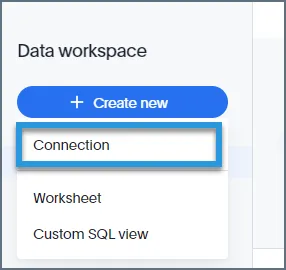
Click Create new > Connection.
-
Name the connection and click "SQL Server" as the data warehouse.
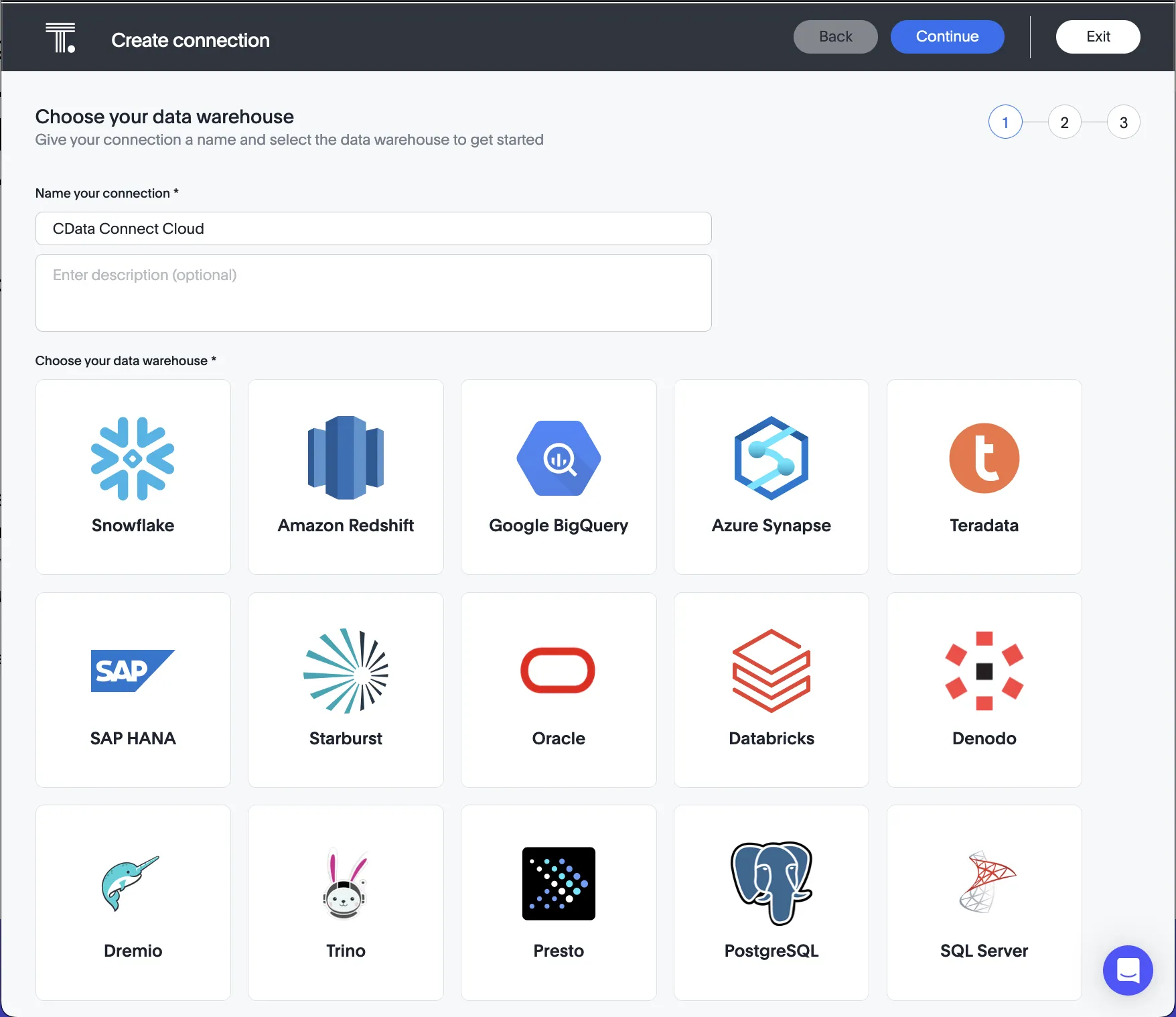
- Click Continue on the top right.
- Enter the connection settings:
- Host: enter the Virtual SQL Server endpoint: tds.cdata.com
- Port: : enter 14333
- Username: enter your CData Connect AI username. This is displayed in the top-right corner of the CData Connect AI interface. For example, [email protected].
- Password: enter the PAT you generated on the Settings page.
- Database: enter the Connection Name of the CData Connect AI data source you want to connect to (for example, OneDrive1).
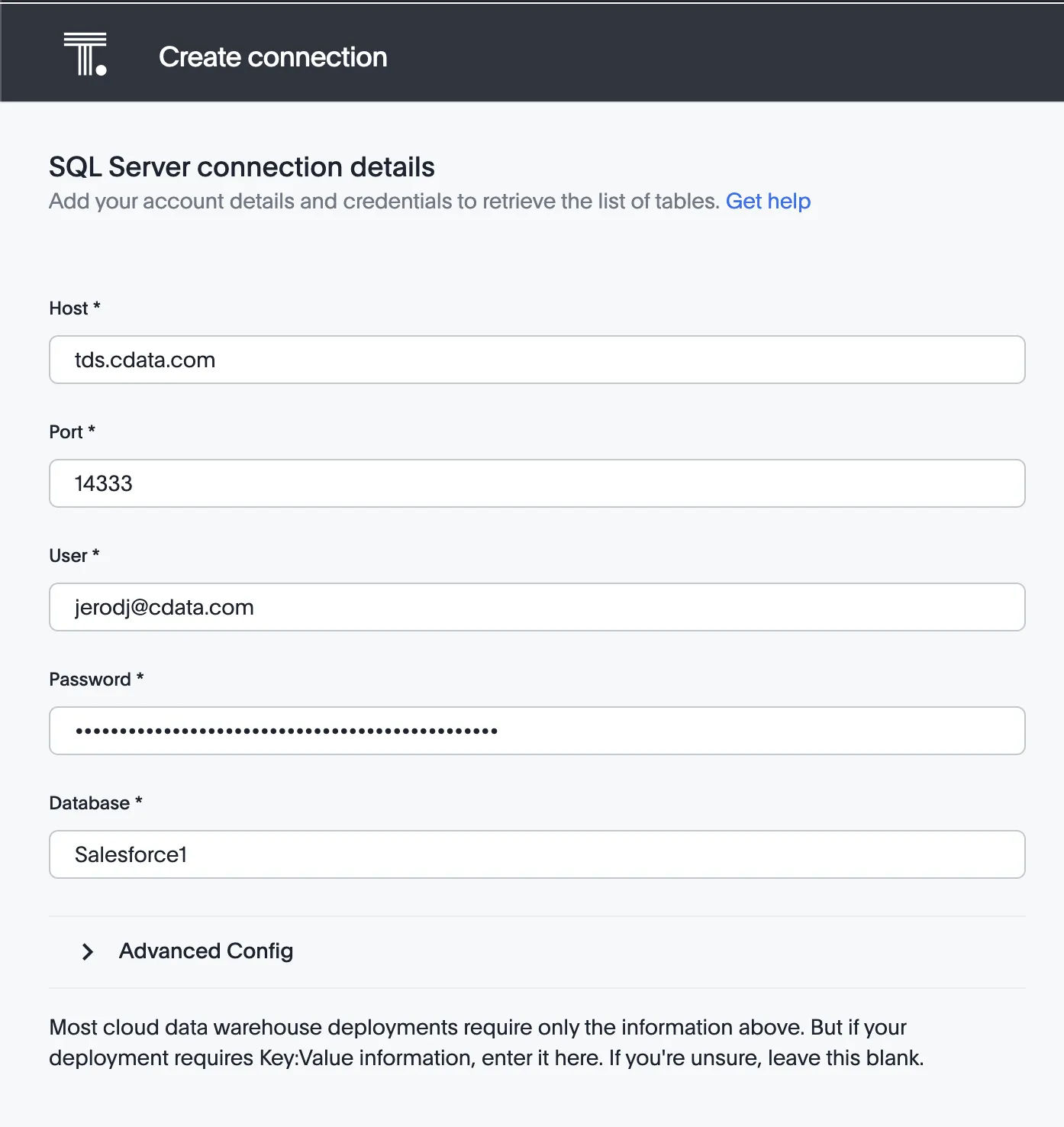
- Click Continue.
- After connecting successfully, you will be able to choose which tables to include.
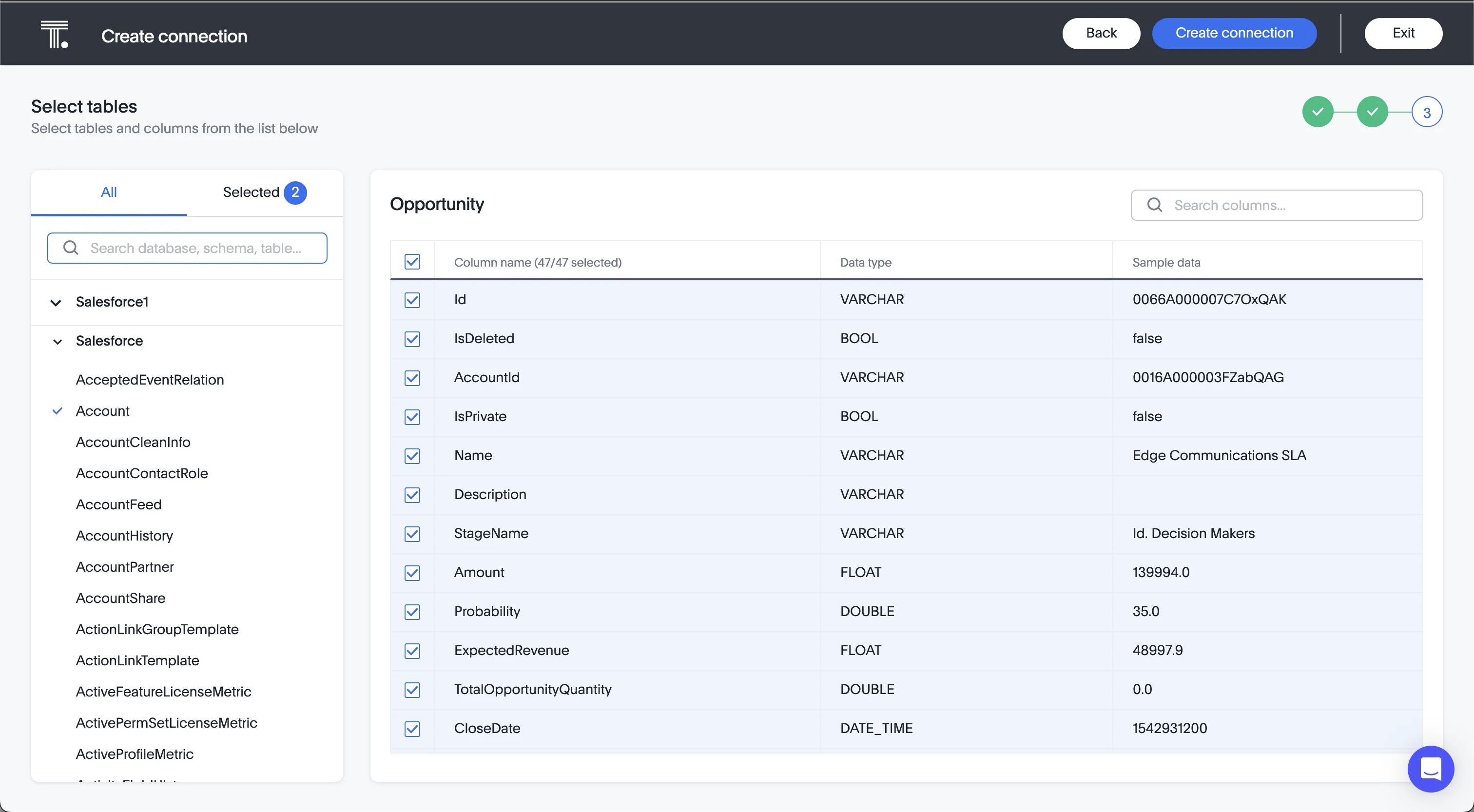
- Click Create Connection.
After you successfully configure your connection, you can build models, search, and visualize your Microsoft OneDrive data.
Real-Time Access to Microsoft OneDrive Data from Cloud Applications
At this point, you have a direct, cloud-to-cloud connection to live Microsoft OneDrive data from ThoughtSpot. You can model, search, and visualize your data from ThoughtSpot . For more information on gaining live access to data from more than 100 SaaS, Big Data, and NoSQL sources from cloud applications like ThoughtSpot, refer to our Connect AI page.