







Analyze SQL Analysis Services Data in Infragistics Reveal

Reveal, an offering from Infragistics, serves as a data visualization tool that seamlessly integrates with CData Connect AI. Together, they empower users to deliver dynamic dashboards using real-time data from a diverse range of data sources, including SQL Analysis Services data. In this article, we will guide you through the process of connecting to SQL Analysis Services via Connect AI and subsequently linking Connect AI with Infragistics Reveal to construct a straightforward dashboard.
Connect to SQL Analysis Services from Infragistics Reveal
To work with live SQL Analysis Services data in Infragistics Reveal, we need to connect to SQL Analysis Services from Connect AI, provide user access to the connection, and create a Workspace for the SQL Analysis Services data.
Connect to SQL Analysis Services from Connect AI
CData Connect AI uses a straightforward, point-and-click interface to connect to data sources.
- Log into Connect AI, click Sources, and then click Add Connection
- Select "SQL Analysis Services" from the Add Connection panel
-
Enter the necessary authentication properties to connect to SQL Analysis Services.
To connect, provide authentication and set the Url property to a valid SQL Server Analysis Services endpoint. You can connect to SQL Server Analysis Services instances hosted over HTTP with XMLA access. See the Microsoft documentation to configure HTTP access to SQL Server Analysis Services.
To secure connections and authenticate, set the corresponding connection properties, below. The data provider supports the major authentication schemes, including HTTP and Windows, as well as SSL/TLS.
-
HTTP Authentication
Set AuthScheme to "Basic" or "Digest" and set User and Password. Specify other authentication values in CustomHeaders.
-
Windows (NTLM)
Set the Windows User and Password and set AuthScheme to "NTLM".
-
Kerberos and Kerberos Delegation
To authenticate with Kerberos, set AuthScheme to NEGOTIATE. To use Kerberos delegation, set AuthScheme to KERBEROSDELEGATION. If needed, provide the User, Password, and KerberosSPN. By default, the data provider attempts to communicate with the SPN at the specified Url.
-
SSL/TLS:
By default, the data provider attempts to negotiate SSL/TLS by checking the server's certificate against the system's trusted certificate store. To specify another certificate, see the SSLServerCert property for the available formats.
You can then access any cube as a relational table: When you connect the data provider retrieves SSAS metadata and dynamically updates the table schemas. Instead of retrieving metadata every connection, you can set the CacheLocation property to automatically cache to a simple file-based store.
See the Getting Started section of the CData documentation, under Retrieving Analysis Services Data, to execute SQL-92 queries to the cubes.

-
HTTP Authentication
- Click Save & Test
-
Navigate to the Permissions tab in the Add SQL Analysis Services Connection page and update the User-based permissions.



Add a Personal Access Token
When connecting to Connect AI through the REST API, the OData API, or the Virtual SQL Server, a Personal Access Token (PAT) is used to authenticate the connection to Connect AI. It is best practice to create a separate PAT for each service to maintain granularity of access.
- Click on the Gear icon () at the top right of the Connect AI app to open the settings page.
- On the Settings page, go to the Access Tokens section and click Create PAT.
-
Give the PAT a name and click Create.

- The personal access token is only visible at creation, so be sure to copy it and store it securely for future use.
Configure SQL Analysis Services Endpoints for Infragistics Reveal
After connecting to SQL Analysis Services, create a workspace for your desired table(s).
-
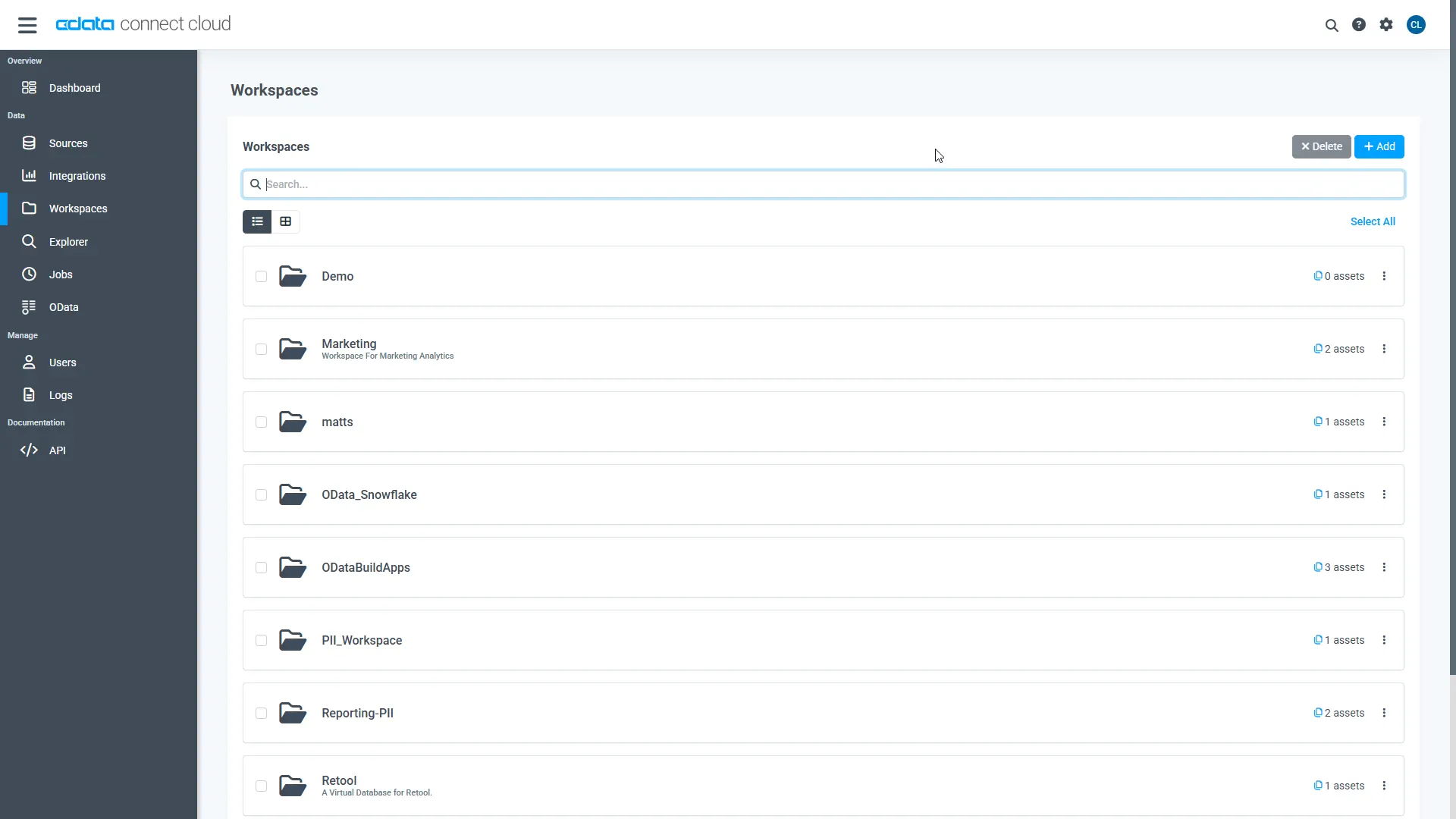
Navigate to the Workspaces page and click Add to create a new Workspace (or select an existing workspace).
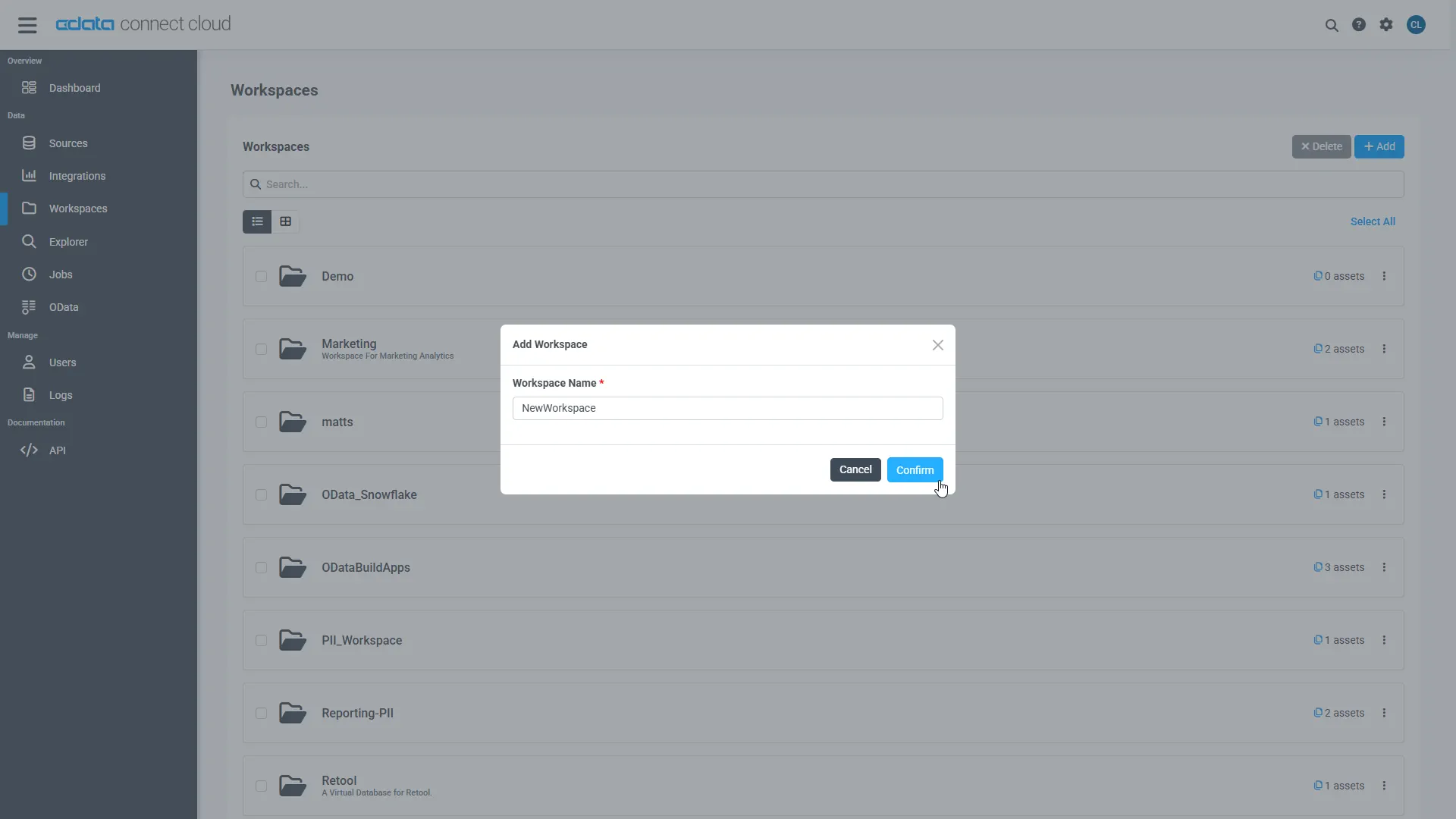
- Click Add to add new assets to the Workspace.
-
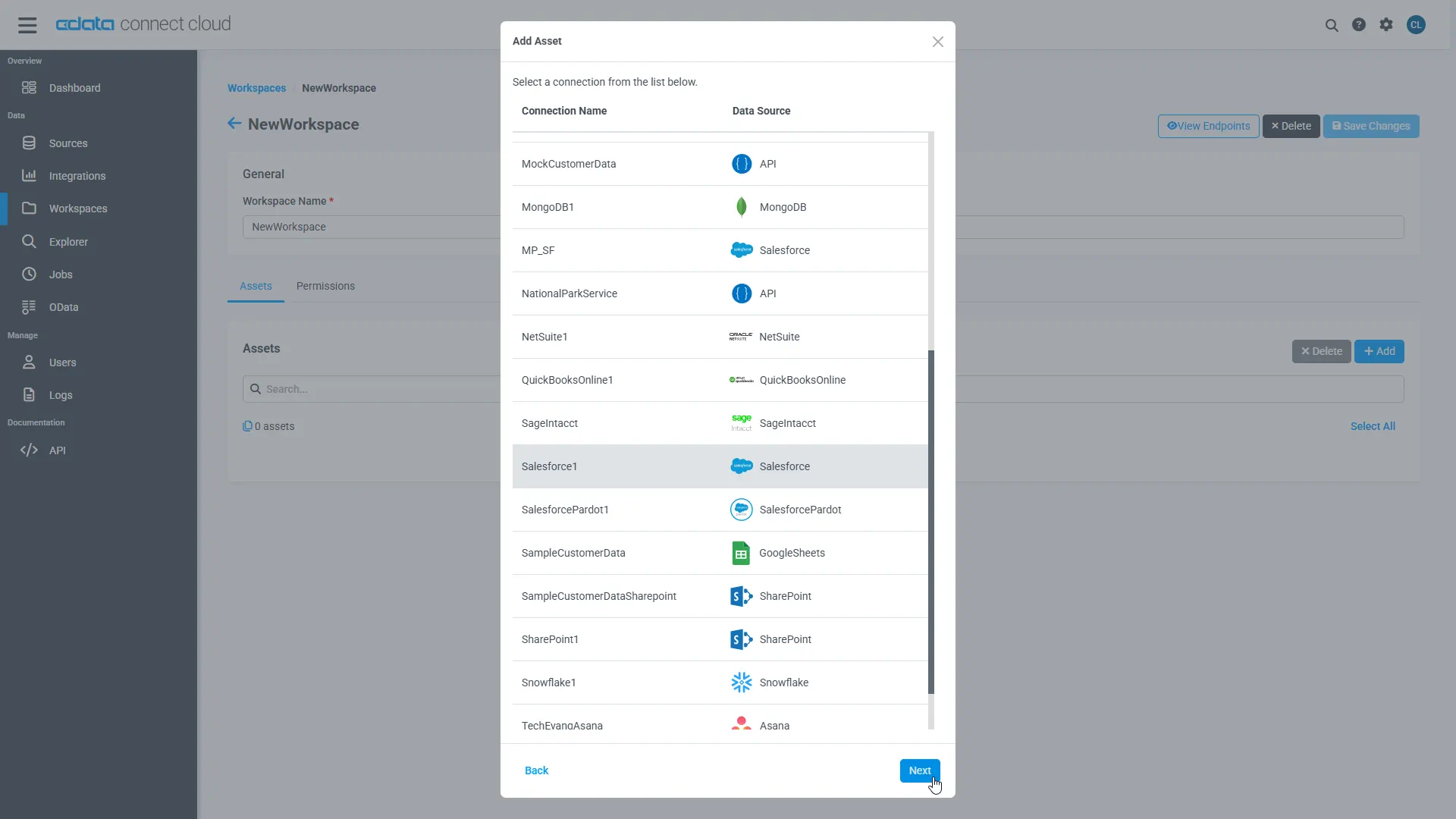
Select the SQL Analysis Services connection (e.g. SSAS1) and click Next.
-
Select the table(s) you wish to work with and click Confirm.
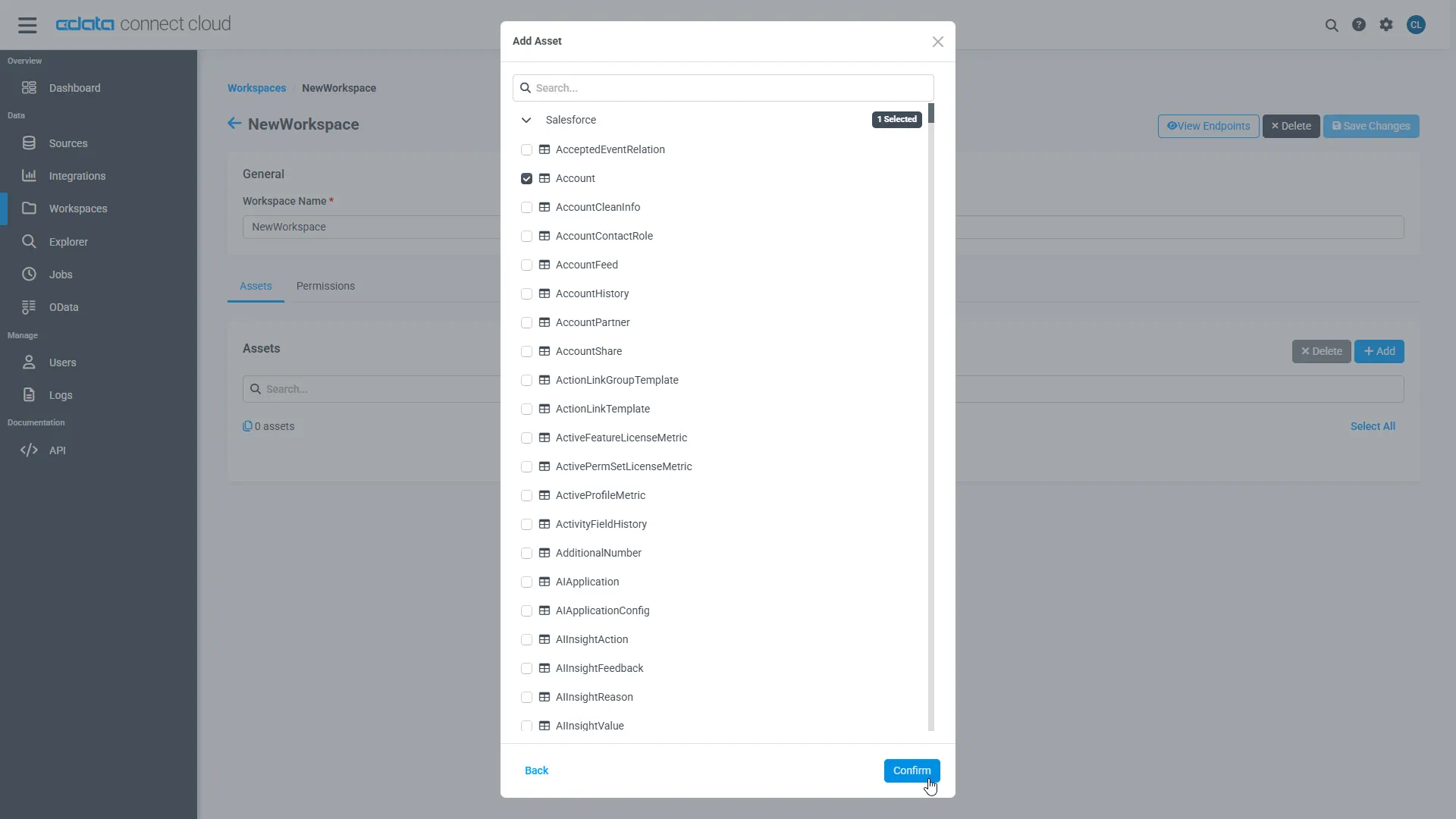
- Make note of the OData Service URL for your workspace, e.g. https://cloud.cdata.com/api/odata/{workspace_name}
With the connection, PAT, and Workspace configured, you are ready to connect to SQL Analysis Services data from Infragistics Reveal.
Create a Dashboard in Reveal
With Connect AI configured, we can visualize SQL Analysis Services data in Reveal.
- Log into Reveal and click Dashboards -> New
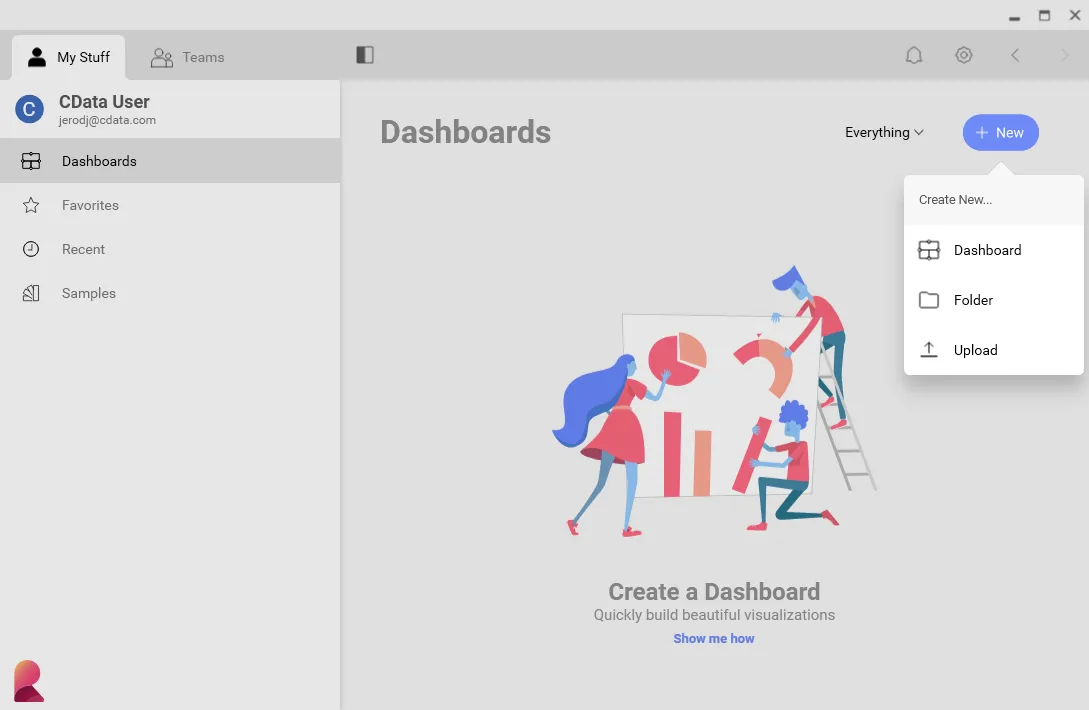
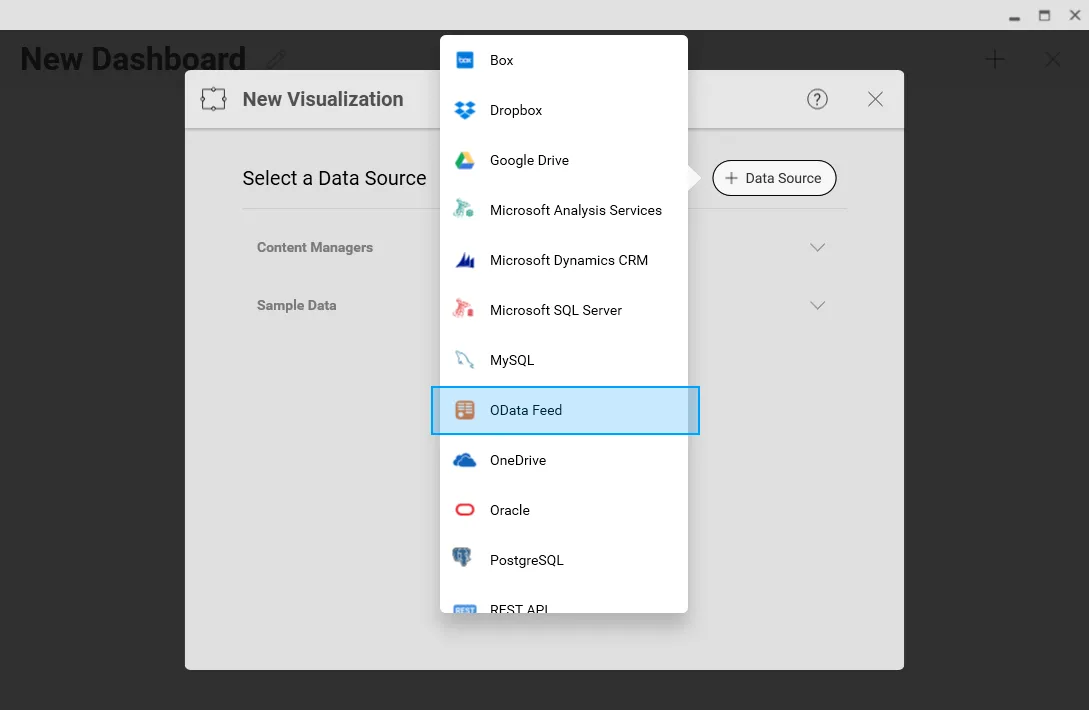
- Click Data Sources -> OData Feed
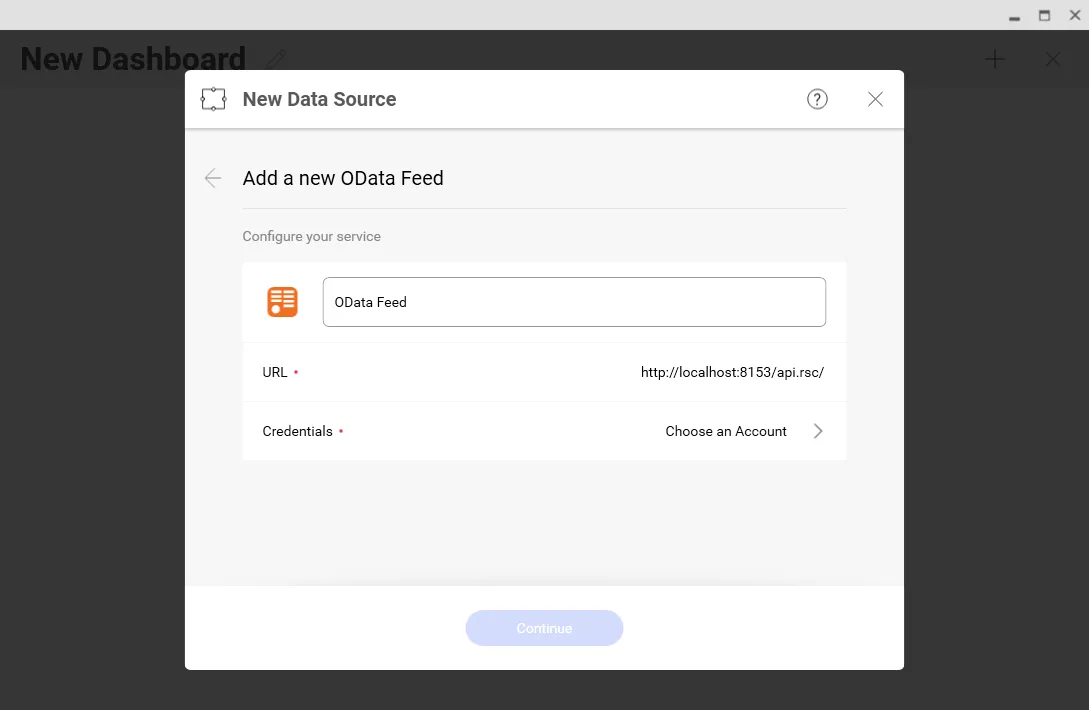
- Specify the Connect AI OData API endpoint URL (found on the OData page): https://cloud.cdata.com/api/odata/{workspace_name}
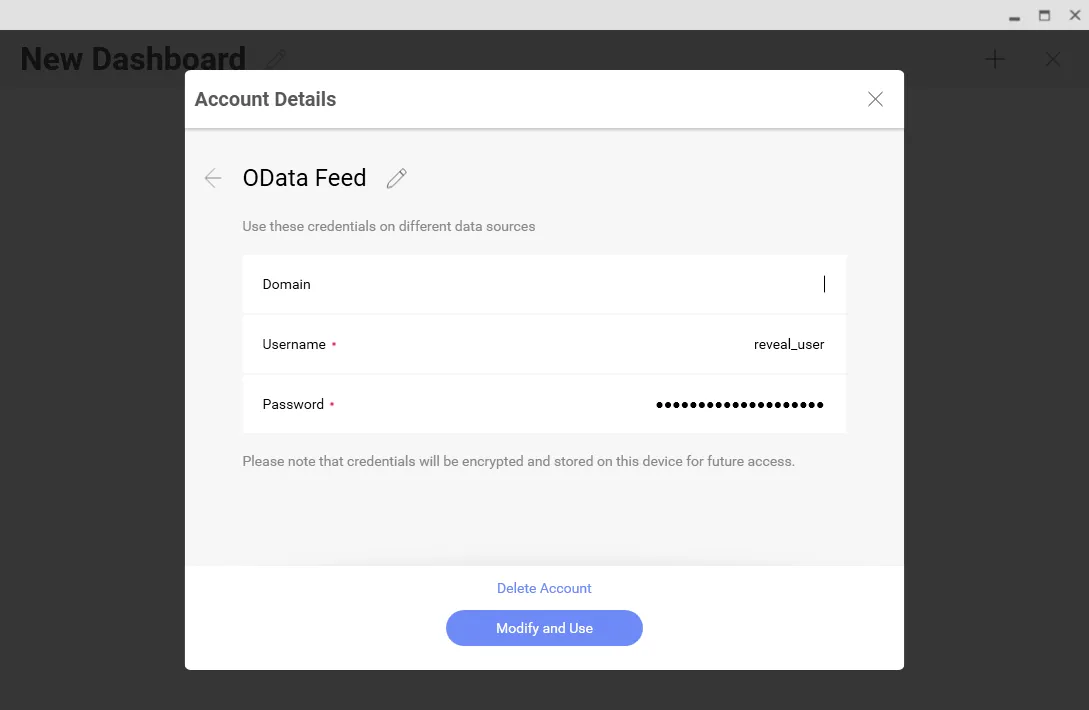
- Select Generic Credentials and
- Set Username to a Connect AI username (e.g. [email protected])
- Set Password to the PAT for the user
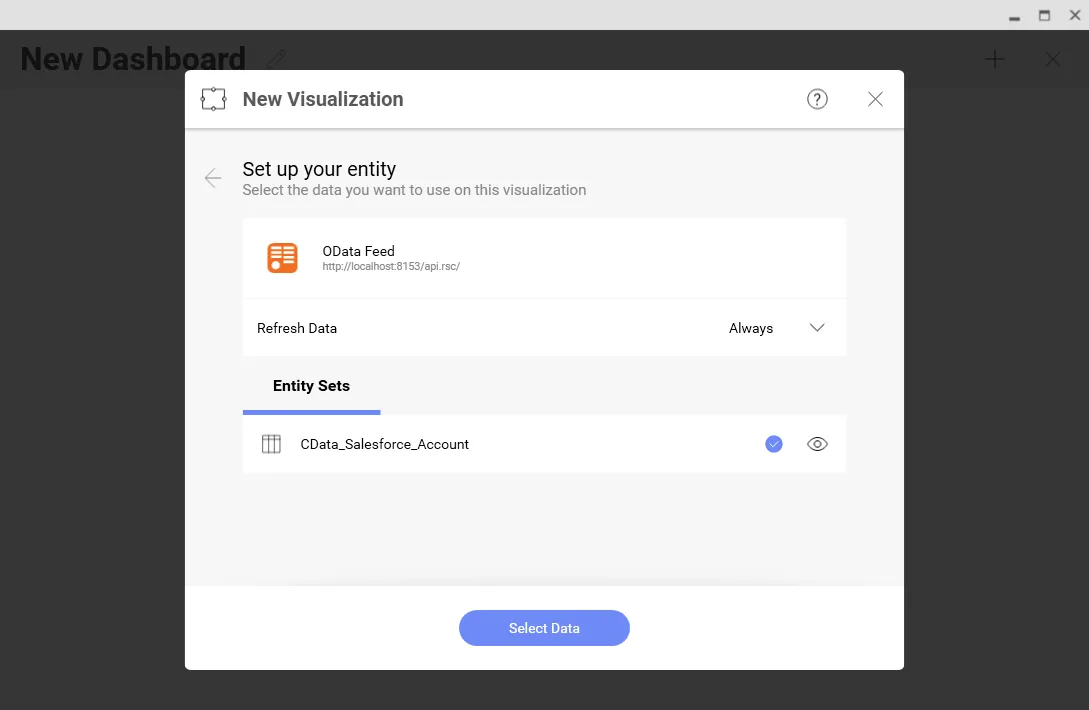
- Select the entity you wish to visualize
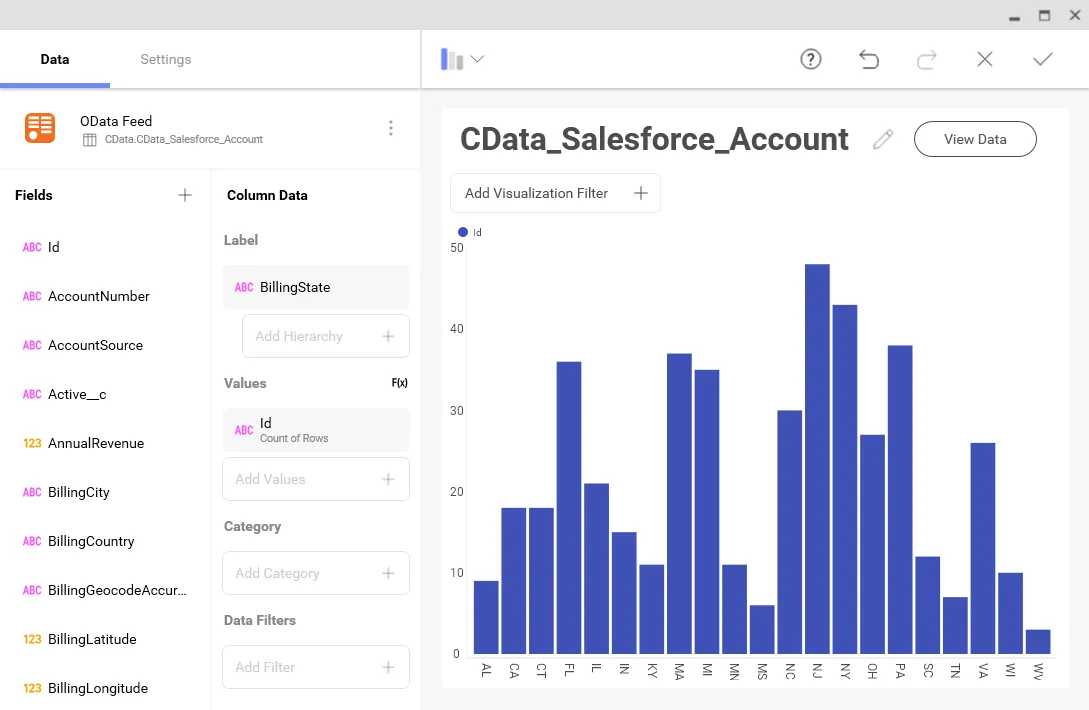
- Select fields and choose a chart type
More Information & Free Trial
At this point, you have created a simple dashboard from live SQL Analysis Services data. For more information on creating OData feeds from SQL Analysis Services (and more than 100 other sources), visit the Connect AI page. Sign up for a free trial and start working live SQL Analysis Services data in tools that consume OData APIs.